





Where the River Meets the Sea
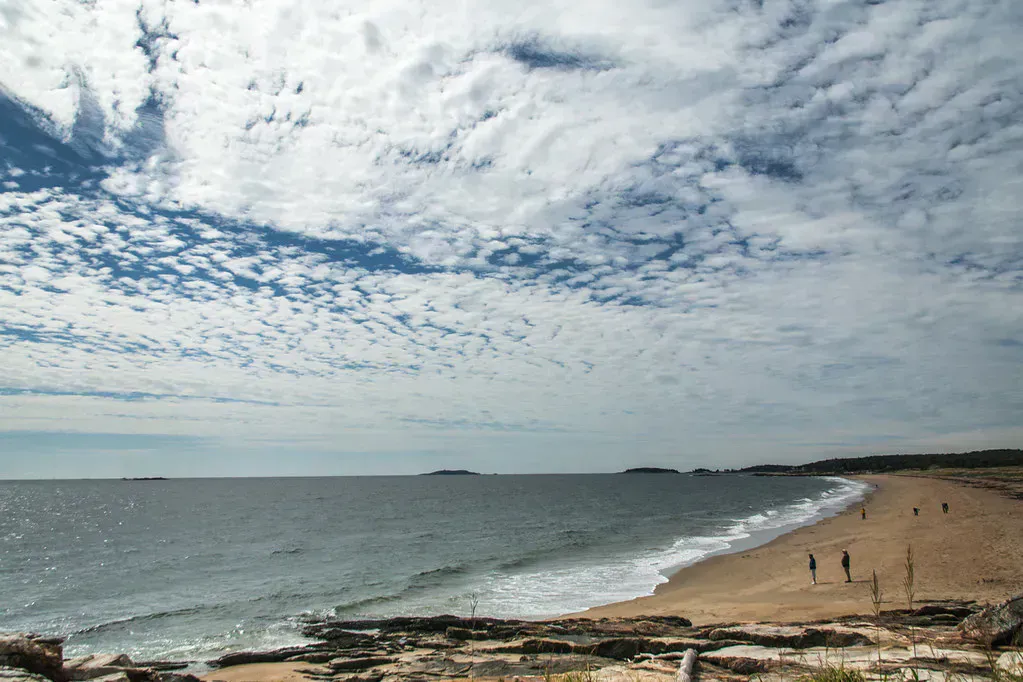
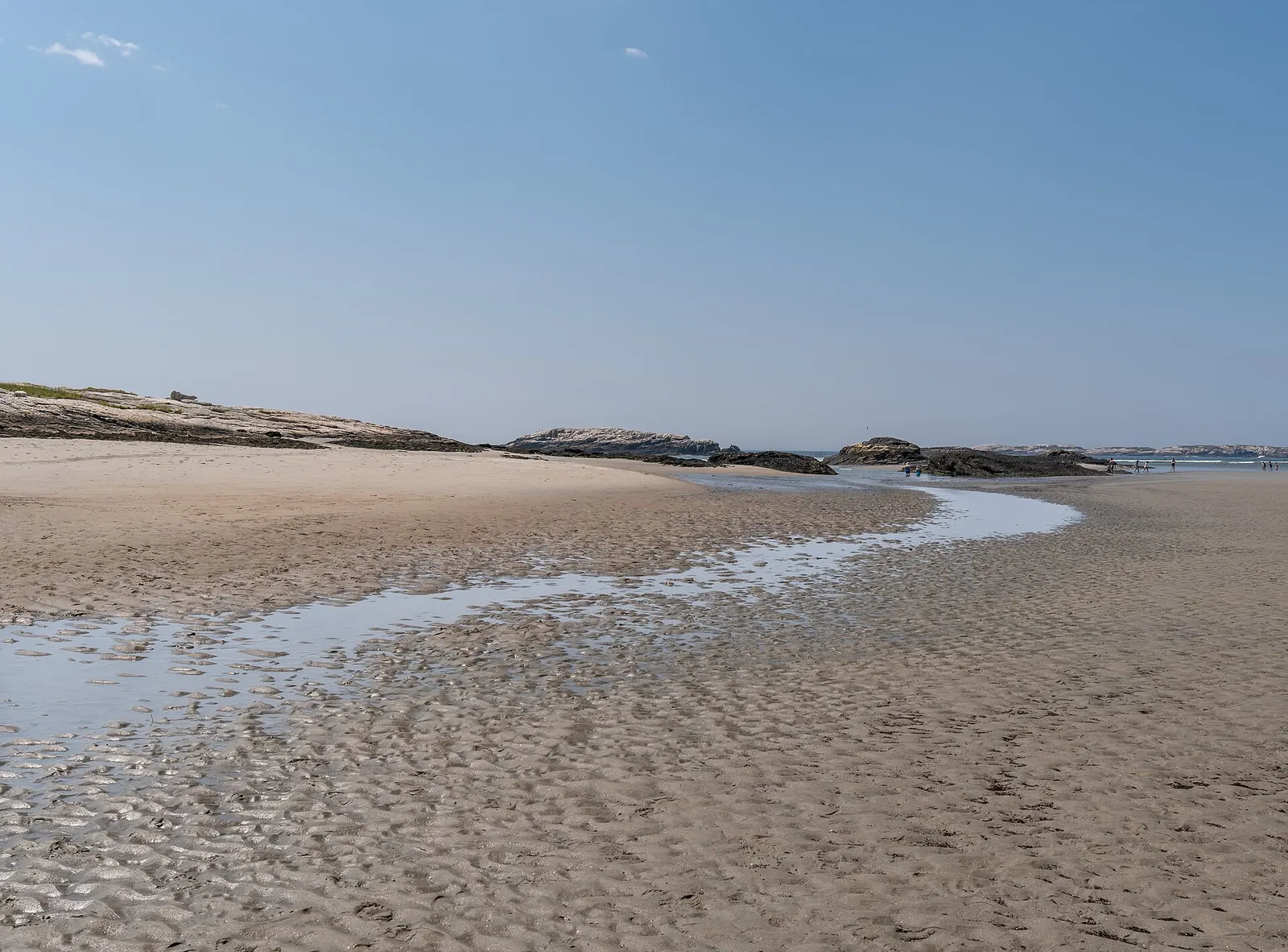
Popham Beach State Park sits at the tip of the Phippsburg peninsula, where the Kennebec River empties into the Atlantic. It is one of the few true sandy beaches on the Maine coast, and at low tide it expands into a vast expanse of firm, flat sand that stretches hundreds of yards in every direction. Two rivers bracket the beach, the smaller Morse at the west end and the Kennebec at the east, and the combination of river current and ocean tide creates a landscape that changes by the hour. The beach faces south, catching sun from morning through late afternoon.
The seabirds working the river mouth and the Seguin Island Light two miles offshore are best appreciated through a pair of 8x42 binoculars, so it is worth bringing a pair to Popham.
#1Premium
Nikon Prostaff P3 8x42
Who it’s forWildlife & bird watching
Why we picked itNikon quality at entry-level price
Pros
- Bright clear image with Eco-glass lenses
- Comfortable long eye relief for eyeglass wearers
- Turn-and-slide eyecups adjust smoothly
Know before you buy
- Not as sharp at edges as premium Nikon models
- Plastic feel to body
The park is 14 miles south of Bath, at the end of Route 209. That drive through Phippsburg is part of the experience: a winding two-lane road past old farmhouses, stone walls, and glimpses of the river. The peninsula narrows as you go, and by the time you reach the park, the ocean feels inevitable.
The Beach
At low tide, Popham Beach is enormous. Sandbars emerge off the beach toward Fox Island, and the tidal pools they hold, with small crabs, periwinkles, sea stars, and anemones, can occupy kids for hours.
The sand is fine-grained and hard-packed at the waterline, good for walking. Higher up, it softens into deeper, dry sand where people spread blankets and set up chairs. The beach runs roughly a mile in length, with rocky outcrops at both ends. The state’s own geologists describe the sand movement here as causing “extreme shoreline change and dune erosion,” which is a dry way of saying the beach you visited last year is not quite the beach you will visit this year.
The water temperature ranges from about 50F in June to the upper 50s in August. Colder than southern Maine beaches because the Kennebec River carries cold inland water into the mix. Most visitors wade and splash rather than sustained swimming.
Time your visit around the tides. Low tide exposes the sandbars and tidal pools, which is the best experience at Popham. Check the tide tables for the Kennebec River entrance before you go. Arrive two hours before low tide to catch the full reveal, and remember that the same two-hour window applies in reverse once the tide turns.
The Fox Island Sandbar
Walking out to Fox Island at low tide used to be the classic Popham move. The shifting sands have complicated it: the Morse River channel has migrated, and the park now says visitors “can no longer walk to Fox Island at low tide without crossing the mouth of the Morse River.” If you choose to cross and explore anyway, the state’s guidance is blunt: “pay attention to the quick-rising tides so as not to get marooned.”
People get stranded on Fox Island because the incoming tide floods the sandbar behind them faster than they expect. The Bureau of Parks and Lands warns that about two hours after low tide, the sandbars will likely be covered with cold, fast-moving water. If you walk out, go at dead low, keep an eye on the water the whole time, and start back well before the bar starts to narrow. Do not try to swim back across a flooded channel. The current is strong and the water is cold enough to sap a swimmer quickly.
Treat the crossing like a short hike with a hard turnaround time, not a stroll. Note the time of low tide before you leave the sand, and give yourself a wide margin. The view from the beach is nearly as good as the view from the island.
Swimming: River Current vs. Ocean Surf
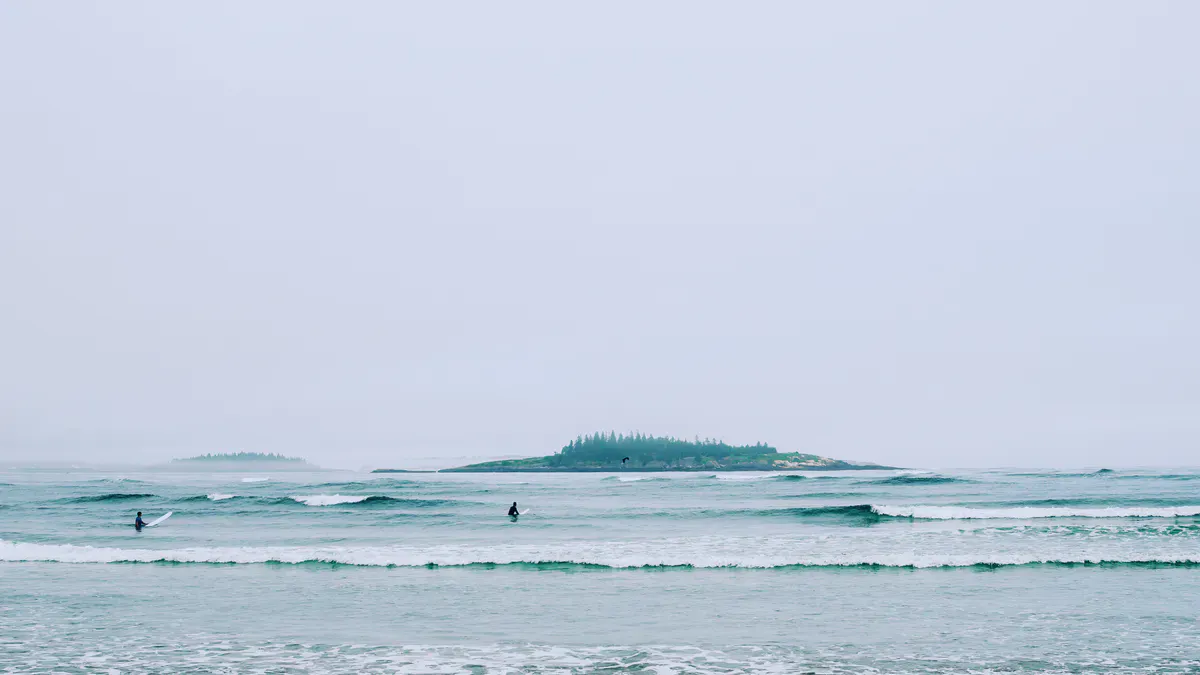
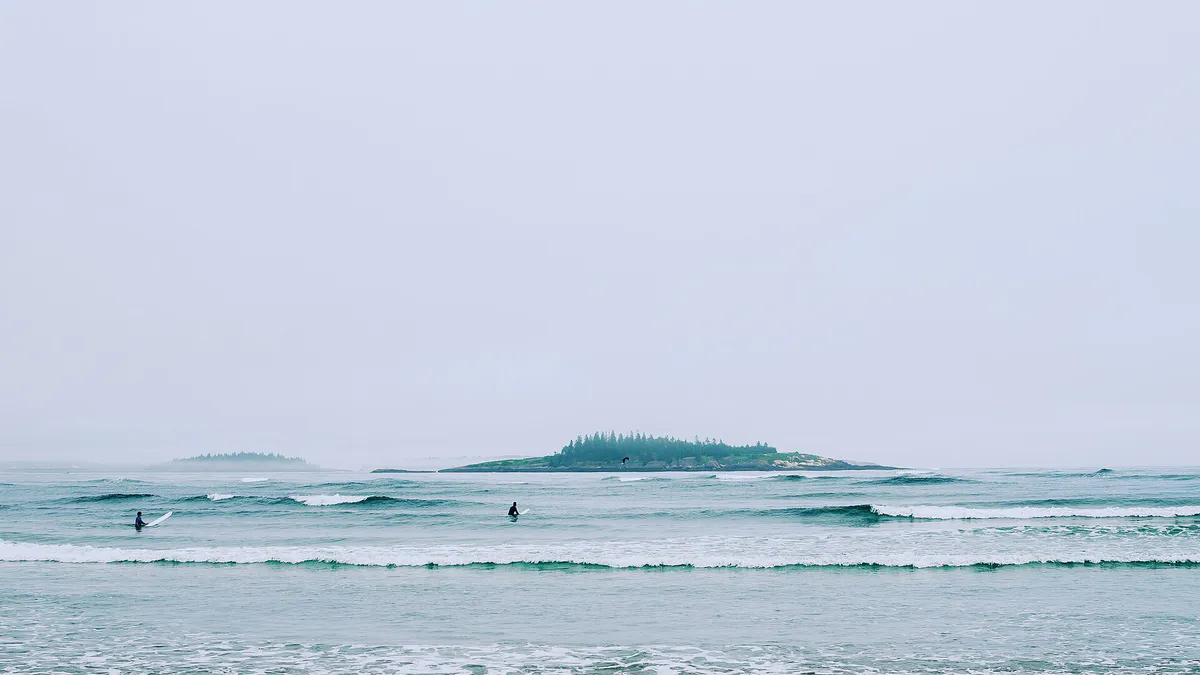
Popham asks more of swimmers than most Maine beaches. The state describes it as a strong surf beach with undertows and occasional rip tides, and advises swimming within your abilities and near the lifeguard. Lifeguards are on duty from mid-June to mid-August.
The geography explains the risk. The Morse River drains at the west end of the beach and the Kennebec, one of Maine’s largest rivers, empties at the east end, so an enormous volume of water moves past both ends of the beach on every tide. The channels near the river mouths behave nothing like ordinary ocean surf: on an outgoing tide they can pull a swimmer seaward quickly, and even shallow water near the channels can carry a strong current. The state strongly discourages any attempt to swim to the offshore islands.
Swim near the center of the beach, in front of the lifeguard when one is on duty, and stay well away from the river channels at both ends. If a current grabs you, do not fight it head-on. Swim parallel to shore until you are out of it, then angle back in. Watch children closely; the bottom drops and the current shifts as the tide moves.
Fort Popham
Fort Popham, a semicircular granite fortification at the mouth of the Kennebec, sits just outside the state park boundary. Construction began in 1861 during the Civil War but was never completed. The walls are thick, the archways are impressive, and you can walk through the interior chambers and climb to the upper level for views of the river, Seguin Island, and the open ocean.
The fort is free to visit and open during daylight hours in summer. It is a 5-minute drive from the state park (or a longer walk along the beach at low tide).
Near Fort Popham, a small fishing pier and the Spinney’s Restaurant provide a classic Maine coast lunch stop. Lobster rolls, fried clams, and ocean views.
The Kennebec mouth off Popham is some of the best-known striped bass water in Maine. Popham Beach and Fort Popham sit inside the Kennebec special striper area, which is closed December 1 through April 30 and catch-and-release only from May 1 through June 30 (single-hook artificial lures, no bait), with harvest under the 28 to 31 inch slot from July 1 through November 30. Our surf striper setup guide covers the gear and the rest of the rules.
The history here runs deeper than the fort. In 1607 the Popham Colony built Fort St. George on this same peninsula, one of the earliest English settlements in North America. It lasted only about a year; our Fort Popham guide covers the fort and the colony story in more detail.
For a quieter beach, the Bates-Morse Mountain Conservation Area next door leads about 2 miles over Morse Mountain to Seawall Beach, a long undeveloped barrier beach with restricted access during bird nesting season.
Seguin Island
Seguin Island sits about two miles offshore, visible from the beach and worth a pair of binoculars for the lighthouse and the seabirds working the river mouth. The Seguin Island Light, first established in 1795 and rebuilt in 1857, is the highest lighthouse in Maine at 180 feet above sea level. The island is maintained by the Friends of Seguin Island and is accessible by private boat in summer.
Practical Details
Popham Beach State Park is open year-round, 9 AM to sunset daily unless otherwise posted at the gate. Day-use fees are collected year-round and charged per person: $8 for adult non-residents, $6 for adult Maine residents, $2 for non-resident seniors, and $1 for children ages 5 to 11. Maine residents 65 and older and children under 5 are free. The entry booth and self-service stations take cash, and a card reader is not a given, so bring bills. The official fee schedule has the current rates.
A bathhouse with fresh-water solar rinse-off showers sits behind the dunes, a real luxury after a salt-and-sand afternoon. The old East Picnic Area is gone: the winter storms of early 2024 took it, along with a dramatic bite of the dunes. Check the park’s conditions page for the current state of the picnic facilities before you plan a cookout. There are no food vendors inside the park.
Parking is the crux of a summer visit. This is Maine’s busiest state park beach, and on hot July and August weekends the lot fills by mid-morning. When it does, the gate closes to new arrivals until enough cars leave. The park runs a summer hotline at (207) 389-9125 with recorded tide and parking updates; call it before you commit to the 14-mile drive down the peninsula.
On a sunny summer Saturday, be at the gate when it opens at 9, or come after mid-afternoon when the morning crowd starts peeling off and the lot reopens. Showing up at 11 AM on a hot weekend usually means a turnaround at the gate.
Dogs are not allowed on the beach from April 1 through September 30. From October through March, dogs are welcome on leash. The off-season is a fine time to visit with a dog: fewer people, wide-open sand, and dramatic winter waves.
Late September and early October are some of the best times to visit Popham. The summer crowds are gone, the water is actually at its warmest, and the angle of the light turns the sand and fort golden in the afternoon. Dogs are allowed after October 1.
Nearby: Hermit Island
Hermit Island, a private campground on a small peninsula just south of Popham Beach, offers some of the most sought-after oceanfront campsites in Maine. Sites sit on rocky headlands and among spruce groves overlooking the ocean. Reservations open in January and popular sites sell out within hours.
When to Go
Spring
Cool and often windy. Good for walking and beachcombing. Water too cold for swimming.
Summer
Warmest water (upper 50s). Tidal pools at their best. Parking fills early on weekends.
Fall
Fewer crowds, warm water in September, golden light. Dogs allowed after October 1. Fort Popham less busy.
Winter
Dramatic waves and empty beach. Cold and windy. Dogs allowed. Park open but no services.
Popham Beach Essentials
- Tide chart (plan around low tide)
- Water shoes (rocky sections and tidal pools)
- Sunscreen and windbreaker
- Towels
- Cash for entrance fee
- Binoculars (seabirds and Seguin Island)
- Snacks and water (no food vendors inside the park)
- Bucket and small net for tidal pool exploring (catch and release)
Getting There
From Portland, take I-295 North to Route 1, then Route 209 South through Phippsburg. The drive is about 80 minutes. From Bath, it is about 20 minutes south on Route 209. The road ends at the park.
FAQ
Can you walk to Fox Island at Popham Beach?
Not the way you used to. The Morse River channel has shifted, and the park says you can no longer walk to Fox Island at low tide without crossing the river mouth. If you cross anyway, the state warns you to watch the quick-rising tide so you don't get marooned. About two hours after low tide, the sandbars are covered with cold, fast-moving water. Go at dead low and start back early.
Are dogs allowed at Popham Beach?
Dogs are banned from April 1 through September 30. From October through March, dogs are welcome on leash. Off-season visits with dogs are excellent, with wide-open sand and few people.
How much does Popham Beach cost?
Day-use fees are per person, collected year-round: $8 for adult non-residents, $6 for adult Maine residents, $2 for non-resident seniors, and $1 for children ages 5 to 11. Children under 5 and Maine residents 65 and older are free. Bring cash for the entry booth or self-service station.
Is swimming safe at Popham Beach?
Swimming is allowed but requires caution. The state describes Popham as a strong surf beach with undertows and occasional rip tides, and says to swim within your abilities and near the lifeguard (on duty mid-June to mid-August). Swim near the center of the beach, stay away from the river channels at both ends, and swim parallel to shore if a current grabs you.
What is the water temperature at Popham Beach?
Ocean water ranges from about 50F in June to the upper 50s in August. The Kennebec River brings cold inland water, keeping temperatures slightly cooler than beaches further south.
Where is Popham Beach?
At the mouth of the Kennebec River in Phippsburg, about 80 minutes northeast of Portland and roughly 20 minutes south of Bath at the end of Route 209.
Is Popham Beach State Park open?
Yes, the state park is open year-round from 9 AM to sunset unless otherwise posted at the gate, with a per-person day-use fee ($6 resident adults, $8 non-resident adults). Lifeguards are on duty mid-June to mid-August; other facilities are seasonal.
What is Popham Beach known for?
A long, wide stretch of sand with dramatic sandbars, tidal channels, and views of offshore islands. At the lowest tides, huge sandbars emerge toward Fox Island, though reaching the island itself now means crossing the Morse River mouth. Its constantly shifting sands make it one of Maine's most scenic and most dynamic beaches.
Are the currents at Popham Beach dangerous?
They can be. Popham is a strong surf beach with undertows and occasional rip tides, and the Morse and Kennebec rivers drive powerful currents past both ends of the beach. The incoming tide can also strand people who walked toward Fox Island at low tide. Swim near the lifeguard, stay off the river channels, and watch the tide chart closely.