Maine’s First and Most Famous Lighthouse
Portland Head Light has been standing watch over the entrance to Portland Harbor since 1791, making it the oldest lighthouse in Maine. George Washington himself authorized its construction, and it was first lit on January 10, 1791, just two years after Washington took office. The tower rises 80 feet from the ground and sits 101 feet above the waterline, its beam visible up to 24 nautical miles out to sea.
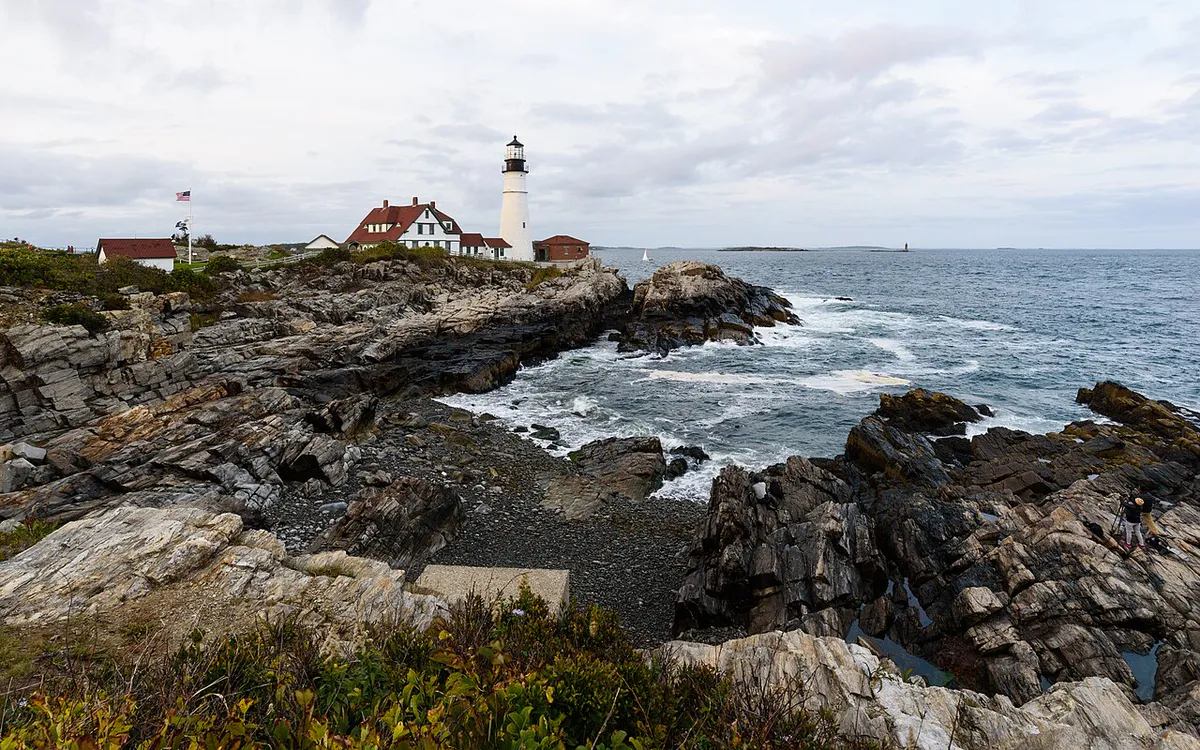
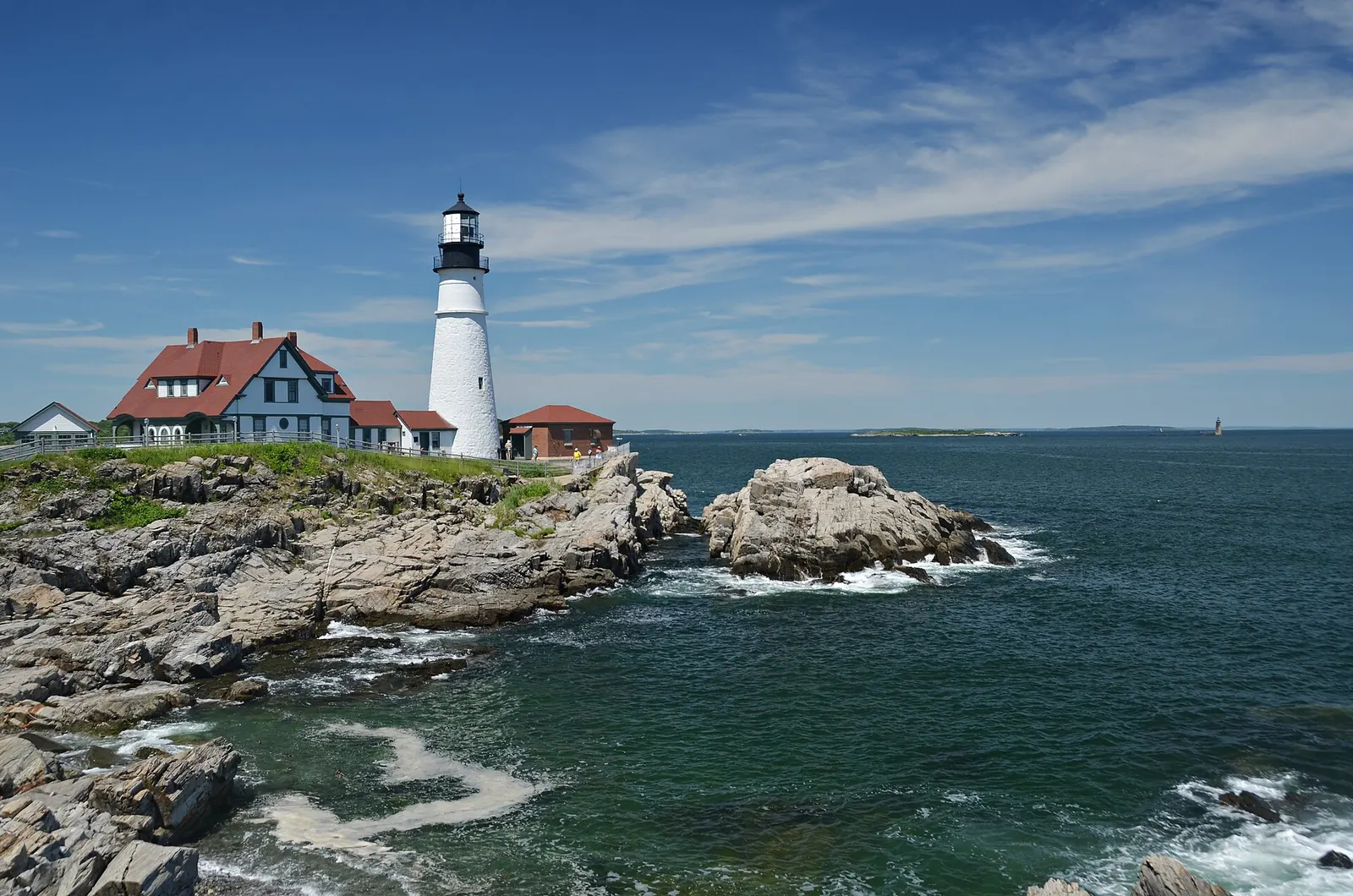
The lighthouse sits within Fort Williams Park in Cape Elizabeth, a 90-acre public park that wraps around the rocky headland. It is routinely called the most photographed lighthouse in the United States, and once you see it, the reason is obvious. The white tower, the red-roofed keeper’s quarters, the rocky shoreline, and the open Atlantic beyond make a composition that works from almost every angle and in every season.
Henry Wadsworth Longfellow was a frequent visitor and wrote his poem “The Lighthouse” after spending time here. The lighthouse has appeared on stamps, postcards, calendars, and paintings for over two centuries.
The History Behind the Light
Construction began in 1787, back when what is now Maine was still part of Massachusetts; Maine did not become its own state until 1820. Local masons built the tower from stone quarried nearby, and the finished light went into service on January 10, 1791. That makes it one of the oldest lighthouses in the country and one of the first completed under the newly formed federal government.
For most of its working life, a keeper and his family lived on the site, tending the lamp by hand, sounding the fog signal in thick weather, and logging the ships that passed. The keeper’s house that anchors the scene today is the same building those families once occupied, and it now holds the museum. The Coast Guard later automated the light, and it remains an active aid to navigation, which is why the tower itself stays closed to visitors.
What to See
The lighthouse tower itself is not open to the public except during Maine Open Lighthouse Day in September, when a limited number of visitors can climb to the top. The rest of the year, the tower is an active Coast Guard aid to navigation and stays closed.
The museum in the keeper’s house is the main indoor attraction. It covers the history of the lighthouse, Fort Williams, and Portland Harbor with artifacts, photographs, and displays about lighthouse keeping. The museum gift shop stocks books, prints, and local crafts.
Fort Williams Park surrounds the lighthouse and offers walking paths along the cliff edge, the ruins of a World War II-era military battery, picnic areas, a children’s playground, and wide open lawns. The Cliff Walk trail runs south from the lighthouse along the rocky shore, offering views of Casco Bay and the offshore islands. On clear days, you can see Mount Washington to the west.
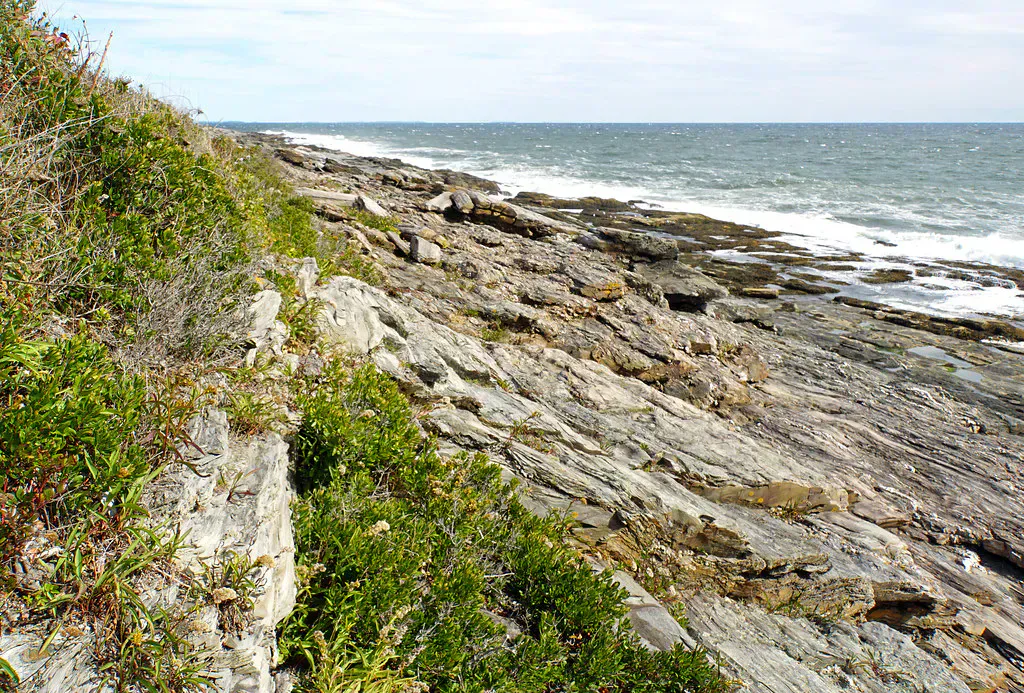
The rocks below the lighthouse are accessible but can be slippery. The view looking up at the tower from the rocks to the south is the classic Portland Head Light photograph.
Fort Williams Park Beyond the Lighthouse
The lighthouse gets the attention, but the park around it is worth an hour on its own. Fort Williams served as an active U.S. Army coastal defense post for much of the first half of the twentieth century, guarding the approach to Portland Harbor, before it was decommissioned and the town of Cape Elizabeth turned it into a public park. Reminders of that era are scattered across the grounds: concrete gun batteries you can walk right up to, and the stone ruins of the Goddard Mansion, a grand nineteenth-century home that now stands as an open shell.
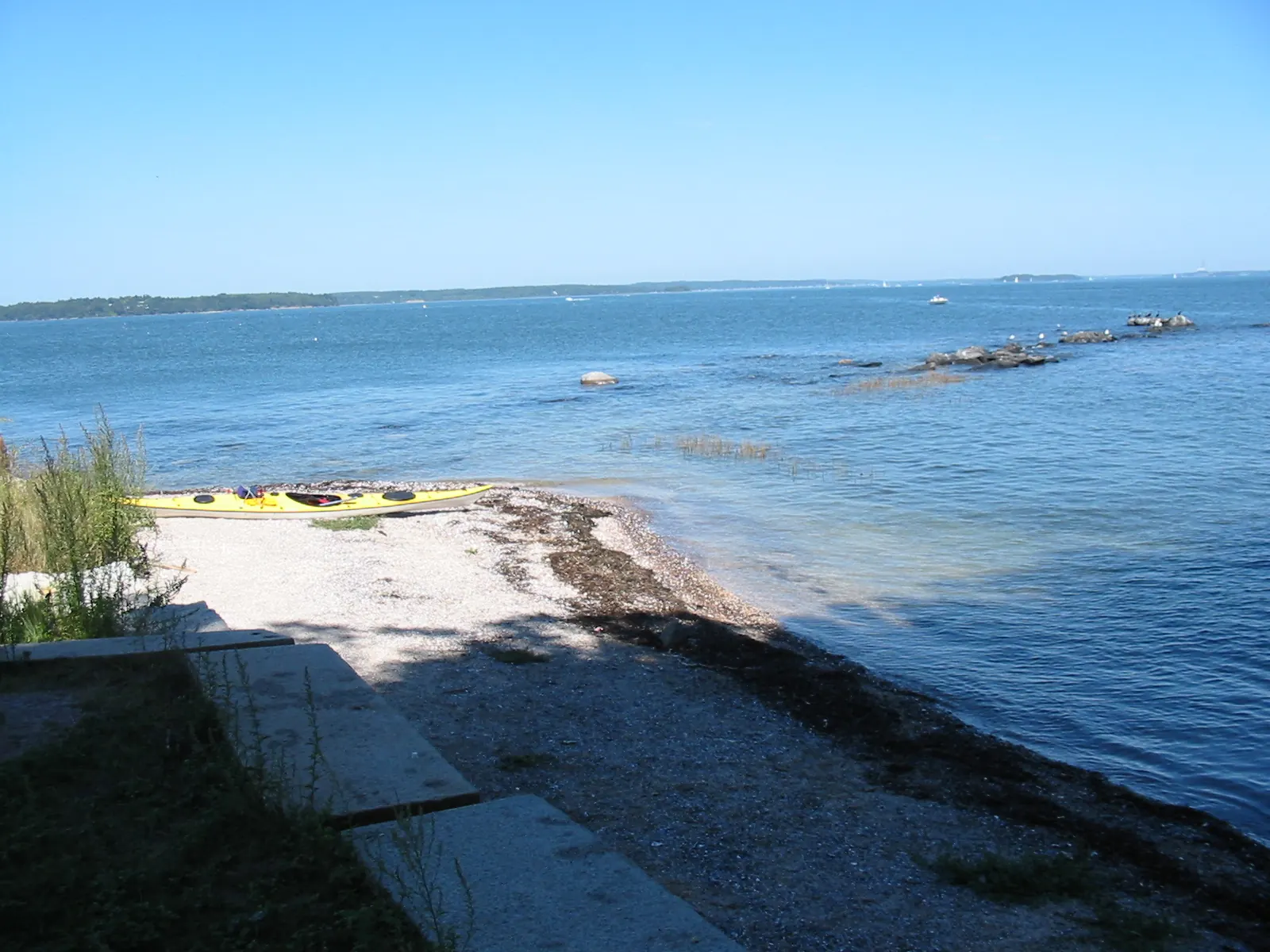
Beyond the military history, the park has wide lawns for kids and dogs, a children’s playground, picnic shelters, and a small stretch of rocky beach at Ship Cove where you can get down near the water. The Cliff Walk follows the shoreline south of the lighthouse and delivers the rockbound-coast views people picture when they think of Maine.
When to Go
Summer
Peak season with long days and warm weather. The park gets busy, especially on weekends. Early morning visits before 9am offer the best light for photography and fewer people.
Fall
Golden light, fall foliage framing the lighthouse, and thinning crowds. Maine Open Lighthouse Day in September is the one chance each year to climb the tower.
Winter
The park stays open and can be beautiful after a snowfall. The museum is closed. Dress for wind exposure on the headland.
Spring
Quiet season with wildflowers starting in May. Fog is common, which can create moody lighthouse photographs.
Photographing Portland Head Light
The classic shot comes from the rocky ledges just south of the tower, looking back at the white lighthouse and red-roofed keeper’s house with the open Atlantic behind them. Almost everyone ends up there, and for good reason, but it is worth walking the Cliff Walk to find angles most visitors skip.
Because the light faces east over the water, morning is the strongest time to shoot it. At sunrise the tower catches warm, direct light while the crowds are thin and the lot is nearly empty. Sunset works too, but by evening the sun has dropped behind the tower, so you are shooting into the light and working with a silhouette rather than a lit facade. Overcast days and the fog common in spring give you softer, moodier frames. Bring a wide lens for the full headland and something longer to isolate the tower against the sea.
Planning Your Visit
The one thing worth planning around at Fort Williams is the crowd. On summer weekends and through the fall foliage weeks, the lots near the lighthouse fill by mid-morning and the walkways get busy with tour groups and families. Arrive before nine and you often have the headland to yourself, with the best light for photos and the easiest parking as a bonus. Weekdays beat weekends in every season, and the shoulder weeks of May and late September stay quiet while the weather holds.
Plan on an hour or two for the lighthouse and the nearest overlooks, or a half day if you bring a picnic and walk the Cliff Walk. The paved paths around the lighthouse are relatively flat and manageable for most visitors, but the ledges below the tower are uneven and turn slick when wet, so wear real shoes if you intend to climb down for the head-on photograph. For current museum hours and any seasonal closures, check the official Fort Williams Park site before you go.
Practical Notes
Fort Williams Park has no entrance fee, but the main lots near the lighthouse are metered during the busy season: $6 covers the first two hours, then $2 per hour after that, paid at the meters by card only (an annual season pass runs $25). The overflow lot deeper in the park stays free year-round, and all parking is free in the off-season months. The museum in the keeper’s house charges $2 for adults and $1 for kids 6-18; children under 6 are free.
Restrooms are available near the parking area. The park has benches, picnic tables, and a large playground for kids. There is no food service in the park itself, but Cape Elizabeth and South Portland have plenty of dining options within a 10-minute drive.
The park is popular with joggers, dog walkers (leashes required), and families year-round. It rarely feels overcrowded because the grounds are so spacious.
Getting There
From downtown Portland, take Route 77 south into Cape Elizabeth. Turn left onto Shore Road and follow signs to Fort Williams Park. The drive takes about 15 minutes. There is ample free parking. From the Maine Turnpike (I-95), take Exit 45 and follow Route 1 south to Route 77.
Public transit is limited, but seasonal trolley services sometimes run from Portland’s Old Port to the lighthouse area. Check local transit options before your visit.
Nearby
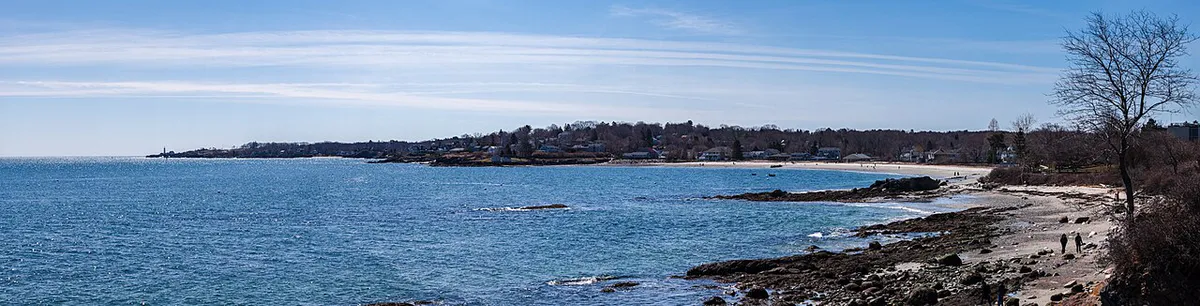
Portland Head Light pairs well with the other coastal stops clustered around Cape Elizabeth. A few minutes south on Route 77, Two Lights State Park offers rugged oceanfront ledges and picnic spots on the open Atlantic. Just beyond it, Crescent Beach gives you a sandy, swimmable beach to round out the trip, so you can take in a working lighthouse, a rocky headland, and a real beach in a single morning. All three sit within a short drive of one another, which makes this corner of Cape Elizabeth one of the easiest half-day loops on the southern Maine coast.
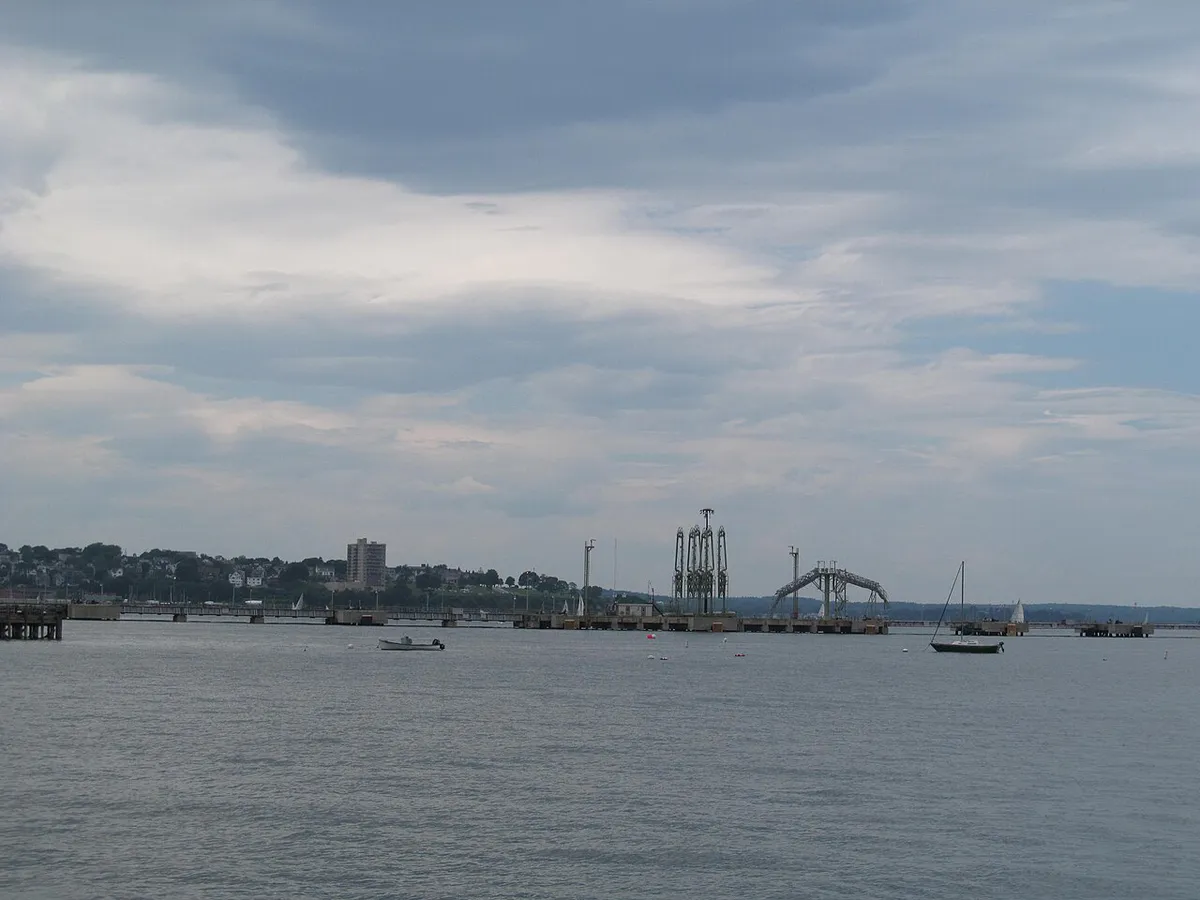
Portland Harbor holds two more lighthouses worth adding when you have a full day. Spring Point Ledge Lighthouse in South Portland is a caisson-style tower at the end of a 900-foot granite breakwater you can walk out on, with panoramic views of the harbor islands, and Bug Light, a few minutes away in Bug Light Park, is the small, ornate light modeled on a Greek monument, with Portland’s skyline across the water. Chasing more? Our Maine Lighthouse Road Trip covers 12 iconic lights from Kittery to Lubec.
FAQ
Can you climb Portland Head Light?
Only on Maine Open Lighthouse Day in September. The tower is an active Coast Guard aid to navigation and is closed to visitors the rest of the year.
Is Portland Head Light free to visit?
There is no entrance fee for Fort Williams Park, but the main parking lots are metered in season: $6 for the first two hours, then $2 per hour, paid by card at the meters. The overflow lot deeper in the park is free. The museum in the keeper's house is $2 for adults.
How far is Portland Head Light from downtown Portland?
About 15 minutes by car. Take Route 77 south to Cape Elizabeth and follow signs to Fort Williams Park.
Are dogs allowed at Portland Head Light?
Yes, dogs are allowed on leash throughout Fort Williams Park.
Why is Portland Head Light so famous?
It is the oldest lighthouse in Maine (1791), was authorized by George Washington, inspired a Longfellow poem, and is widely considered the most photographed lighthouse in the United States.
What are the hours at Portland Head Light?
Fort Williams Park, where the lighthouse stands, is open year-round from dawn to dusk and is free to enter. The tower itself is not open to the public, but the museum and gift shop in the former keepers' quarters are open daily from Memorial Day through mid-October.
Is there parking at Portland Head Light?
Yes. Fort Williams Park has large lots near the lighthouse, metered in season ($6 for the first two hours, then $2 per hour, card only), plus a free overflow lot deeper in the park. Lots fill midday on summer weekends and during fall foliage, so arrive early in the morning or visit on a weekday.
When was Portland Head Light built?
Construction was authorized by George Washington, and the lighthouse was first lit in 1791, making it the oldest lighthouse in Maine and one of the oldest in the United States. It has guided ships into Casco Bay for more than two centuries.
What is the best time to visit Portland Head Light?
Early morning is ideal: sunrise lights the tower from the east, crowds are thin, and parking is easy. Weekdays beat weekends, and late September into October adds fall color. Sunset is beautiful too, though the light falls behind the tower.