A Forest from Another Time
Step into Crockett Cove Woods on a foggy morning and you enter a landscape that feels transplanted from the Pacific Northwest or a Tolkien novel. A hundred acres of old-growth spruce and fir stand draped in thick curtains of moss and lichen, their roots gripping mossy boulders beneath a canopy so dense that the forest floor exists in perpetual twilight. This is a fog forest, a coastal forest type sustained by the heavy moisture that rolls off Penobscot Bay and settles into the cove, creating conditions that support one of the richest communities of bryophytes (mosses and liverworts) in the northeastern United States.
The Nature Conservancy acquired and protects Crockett Cove Woods because of this bryophyte community. Over 200 species of mosses, liverworts, and lichens have been identified here, many of them rare or at the edge of their range. The forest has never been logged commercially, and the undisturbed conditions have allowed these slow-growing, moisture-dependent organisms to develop a diversity that takes centuries to establish.
For visitors, the science is secondary to the atmosphere. Walking through Crockett Cove Woods is a sensory experience: the green-on-green light, the soft give of the moss underfoot, the dripping silence broken only by the occasional call of a chickadee or the distant sound of the cove.
The Trail
A self-guided nature trail loops through the preserve, approximately one mile in length. The trail is marked with numbered posts that correspond to a nature guide brochure available at the trailhead. The walk is easy and flat, following well-worn paths through the forest and along the edge of the cove.
The trail passes through several distinct zones:
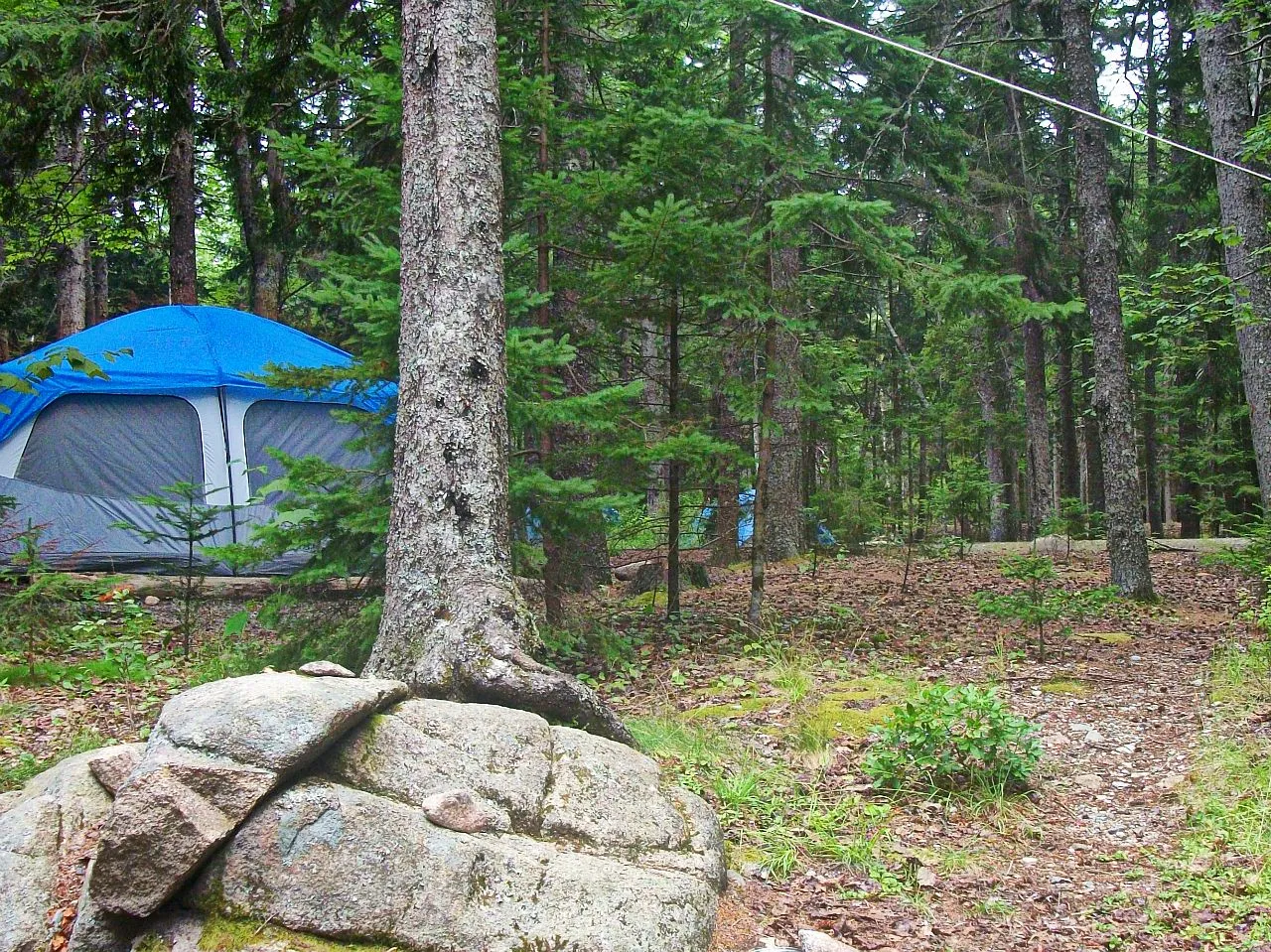
The Spruce-Fir Interior: The heart of the forest, where mature red spruce and balsam fir grow closely together, their interlocking canopy creating the dark, humid conditions that bryophytes need. Every surface is covered in moss: tree trunks, branches, rocks, fallen logs, even the trail edges. The effect is of walking through a green cave.
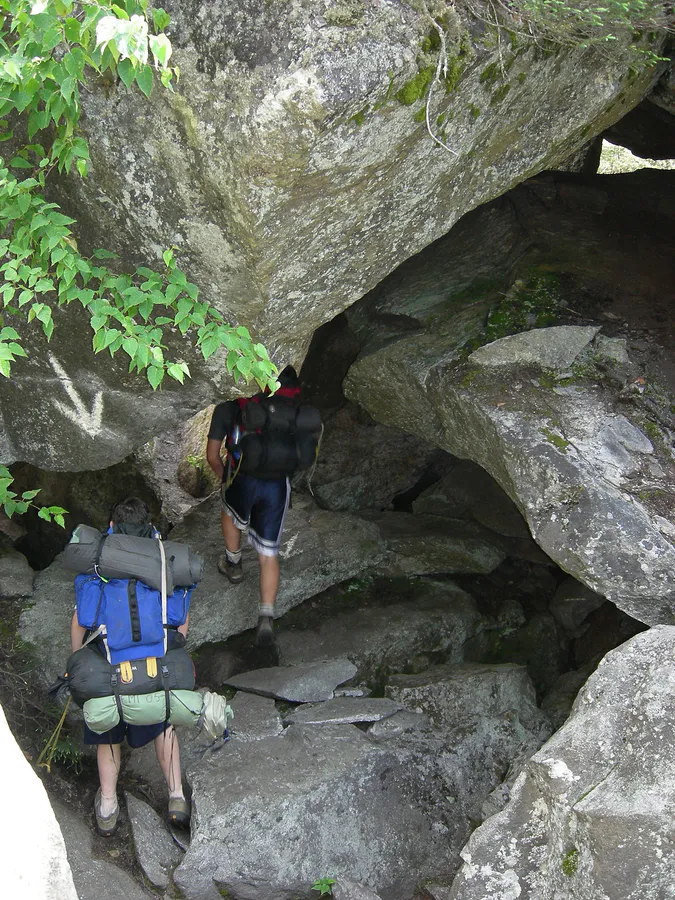
The Boulder Field: A section where glacial boulders are scattered through the forest, each one wearing a thick coat of moss and lichen. The spaces between boulders create microhabitats for ferns and small woodland plants.
The Cove Edge: The trail emerges briefly at the edge of Crockett Cove, a small saltwater inlet. The transition from deep forest to open water is abrupt, and the light change is dramatic. The cove is a quiet backwater where herons sometimes stand and harbor seals occasionally surface.
The Bryophytes
The moss and lichen diversity at Crockett Cove Woods is the scientific reason for the preserve’s protection, and appreciating it requires slowing down and looking closely. Bring a hand lens if you have one; it transforms the walk.
Sphagnum mosses form hummocks in the wetter areas. Hypnum mosses cover every horizontal surface in feathery sheets. Old man’s beard lichen (Usnea) hangs from branches like gray-green tinsel. Lungwort lichen (Lobaria pulmonaria) grows on tree trunks, its leaf-like thallus indicating centuries-old forest conditions and clean air.
The presence of lungwort lichen is particularly significant. This species is sensitive to air pollution and is used as an indicator of forest ecosystem health. Its abundance at Crockett Cove Woods indicates an exceptionally clean and stable environment.
When to Go
Summer
Fog is most frequent. The forest is lush and green. Wildflowers in the small clearings. Mosquitoes present in the damp interior, bring repellent.
Spring
Mosses are bright green with spring moisture. Migrant birds pass through the forest. Trail can be muddy.
Fall
Hardwood edges show some color. The fog forest remains green year-round. Fewer visitors. Mushrooms appear on fallen logs.
Winter
The preserve is open. The evergreen canopy and mosses remain green under snow. Trail may be icy. Very quiet and atmospheric.
Getting There
From the town of Deer Isle, take Route 15A south toward Sunset. Turn right onto Whitman Road and follow it to Fire Lane 88 (also labeled as the preserve access). The small parking area on the left holds about five cars. The trailhead is at the end of the parking area with a Nature Conservancy sign and brochure box.
From the Deer Isle Bridge, the drive is about 15 minutes. The roads are narrow and winding; take it slowly.
Checklist
What to Bring
- Pick up the self-guided nature brochure at the trailhead
- Bring a hand lens for close-up moss and lichen viewing
- Visit on a foggy day for the full fog-forest experience
- Camera for the atmospheric light conditions
- Wear shoes with good traction for damp surfaces
- Stay strictly on the marked trail to protect bryophytes
- Apply bug repellent for the damp forest interior
- Allow 45 minutes to 1 hour for the trail loop
- Combine with a visit to Haystack Mountain School nearby
- Look for lungwort lichen on tree trunks. It indicates ancient forest
FAQ
What is a fog forest?
A coastal forest sustained by frequent fog that provides moisture beyond what rainfall alone delivers. The heavy humidity supports dense moss, lichen, and liverwort communities. Crockett Cove Woods on Deer Isle is one of the best examples in Maine.
Is there a fee to visit Crockett Cove Woods?
No. The preserve is free and open year-round, managed by The Nature Conservancy.
How long is the trail?
The self-guided loop is approximately one mile. Most visitors spend 45 minutes to an hour, depending on how closely they examine the mosses and lichens.
Why are the mosses and lichens important?
Over 200 species of bryophytes and lichens grow here, many rare or at the edge of their range. The undisturbed old-growth conditions have allowed centuries of slow accumulation. This level of bryophyte diversity is exceptionally rare in New England.
Can I visit in winter?
Yes. The preserve is open year-round. The evergreen forest and mosses remain green under snow. The trail may be icy or snow-covered, so wear appropriate footwear.
While on Deer Isle, visit the Haystack Mountain School of Crafts campus for its striking modernist architecture set into the coastal forest.