







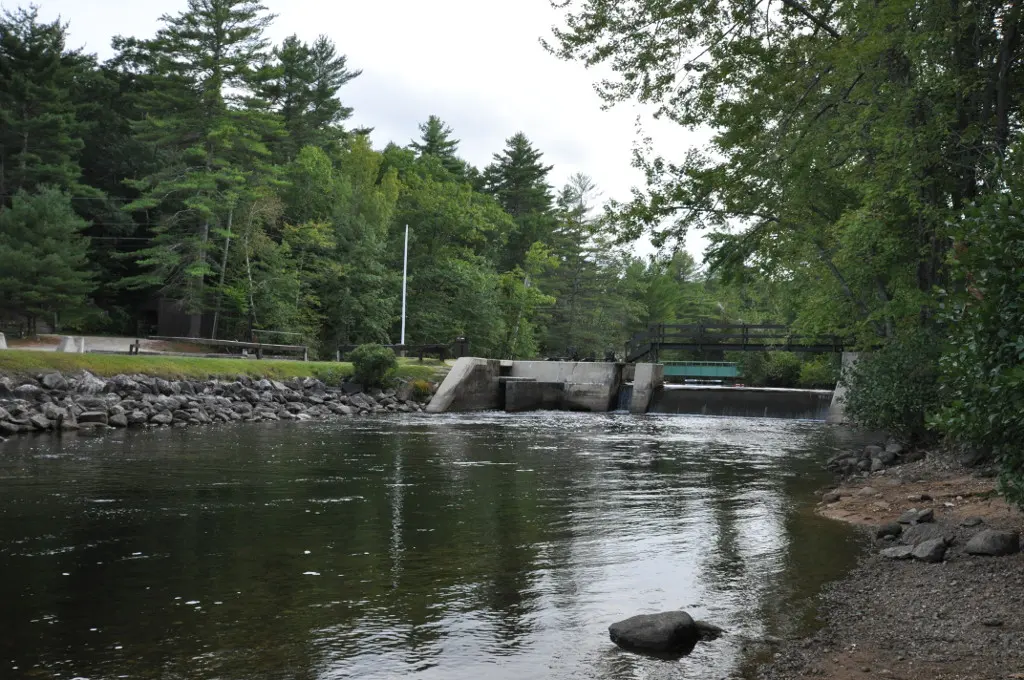
A Working Piece of 1830s Engineering
Songo Lock sits on the Songo River in Naples. Since 1830 this hand-operated lock has raised and lowered boats between Sebago Lake and Brandy Pond, which connects to Long Lake. It is the last surviving lock of the Cumberland and Oxford Canal, a 50-mile waterway that once linked Portland Harbor to the interior lakes and towns as far north as Harrison. Watching a boat pass through is a look back at a time when canals, not railroads or highways, moved goods and people through inland Maine.
- 1828: Digging begins Construction starts on the Cumberland and Oxford Canal.
- 1830: Canal opens The canal is finished at a cost of $206,000.
- The busy years More than 100 canal boats, each about 65 feet long, haul lumber out and supplies in, towed by horses and oxen on the canal and sailed across the lakes.
- 1872: Last cargo The railroad makes the canal obsolete. Songo Lock survives and now serves boaters moving between Sebago Lake and the Long Lake chain.
What to See
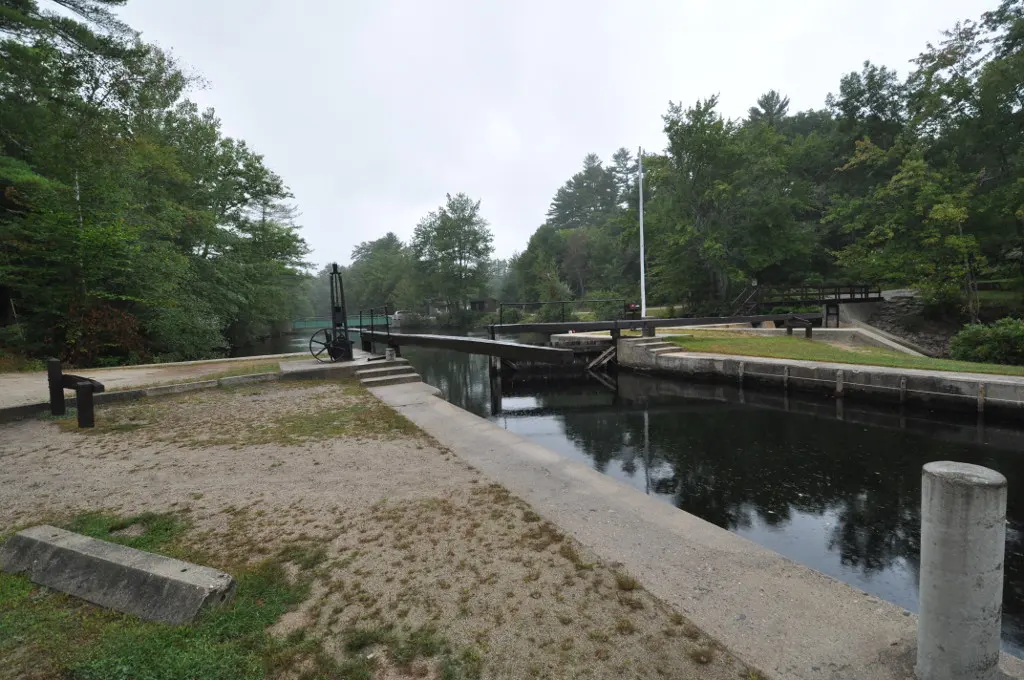
The lock itself is the attraction: a stone masonry chamber 90 feet long and 26 feet wide, built on one side of a small artificial rubblestone island in the river. The stonework is original, nearly 200 years old and still holding. The wooden gates at each end are replaced from time to time but follow the original design.
A lockkeeper works the gates by hand with the same basic mechanism used for nearly 200 years, filling or draining the chamber to move boats the roughly one and a half feet between the two water levels. During operating hours you can stand on the bank and watch each boat go through.
- Chamber
- 90 feet long, 26 feet wide
- Lift
- About 1.5 feet
- Power
- By hand, no electricity
- Time per boat
- 10 to 15 minutes
- Boat enters A boat moves into the stone chamber.
- Gate closes The lockkeeper closes the downstream gate and opens the upstream sluices.
- Water evens out The water in the chamber rises (or falls, depending on direction) until it matches the other side.
- Boat leaves The far gate opens and the boat continues on its way.
On busy summer days boats may queue up, and the lockkeeper cycles through them steadily. Kids love watching the water rise and fall, and adults appreciate a system that has worked without electricity or modern machinery for almost two centuries. The river runs through a quiet, shaded, wooded corridor, with a small parking area and footpath for spectators.
If you have a kayak or canoe, paddle through the lock yourself. The $7.50 per-boat fee is worth it. Floating into the stone chamber, watching the water change around you and drifting out the other side is something few places in New England offer.
When to Go
Summer
The lock is in full operation with the most boat traffic. Best chance to see the lock in action. Can be busy on hot weekends.
Fall
Lock closes after Labor Day, but the site is still accessible and the fall foliage along the Songo River is beautiful.
Winter
The river and lock are frozen. The site is quiet and largely inaccessible.
Spring
The river is running high. The lock does not operate until mid-June. The site is accessible but there is not much to see without boat traffic.
Practical Notes
Visit mid-morning on a weekday in July or August to see boats pass without the weekend crowds. Weekend lines of waiting boats are fun to watch too, but parking gets tighter and the bank more crowded.
- $7.50 Boat passage Per boat, per passage Set by Maine state parks.
- Free Watching From the bank The lot is small and fills on busy summer weekends; there is more parking along the road.
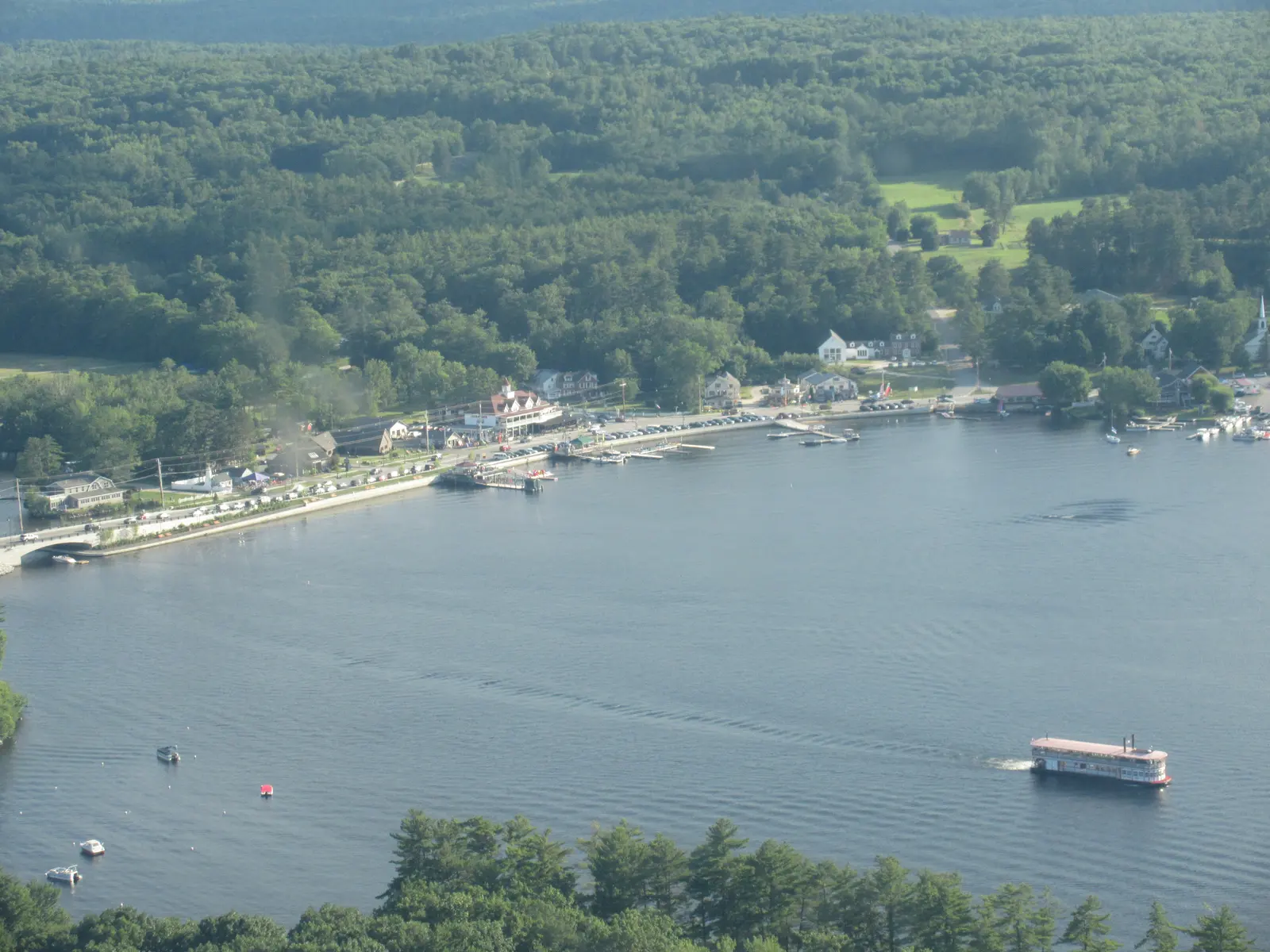
Naples village is about a 5-minute drive from the lock, with restaurants, ice cream shops, a general store and other lakeside services. The Naples Causeway on Long Lake is the town’s social center in summer.
The Songo River Queen, a replica paddle steamer, used to pass through the lock on excursion cruises from Naples. Check locally for current schedules.
- Naples village
- About 5 minutes away
Getting There
- Take Route 302 west From Portland, drive through Windham and Raymond to Naples, roughly 45 minutes.
- Follow the signs The lock is on the Songo River just off Route 302, and signs in Naples point the way.
- Turn onto Songo Lock Road Follow it to the parking area. The lock is at 43.9323, -70.5770.
- From Bangor Plan about 3 hours.
FAQ
Is Songo Lock still working?
Yes. The lock operates daily from mid-June through Labor Day, 9am to 5pm. Boats pass through regularly during the season.
How old is Songo Lock?
The lock was built in 1830 as part of the Cumberland and Oxford Canal. It is the only surviving lock from the original 27 that made up the canal system.
Can I take my boat through the lock?
Yes. Any boat that fits within the 90-foot by 26-foot chamber can pass through during operating hours. The fee is $7.50 per boat.
Is there a fee to watch?
No. Spectators can watch for free from the bank alongside the lock. Only boats passing through pay the $7.50 fee.
How does the lock work?
The lockkeeper opens and closes gates and sluices by hand. Water fills or drains from the stone chamber, raising or lowering the boat about one and a half feet to match the water level on the other side. No electricity or pumps are used.
For more in the Lakes Region, see our guides to Sebago Lake and Long Lake.