














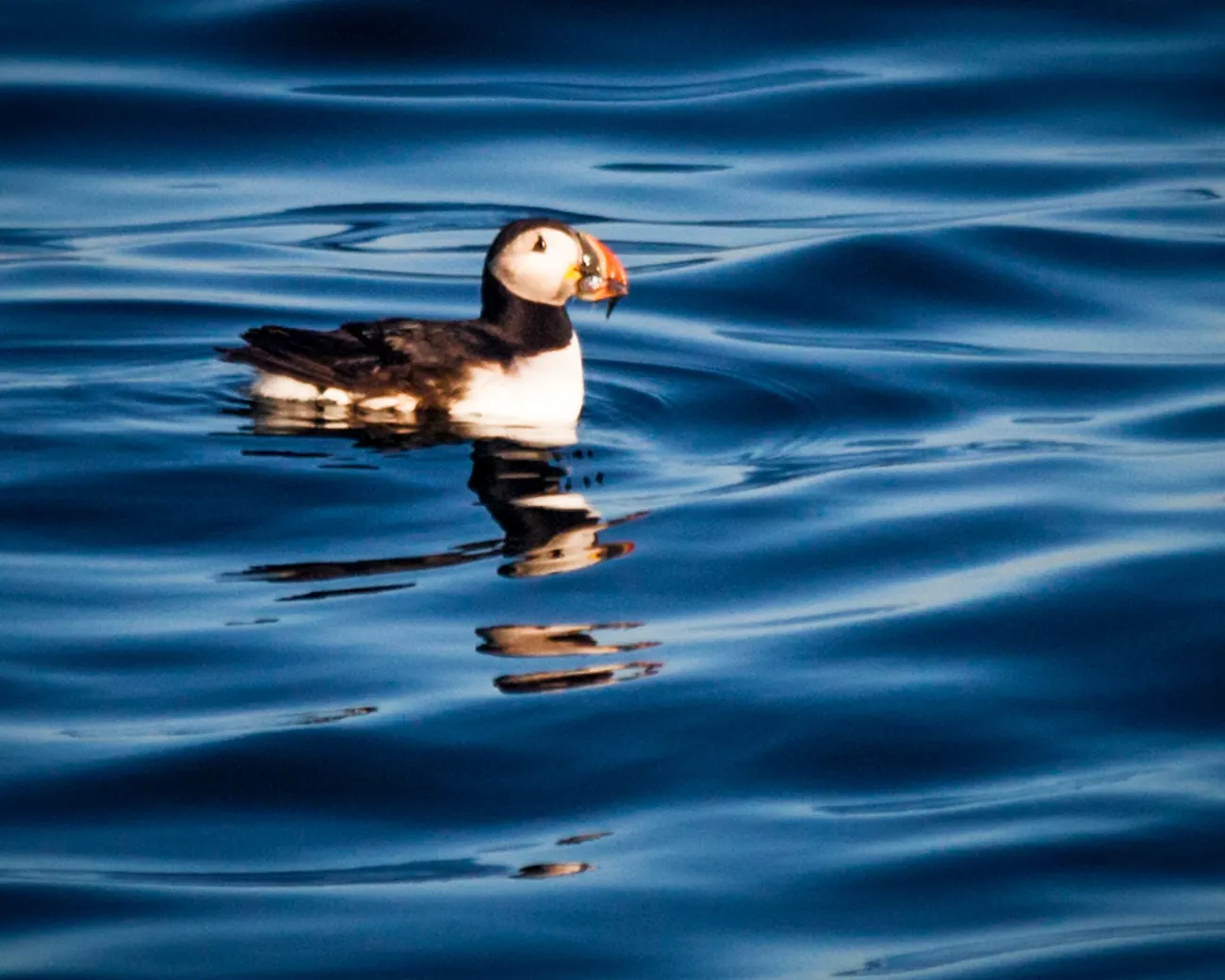
More than 4,000 Atlantic puffins spend the summer around Maine’s offshore nesting islands. That sounds like a generous number until you look at the map. The birds are concentrated on five remote colonies, none visible as a nesting colony from the mainland, and only one Maine departure offers a chance to step ashore. For everyone else, seeing puffins means choosing the right boat and going during a short season.
The practical question is not simply where the birds are. It is which experience fits the trip you can actually book: a tightly limited landing from Cutler, a cruise around Eastern Egg Rock from New Harbor or Boothbay Harbor, or a Bar Harbor whale-watch trip that adds Petit Manan puffins from the water. Those are different outings, with different booking pressure and very different views.
Which Puffin Trip Fits?
| If you want | Choose | What actually happens |
|---|---|---|
| The only landing option | Machias Seal Island from Cutler | A small authorized trip attempts to land; weather may limit the boat to circling the island |
| A dedicated cruise with realistic same-season availability | Eastern Egg Rock from New Harbor or Boothbay Harbor | The boat views puffins around the colony; passengers do not land |
| Puffins added to an Acadia -area boat day | Petit Manan from Bar Harbor | Whale-watch boats view puffins from the water with no landing |
The first row is the rarest experience, but it is not automatically the right answer. The 2026 Machias Seal Island season is already sold out. Eastern Egg Rock cruises are therefore the practical choice for most people planning during the current season, while the Bar Harbor option makes geographic sense for an Acadia itinerary.
Maine’s Five Puffin Colonies
Maine’s summer puffins gather at five named colonies spread from Muscongus Bay to the Down East coast:
- Eastern Egg Rock lies in Muscongus Bay and is viewed on cruises from New Harbor and Boothbay Harbor. It is a boat-viewing colony; visitors do not land.
- Seal Island lies in outer Penobscot Bay. It is a nesting colony, not one of the regular landing experiences described here.
- Matinicus Rock is also in outer Penobscot Bay. Like Seal Island, it belongs on the colony map but is not a dependable substitute for a scheduled Eastern Egg Rock or Machias Seal Island trip.
- Machias Seal Island is the Down East colony reached by the only Maine tour that attempts a visitor landing.
- Petit Manan Island is the Down East colony seen from Bar Harbor whale-watch boats, with viewing from the water only.
Knowing all five prevents a common planning mistake. A colony name in a birding account does not necessarily mean a regular public tour goes there, and a tour that approaches an island does not imply permission to step ashore. Build the trip from an actual departure product, not from the colony list alone.
Machias Seal Island: The Only Landing Tour (checked July 2026)
Bold Coast Charter Company runs from Cutler aboard the Barbara Frost. The family-run company has operated for more than 30 years and holds U.S. Fish and Wildlife Service authorization for the Machias Seal Island trip. Capacity is only about 15 passengers, with one trip daily during the operating season. That small scale is why booking lead time matters so much.
When a landing succeeds, visitors go ashore for the close colony experience that distinguishes Machias Seal Island from every cruise-only choice. But a ticket is not a promise that the sea will cooperate. Landings are weather-dependent. On some days, the Barbara Frost can only circle the island, turning the trip into boat viewing rather than a shore visit.
Island trips conclude in early August each season. For 2026, the season was sold out as of July 2026. Anyone planning a future landing should think in months, not days: follow the operator’s reservation timing and book well before a summer Maine itinerary is otherwise complete.
Machias Seal Island landings depend on weather and sea conditions. Plan emotionally and practically for the possibility that the boat will circle instead. The authorization controls access; the conditions control whether access is safe that day.
The sold-out season is not a reason to abandon a puffin trip. It is a reason to separate the goal of seeing puffins from the goal of landing beside a colony. Cruise-only trips remain the realistic same-season option and still put visitors in the active waters around nesting islands.
Eastern Egg Rock: The Practical Puffin Cruise (checked July 2026)
Eastern Egg Rock sits in Muscongus Bay and supports the most straightforward dedicated puffin-cruise choices in this guide. Hardy Boat Cruises departs from New Harbor. Cap’n Fish’s Cruises runs the Audubon puffin cruise from Boothbay Harbor. Both view the colony from the boat; neither lands on Eastern Egg Rock.
That distinction should shape expectations, not diminish the trip. Puffins spend time on the water, fly between feeding areas and the island, and move around the colony. In June and July, adults repeatedly ferry food to chicks, creating the most visible, continuous activity of the season. From a boat, the experience is movement: birds on the surface, fast low flights, and repeated approaches to the island.
New Harbor is the direct geographic fit for a Pemaquid Peninsula visit. Boothbay Harbor works for travelers already using that town as a Midcoast base. Choose between them by departure location, available date, and current operating details rather than treating one operator as a universally better experience.
If you are planning in the same season you hope to travel, start with Eastern Egg Rock availability. Treat a future Machias Seal Island landing as a separate, early-booking trip rather than holding the entire Maine itinerary open for a cancellation.

Petit Manan from Bar Harbor
Bar Harbor whale-watch boats can show passengers puffins around Petit Manan Island. There is no landing. This is best understood as a puffin opportunity folded into a broader boat trip, not the same product as a dedicated Eastern Egg Rock cruise or the small Machias Seal Island landing attempt.
The advantage is location. Travelers already staying in Bar Harbor do not need to shift their base to New Harbor, Boothbay Harbor, or Cutler. If a weekend in Bar Harbor or three-day Acadia itinerary has room for a boat excursion, Petit Manan is the colony that fits naturally.
The tradeoff is focus. A whale-watch route has more than one purpose, and wildlife never follows a visitor’s checklist. Ask the operator what the current trip includes, how puffin viewing fits the route, and what happens when weather changes the offshore plan.
Puffin Season and Best Timing (checked July 2026)
Tour boats generally run from May through mid-August. The strongest practical window is June and July, when adults are carrying food back to chicks and colony traffic is active. By late August, puffins are essentially gone from the nesting islands and back on the open Atlantic.
- May: The tour season begins, but exact start dates depend on operators and conditions.
- June: One of the two best viewing months, with adults actively traveling to and from colonies.
- July: Peak practical timing for chick-feeding activity, paired with the greatest booking pressure.
- Early to mid-August: Some tours continue, but the window is closing. Machias Seal Island trips finish in early August.
- Late August onward: Do not plan a colony tour around seeing puffins. The birds have essentially departed.
The calendar answers only half the question. A June date with rough water can produce a very different outing from a calm July date, and no operator can guarantee wildlife position or behavior. Give yourself flexibility if seeing puffins is a priority rather than a casual add-on.
Booking Lead Time: What 2026 Teaches
The landing tour and the cruise tours should not share one booking strategy.
For Machias Seal Island, book months ahead. Capacity is about 15, there is one trip daily, the season ends in early August, and the entire 2026 season was already sold out by July. This is a scarce permit-and-capacity experience.
For Eastern Egg Rock, search the New Harbor and Boothbay Harbor departure choices as soon as your travel dates are firm. These cruises are the realistic alternative when landing inventory is gone. Flexibility across a few days helps because weather affects boat operations.
For Petit Manan, begin with the Bar Harbor whale-watch schedule and confirm that the trip you are considering includes the relevant waters. Do not assume every boat from the same harbor follows the same route.
Choose the colony by where you are sleeping. New Harbor and Boothbay Harbor serve a Midcoast plan; Cutler requires a Down East commitment; Bar Harbor makes sense when Acadia is already the base. A shorter drive before an early boat is often worth more than a theoretically perfect itinerary.
What You Will Actually See
Puffins are compact seabirds in a large moving landscape. On a cruise, they may sit low on the water, disappear on dives, cross the bow in quick flight, or carry food toward the island. They will not look as large to the naked eye as they do in a close photograph. Binoculars help, but spend time watching without a screen as well; following the birds’ repeated paths often reveals more than chasing one frame.
June and July offer the clearest colony story because adults are feeding chicks. The action is not a staged gathering on one exposed rock. It is traffic between sea and nest: birds arriving, departing, floating, and vanishing against a busy background.
The same islands and waters also hold other seabirds. Existing Maine tour accounts regularly note razorbills, common murres, black guillemots, Arctic and common terns, along with harbor seals around ledges. Which ones appear varies by colony and day. Let the crew identify what is present rather than turning that list into a guarantee.
Why Eastern Egg Rock Matters
Eastern Egg Rock is more than a convenient cruise destination. The existing story on this page begins in 1973, when Steve Kress and a team connected with Audubon’s Hog Island program moved young puffins from Newfoundland and raised them on Eastern Egg Rock. The idea was that birds would remember the island and eventually return to breed.
Returns began in 1977, and the first nesting pairs followed in 1981. The project became a model for restoring seabird colonies through social attraction. That history adds context to the boat ride: the colony visitors see today is tied to decades of patient work rather than an uninterrupted natural spectacle.
It also explains why access is controlled. Puffin viewing depends on keeping nesting islands viable. Remaining on the boat at Eastern Egg Rock is part of the experience’s conservation logic, not a lesser ticket tier.
Can You See Puffins Without a Boat?
Not as a reliable colony experience. All five colonies are on offshore islands, and the practical visitor options in this guide travel by boat. There is no mainland overlook where the nesting colonies become a dependable binocular view.
That answer is useful because it prevents wasted driving. Quoddy Head, Acadia, and the Pemaquid coast offer exceptional ocean views, but standing on shore in those places is not a substitute for reaching the colony waters. If puffins are the goal, reserve the boat first and build the shore itinerary around it.
What to Bring
Puffin Tour Packing List
- Binoculars for finding small birds on open water
- Camera with useful reach, if photography is part of the trip
- Warm layer and windproof outer layer
- Waterproof shell for spray or changing weather
- Closed-toe shoes with secure footing on a wet deck
- Sun protection
- Water and any food the operator allows
- Motion-sickness plan made before departure, if needed
- Dry protection for phone, camera, and travel documents
Open water is cooler and windier than the harbor. Dress for the boat, not the parking lot. If you are prone to motion sickness, follow the directions for your chosen remedy before the trip and ask the operator where the vessel’s motion is least pronounced. For a landing attempt, follow every instruction about what may be carried ashore.
Frequently Asked Questions
What is the best place to see puffins in Maine?
It depends on the experience. Machias Seal Island is the only landing tour, Eastern Egg Rock has dedicated cruise viewing from New Harbor and Boothbay Harbor, and Petit Manan fits travelers taking a Bar Harbor whale-watch boat.
What is the best month for a Maine puffin tour?
June and July are the strongest practical months. Adults are ferrying food to chicks, and tour operations are within their main season. Puffins are essentially gone from the colonies by late August.
Can I land on a Maine puffin island?
Only the authorized Machias Seal Island tour from Cutler attempts a landing. Even there, weather may limit the trip to circling the island. Eastern Egg Rock and Petit Manan are viewed from the boat.
Is the Machias Seal Island tour available in 2026?
The 2026 Bold Coast Charter season was sold out as of July 2026. Future visitors should book months ahead and remember that a reservation still does not guarantee weather will permit a landing.
Which operators cruise to Eastern Egg Rock?
Hardy Boat Cruises departs from New Harbor, and Cap'n Fish's Cruises runs the Audubon puffin cruise from Boothbay Harbor. Both view the colony from the water without landing.
Can I see puffins while staying in Bar Harbor?
Yes. Bar Harbor whale-watch boats can view puffins around Petit Manan Island. It is a no-landing option incorporated into a broader boat trip, so confirm the current route with the operator.
How many puffins summer in Maine?
More than 4,000 puffins summer across Maine's five colonies: Eastern Egg Rock, Seal Island, Matinicus Rock, Machias Seal Island, and Petit Manan Island.