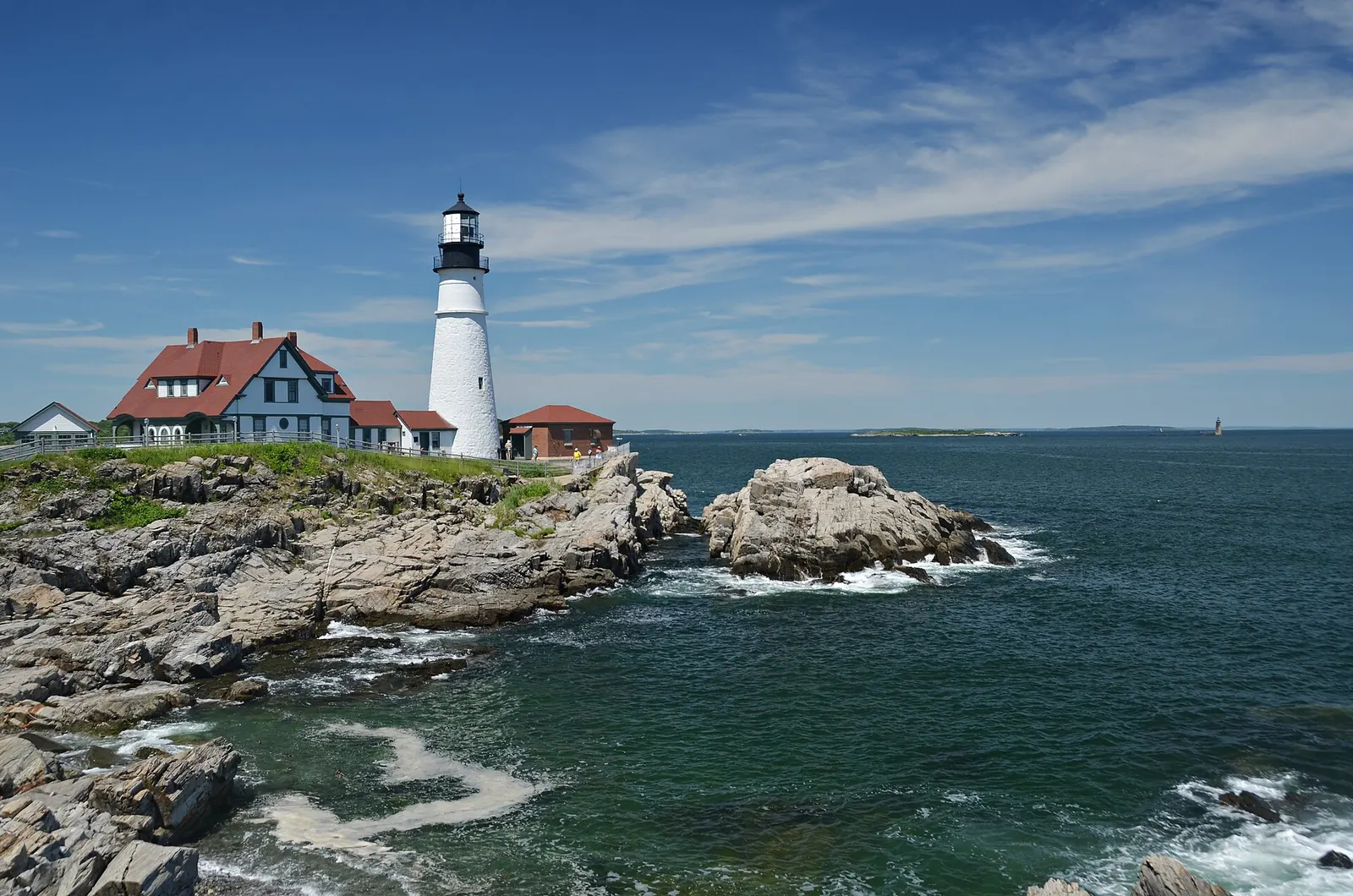
The Lighthouse Edward Hopper Made Famous
Cape Elizabeth Light, universally known as Two Lights, is one of the few lighthouse stations in Maine that began with twin towers. When the station was established in 1828, two stone towers were erected roughly 300 yards apart on the cape’s rocky headland, one displaying a fixed light and the other a flashing light. The dual beacons helped mariners distinguish Cape Elizabeth from other lights along the coast and fix their position when approaching Portland Harbor from the south.
The original stone towers deteriorated over the decades, and in 1874 the U.S. Lighthouse Service replaced them with the current pair of 67-foot cast-iron towers. For nearly fifty years, both towers operated together, their twin lights a defining feature of the cape. In 1924, the Lighthouse Service decided the western tower was redundant and deactivated it. The east tower remains active today, its automated light flashing a distinctive pattern of four white flashes every 15 seconds, visible up to 15 nautical miles. The focal plane sits 129 feet above sea level.
The west tower and keeper’s house became a private residence. The east tower and its grounds remain Coast Guard property and are not open to the general public. But the station’s legacy extends far beyond navigation. In the summers of 1927 and 1929, the American painter Edward Hopper rented a house near the lighthouse and painted several views of the towers, the keeper’s house, and the surrounding landscape. His oil painting “The Lighthouse at Two Lights” (1929) became one of his most celebrated works and was featured on a U.S. postage stamp in 1970 commemorating the 150th anniversary of Maine’s statehood. The painting now hangs in the Metropolitan Museum of Art in New York.
What to See
The east tower of Cape Elizabeth Light is an active Coast Guard aid to navigation, and the lighthouse grounds are not open to the public. You cannot walk up to the tower or enter the property. However, the lighthouse is visible from Two Lights State Park, which sits adjacent to the light station on the same stretch of coastline.
Two Lights State Park is a 41-acre park with rocky shoreline, picnic areas, and walking paths along the cliff tops. The park does not surround the lighthouse, but views of the east tower are available from several points within the park and from the roads in the neighborhood. Two Lights Road, which leads to both the park and the lighthouse, offers roadside views of the towers as you drive past.
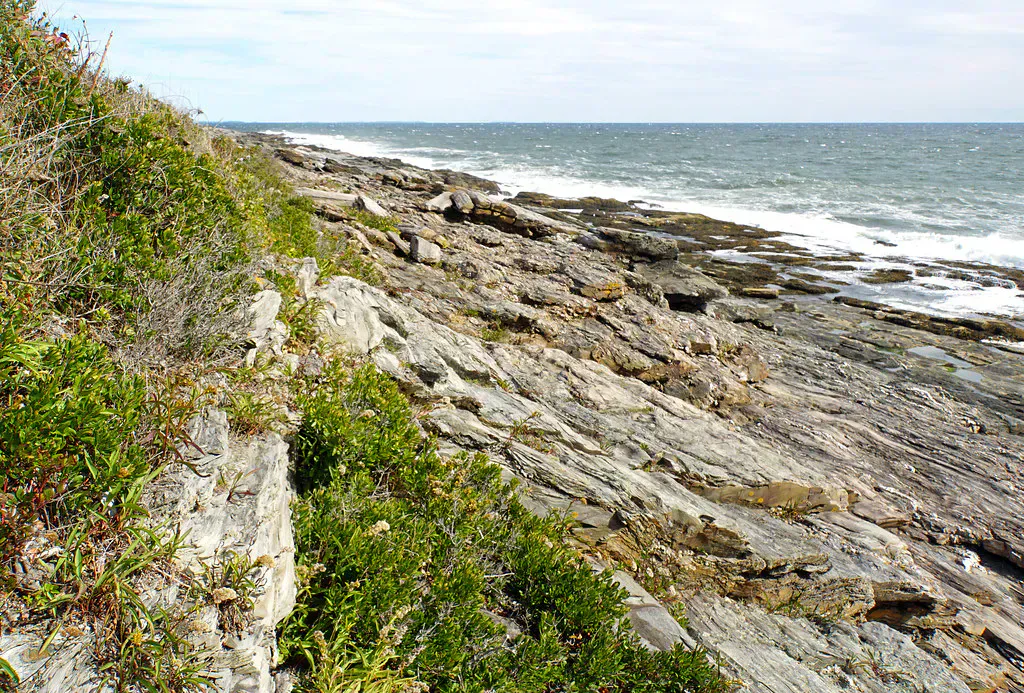
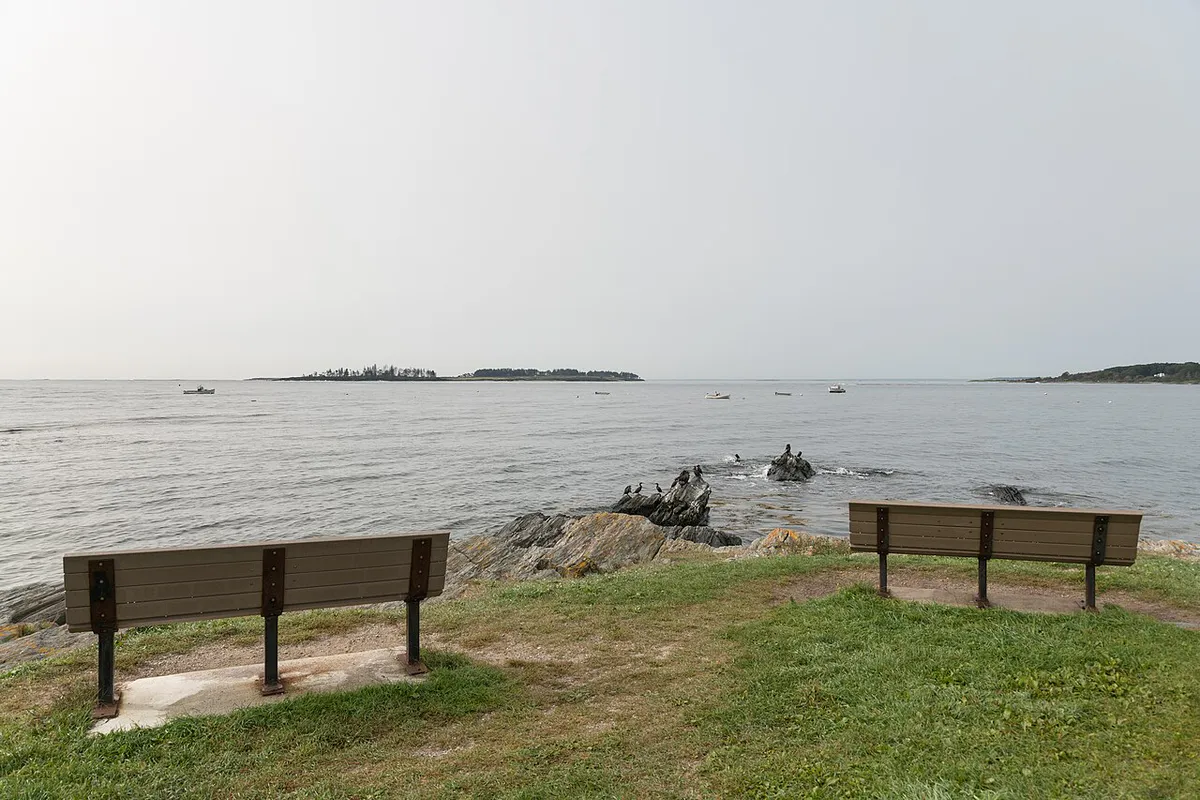
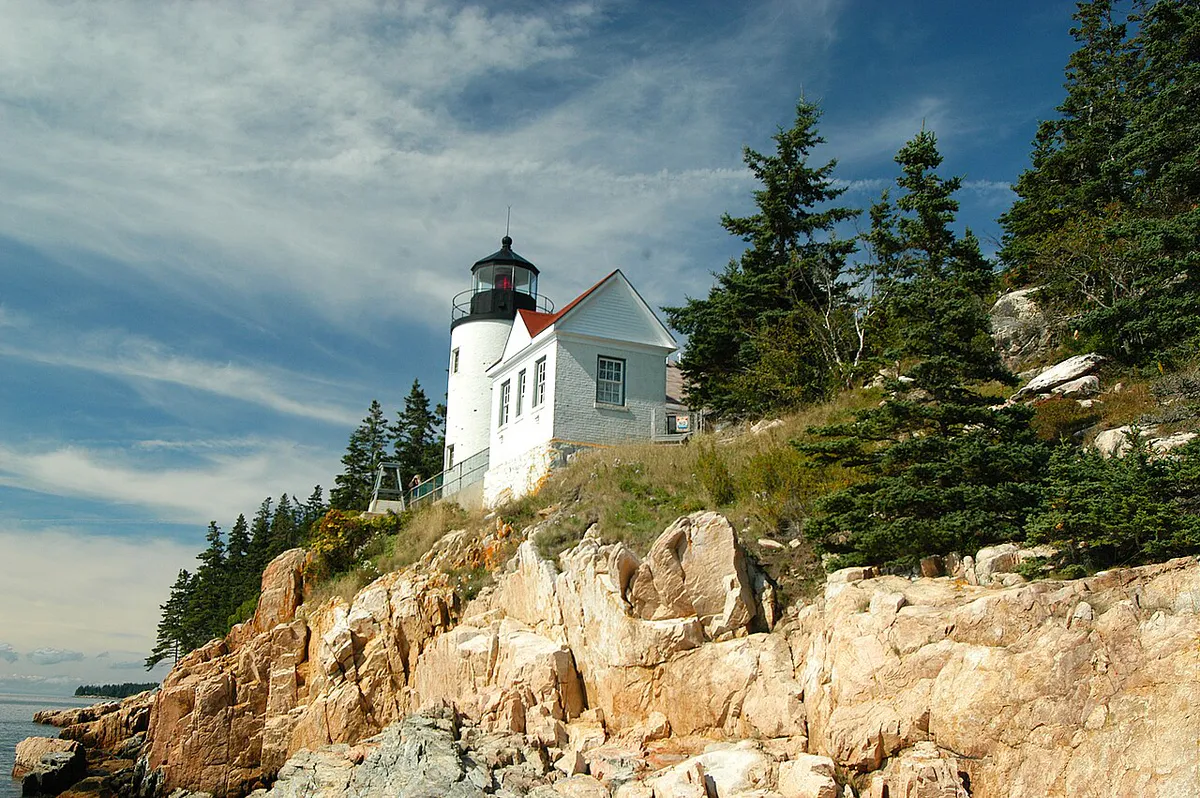
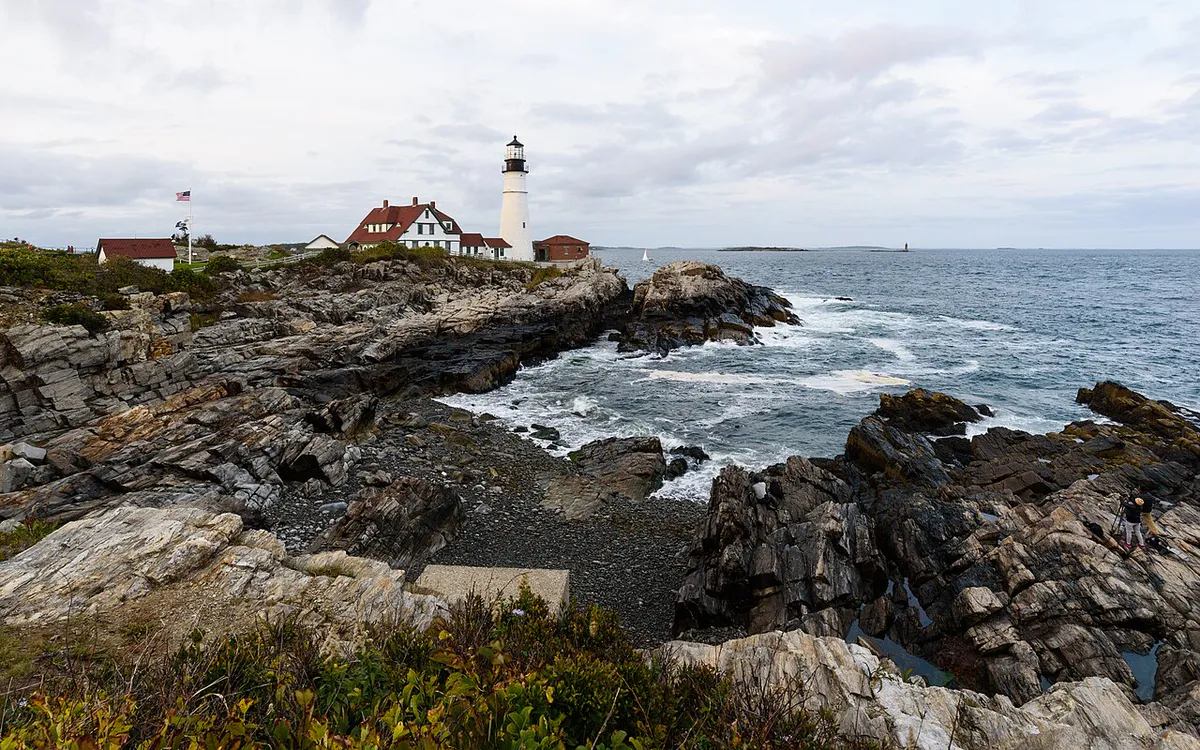
The park itself is worth visiting regardless of the lighthouse views. The rocky coastline here is dramatic, with waves crashing against ledges and tide pools exposed at low water. The park has no sandy beach, but the rock formations are excellent for exploring, sitting, and watching the ocean. Picnic tables are set into sheltered spots among the rocks, and the views extend east across the open Atlantic.
The west tower, now privately owned, is visible from the road but the property is fenced and signed. Respect the private property boundaries.
Edward Hopper’s Maine
Hopper first came to Maine in 1914, drawn by the light, the architecture, and the spare New England landscape that matched his artistic vision. He painted lighthouses and coastal scenes throughout his career, but his Cape Elizabeth works are among his finest. In 1927, Hopper bought a car and drove to Cape Elizabeth, where he spent the summer painting the lighthouse from multiple angles and in different media: conte crayon, watercolor, and oil.
His 1929 painting “The Lighthouse at Two Lights” captures the east tower and keeper’s house in his characteristic style, with strong sunlight, geometric shadows, and a quiet, almost lonely atmosphere. Other Two Lights paintings include “Light at Two Lights” (1927, Whitney Museum of American Art) and “Coast Guard Station, Two Lights, Maine” (Metropolitan Museum of Art). Together, these works made Cape Elizabeth Light one of the most artistically significant lighthouses in America.
Art lovers visiting Two Lights can see roughly the same views that Hopper painted, though the landscape has changed with nearly a century of growth. The angles of the towers, the quality of the light on the white-painted iron, and the feeling of the rocky coast remain.
When to Go
Summer
Warm weather for exploring the state park's rocky shore. Long days with excellent coastal light. The park is popular with picnickers on weekends.
Fall
Beautiful slanting light that Hopper would have appreciated. Fewer visitors and dramatic fall skies over the ocean. The park stays open.
Winter
The park is open year-round. Winter storms produce powerful surf against the rocks. Cold and exposed but atmospheric.
Spring
The coast wakes up with migrating birds and wildflowers. Cool mornings and quieter than summer.
Photography Tips
Since you cannot access the lighthouse grounds, your best photographs will come from Two Lights Road and from Two Lights State Park. Driving along Two Lights Road, you can pull over at several points where the east tower is visible above the trees and neighborhood houses. A telephoto lens (200mm or longer) helps isolate the tower from the surrounding structures.
From the state park, wider coastal compositions work well, with the rocky shore in the foreground and the tower visible in the background. The morning light is best for photographing the east tower, which faces east-southeast. Late afternoon and sunset light work beautifully on the park’s rocky coastline even if the tower is less prominent.
The adjacent Lobster Shack at Two Lights, a seasonal seafood restaurant on the rocks just outside the park entrance, offers views of the lighthouse from its outdoor seating area and is a photogenic spot in its own right.
What’s Nearby
Cape Elizabeth is home to three of Maine’s most accessible coastal attractions. Portland Head Light and Fort Williams Park are about 10 minutes north. Crescent Beach State Park, one of the best sand beaches near Portland, is about 5 minutes south on Route 77. The Spurwink River marsh, visible from Route 77 between Crescent Beach and Two Lights, is excellent for birdwatching.
The Lobster Shack at Two Lights, located on the rocks right at the entrance to Two Lights Road, has been serving lobster rolls and fried clams at picnic tables overlooking the ocean since the 1920s. It is a Cape Elizabeth institution and a natural pairing with a visit to the lighthouse and state park.
Getting There
From downtown Portland, take Route 77 south into Cape Elizabeth. Turn left onto Two Lights Road and follow it to the end. Two Lights State Park is on the left. The east lighthouse tower is visible along the road before you reach the park. The drive from Portland takes about 20 minutes. From the Maine Turnpike (I-95), take Exit 45 and follow Route 1 south to Route 77.
Two Lights State Park charges a day-use fee of $6 for non-residents and $4 for Maine residents. Parking is in the lot inside the park. If you only want to view the lighthouse from the road, no fee is required.
FAQ
Can you visit Cape Elizabeth Light (Two Lights)?
The lighthouse grounds are Coast Guard property and not open to the public. You can view the east tower from Two Lights Road and from Two Lights State Park, which is adjacent to the light station.
Why is it called Two Lights?
The station originally had two towers, built in 1828. Twin lights helped mariners distinguish Cape Elizabeth from other lights. The west tower was deactivated in 1924. The east tower remains active.
What did Edward Hopper paint at Two Lights?
Hopper painted several views of the Cape Elizabeth Light station in 1927 and 1929, including 'The Lighthouse at Two Lights' (1929, Metropolitan Museum of Art) and 'Light at Two Lights' (1927, Whitney Museum). His work was featured on a 1970 U.S. postage stamp.
Are dogs allowed at Two Lights State Park?
Yes, dogs are allowed on leash throughout Two Lights State Park. Owners must clean up after their pets.
How far is Two Lights from Portland Head Light?
About 10 minutes by car. Both are in Cape Elizabeth. You can easily visit both in a single morning or afternoon.