Where Art Meets the Atlantic
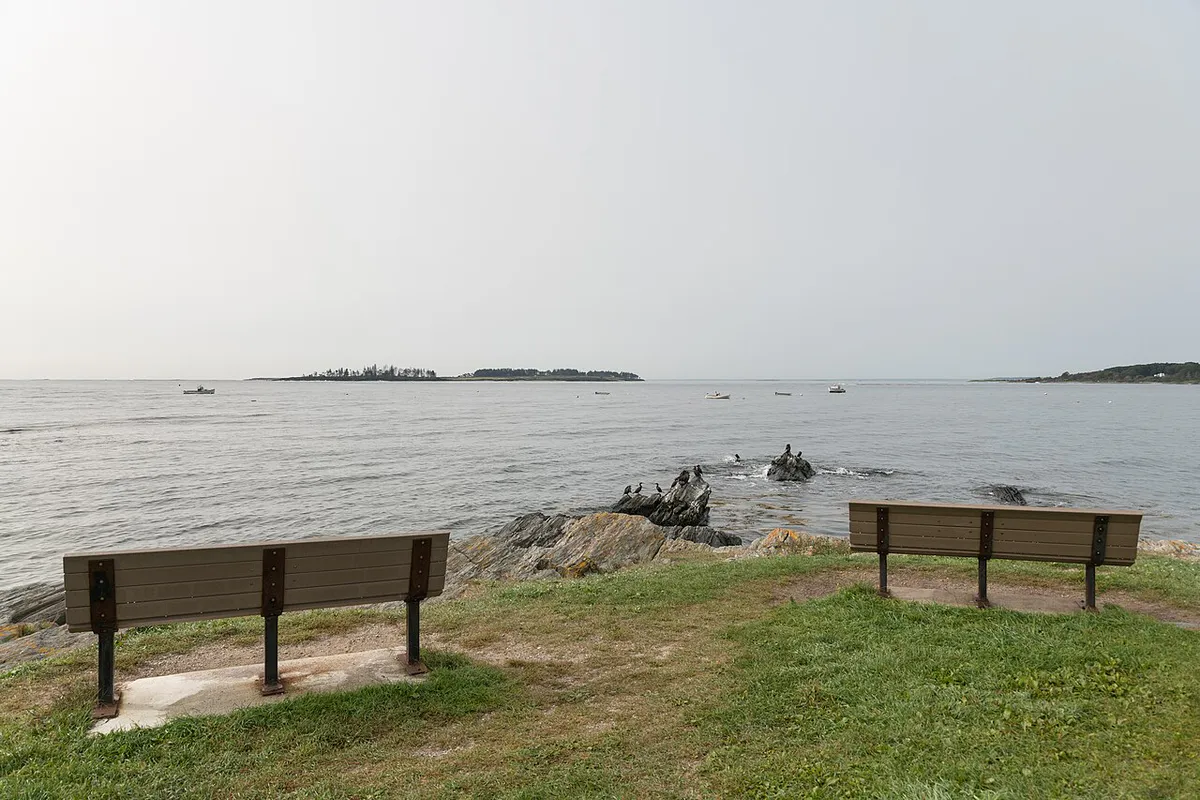
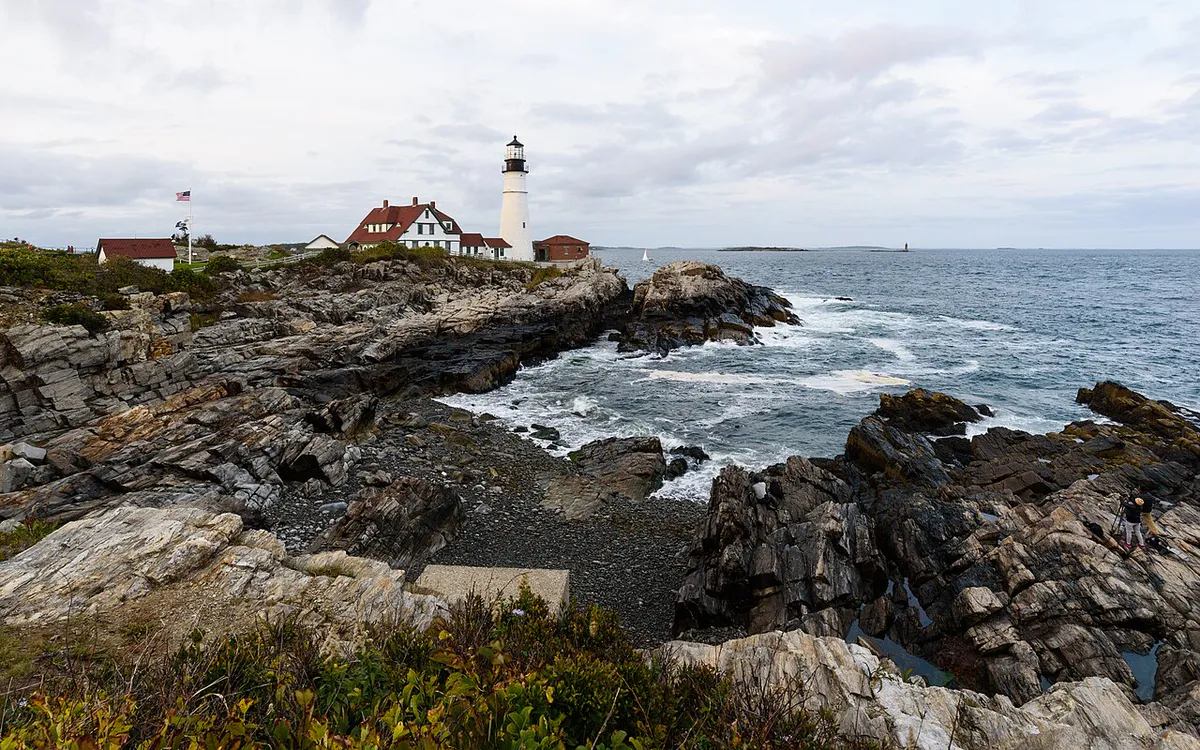
Two Lights State Park occupies 41 acres of rocky headland on the eastern shore of Cape Elizabeth, just south of Portland. The park sits on a ledge of ancient metamorphic rock that juts into the open Atlantic, taking the full force of ocean swells with nothing to break them between here and Europe. Waves crash against the dark rock, send spray across the ledges, and drain back through channels and crevices in a constant, mesmerizing cycle. It is one of the most accessible places near Portland to experience the raw power of the Maine coast.
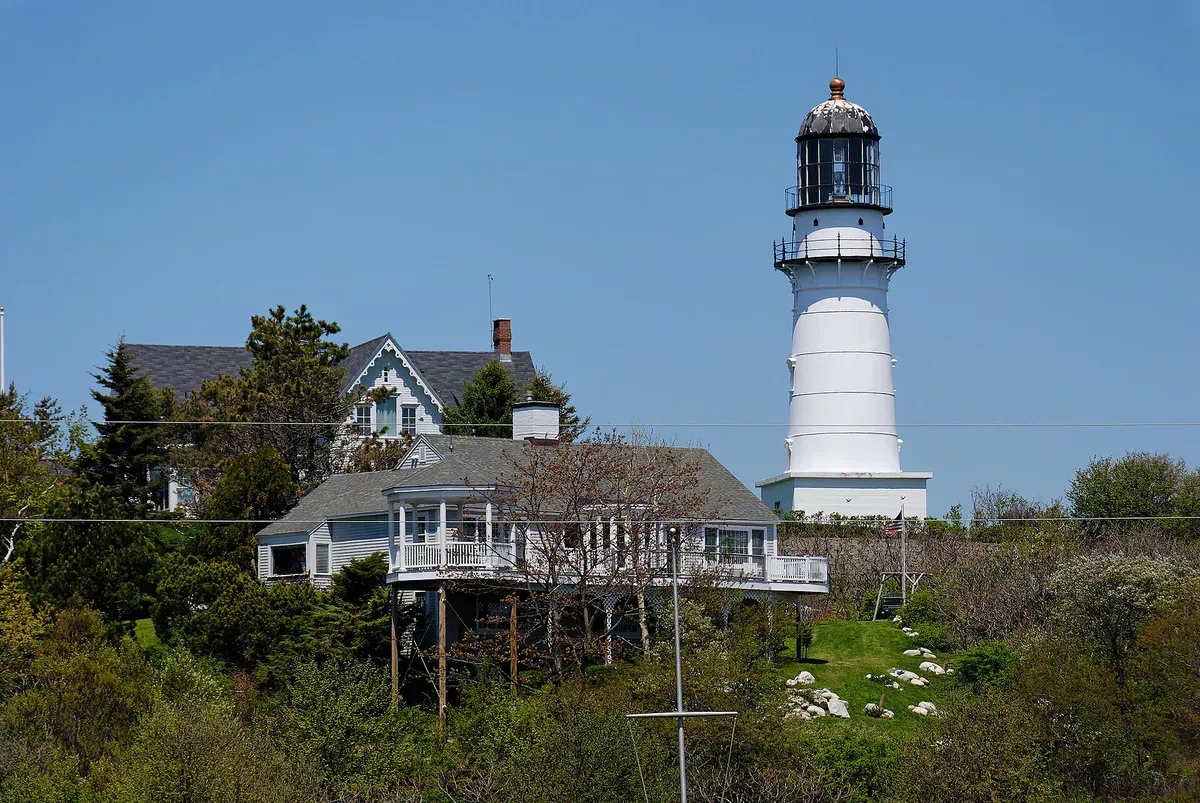
The name comes from the twin lighthouses built here in 1828, the only double lighthouse station in Maine. The lighthouses themselves are not within the state park. They stand on adjacent private and Coast Guard property, but the coastline that surrounds them is what drew Edward Hopper to Cape Elizabeth in the summers of 1927 and 1929. Hopper painted several works here, including “The Lighthouse at Two Lights” (1929, now at the Metropolitan Museum of Art) and “Light at Two Lights” (Whitney Museum of American Art). The interplay of harsh sunlight, deep shadow, and stark coastal architecture that defined Hopper’s vision was drawn directly from this headland.
The Rocky Shore
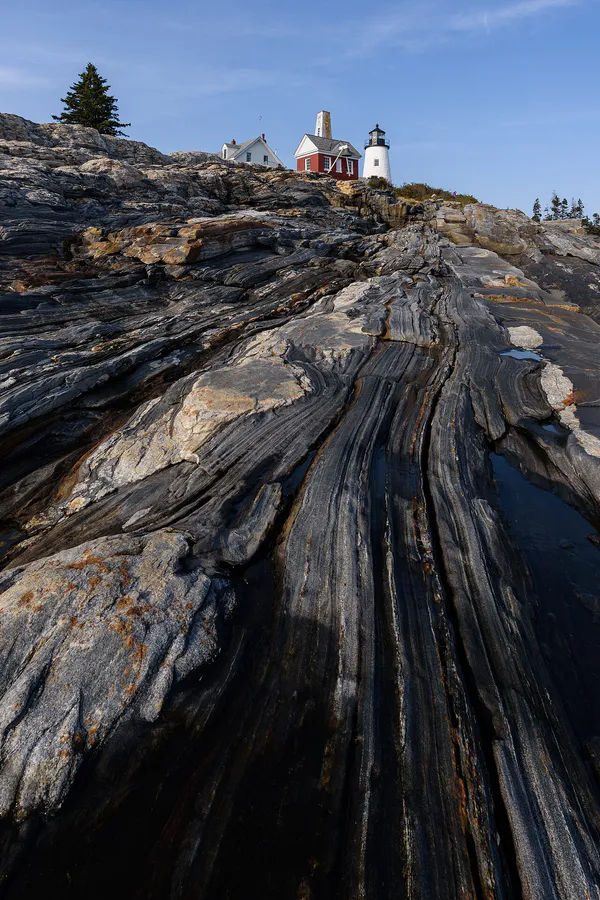
The park’s main attraction is its shore, a broad expanse of dark, weathered rock that slopes from the grassy picnic area down to the waterline. The rock is fractured and folded, full of tide pools, crevices, and channels that fill and drain with each wave cycle. At low tide, the pools harbor periwinkles, sea urchins, barnacles, crabs, and rockweed. At high tide or during storms, waves sweep across the lower ledges with impressive force. If this kind of shoreline is your thing, see the best tide pooling spots on the Maine coast.
The rock formations here are metamorphic, part of the Cape Elizabeth formation that dates to the Ordovician period, roughly 450 million years old. You can see layers of mica schist and quartzite folded and twisted by tectonic forces, and in places dark igneous dikes cut through the lighter rock in patterns similar to those at Schoodic Point in Acadia.
What Hopper Saw
Edward Hopper spent parts of two summers in Cape Elizabeth, painting the lighthouses, the coast guard station, and the surrounding coastline. What attracted him was the quality of the light: the way direct coastal sunlight created sharp contrasts between illuminated surfaces and deep shadows on the white-painted buildings. His Cape Elizabeth paintings are among his most celebrated works, and they established themes, isolation, stark geometry, the interplay of natural and built environments. That defined American art for a generation.
The coast guard station that appears in Hopper’s 1927 painting “Coast Guard Station, Two Lights, Maine” still stands in the cove below the park, though it is now a private residence. The lighthouse that appears in “The Lighthouse at Two Lights” is the eastern tower, visible from the park grounds but not accessible to the public.
Tidal Pools and Wildlife
The tidal zone at Two Lights is rich and accessible. At low tide, walk carefully among the pools to find green crabs, hermit crabs, dog whelks, blue mussels, and the occasional sea star. Rockweed (Fucus) covers much of the intertidal zone in slippery olive-brown bladders that pop underfoot. Look for periwinkles clinging to the upper rocks and barnacles encrusting every surface.
Offshore, look for harbor seals, eider ducks, cormorants, and various gull species. In winter, the ledges attract purple sandpipers and harlequin ducks, two species that specialize in wave-swept rocky coastlines. Birders consider the park a reliable spot for these winter specialties.
When to Go
Summer
Warmest weather and longest days. The picnic area is busy on weekends. Morning visits are quieter. Tidal pools are best explored at low tide.
Fall
Beautiful light for photography. Storm season brings dramatic surf. Fewer visitors. Migrating hawks and songbirds pass through.
Winter
Winter storms produce the most powerful surf. Purple sandpipers and harlequin ducks on the rocks. Cold and windy but dramatic.
Spring
Quiet and uncrowded. Tidal pools begin to fill with life again. Eider ducks nest on nearby islands.
Practical Notes
The park has a small parking lot, portable restrooms, picnic tables, and charcoal grills. No food vendors. The park is open year-round from 9am to sunset. The entrance fee is $4 for Maine residents and $6 for non-residents, collected at a self-service station.
The park grounds are mostly flat with mowed grass areas above the rocky shore. The trail system consists of short, informal paths along the coastline. There is no designated swimming area, though some visitors do wade in the calmer spots at low tide.
Getting There
From Portland, take Route 77 south through South Portland into Cape Elizabeth. Follow signs for Two Lights State Park. The park entrance is on Tower Drive, about 15 minutes from downtown Portland. Street parking is available when the lot is full.
GPS coordinates: 43.5604, -70.2085
FAQ
Can I see the lighthouses from Two Lights State Park?
You can see the eastern lighthouse tower from the park grounds, but neither lighthouse is within the park or open to the public. Both are on adjacent private or Coast Guard property.
What did Edward Hopper paint at Two Lights?
Hopper painted several works here during the summers of 1927 and 1929, including The Lighthouse at Two Lights (Metropolitan Museum of Art), Light at Two Lights (Whitney Museum), and Coast Guard Station, Two Lights, Maine (Metropolitan Museum of Art).
Is Two Lights State Park good for kids?
Yes. The tidal pools at low tide are fascinating for children. The park is flat and easy to navigate. Just watch children carefully near the waterline, as waves can surge across the rocks unexpectedly.
Are dogs allowed at Two Lights State Park?
Yes. Dogs are allowed on leash throughout the park.
How far is Two Lights State Park from Portland?
About 15 minutes by car from downtown Portland via Route 77 through South Portland and Cape Elizabeth. It is one of the closest coastal state parks to the city.