
A Lighthouse at the Edge
Whitehead Island lies at the southern entrance to Penobscot Bay, a rugged granite island that has warned mariners since 1807 when the federal government erected a lighthouse on its highest point. The light stands at the edge of the western approach to one of the busiest waterways on the Maine coast, marking the passage between Whitehead and the mainland at Tenants Harbor in St. George.
The current tower, a 41-foot granite cylinder, was built in 1852 to replace the original wooden tower. The light was automated in 1982 and the Coast Guard departed, leaving the keeper’s house and outbuildings to the Pine Island Camp, a boys’ summer camp that has used the island as an outpost since 1992. The light itself remains active, flashing green every six seconds to guide vessels through the passage.
Whitehead is not the easiest lighthouse to visit. There is no ferry, no scheduled boat service, and no dock suited to casual visitors. But for those willing to make the effort, the island offers one of the most dramatic lighthouse settings in Maine: a granite tower on a bare, windswept island surrounded by open ocean, lobster boats working the surrounding waters, and views that reach from Monhegan Island to the Camden Hills.
Getting There
Whitehead Island is approximately one mile off the coast of St. George. Access is by private boat or kayak from Tenants Harbor or Spruce Head. The crossing is short but exposed, and the waters around the island can be rough with tidal currents and ocean swells. Kayakers should have experience with open water conditions.
There is no public dock on the island suitable for tying up a boat. Most visitors anchor off the island or land a kayak on the cobble beach on the protected side. The Pine Island Camp uses the island during summer, and visitors should be respectful of the camp’s activities and stay on the lighthouse grounds and the public shore areas.
The Light Station
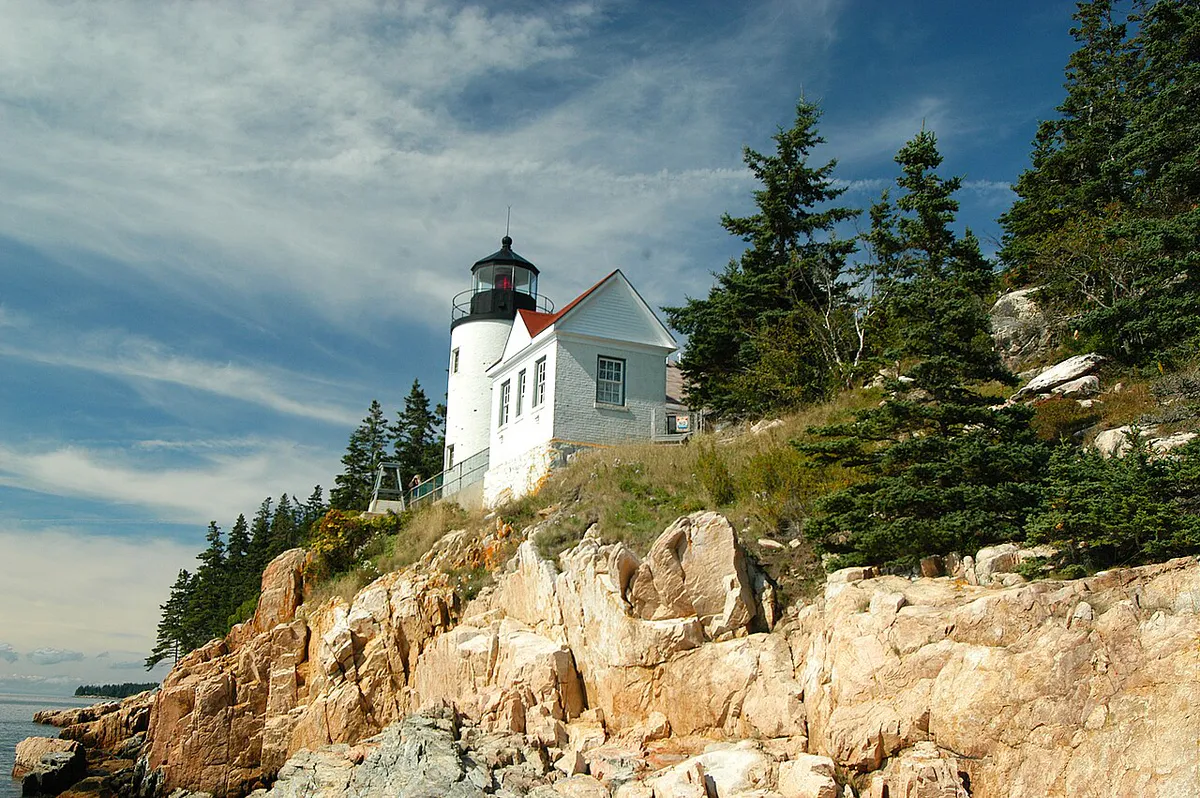
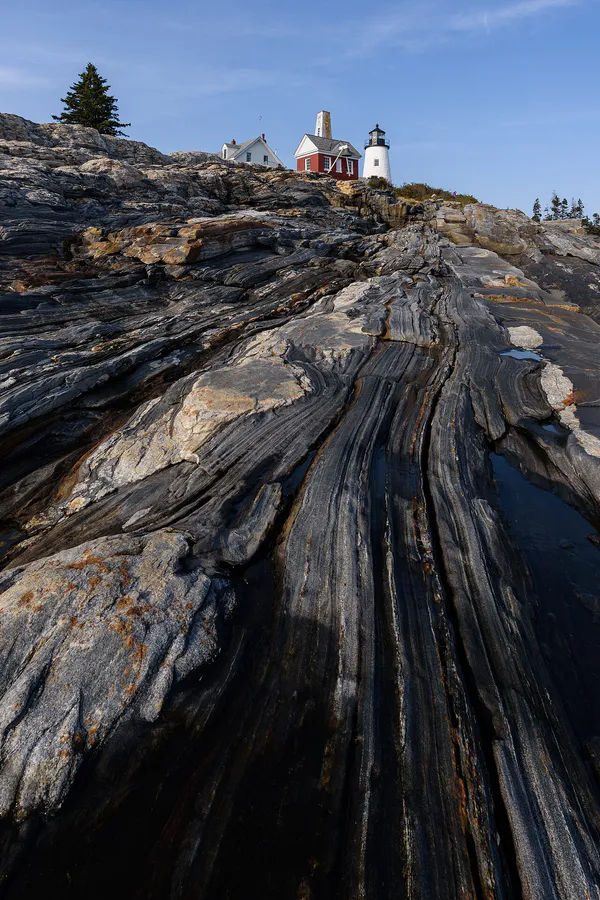
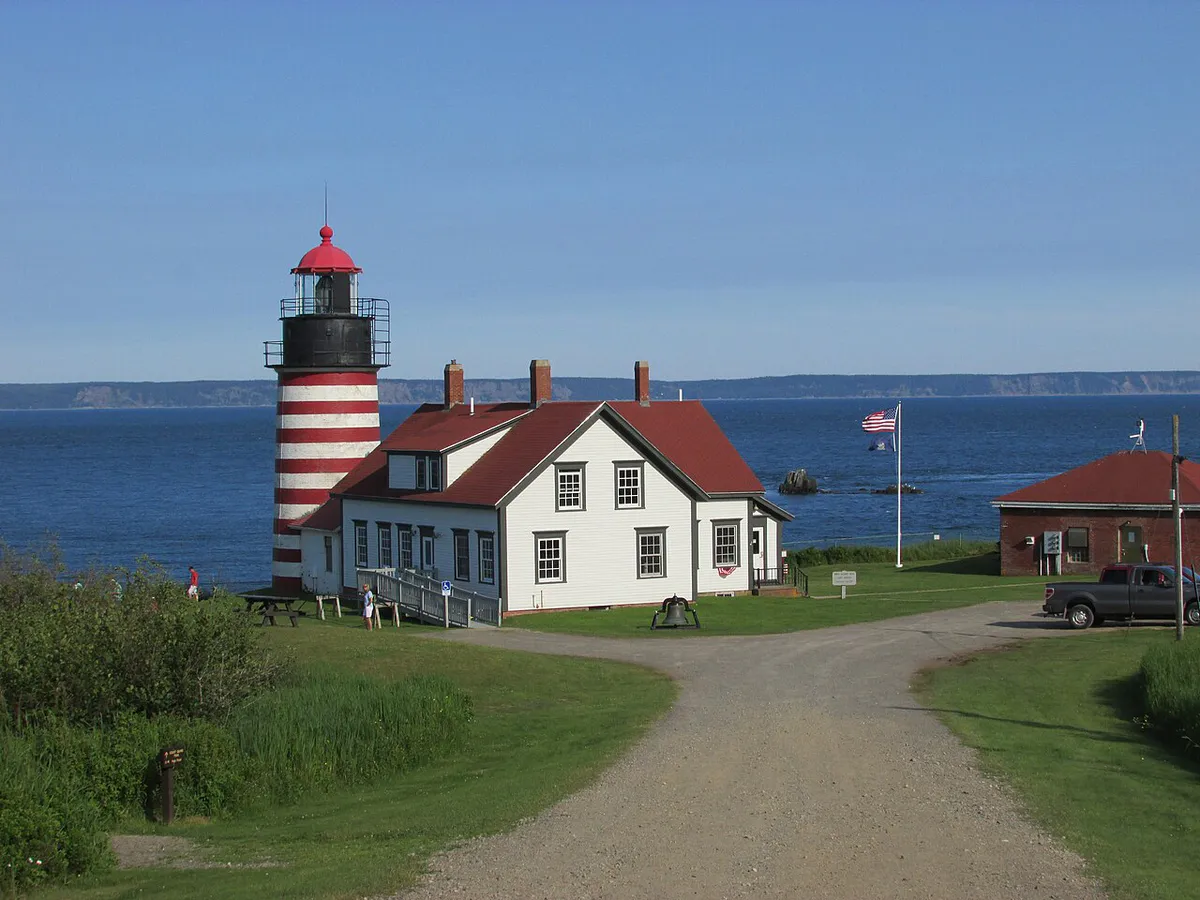
The lighthouse compound includes the 1852 granite tower, the keeper’s house (now used by Pine Island Camp), a fog signal building, and several outbuildings. The tower is not generally open to the public, but the grounds around the lighthouse are accessible and the exterior is photogenic from every angle.
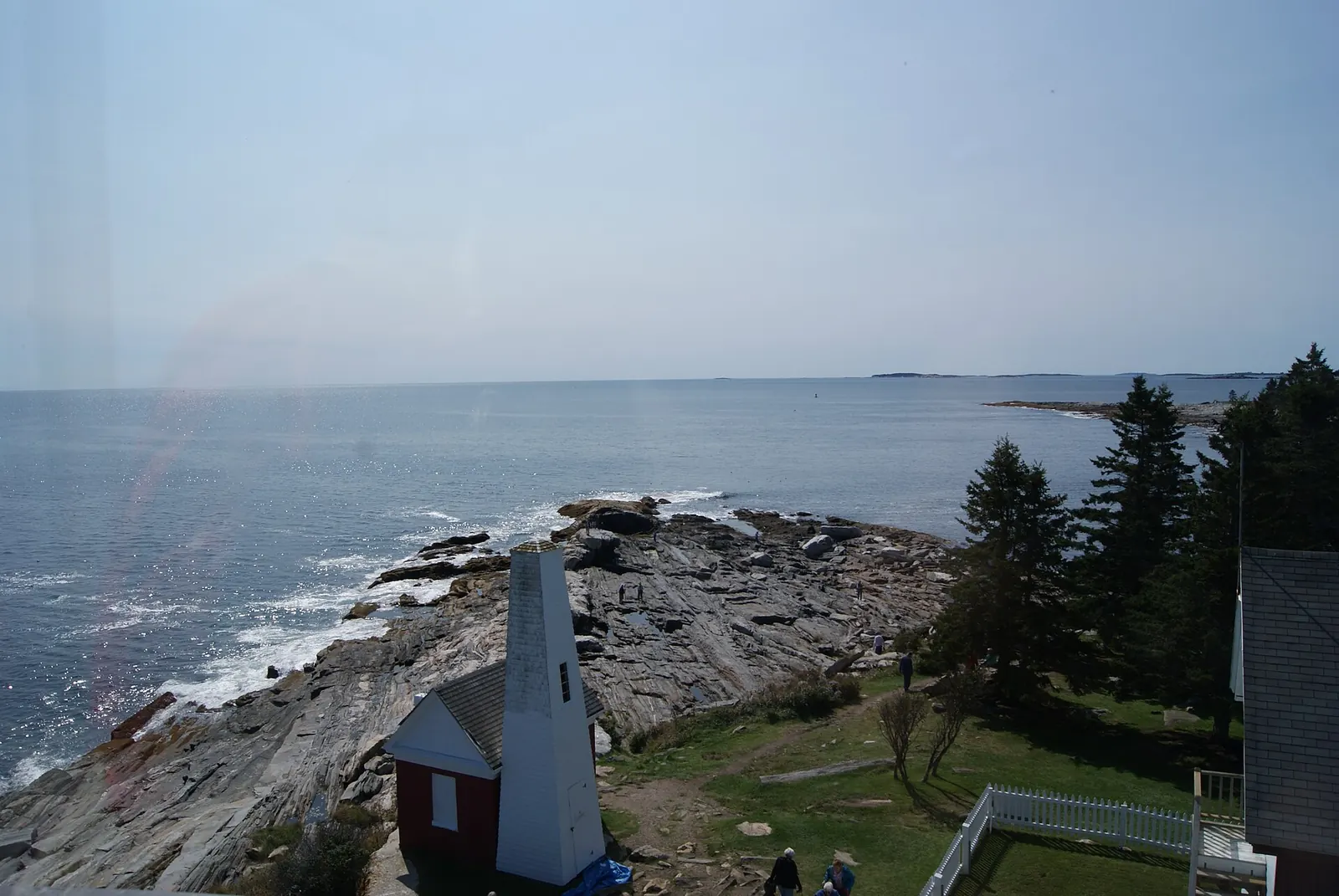
The tower sits on the island’s highest point, and the surrounding terrain is bare granite ledge sculpted by weather and ocean spray. Walking around the lighthouse, you see the full sweep of the western Penobscot Bay: Monhegan Island to the south, the Muscle Ridge Islands to the east, Owls Head and Rockland to the north, and the open Atlantic everywhere else.
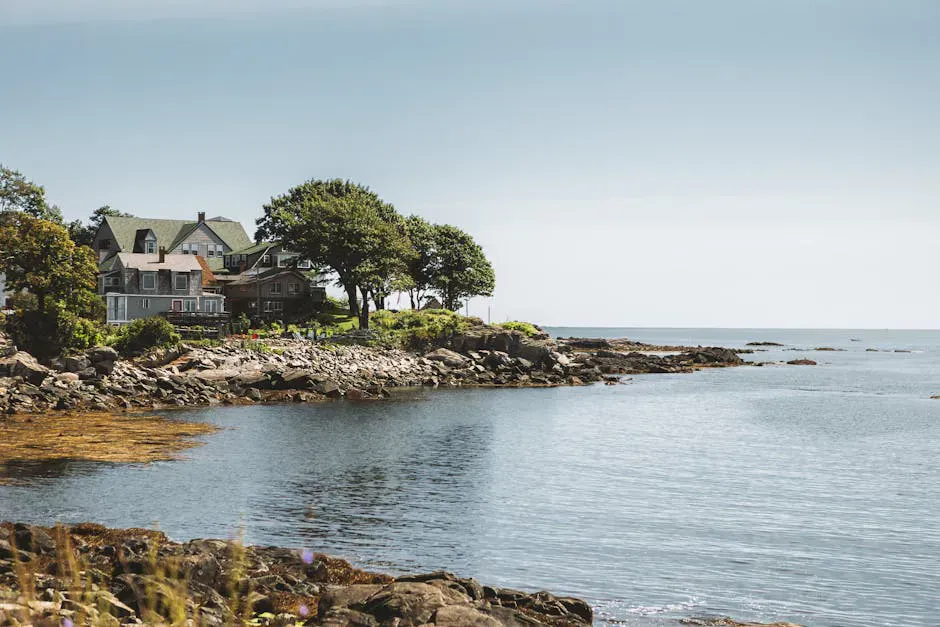
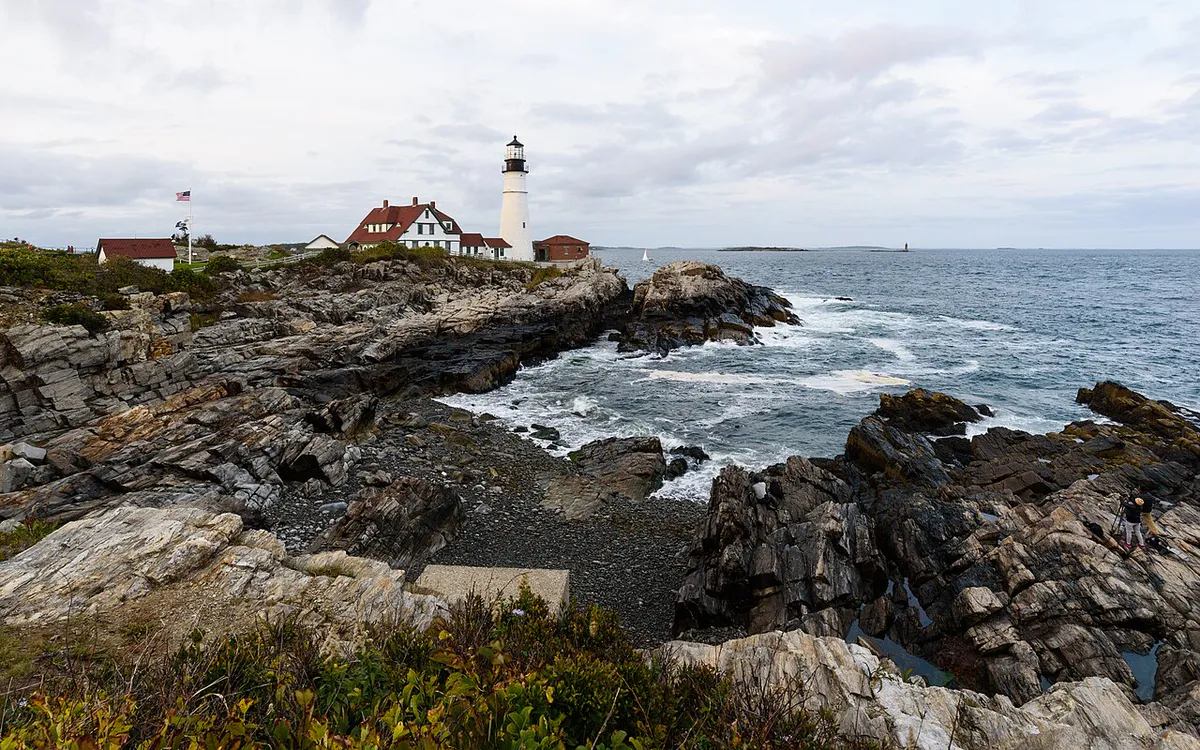
The island’s shoreline is a mix of granite ledge, cobble beaches, and dramatic rock formations shaped by centuries of wave action. At the southern tip, the rocks drop away into deep water where lobster boats work their traps close to shore.
History
Whitehead Light Station has a rich maritime history. The original lighthouse was authorized by President Thomas Jefferson in 1807, making it one of the earliest lighthouses in Maine. The current granite tower, built in 1852, replaced the deteriorating original wooden structure.
Throughout the nineteenth and early twentieth centuries, lighthouse keepers and their families lived on the island year-round. The isolation was extreme, especially in winter when storms could cut the island off from the mainland for days. The keeper’s logbooks, now preserved in archives, record the rhythms of island life: weather observations, ship passages, supply deliveries, and the constant maintenance of the light mechanism.
The most notable keeper was Abbie Burgess, who tended the twin lights on nearby Matinicus Rock as a teenager in the 1850s. While Burgess is more closely associated with Matinicus, her story reflects the lives of lighthouse keepers across these isolated Penobscot Bay islands.
When to Go
Summer
Best weather for the boat crossing. Longest days and calmest seas. Pine Island Camp is active on the island. Lobster boats work the surrounding waters.
Fall
Camp season ends. Fewer boats in the area. Clear autumn light is excellent for photography. Weather windows become less predictable.
Spring
Cold water, unpredictable weather. Only for experienced boaters. Seabirds returning to nesting sites on nearby islands.
Winter
Not recommended for visits. Seas are rough, weather is severe, and there is no shelter or services on the island.
Checklist
What to Bring
- Arrange private boat or kayak transportation
- Check marine weather forecast before departure
- Bring all water and supplies for the day
- Inform someone of your travel plans
- Camera with telephoto lens for the lighthouse
- Binoculars for scanning Penobscot Bay
- Wear layers for wind exposure on the island
- Non-slip shoes for granite ledge walking
- Respect Pine Island Camp activities in summer
- Plan the mainland viewpoint at Spruce Head as a backup
FAQ
Can you visit Whitehead Light Station?
Yes, but only by private boat or kayak. There is no ferry or scheduled boat service. The lighthouse grounds are accessible during daylight hours. The tower interior is not generally open to the public.
Is the lighthouse still active?
Yes. The light flashes green every six seconds and is maintained by the US Coast Guard. It was automated in 1982.
Who owns Whitehead Island?
The lighthouse and surrounding property are managed by Pine Island Camp, a boys' summer camp that has maintained the island since 1992. The light itself is managed by the Coast Guard.
Can you see the lighthouse from the mainland?
Yes. The best mainland views are from the end of Spruce Head Road on Spruce Head Island, where you can see the lighthouse across the channel about a mile away.
Is Whitehead Island safe to kayak to?
Only for experienced open-water kayakers. The crossing involves tidal currents and exposure to ocean swells. Check marine conditions and do not attempt the crossing in rough weather.
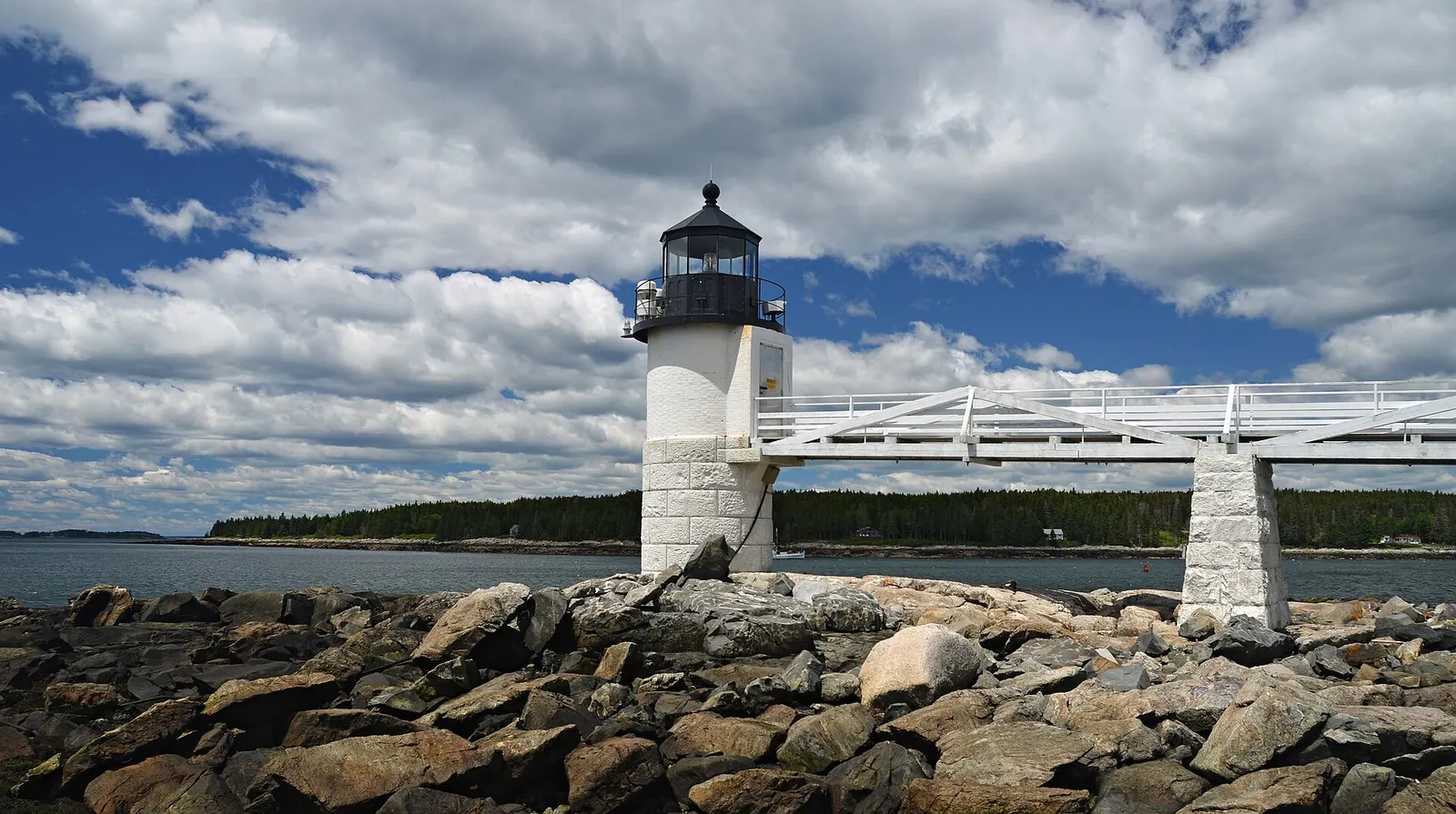
For an easier-to-access Midcoast lighthouse, visit Marshall Point Lighthouse in Port Clyde, about 15 minutes south on the mainland.