
Midcoast Maine’s Most Dramatic Shoreline Walk
Giant’s Stairs is a short coastal trail that packs more geological drama into one mile than most hikes deliver in ten. Located at the southern tip of Bailey Island in the town of Harpswell, the trail follows the edge of a rocky headland where massive slabs of dark basalt and schist have been fractured, tilted, and stacked by millions of years of geological force and relentless ocean erosion. The result is a staircase of enormous rock formations that rise from the crashing surf like the steps of some ancient giant.
The walk itself is easy in terms of distance and elevation. The loop covers roughly one mile with minimal climbing, making it accessible to almost anyone. But the terrain is uneven rock rather than groomed trail, and the coastline here is exposed to open ocean, so the experience feels far more adventurous than the distance suggests. Waves crash against the base of the cliffs, sea spray reaches the trail on windy days, and the tidal pools between the rocks are alive with sea urchins, periwinkles, hermit crabs, and rockweed.
This is not a backcountry wilderness hike. It is a short walk through a quiet residential neighborhood that suddenly opens onto one of the most striking pieces of coastline in Maine. The contrast is part of the charm.
The Trail
The trail starts at the end of Ocean Street on Bailey Island, at a small Harpswell Heritage Land Trust preserve sign. Limited roadside parking is available near the trailhead. From the sign, a short path through spruce trees leads quickly to the shoreline, where the character of the walk changes completely.
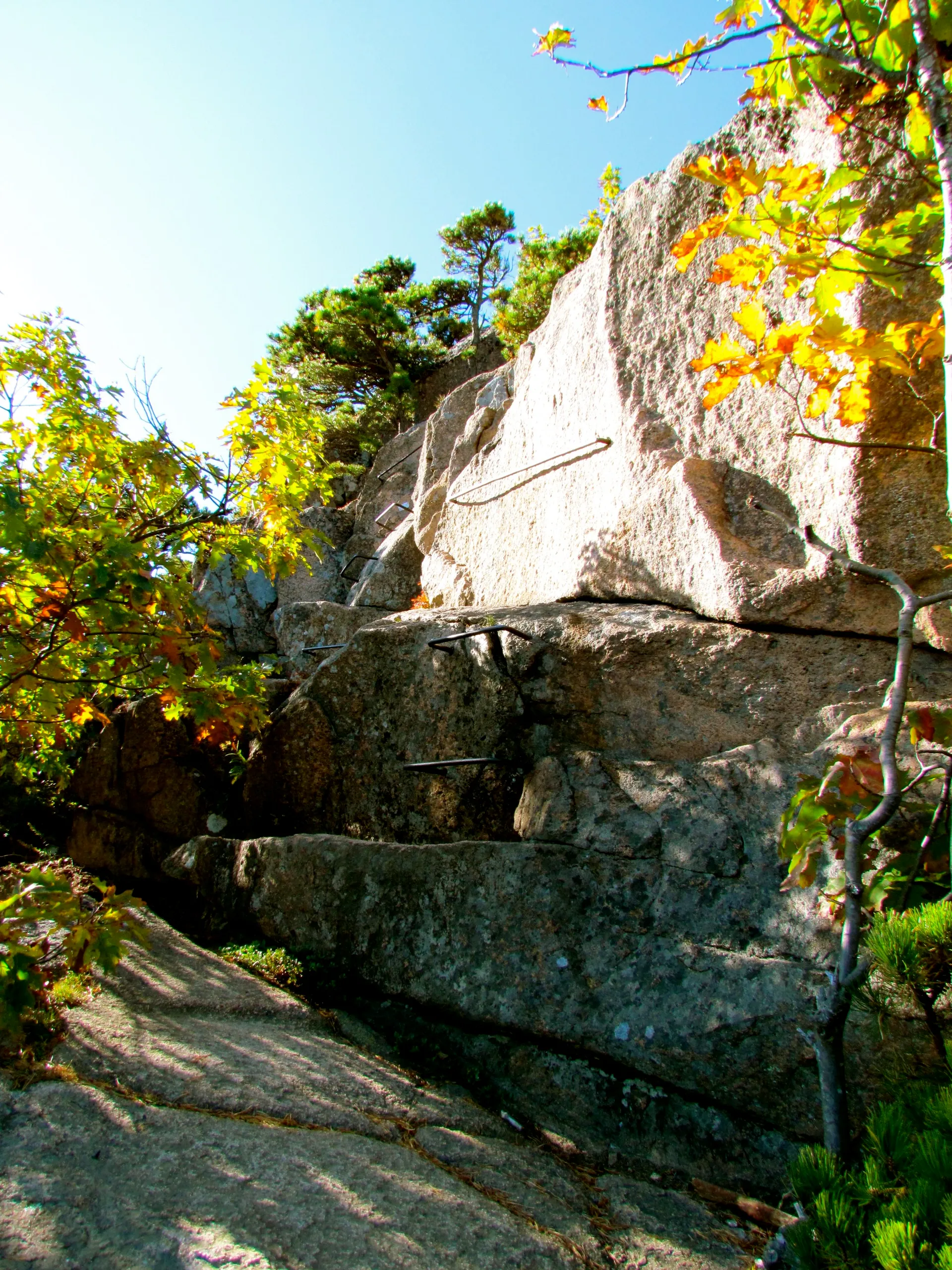
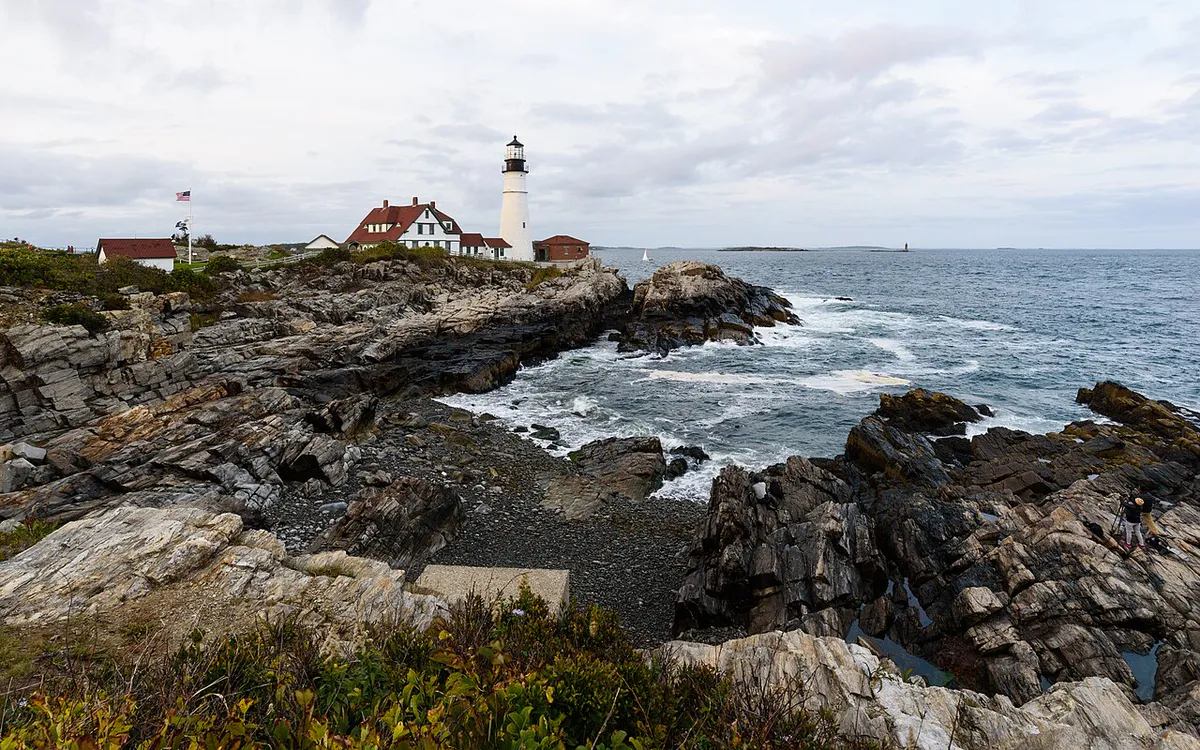
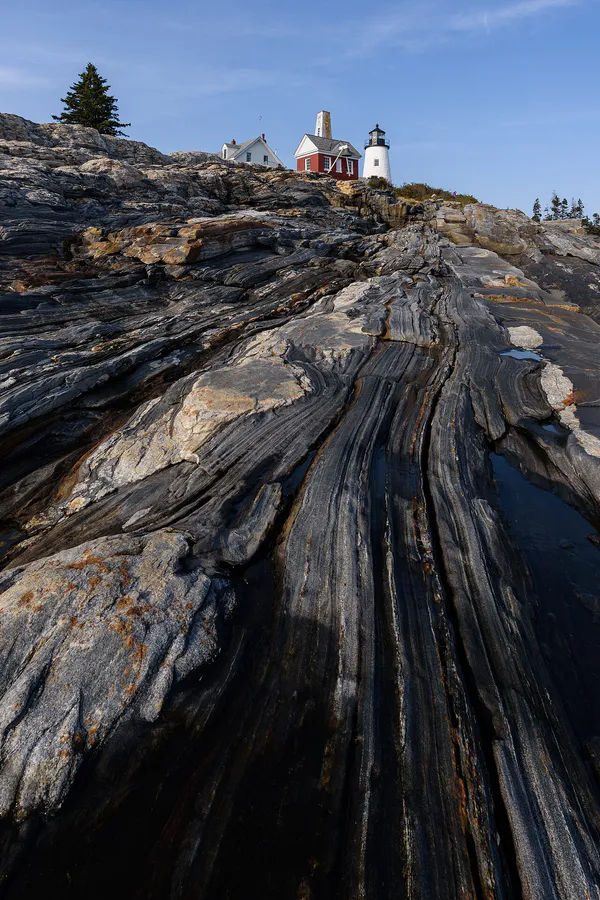
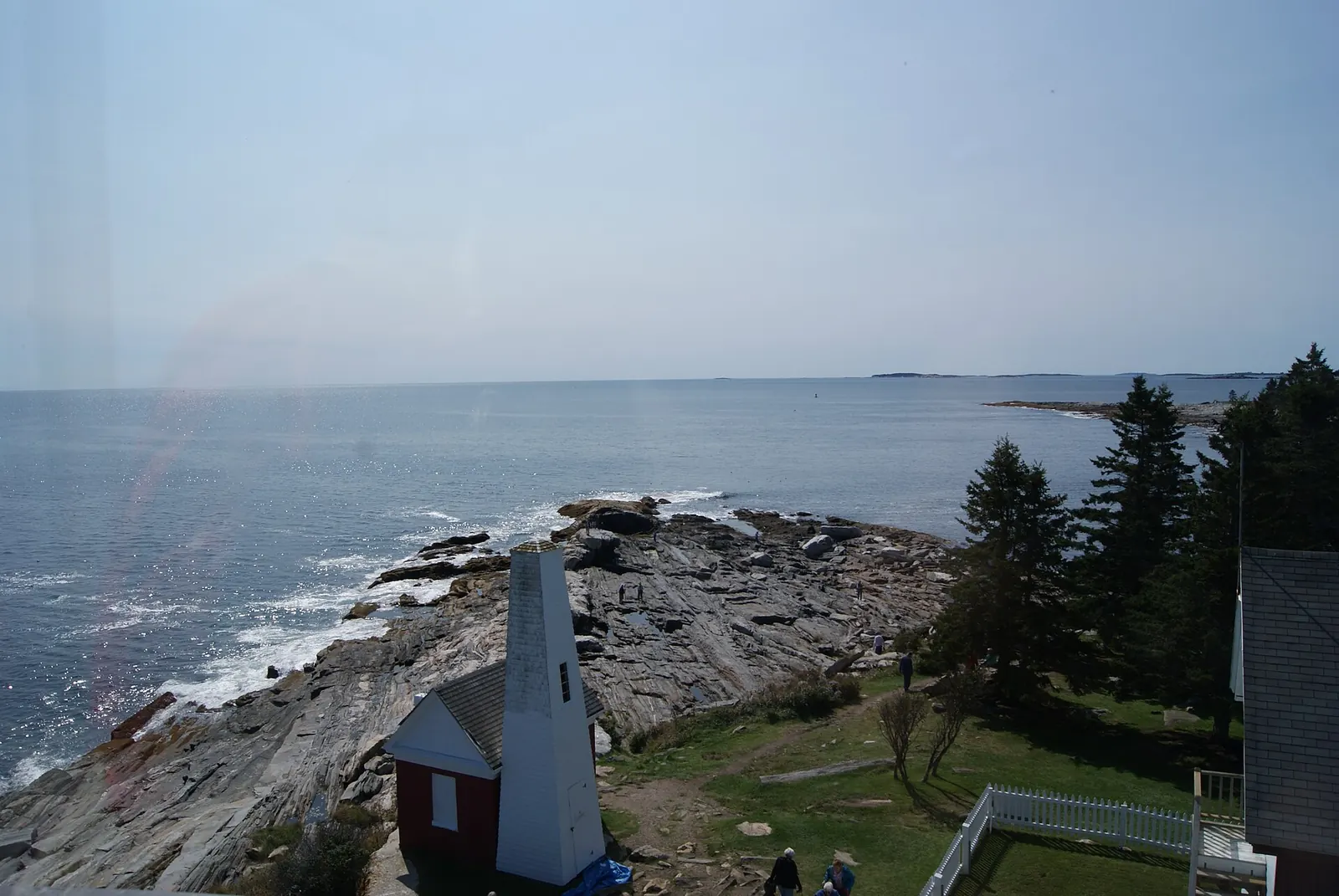
The trail follows the edge of the rocky coast, picking a route across dark, angular rock formations. These are not smooth, wave-polished stones. They are fractured sheets of metasedimentary rock, tilted at steep angles, with sharp edges and deep crevices between them. The rock is a mix of schist and basalt, part of the Cushing Formation that dates back roughly 450 million years to the Ordovician period. The layered, stepped appearance of the formations is what gives the trail its name.
The path loops along the headland, passing through sections of spruce and bayberry before returning to the coast. At the farthest point, you look south across open water toward the outer islands of Casco Bay. On stormy days, the waves explode against the rocks in plumes of white spray. On calm days, the tidal pools are the main attraction, each one a miniature aquarium of marine life.
The trail eventually loops back through the trees and returns to the starting point near Ocean Street. The entire walk takes most people 30 to 45 minutes, though you can easily spend an hour or more exploring the rock formations and tidal pools.
Visit at low tide for the best tidal pool exploration. Check the local tide charts before you go. At low tide, the pools between the rocks are exposed and teeming with sea life. At high tide, the waves reach higher on the rocks and the pools are submerged, but the crashing surf is more dramatic.
What You’ll See
The rock formations are the star of the show. The dark, layered slabs stand at dramatic angles, creating narrow channels and deep crevices where the ocean surges in and out with each wave. The contrast between the dark rock and the white foam of the breaking waves is striking, especially on overcast days when the colors are most saturated.
In the tidal pools, look for green sea urchins, periwinkles, dog whelks, hermit crabs, barnacles, and several species of rockweed and kelp. Blue mussels cluster on the lower rocks. In summer, harbor seals sometimes haul out on the outer ledges, and you may see them bobbing in the water just offshore, their dark heads watching you with curiosity.
Seabirds are common along this stretch of coast. Double-crested cormorants dry their wings on the rocks. Herring gulls and great black-backed gulls patrol the shoreline. In migration season, eiders raft up in large flocks just offshore, and occasional loons or grebes appear in the deeper water. Ospreys nest nearby and can sometimes be seen diving for fish.
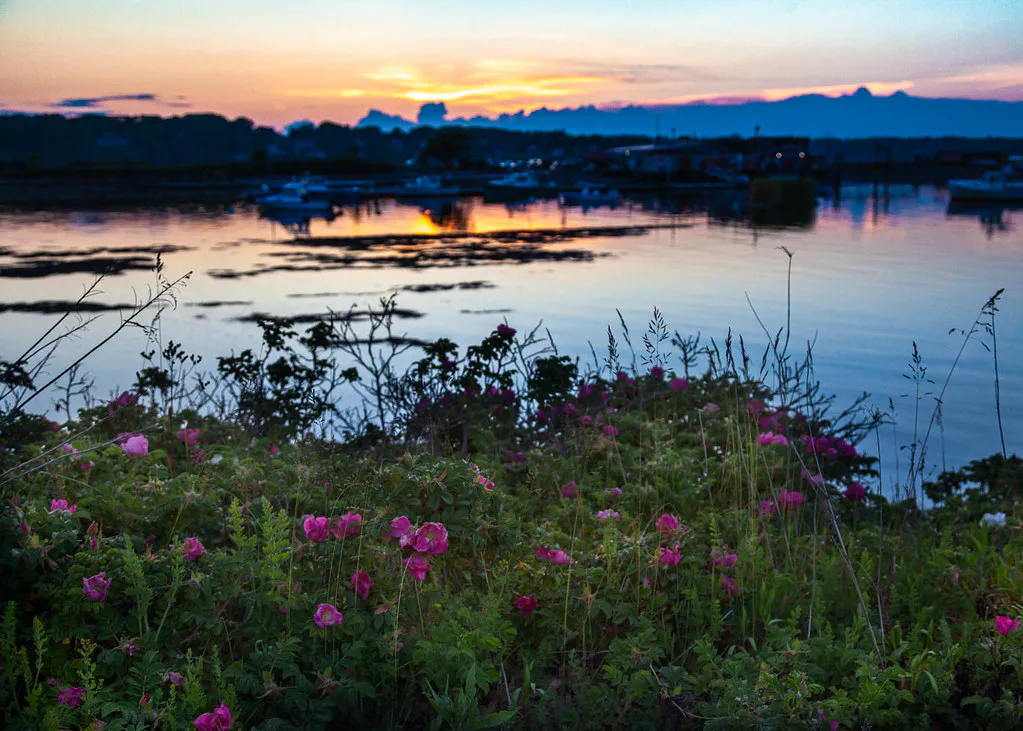
The vegetation at the trail edges is typical of the Maine coast: bayberry, rosa rugosa, red spruce, and juniper, all shaped by the salt wind into low, sculpted forms. In July and August, the bayberry and wild rose fill the air with fragrance.
The rocks along the Giant’s Stairs are uneven, angular, and can be extremely slippery when wet from spray or rain. Wear shoes with good grip, not sandals or smooth-soled shoes. Stay well back from the water’s edge, as waves can surge unexpectedly, especially on incoming tides. The rock crevices are deep enough to cause injury if you fall into one. Supervise children closely.
When to Go
Spring
Fewer crowds and nesting seabirds are active. Cooler temperatures make for comfortable walking. Sea spray can make rocks slippery.
Summer
Warm weather, tidal pools at their most active, and calm days are ideal for exploration. Parking can be tight on weekends.
Fall
Migrating seabirds, fall colors in the spruce and bayberry, and far fewer visitors. The light is beautiful on the rocks.
Winter
Storm watching can be spectacular as powerful waves crash against the formations. Dress warmly and exercise extreme caution on icy rocks.
Getting There
From Portland, take I-295 north to exit 28 for Brunswick/Bath. Follow Route 1 through Brunswick, then turn right onto Route 24 south toward Bailey Island. Follow Route 24 for approximately 12 miles through Orr’s Island and across the famous cribstone bridge onto Bailey Island. Continue to the end of Route 24, then turn right onto Ocean Street. The trailhead is at the end of Ocean Street. Total drive time from Portland is about 45 minutes.
Parking is limited to roadside spaces near the trailhead. There is no formal parking lot. Be respectful of the residential neighborhood and do not block driveways.
Combine the Giant’s Stairs with a meal at a local lobster shack on Bailey Island. The whole outing makes a perfect half-day trip from Portland. After the walk, drive back up Route 24 and stop for lobster rolls at one of the seasonal take-out spots. It is a quintessential midcoast Maine experience.
Packing List
- Shoes with excellent grip (rocks are slippery)
- Camera for rock formations and tidal pools
- Binoculars for seabirds and seals
- Light jacket (ocean breeze can be cool)
- Water bottle
- Tide chart (check before you go)
- Sun protection
- Snack
- Dog leash if bringing pets
- Waterproof phone case (sea spray is common)
FAQ
How long does the Giant's Stairs trail take?
The loop takes 30 to 45 minutes at a casual pace. Allow more time if you want to explore tidal pools or photograph the rock formations.
Is the Giant's Stairs trail suitable for kids?
Yes, for children who can walk on uneven rocky terrain. The rocks are angular and require careful footing. Supervise children closely near the water's edge and deep crevices.
Is there a fee to hike Giant's Stairs?
No, the trail is free and open to the public year-round. It is maintained by the Harpswell Heritage Land Trust.
What is the best tide to visit?
Low tide is best for tidal pool exploration. High tide is more dramatic for watching waves crash against the formations. Both are worth seeing.
Can I swim at Giant's Stairs?
No. The shoreline here is all exposed rock with strong surf and dangerous currents. There is no beach. This is a walking and observation trail only.