Maine’s Hidden Prairie
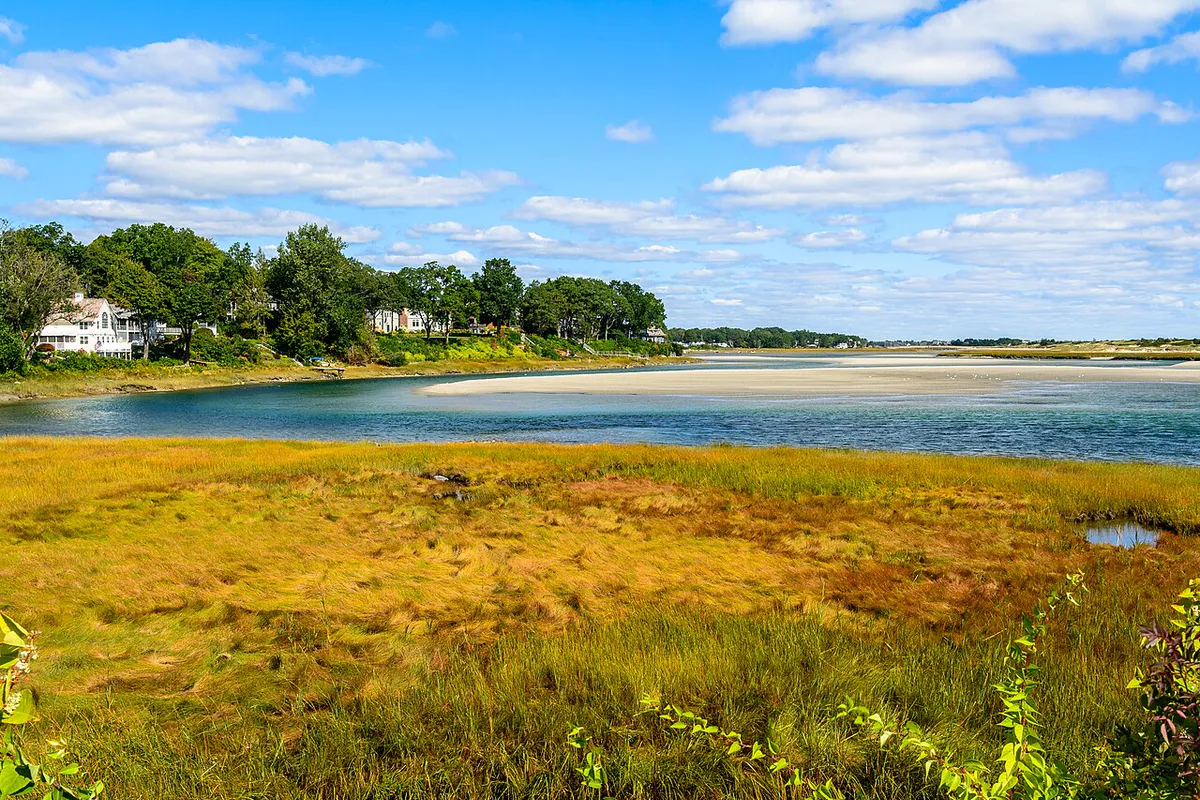
Kennebunk Plains Preserve is one of the most unexpected landscapes in Maine. Surrounded by the suburban sprawl of southern York County, a thousand acres of flat, open grassland spread out under a wide sky, looking more like a remnant of the Great Plains than anything you would expect to find thirty minutes south of Portland. This is sandplain grassland, a globally rare habitat type, and Kennebunk Plains is the largest remaining example in New England.
The Nature Conservancy protects the property and manages it with prescribed fire, the same natural process that maintained these grasslands for thousands of years. Without periodic burning, the plains would eventually succeed to forest. Fire keeps the woody vegetation at bay and promotes the grasses, wildflowers, and blueberry that define this landscape.
The preserve sits on a deposit of sandy glacial outwash, sediment left behind by melting glaciers roughly 12,000 years ago. The sandy, nutrient-poor soil drains quickly and supports a community of drought-adapted plants that cannot compete in richer soils but thrive here. The result is an open landscape of little bluestem grass, poverty grass, wild blueberry, and a scattering of pitch pine and scrub oak at the margins.
The Grasshopper Sparrow
Kennebunk Plains is the last reliable nesting site in Maine for the grasshopper sparrow, a small, secretive bird that depends on large, open grasslands for breeding. The species has declined sharply throughout the northeast as grasslands have been developed, converted to agriculture, or succeeded to forest. In Maine, the grasshopper sparrow is listed as endangered.
The sparrow is named for its insect-like song, a thin, buzzy trill that sounds more like a grasshopper than a bird. Males sing from low perches (fence posts, tall grass stems, small shrubs) in the early morning and evening during breeding season, roughly May through July. They are difficult to see even when singing, as they tend to drop back into the grass between songs.
To find grasshopper sparrows, visit in late May or June during the first two hours after sunrise. Stand still, listen for the buzzy insect-like song, and scan the tops of grass stems and low perches with binoculars. The birds are small, brown, and cryptic, patience is essential. Do not enter the nesting areas, which are marked with signs and rope.
Sections of the preserve are closed during nesting season (approximately May through August) to protect the sparrows and other ground-nesting birds. These closures are clearly marked with signs and barriers. Visitors must stay on designated trails and paths during the nesting period.
Wild Blueberry Picking
In August, after the bird nesting season ends and the closures are lifted, The Nature Conservancy opens the plains for wild blueberry picking. This is the event that draws the biggest crowds to Kennebunk Plains, and for good reason, the berries are abundant, free, and flavor-packed in a way that commercially grown blueberries cannot match.
The blueberries at Kennebunk Plains are wild lowbush blueberries (Vaccinium angustifolium), the same species harvested commercially in Washington County’s blueberry barrens. They grow low to the ground in thick mats, and a single square foot of ground can yield a surprising quantity of small, intensely flavored berries.
Bring a rake-style blueberry harvester for efficient picking, or pick by hand if you prefer the meditative approach. A gallon bucket fills in about 30 to 45 minutes when the berries are at peak ripeness, typically mid to late August. Arrive early on weekends, the parking area fills by 9 AM during peak blueberry season.
Do not pick blueberries before the designated August harvest period. Early picking disrupts the nesting season closures and is prohibited. The Nature Conservancy posts announcements on their website and at the preserve when the harvest period opens.
Wildflowers and Rare Plants
The sandplain grassland supports a diverse wildflower community that blooms in waves from spring through fall. Northern blazing star (Liatris scariosa var. novae-angliae), a globally rare plant, blooms in late August and September, its purple spikes standing above the grass in dramatic clusters. Other notable species include stiff aster, pinweed, and several species of goldenrod.
The pitch pine and scrub oak at the preserve margins represent another fire-dependent community. These trees have thick bark and the ability to resprout after fire, and they mark the transition zone between grassland and the surrounding forest.
Walking the Plains
The preserve has about three miles of mowed paths and old roads that crisscross the grassland. There are no formal named trails, the paths follow the network of management roads used by TNC for prescribed burning and monitoring. The walking is flat and easy, suitable for all ages, though there is no shade anywhere on the plains.
The open landscape and wide sky give Kennebunk Plains a distinct feel that is unlike any other hiking experience in Maine. In summer, grasshoppers and butterflies are everywhere, meadowlarks sing from the grass, and the wind moves across the plain in visible waves. It is surprisingly beautiful for such a flat, unassuming landscape.
Planning Your Visit
Spring
Grasshopper sparrows begin singing in late May. Early wildflowers appear. Some areas closed for nesting. Warm days, cool evenings.
Summer
Peak birding and wildflower season. Blueberry picking in August. Hot and exposed, bring sun protection and water. Nesting closures through July.
Fall
Northern blazing star blooms late August through September. Autumn colors in the surrounding forest. Cool walking weather. Fewer visitors.
Winter
Open and windswept. Snowy owls occasionally visit. Cross-country skiing and snowshoeing possible. Cold and exposed.
Kennebunk Plains Visit
- Binoculars (essential for sparrow watching)
- Sunscreen and hat (no shade on the plains)
- Water, at least a liter in summer (no shade, no water on site)
- Camera
- Bug spray (ticks are present in the grass, check yourself after)
- Blueberry container (August visits)
- Comfortable walking shoes
- Wind layer (the plains are exposed to wind in all seasons)
- Leave dogs at home (not permitted during nesting season)
Getting There
From the Maine Turnpike (I-95), take Exit 32 (Biddeford). Turn left onto Route 35 north toward Kennebunk. After about 3 miles, turn right onto Route 99 (Webber Hill Road). The preserve entrance is on the left about 1 mile ahead, marked with a Nature Conservancy sign. The drive from Portland is about 35 minutes. From Bangor, allow about 3 hours via I-95 south.
The parking area is gravel and holds approximately 15 to 20 vehicles. It can fill during peak blueberry season in August.
FAQ
What is a sandplain grassland?
A globally rare habitat type that develops on sandy, nutrient-poor glacial outwash soils. The thin, well-drained soil supports grasses and wildflowers adapted to drought and periodic fire. Kennebunk Plains is the largest remaining sandplain grassland in New England.
Can I pick blueberries at Kennebunk Plains?
Yes, during the designated harvest period in August. The Nature Conservancy announces the exact dates each year. Picking is free and no permit is needed. Do not pick before the official opening.
What is a grasshopper sparrow?
A small, ground-nesting bird that depends on large open grasslands for breeding. It is named for its insect-like buzzy song. The species is endangered in Maine, and Kennebunk Plains is its last reliable nesting site in the state.
Are dogs allowed?
Dogs are not permitted during the bird nesting season (approximately May through August). During the rest of the year, dogs may be allowed on leash. Check with The Nature Conservancy for current policies.
Is the preserve flat?
Yes. The terrain is essentially flat with no elevation gain. The walking is easy and suitable for all ages and fitness levels. The main challenge is sun exposure. There is no shade.