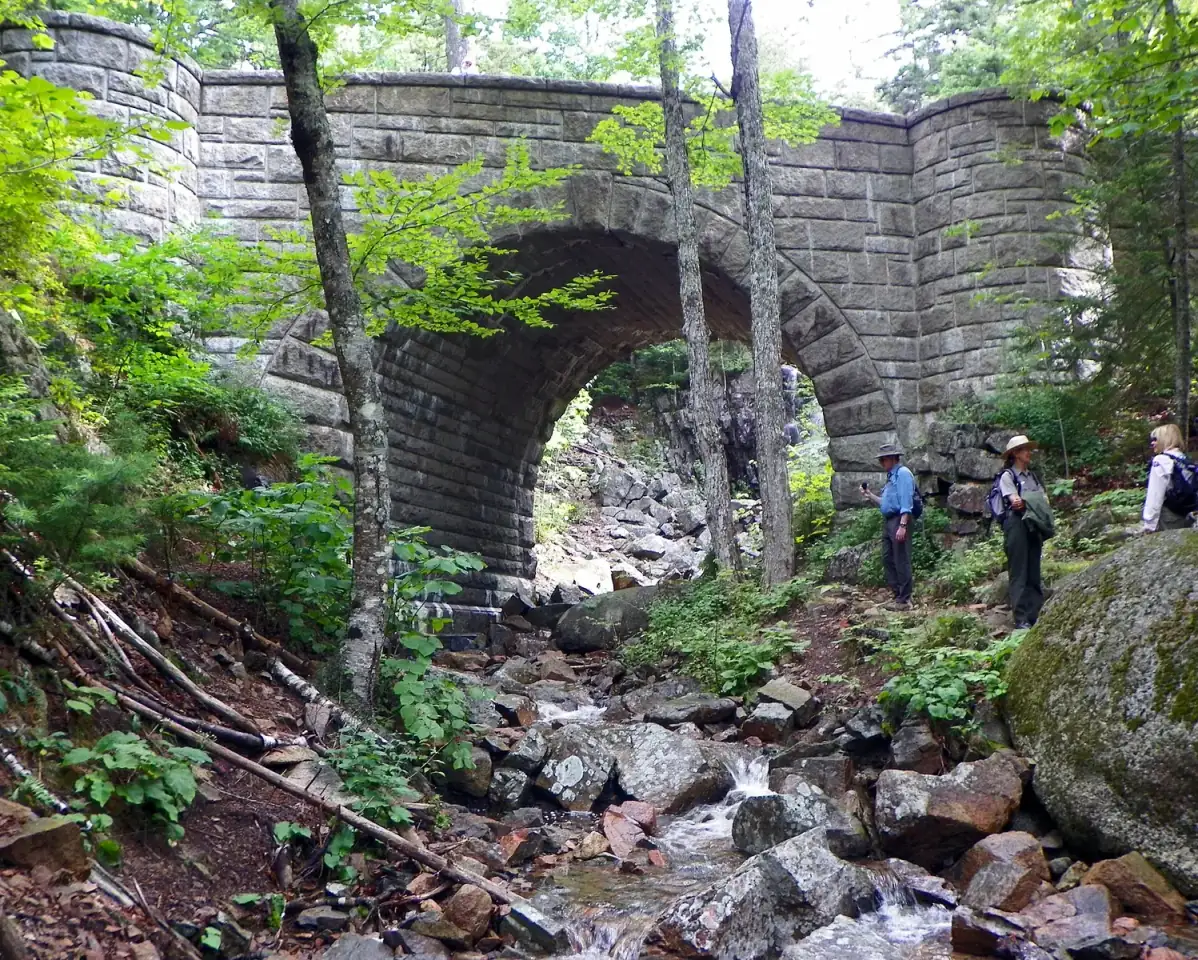
Rockefeller’s Gift to Acadia
Between 1913 and 1940, John D. Rockefeller Jr. financed and oversaw the construction of 57 miles of broken-stone carriage roads through what is now Acadia National Park. Rockefeller was passionate about the project, walking the staked routes himself, overseeing the construction crews by name, and bringing in expert engineers to design 17 stone-faced bridges that blend seamlessly into the landscape. Of those 57 miles, 45 are within park boundaries and open to the public. They remain car-free, just as Rockefeller intended.
The roads wind through forests, along lake shores, and across mountain shoulders, connecting viewpoints and swimming holes with a network that feels more like a European garden estate than a national park. The crushed stone surface is firm enough for road bikes with wider tires but gentle enough for walking, horseback riding, and cross-country skiing. E-bikes are permitted, which has opened these routes to more visitors in recent years.
Best Routes
The carriage road network is extensive, and you can spend days exploring it. Here are the standout sections.
Eagle Lake Loop is one of the most popular rides, circling the lake with water views and forest shade. The loop is about 6 miles and mostly flat, making it ideal for families and casual riders.
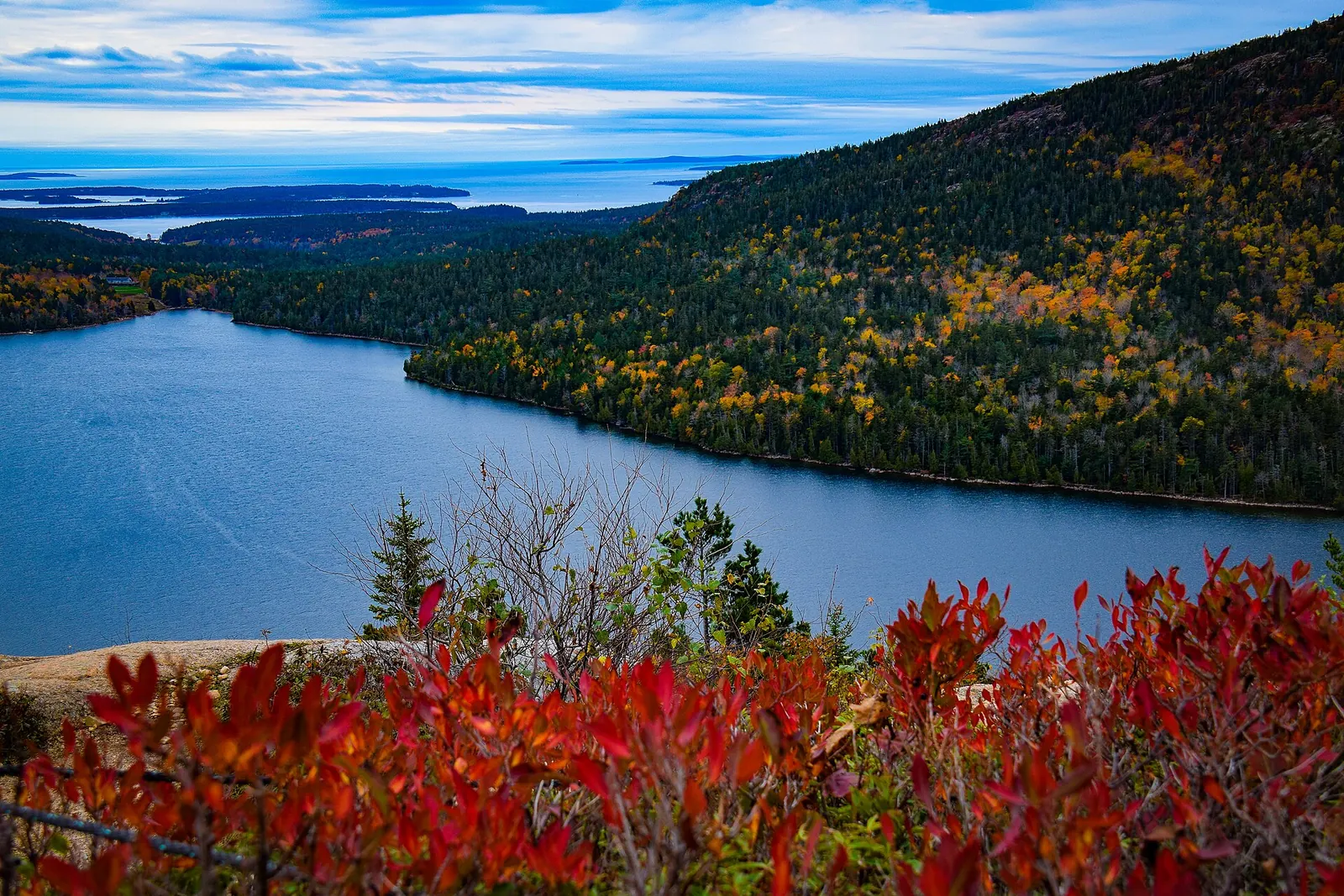
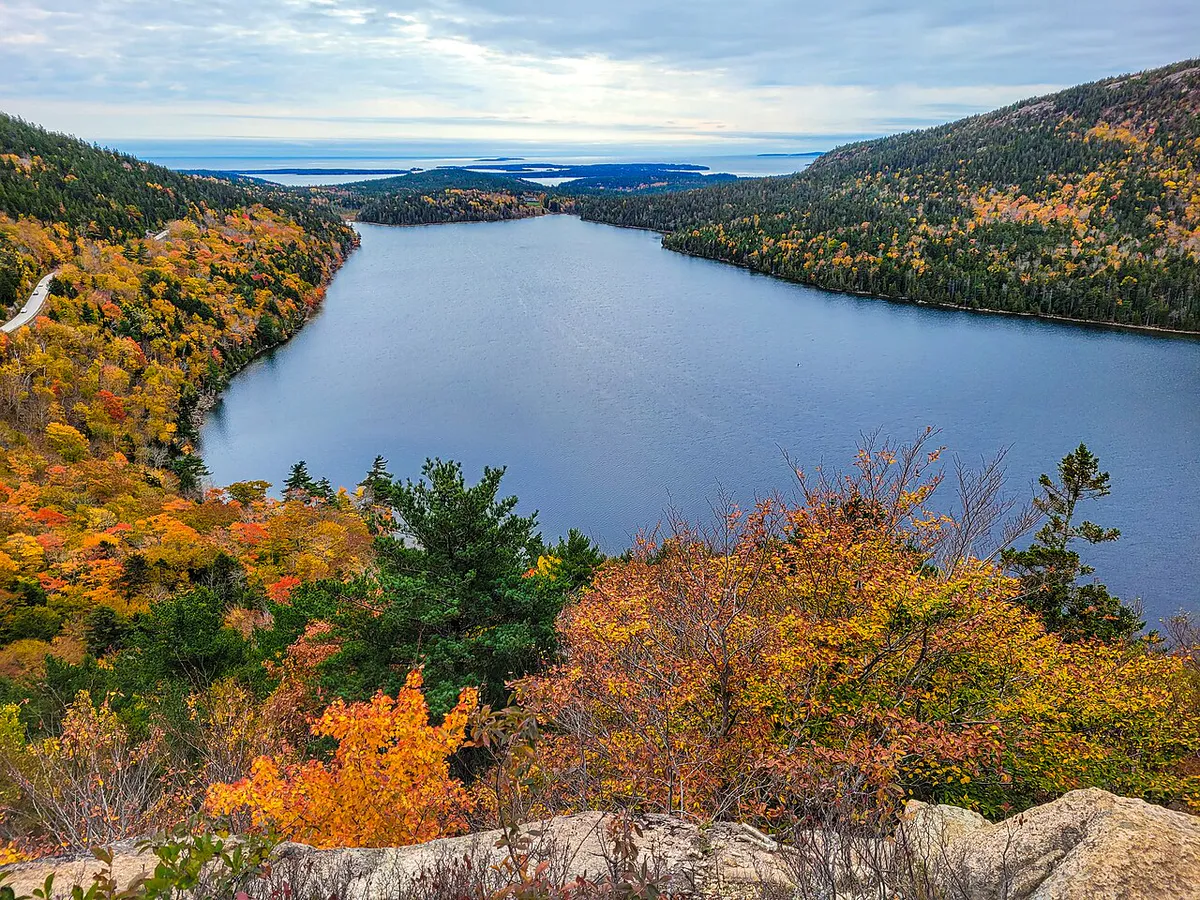
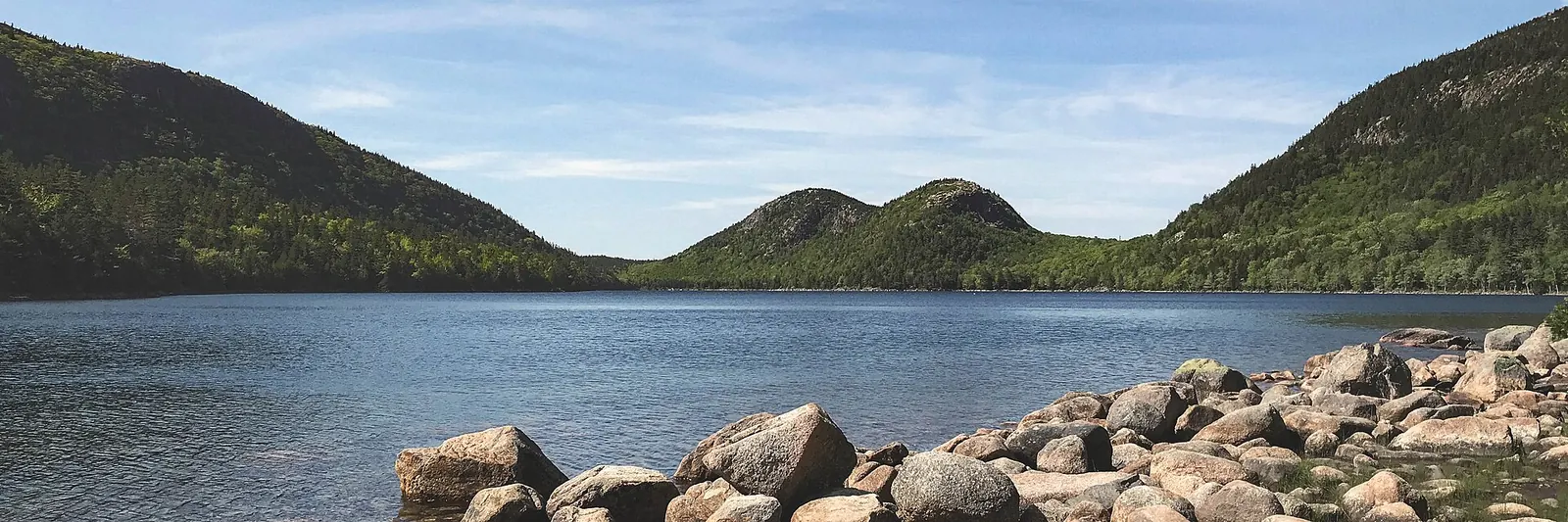
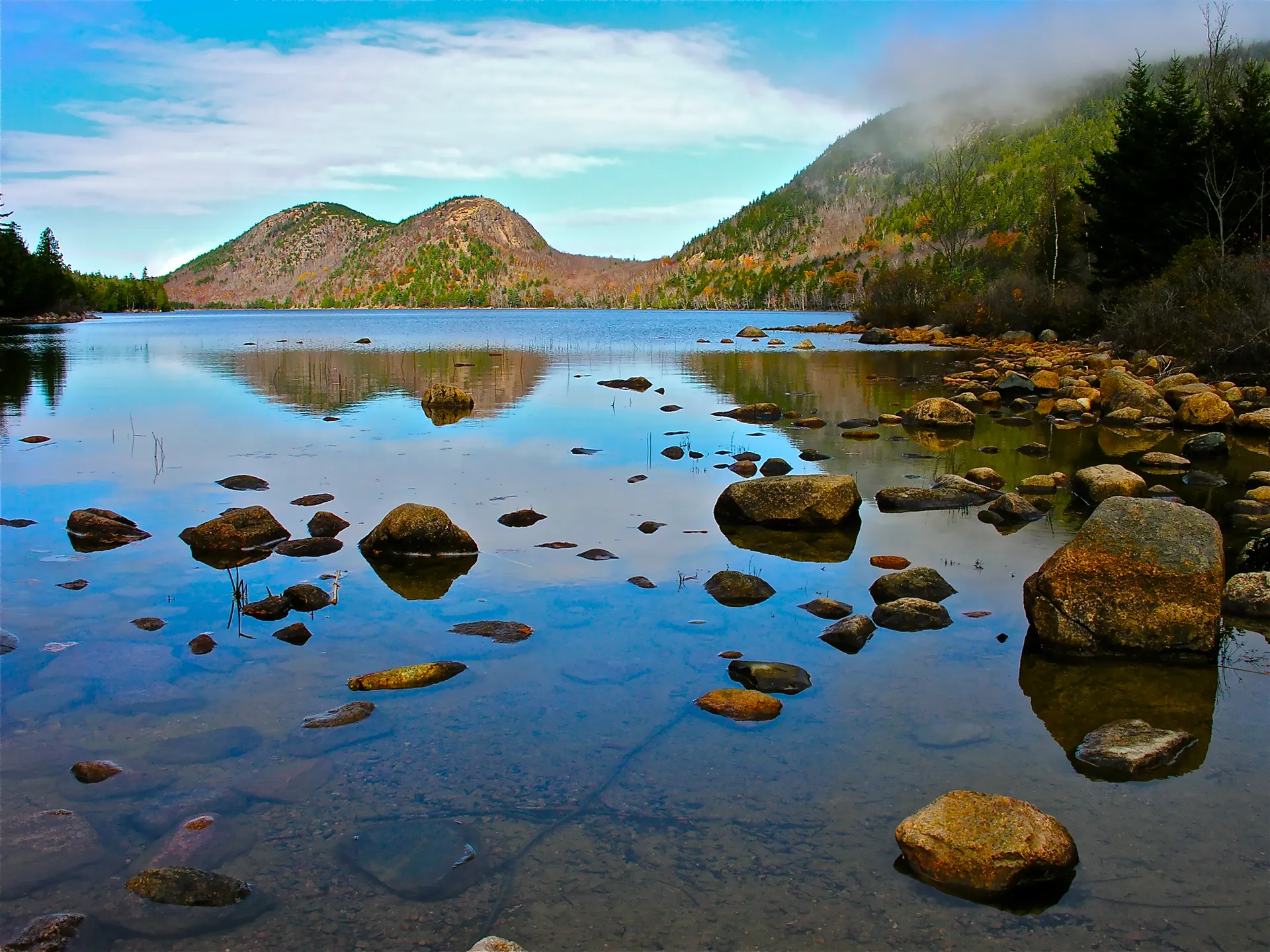
Jordan Pond to Bubble Pond connects two of the park’s most scenic bodies of water through dense forest. The route passes several stone bridges and offers glimpses of the Bubbles, the twin rounded peaks above Jordan Pond. This stretch is about 3.5 miles one way.
Around Day Mountain provides more elevation change and a quieter experience. The roads climb gently through the forest with occasional views of Somes Sound and the western mountains. This area sees fewer visitors than the eastern sections.
Witch Hole Pond is a shorter loop near the park entrance, about 3.5 miles, and good for an easy morning ride or walk with young children.
Several shops in Bar Harbor and near the park entrance rent road bikes, mountain bikes, and e-bikes suited for the carriage roads. Acadia Bike and Bar Harbor Bicycle Shop are popular options. E-bikes make the longer loops accessible to riders who want to cover more ground without the fitness demands.
The Stone Bridges
Rockefeller financed 16 of the 17 stone-faced bridges, each one unique in design. They span streams, waterfalls, road crossings, and cliff sides. The bridges are steel-reinforced concrete underneath, but the facing is native granite and other local stone, which gives them a natural, hand-built appearance.
Some notable bridges include Waterfall Bridge (which frames a cascade below), Deer Brook Bridge (with its graceful arch over a stream valley), and the Hemlock Bridge (tucked into a quiet section of forest). Photographing all 17 bridges is a goal for many repeat visitors.
The bridges are not just decorative. They solved engineering problems that allowed the roads to maintain gentle grades across rugged terrain. Rockefeller insisted on grades no steeper than 9 percent, which is why the roads feel so comfortable for biking and walking.
When to Visit
Spring
Mud season into May. Roads can be soft. Fewer crowds. Some sections may still have snow.
Summer
Ideal biking weather. All roads open. Busiest season, especially July and August. Start early.
Fall
Foliage along the carriage roads is spectacular. Cooler riding temps. Smaller crowds after Labor Day.
Winter
Cross-country skiing and snowshoeing on groomed and ungroomed sections. Peaceful and beautiful.
Summer is prime biking season, but fall is arguably the best time to ride the carriage roads. The foliage turns the hardwoods along the routes into corridors of gold, orange, and red, and the cooler temperatures make the riding more comfortable. Winter transforms the roads into cross-country ski trails, and several sections are groomed by local organizations.
Avoid the Eagle Lake and Jordan Pond loops between 10 AM and 2 PM on summer weekends. These sections get busy with bike traffic. Early morning rides (before 9 AM) or late afternoon outings are much more peaceful. The western sections around Day Mountain and Long Pond see far fewer visitors at any time of day.
Practical Notes
The carriage roads require an Acadia National Park entrance fee ($35 per vehicle for a 7-day pass). Parking at popular trailheads like Eagle Lake and Jordan Pond fills early in summer. The Island Explorer shuttle is a free alternative that connects Bar Harbor to several carriage road access points.
Dogs are allowed on the carriage roads on a leash no longer than 6 feet. Horses are permitted on most sections. The crushed-stone surface is generally accessible for riders of all abilities, though some sections have moderate grades.
Restrooms are available at Jordan Pond House and at several parking areas along Park Loop Road. Water fountains are limited, so bring your own.
Packing List
Carriage Roads Ride
- Bike or rental reservation
- Helmet
- Water (at least 1 liter per person)
- Snacks
- Camera
- Sunscreen
- Bug spray (May through July)
- Park pass
Getting There
Acadia National Park is on Mount Desert Island, reached via Route 3 from the mainland. From Bangor, take I-395 to Route 1A East, then Route 3 over the bridge onto Mount Desert Island. Most visitors orient their trip around the Hulls Cove Visitor Center on Route 3, about four miles northwest of Bar Harbor.
The most popular carriage road access points are off Route 233 (Eagle Lake Road). The Eagle Lake parking area sits on Route 233 about three miles west of Bar Harbor, with lots on both sides of the road just past Duck Brook Road. Jordan Pond carriage roads are accessed from the Jordan Pond House parking area off Park Loop Road. Witch Hole Pond is reached from the Duck Brook Bridge area off Duck Brook Road.
Parking requires a valid Acadia park pass ($35 per vehicle for a 7-day pass). Popular lots like Eagle Lake and Jordan Pond fill before 9 AM in summer. The free Island Explorer shuttle, running late June through mid-October, stops at several carriage road access points and is the easiest way to avoid parking headaches.
The drive from Portland is about 180 miles (three hours) via I-295 and Route 3. Bangor is about 60 miles (an hour) west. GPS coordinates for the carriage road network center approximately 44.3500, -68.2500.
FAQ
How many miles of carriage roads are in Acadia?
There are 45 miles of carriage roads within Acadia National Park boundaries, part of a 57-mile total network that includes 12 miles on private land.
Are e-bikes allowed on the carriage roads?
Yes. E-bikes are permitted on the carriage roads within Acadia. This has made the network more accessible to a wider range of visitors.
How many stone bridges are on the carriage roads?
There are 17 stone-faced bridges, 16 of which were financed by John D. Rockefeller Jr. Each bridge is unique in design and built from native stone.
Do I need to pay to use the carriage roads?
Yes. An Acadia National Park entrance fee is required. A 7-day vehicle pass is $35. Annual Acadia passes are $70, and the America the Beautiful pass ($80) covers all national parks.
Can I walk on the carriage roads instead of biking?
Absolutely. The carriage roads are open to walkers, joggers, horseback riders, and in winter, cross-country skiers and snowshoers. The crushed-stone surface is comfortable for walking.