Iron from the Wilderness
Deep in the Maine woods, where gravel logging roads wind through spruce and hardwood forest, a massive stone blast furnace rises among the trees. This is Katahdin Iron Works, a remnant of one of Maine’s most ambitious 19th-century industrial ventures. The furnace tower stands roughly 35 feet tall, built from local stone, and it looks like something from a medieval castle dropped into the North Woods. It is one of the best-preserved charcoal iron smelting sites in New England.
The operation began in 1843 when Moses Greenleaf and other investors recognized that the area had the three ingredients needed for iron production: iron ore deposits, vast forests for charcoal, and water power from the Pleasant River. At its peak in the 1870s, the Katahdin Iron Works employed over 200 workers and produced roughly 2,000 tons of pig iron per year. A small company town grew around the furnace, complete with housing, a store, a school, and a hotel that later became a popular sporting camp for vacationers.
The iron industry collapsed in the 1890s when higher-quality ore from the Lake Superior region made the remote Maine operation uneconomical. The workers left, the buildings fell, and the forest slowly reclaimed the town. Today, the blast furnace, a charcoal kiln, and foundation remnants are all that survive above ground.
What to See
The blast furnace is the centerpiece. It is a tapering stone tower with arched openings at the base where workers once tapped molten iron and fed the fire. Interpretive signs explain the smelting process: how charcoal was produced in beehive kilns, how ore was mined and hauled to the furnace, and how the blast was powered by a water-driven bellows.
A short walk from the furnace takes you to the remains of a charcoal kiln, a beehive-shaped stone structure where wood was slowly burned to produce charcoal fuel. Scattered around the site are foundation stones from the company buildings, now mostly hidden in ferns and underbrush. The state maintains the site with mowed paths, interpretive panels, and a small parking area.
Gateway to Gulf Hagas
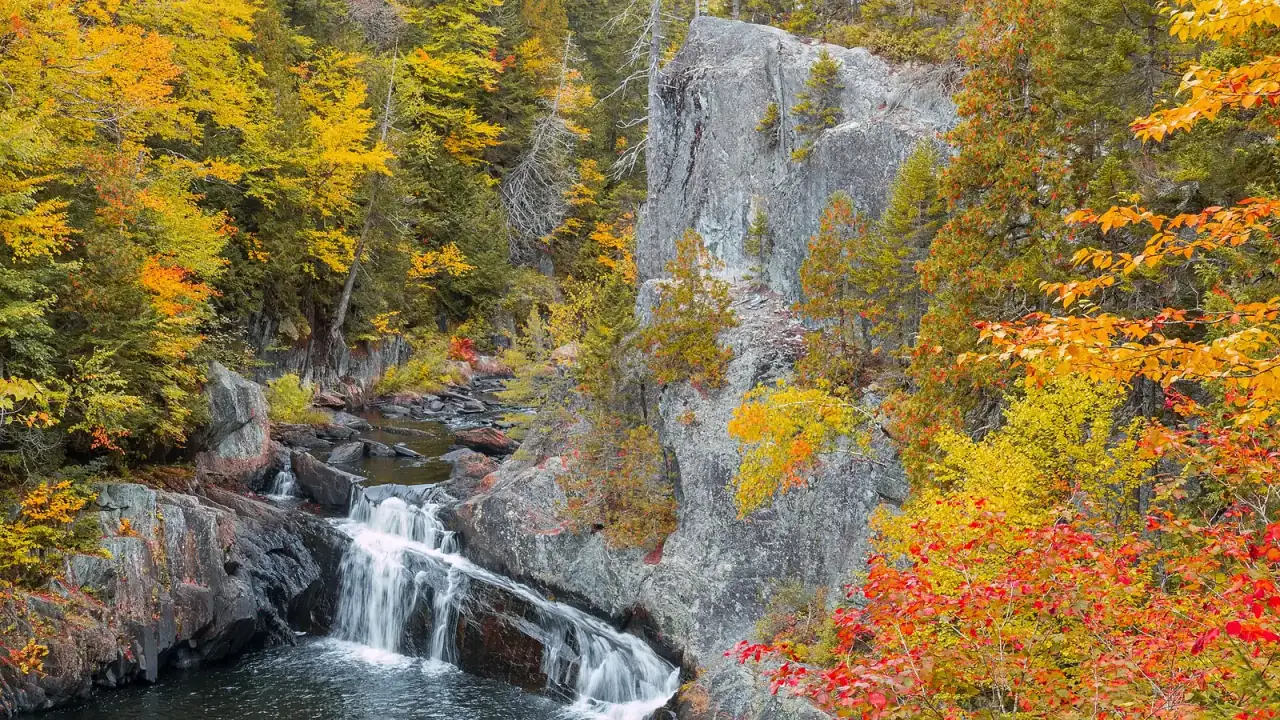
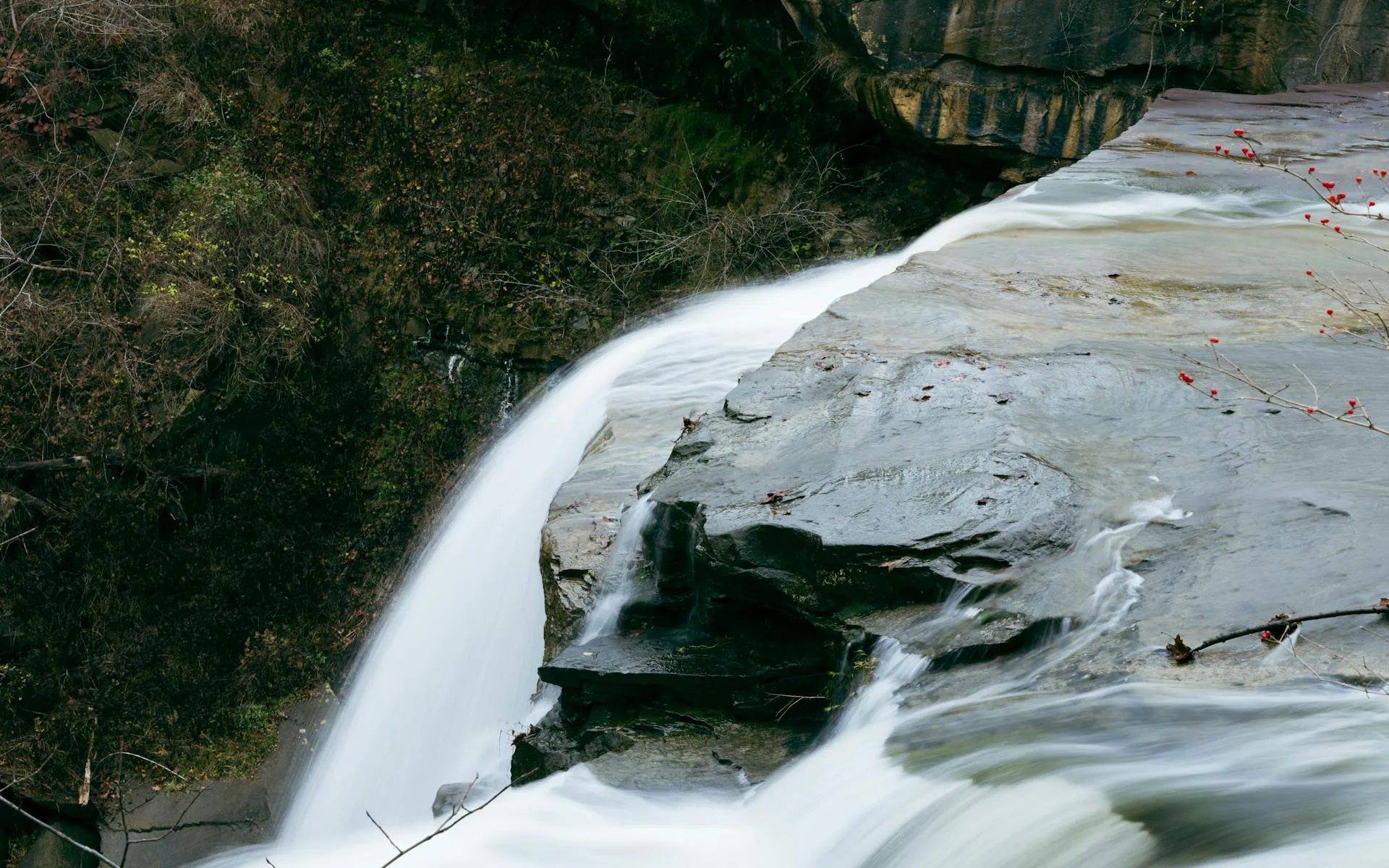
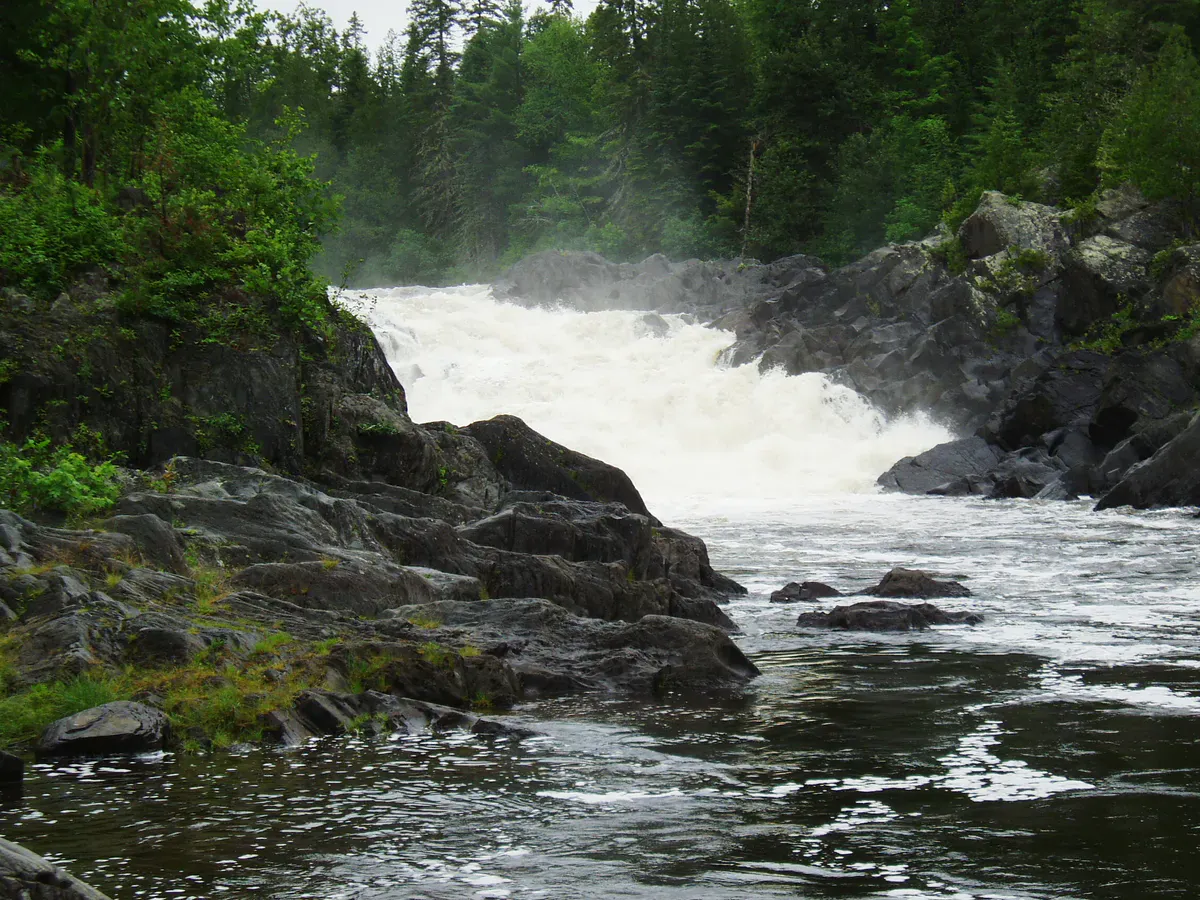
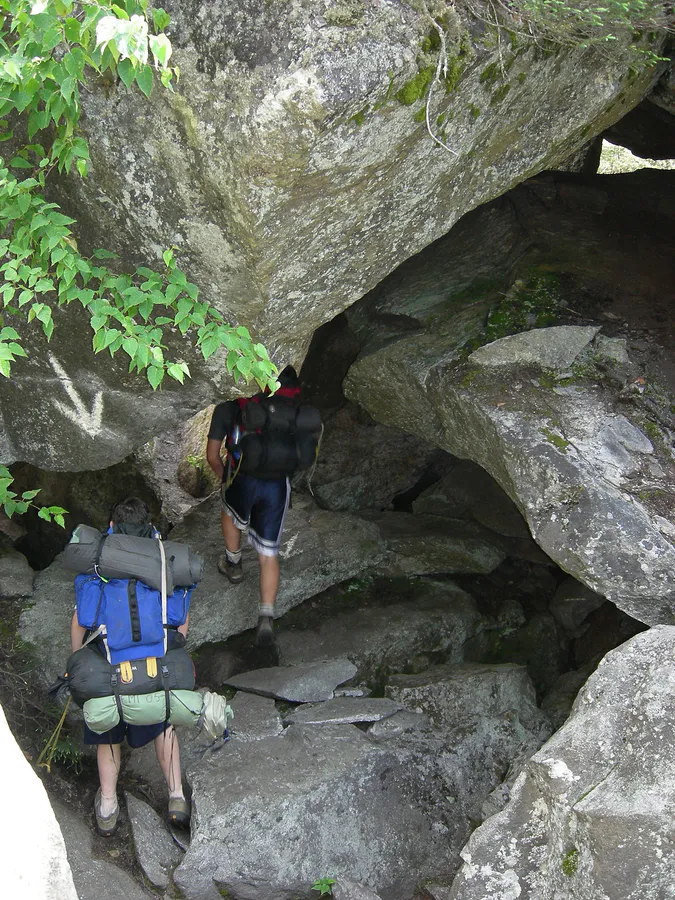
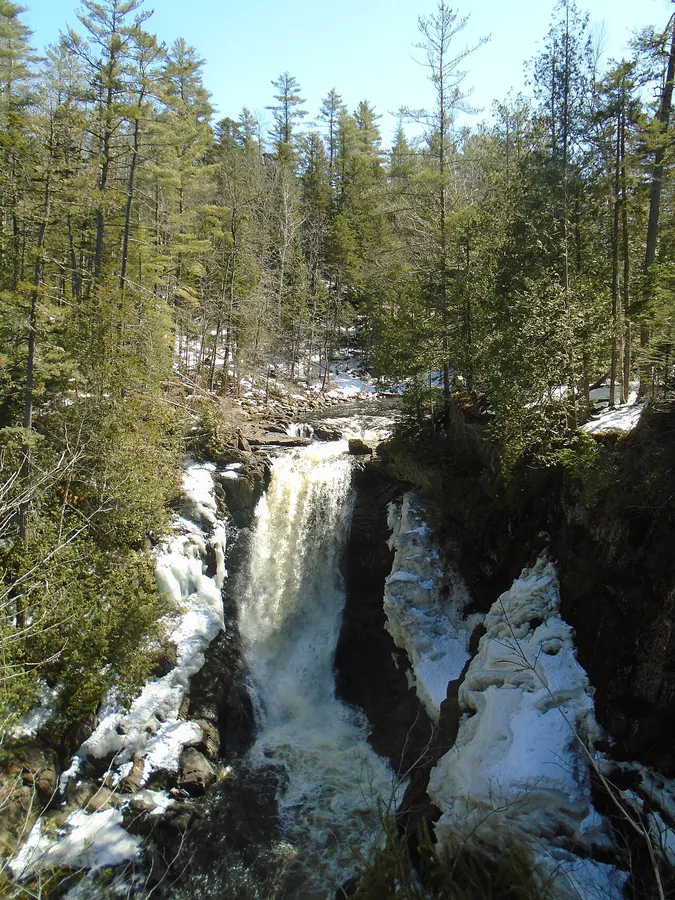
Most visitors to Katahdin Iron Works are not here just for the ruins. The site sits at the beginning of the gravel road that leads to the Gulf Hagas trailhead, one of the most spectacular gorge hikes in the eastern United States. Gulf Hagas is sometimes called the Grand Canyon of Maine, with slate walls rising above the Pleasant River and a series of waterfalls dropping through the narrow gorge.
The Iron Works makes a natural first stop on the way to Gulf Hagas. You pass through the North Maine Woods checkpoint here, pay the gate fee, and then continue on the logging road to the trailhead. Stop at the furnace for 15 to 20 minutes on your way in or out. The historical context adds something to the Gulf Hagas hike, since the same Pleasant River that carved the gorge once powered the iron works.
When to Go
Summer
Best access and longest days. Bugs can be fierce in June. July and August are more comfortable. Combine with Gulf Hagas for a full day.
Fall
Bright foliage along the road and around the ruins. Fewer bugs. October brings color peak but shorter days and potentially muddy roads.
Spring
Road opens late May depending on conditions. Mud season can make access difficult. Black flies are at their worst.
Winter
Road is not maintained. Access is not practical for most visitors.
Practical Notes
There are no restrooms, water, or services at the site. Bring everything you need. Cell service is nonexistent here and for much of the drive in. Tell someone your plans before heading into this area.
The KI Jo-Mary day-use fee at the checkpoint is charged per person, not per vehicle: $13 for Maine residents and $18 for nonresidents, with visitors under 18 and 70 or older free. This fee covers access to the logging road network, not just the iron works site. Camping costs $15 per night on top of the day-use fee.
The drive from Brownville Junction to the iron works follows a paved road that turns to well-maintained gravel. From Brownville Junction, it is about 10 miles. The last few miles are gravel but generally passable in a regular car in dry conditions. Beyond the iron works toward Gulf Hagas, the road gets rougher.
Getting There
From I-95, take Exit 199 to Route 11 North toward Brownville and Brownville Junction. In Brownville Junction, follow signs for Katahdin Iron Works Road (also called KI Road). The paved road turns to gravel after several miles and ends at the checkpoint gate and iron works site. From Bangor, the drive takes about 90 minutes. From Portland, expect roughly 3.5 to 4 hours.
GPS coordinates for the iron works site: 45.4742, -69.2811
FAQ
What is Katahdin Iron Works?
A historic charcoal iron smelting operation that ran from 1843 to the 1890s in the Maine woods. The preserved blast furnace, charcoal kiln remains, and interpretive signs are open to visitors.
Do I need to pay to visit Katahdin Iron Works?
The KI Jo-Mary checkpoint sits at the iron works. From its May opening through October it charges a per-person day-use fee: $13 for Maine residents and $18 for nonresidents, with visitors under 18 and 70 or older free. Checkpoints take cash or check only. The fee covers the road network beyond the gate, including the road to Gulf Hagas.
Can I visit Katahdin Iron Works without hiking Gulf Hagas?
Yes. The iron works site itself takes only 15 to 30 minutes to explore. Many people stop here on the way to Gulf Hagas, but it is worth a visit on its own, especially if you are interested in industrial history.
Is there cell service at Katahdin Iron Works?
No. There is no cell service at the site or along most of the access road. Plan accordingly and tell someone where you are going before heading in.
What vehicles can reach Katahdin Iron Works?
A regular car can reach the iron works in dry conditions. The road beyond the iron works to Gulf Hagas is rougher and high-clearance vehicles are recommended.