Two Thousand Years of Oyster Feasts
On the banks of the Damariscotta River, just south of the twin towns of Damariscotta and Newcastle, a massive deposit of oyster shells rises from the riverbank like a white cliff face. This is the Whaleback Shell Midden, one of the largest and most significant Native American archaeological sites in the northeastern United States. The shell deposit is roughly 2,000 years old, built up over centuries by the Wabanaki people who gathered here to harvest, eat, and process oysters from the river.
The midden (an archaeological term for a refuse heap) originally stood over 30 feet high and contained millions of oyster shells. In the late 19th century, much of it was mined for chicken feed and fertilizer, the calcium-rich shells were commercially valuable, but what remains is still impressive. The exposed cross-section of the midden reveals layers of densely packed shells, interspersed with thin dark bands of ash, charcoal, and soil that represent the campfires and living surfaces of the people who ate here.
The site was designated a National Historic Landmark in 1969, recognizing its significance as evidence of one of the largest pre-contact shellfish harvesting operations in North America. Standing here, looking at a wall of shells accumulated over 20 centuries, forces a recalibration of your sense of time.
What You See
The most visible feature is the exposed face of the midden itself, a vertical cross-section roughly 15 feet high at its tallest remaining point. The shells are densely packed and compacted by centuries of weight, forming a solid mass that is almost like sedimentary rock. Individual shells are clearly visible, most are eastern oyster (Crassostrea virginica), though clam and mussel shells are also present.
The dark horizontal bands between shell layers are particularly interesting. These represent the campfire areas and living surfaces where the oysters were processed. Archaeological excavations have recovered stone tools, bone implements, pottery fragments, and animal bones from these layers, providing evidence of the broader diet and activities of the people who gathered here.
The oyster shells in the midden are noticeably larger than modern oysters from the same river. Many are 8 to 10 inches long, some even larger. This tells us something about the abundance of the pre-contact oyster population and the health of the Damariscotta River ecosystem before European settlement altered the landscape.
An interpretive trail with signs explains the site’s history, the archaeological significance, and the cultural context of the Wabanaki oyster harvests. The trail is short, about a quarter mile, and follows the riverbank past the midden face and through the surrounding forest.
Historical Context
The Damariscotta River was once one of the richest oyster habitats on the Atlantic coast. The Wabanaki people traveled to this stretch of river for seasonal oyster harvests, setting up camps along the banks and processing enormous quantities of shellfish. The middens on both banks of the river accumulated over approximately 1,000 years, from roughly 200 BCE to 1000 CE.
There were originally two major middens, one on each bank of the river. The Glidden Midden on the east bank and the Whaleback Midden on the west bank faced each other across the water, marking what must have been a culturally significant gathering place. The Glidden Midden was almost entirely mined for commercial use in the 1880s. The Whaleback survived somewhat better, though it too was partially mined.
The shell midden is a protected National Historic Landmark. Do not remove shells, dig in the deposit, or disturb the site in any way. Removing artifacts from a National Historic Landmark is a federal crime. Look, photograph, and learn, but leave everything in place.
The commercial mining of the middens in the late 1800s was a significant cultural loss. Thousands of tons of shells, and the archaeological information they contained, were ground into fertilizer and animal feed. Contemporary efforts focus on preserving what remains and interpreting the site for the public.
Visit the Damariscotta River Cruises or paddle the river to see the midden from the water. From the river, you can see the full scale of the remaining deposit and get a sense of how massive the original midden must have been. The view from the water also shows the Glidden Midden site on the opposite bank.
The Damariscotta River Today
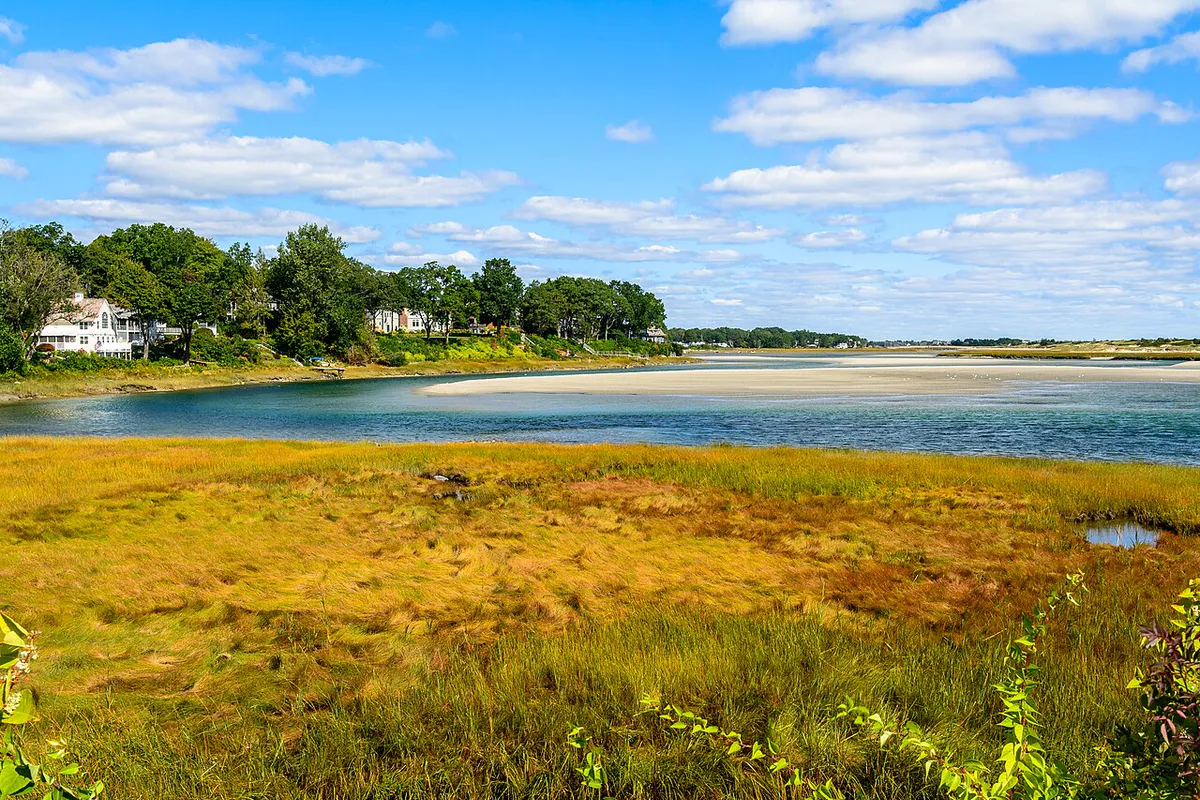
The Damariscotta River has experienced an oyster revival in recent decades. Aquaculture operations now raise oysters commercially in the same waters where Native Americans harvested wild oysters for millennia. Damariscotta is known as the “oyster capital of New England,” and several restaurants in town serve locally grown oysters that connect directly to the 2,000-year tradition visible at the midden.
The connection between the ancient midden and the modern oyster farms is not lost on locals. Some oyster farmers see themselves as continuing a practice that predates their industry by 20 centuries. The river’s oyster-growing conditions, clean water, strong tidal exchange, and the right mix of salinity, have not changed.
When to Go
Spring
The site is accessible and the interpretive trail is clear. The forest leafs out and the river is high with snowmelt. Quiet visiting.
Summer
Full foliage provides shade. The best time to combine with other Damariscotta River activities. The interpretive signs are most accessible.
Fall
Beautiful fall color along the river. The site is quiet. Excellent time for photography with the white shells against autumn foliage.
Winter
Accessible but the trail may be snowy or icy. The exposed midden face is visible year-round. No facilities.
Practical Notes
The Whaleback Shell Midden is located on Business Route 1 (Main Street) in Damariscotta, on the west bank of the river. A small parking area provides access to the interpretive trail. The site is free and open year-round. There are no facilities at the site itself, but downtown Damariscotta is less than a mile away with restaurants, shops, and public restrooms.
The site is managed by the Friends of the Whaleback Shell Midden and the Maine Bureau of Parks and Lands.
FAQ
What is a shell midden?
A midden is an archaeological term for a refuse heap. A shell midden is a deposit of discarded shells from shellfish processing. The Whaleback Midden accumulated over approximately 1,000 years of Wabanaki oyster harvesting, roughly from 200 BCE to 1000 CE.
Is the Whaleback Shell Midden free to visit?
Yes. The site is free and open to the public year-round. A short interpretive trail with signs explains the site's history and significance.
Can you take shells from the midden?
Absolutely not. The site is a National Historic Landmark and removing any material is a federal crime. Leave everything in place for future visitors and ongoing research.
How old is the Whaleback Shell Midden?
The shell deposits accumulated over approximately 1,000 years, from roughly 200 BCE to 1000 CE, making the site about 2,000 years old at its most recent layers.
Why is the midden called Whaleback?
The original shape of the midden, a long, rounded mound of shells rising from the riverbank, resembled the back of a whale when seen from the water. Commercial mining in the 1880s reduced its size significantly, but the name persisted.