A Gorge You Can See from the Car
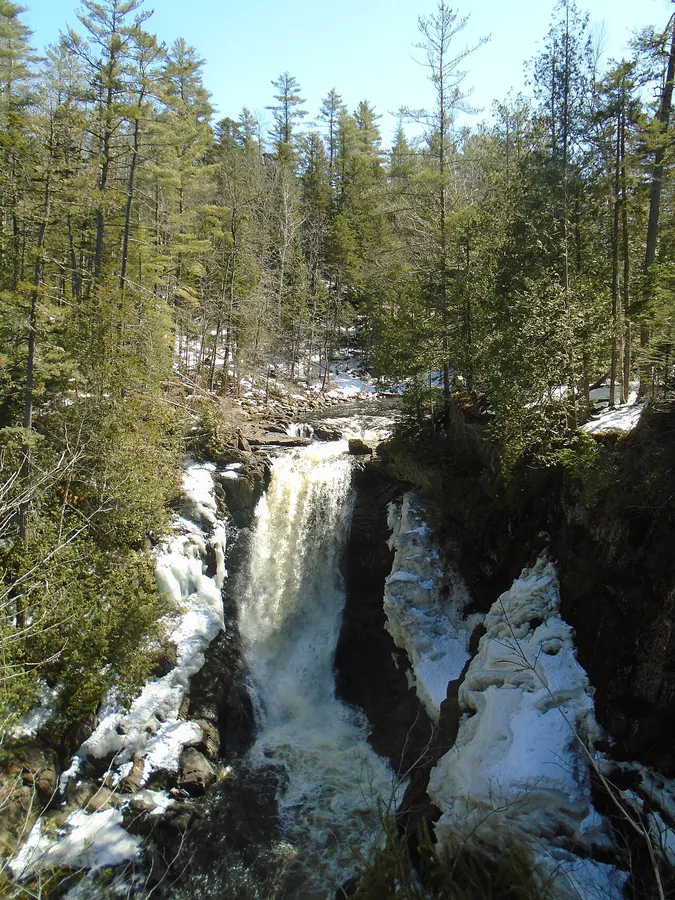
Snow Falls is a 25-foot cascade on the Little Androscoggin River that cuts through a narrow gorge between West Paris and South Paris in Oxford County. What makes it unusual is how accessible it is. You pull off Route 26 into a rest area, walk a few steps, and you are looking down into a tight rock gorge where the river drops through a series of slanting cascades into a pool below. No trail, no hike, no permit. Just park and look.
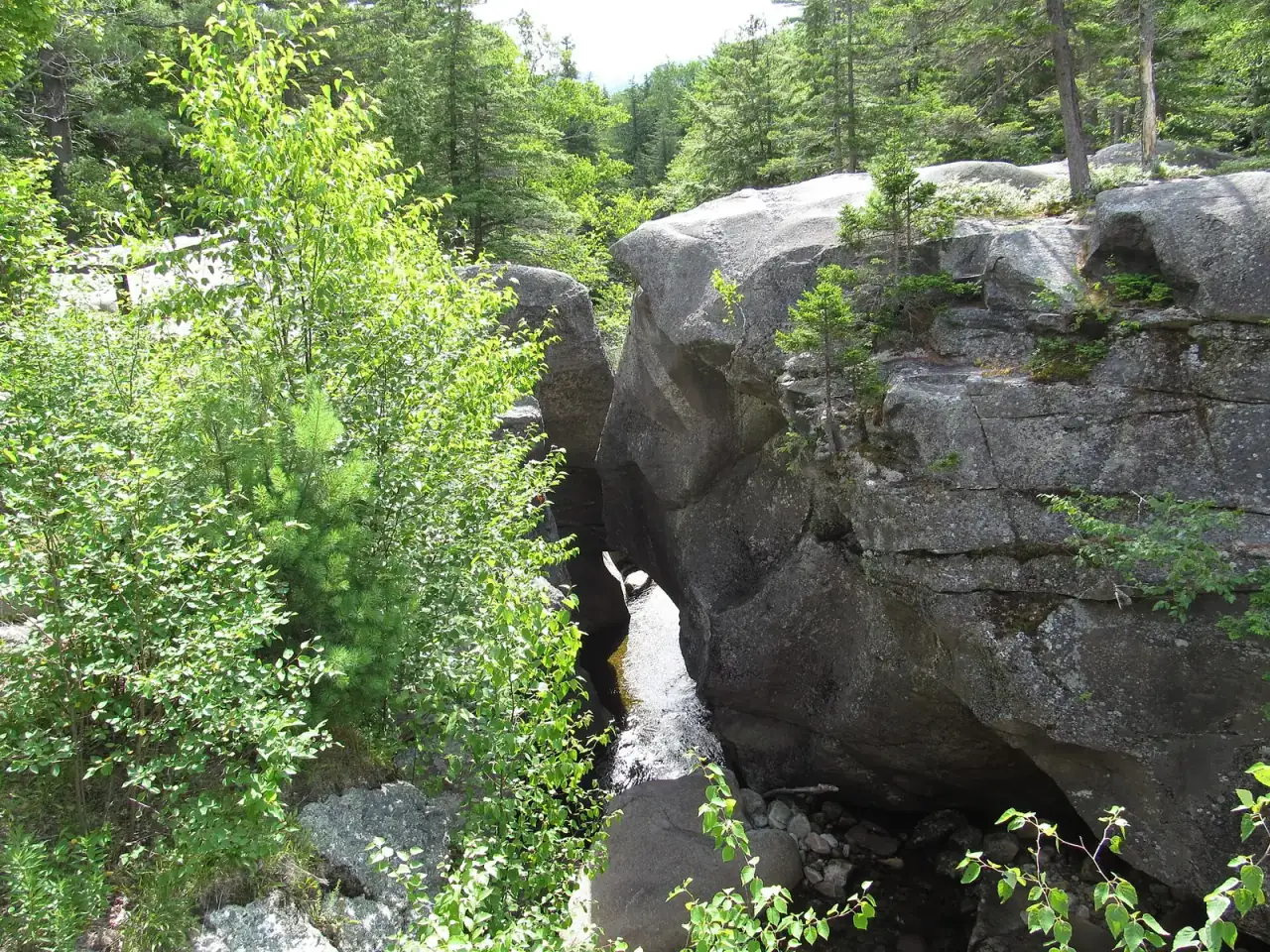
The gorge itself is the real attraction. The Little Androscoggin has carved a slot through bedrock over thousands of years, and the walls rise steeply on both sides. A bridge spans the gorge at the rest area, giving you a direct overhead view of the water dropping through the slot. The gorge is roughly 30 feet deep and about 15 feet wide at its narrowest point. When water levels are high, the entire gorge fills with white water and spray.
Safety fencing has been installed along the gorge edges to prevent people from climbing into the canyon. The rock walls are steep, slippery, and dangerous. The gorge is not a swimming hole. People have been seriously injured attempting to access the base of the falls. Stay behind the fences and enjoy the view from the bridge and overlooks.
History of the Falls
Snow Falls is named after Captain Snow, a hunter and trapper who was killed near this site in 1762 during the French and Indian War era. The name has nothing to do with winter snow. Over the centuries, several mills were built along the falls to harness the river’s power, and ruins of some of these structures are still visible on the west bank. The falls have been a known landmark and rest stop along this corridor for well over a century.
The rest area was developed to give travelers a place to stop and take in the gorge. Picnic tables sit under shade trees near the parking lot, and the whole stop takes as little as ten minutes if you are just passing through, or longer if you want to sit, eat, and watch the water.
Snow Falls is at its most impressive when water levels are high. After heavy rain or during spring snowmelt, the Little Androscoggin pushes a serious volume of water through the gorge, and the cascades become a continuous sheet of white water. In late summer, the flow can drop significantly. If you want drama, visit in May or after a good rainstorm.
The Gorge
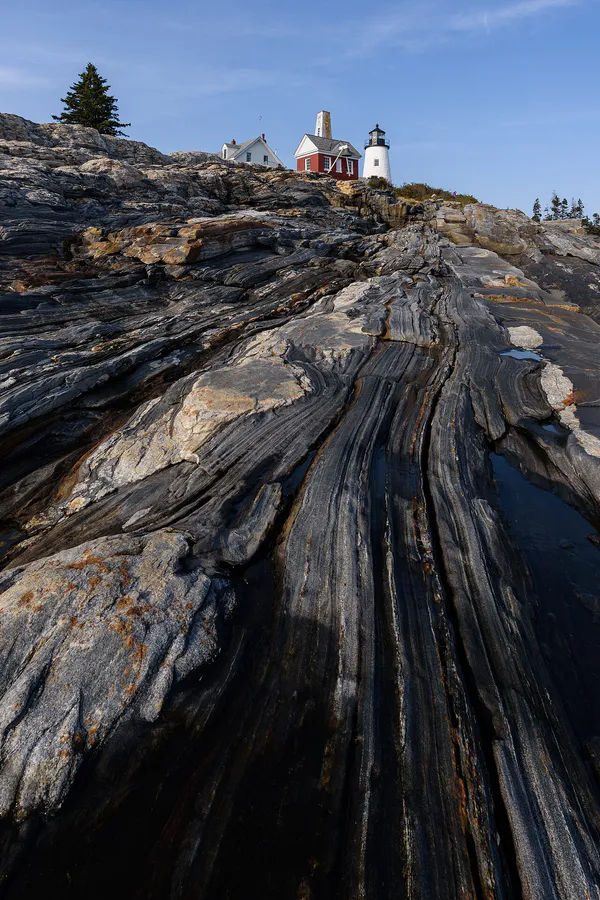
The rock is a dark metamorphic slate that shows clear layering and folding from the geological forces that shaped this part of Maine. Glacial action widened the gorge, and the river has been deepening it ever since.
From the bridge, you can see the full drop where the river enters the gorge at the upstream end and exits into a wider pool downstream. The cascades are slanting rather than vertical, with the water sliding and tumbling over angled rock faces. A pair of compact binoculars helps you pick out the layered rock detail and the old mill ruins deep in the gorge from the bridge. In fall, the hardwood trees along the banks turn orange and red, and the contrast with the dark rock and white water makes this a popular photography stop.
Mill ruins on the west bank add a layer of history to the scene. Stone foundations and fragments of old dams are visible among the trees, remnants of an era when nearly every falls in Maine powered a sawmill or grist mill.
When to Visit
Spring
Snowmelt brings the Little Androscoggin to its highest flow. The gorge is at its most dramatic in April and May.
Summer
Low water levels reduce the falls to a modest cascade. Still scenic, but less impressive than spring.
Fall
Foliage along the gorge is beautiful in late September and October. Moderate water flow.
Winter
The gorge partially freezes. The rest area is accessible from the road but may not be plowed.
Spring is the best season. The combination of high water and the tight gorge creates a powerful display. Summer visitors may be disappointed by low flow. Fall foliage around the gorge is attractive, and the stop is quick enough to add to any leaf-peeping drive through Oxford County.
Practical Notes
Snow Falls is a natural break point on the drive from Portland to Bethel or Sunday River ski resort. If you are heading to Grafton Notch or the western mountains, stop here on the way through. It only takes ten minutes, and the gorge is genuinely scenic. The nearest public restrooms are in South Paris or West Paris.
There are no fees or permits required. The rest area has a paved parking lot with room for about 15 cars and picnic tables but no restroom facilities. Dogs are welcome at the rest area.
Packing List
Snow Falls Visit
- Camera (the gorge photographs well, especially with foliage or high water)
- Snacks or a picnic (picnic tables available)
- Binoculars (helpful for viewing details in the gorge from the bridge)
- Rain jacket if weather is unsettled
Getting There
Snow Falls rest area is on Route 26, about six miles north of the intersection of Routes 26 and 119 in South Paris, or two miles south of Trap Corner. The rest area is clearly signed and has a paved parking lot. It sits between West Paris and South Paris, an easy stop if you are driving between Portland and the Bethel or Rangeley areas.
From Portland, the drive takes about an hour and 15 minutes via the Maine Turnpike to Auburn and then Route 26 north. From Bangor, take Route 2 west to Rumford and then Route 26 south, about two hours and 15 minutes.
GPS coordinates: 44.3048, -70.5398
FAQ
Can you swim at Snow Falls?
No. The gorge is fenced off and the rock walls are too steep and dangerous to access safely. This is a viewing-only waterfall. The current in the gorge is strong and the rocks are extremely slippery.
Is there a trail at Snow Falls?
No trail is needed. The falls and gorge are visible directly from the rest area parking lot and the bridge that spans the gorge. It is fully accessible without any hiking.
Who was Snow Falls named after?
The falls are named after Captain Snow, a hunter and trapper who was killed near this site in 1762. The name has no connection to winter weather.
Is Snow Falls worth stopping for?
Yes, especially if you are already driving Route 26 between Portland and the western mountains. The gorge is genuinely impressive, particularly in spring when water levels are high. It takes less than ten minutes to see.
Are there restrooms at Snow Falls?
The rest area has a parking lot and picnic tables. Restroom availability varies; the nearest reliable public restrooms are in South Paris or West Paris.