
Maine’s Largest Granite Fortress
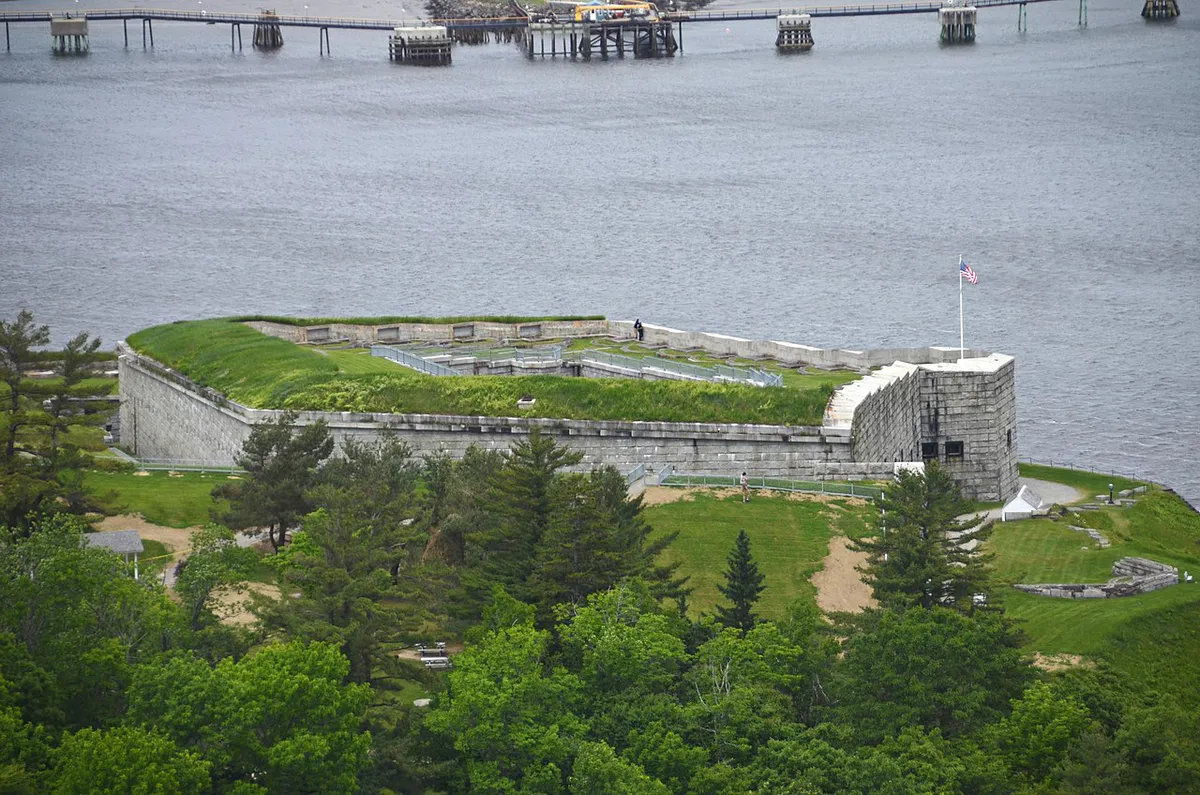
Fort Knox sits on a bluff above the Penobscot River in Prospect, a 124-acre fortification built to defend the river valley from British naval attack. Construction began in 1844 during tensions with Great Britain over the Maine-New Brunswick border. The fort was garrisoned during the Civil War and the Spanish-American War but never saw combat. That lack of battle damage is precisely why it survives today as the most intact granite fortification in Maine and one of the best-preserved military structures on the entire New England coast.
The fort was not named for the federal gold depository in Kentucky. Both share a namesake: Henry Knox, the first United States Secretary of War and a Revolutionary War general who settled in nearby Thomaston after the war. Maine’s Fort Knox predates Kentucky’s by nearly a century.
What makes this site remarkable beyond its history is its sheer physical presence. The fort’s walls are built from locally quarried granite, cut and fitted with a precision that remains impressive nearly two centuries later. The interior is a labyrinth of vaulted casemates, magazine rooms, spiral staircases, and long tunnels connecting the various bastions. Walking through it feels more like exploring a medieval castle than a nineteenth-century military installation.
Exploring the Fort
The fort is essentially a massive hollow rectangle of granite walls surrounding an open parade ground. Two tiers of gun emplacements face the river, while the rear walls are protected by a dry moat cut from bedrock. You can explore freely once inside, and there is a lot of ground to cover.
The Casemates: Arched granite chambers line the interior walls, originally designed to house soldiers and store supplies. The vaulting is beautiful stonework, with each block precisely cut and fitted without mortar. The chambers are cool and dim even on the hottest summer days.
The Hot Shot Furnace: Near the river-facing walls, a brick furnace was designed to heat cannonballs until they glowed red. The heated shot would be loaded into cannons and fired at wooden-hulled ships, setting them ablaze on impact. The furnace is one of only a few surviving examples in the country.
The Spiral Staircases: Twin granite spiral staircases in the main bastions connect the lower casemates to the upper gun platforms. The stairs are narrow and worn, and climbing them gives a tactile sense of the fort’s age and the labor that went into its construction.
The Penobscot Narrows Connection
Fort Knox shares its parking area and admission with the Penobscot Narrows Bridge Observatory, the tallest public bridge observatory in the world at 420 feet. The combination ticket covers both, and most visitors do both in a single trip. The observatory elevator rises inside the bridge pylon and opens to a glass-enclosed observation deck with views stretching from Penobscot Bay to the Camden Hills and, on clear days, to Cadillac Mountain.
The bridge itself is a modern cable-stayed design that replaced the old Waldo-Hancock Bridge in 2006. Standing at the fort’s upper ramparts, the bridge frames a striking visual contrast: granite walls built by hand in the 1840s beside a twenty-first-century engineering achievement.
When to Go
Summer
Peak season with the longest hours. Living history events and cannon demonstrations on select weekends. The interior chambers offer cool relief on hot days.
Fall
Foliage season transforms the Penobscot River valley. Fewer visitors than summer. Fort Knox Fright at the Fort in October draws large crowds for Halloween events.
Spring
Site opens May 1. Quieter than summer with comfortable temperatures for exploring. Grounds are green and the river runs high.
Winter
Fort and observatory are closed. The grounds are not accessible.
Fright at the Fort
Each October, Fort Knox transforms into one of Maine’s largest and most popular Halloween events. Fright at the Fort uses the fort’s tunnels, chambers, and dark corridors for a haunted experience that draws tens of thousands of visitors over several weekends. If you have young children and want to avoid the Halloween crowds, visit before October.
Practical Notes
The parking area serves both Fort Knox and the observatory. It fills on peak summer weekends, especially when combined with observatory traffic. Restrooms and a small gift shop are at the parking area. Picnic tables are available on the fort grounds.
Dogs on leash are allowed on the fort grounds and in the outdoor areas but not inside the observatory elevator or observation deck.
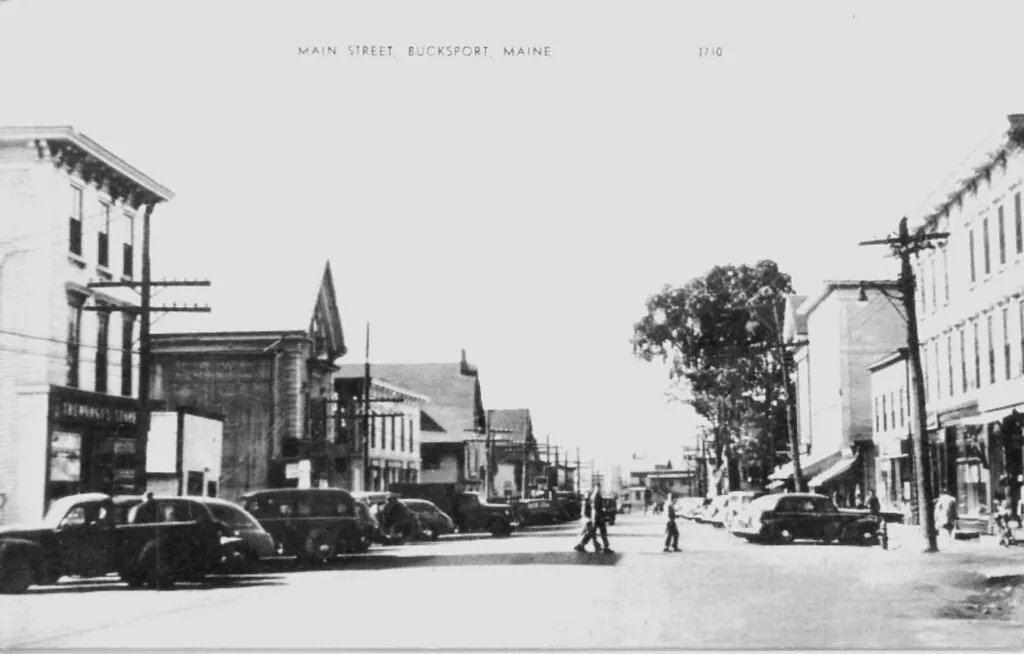
Bucksport, just across the river, has restaurants, shops, and the Bucksport Waterfront Walkway. The town makes a good lunch stop before or after the fort.
Checklist
What to Bring
- Bring a flashlight for interior passages
- Wear sturdy shoes for uneven stone surfaces
- Allow 60-90 minutes for the fort itself
- Get the combined fort + observatory ticket
- Explore both upper and lower gun batteries
- Find the hot shot furnace near the river wall
- Walk the dry moat behind the main structure
- Check for living history demonstrations on weekends
- Visit the observatory for Penobscot Bay views
- Stop in Bucksport for lunch or supplies
FAQ
Is Fort Knox in Maine the same as the gold vault?
No. Both are named after Henry Knox, the first US Secretary of War. Maine's Fort Knox was built in 1844. The Kentucky facility, Fort Knox Army Post and the US Bullion Depository, came much later. Maine's fort stores granite, not gold.
Can you go inside the fort?
Yes. The fort is open for self-guided exploration. You can walk through the casemates, climb the spiral staircases, visit the magazine rooms, and access the upper ramparts. Bring a flashlight for the darker interior spaces.
How long should I plan for a visit?
Allow 60 to 90 minutes for the fort and 30 to 45 minutes for the observatory. A combined visit typically takes 2 to 2.5 hours including the parking area and gift shop.
Is Fort Knox wheelchair accessible?
The parking area, gift shop, and parade ground are accessible. The interior casemates, spiral staircases, and upper ramparts are not wheelchair accessible due to steep stairs and uneven stone surfaces.
What is Fright at the Fort?
An annual Halloween event held on weekends in October. The fort's tunnels and chambers are converted into a haunted experience. It is one of Maine's largest Halloween attractions and draws large crowds.
For views from the adjacent observatory, see our guide to Penobscot Narrows Bridge Observatory which shares the same parking area and admission.