

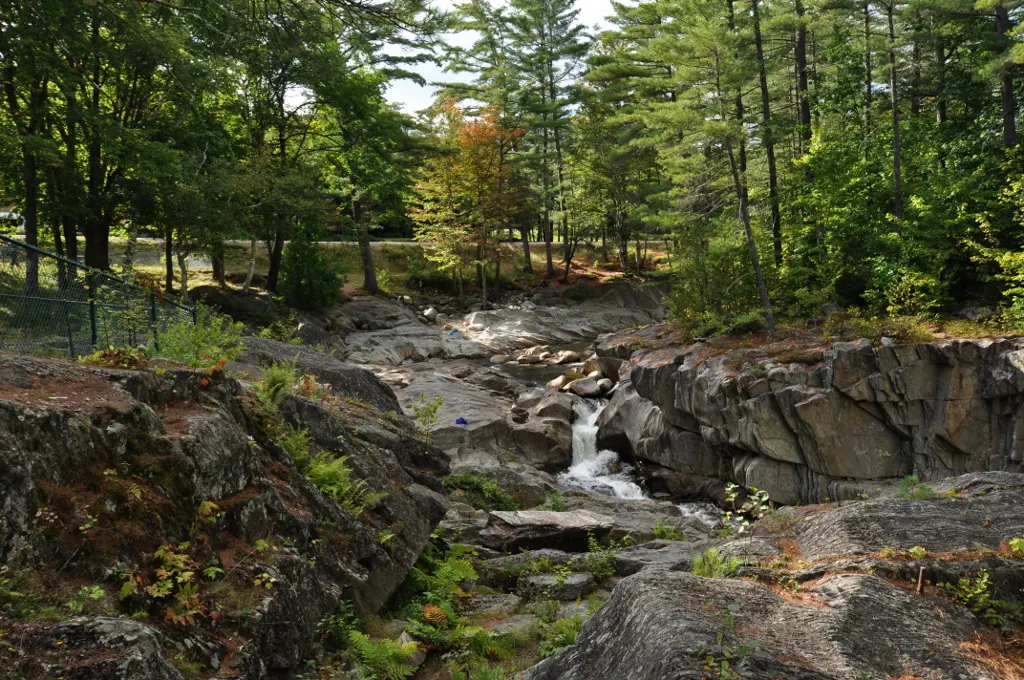
Some of the best swimming in Maine happens in places you have to walk to: waterfall plunge pools, granite river gorges carved by 10,000 years of snowmelt, and clear pools below cascades.
Maine swimming holes
Frenchman's Hole, Coos Canyon, Smalls Falls
All of them are cold. Most stay in the 50s and 60s even in August.
- Most famous
- Frenchman's Hole, Newry
- Easiest for families
- Coos Canyon, beside Route 17
- Big day out
- Gulf Hagas, an 8-mile loop
- Best month
- August, warmest water
If you’ve already done the lake swim circuit, this is the next move. These spots range from “pull off the road and walk 200 feet” to “hike 3 miles on a rough trail.” Some are famous and busy on summer weekends; at others you may have the pool to yourself even in August.
Waterfall swimming holes kill people almost every summer in New England. The most common causes are shallow-water diving (unseen rocks), strong currents below falls (hydraulics hold you under), and cold-water shock. Never jump or dive into any pool; get in feet first. Never swim directly below a waterfall; the churning water is not buoyant and can pull you down. If you are not a strong swimmer, stay in shallow water. Water temperatures in most Maine swimming holes stay in the 50s and 60s even in August.
The 9 Best Swimming Holes in Maine
Most of the 9 sit in the western mountains around Bethel, Rumford and Rangeley. Houston Brook Falls and Gulf Hagas are farther north and east, and Jewel Falls is in Portland. Tap a pin for its photo and page.
1. Frenchman’s Hole
- Best for
- A classic swim and picnic
- Depth
- Changes with water level
- Effort
- Short walk
- Access
- Bull Branch Road, off Sunday River Road, Newry
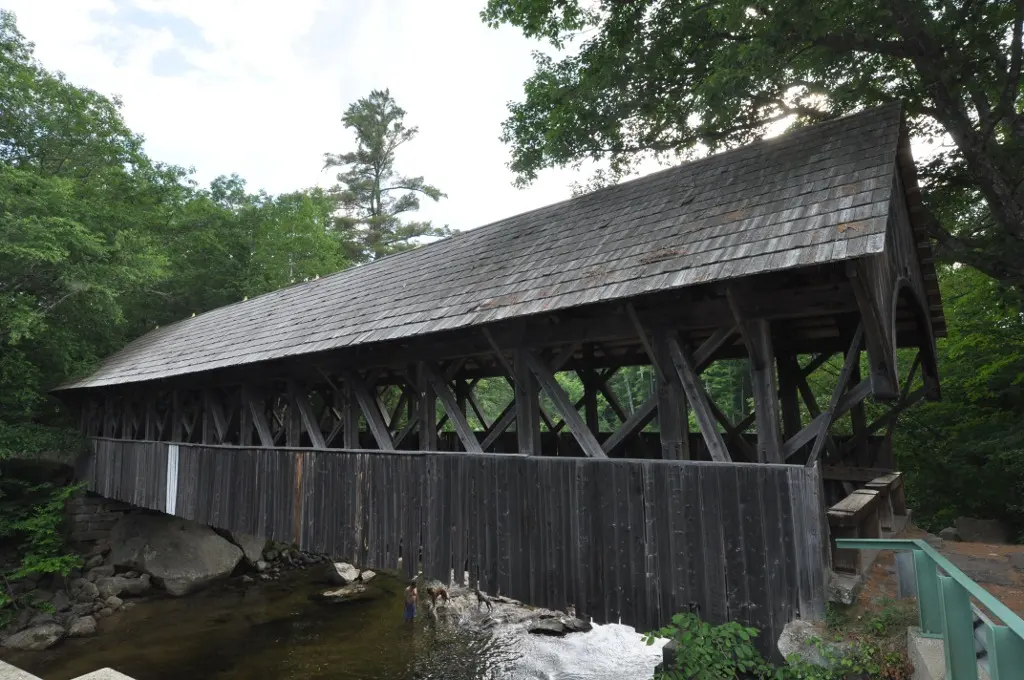
Frenchman’s Hole in Newry is the most famous swimming hole in Maine, and it earns it. A cascade drops about 15 feet into a clear pool on Bull Branch, on state public land. The state says it draws people in hot weather for swimming and picnicking. Take Sunday River Road about 7 miles north from Route 2 to the twin bridges at Ketchum, turn right onto Bull Branch Road and go about 1 mile. It’s a short walk from the roadside parking to the water.
The pool is ringed by granite ledges and cold enough that the first 30 seconds make you question your choices. Its depth changes with the water level, and there are submerged rocks. Get in feet first, and don’t jump or dive. There are no lifeguards. On summer weekends the lot fills by 10 AM, so come early or come on a weekday.
Bull Branch is a mountain stream, so even in August the water is cold. Late summer, when the flow is lower, is the most comfortable time to swim. After rain, the stream rises fast and the rocks get slick, so save it for a dry spell.
2. Coos Canyon
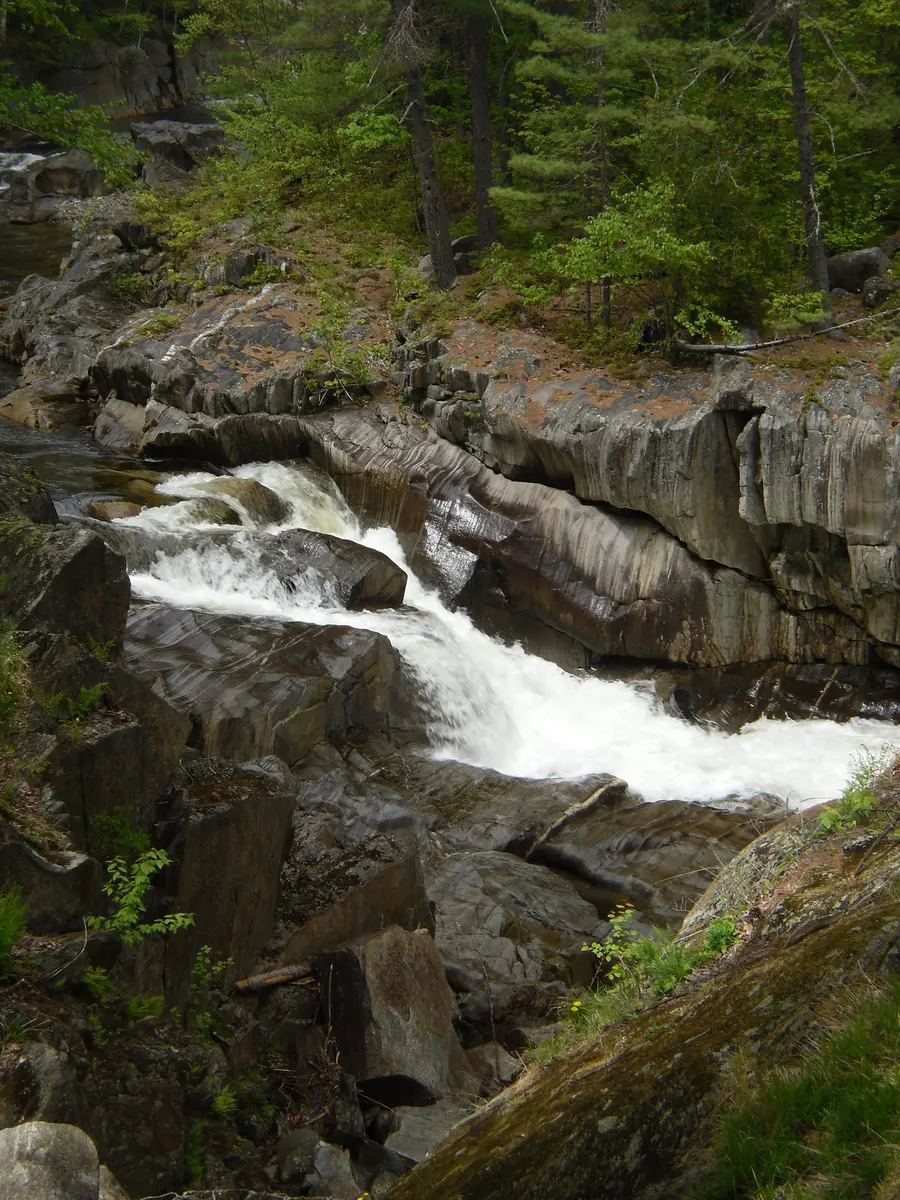
Coos Canyon in Byron sits right beside Route 17 between Rumford and Rangeley. The Swift River cuts through pink granite here in a chain of pools, chutes and small cascades. Park and walk down the granite slabs to the water.
There are wading spots for kids and deeper pools for swimming. The granite is slick and the current in the chutes is strong, so stay out of them. It’s also Maine’s best-known spot for amateur gold panning. Yes, there’s gold in this river. No, you won’t find enough to quit your job.
- Best for
- Family swimming, amateur gold panning
- Depth
- Varies, wading to deeper pools
- Effort
- Roadside, no hike
- Access
- Free pull-off on Route 17, picnic tables and a kiosk
3. Smalls Falls
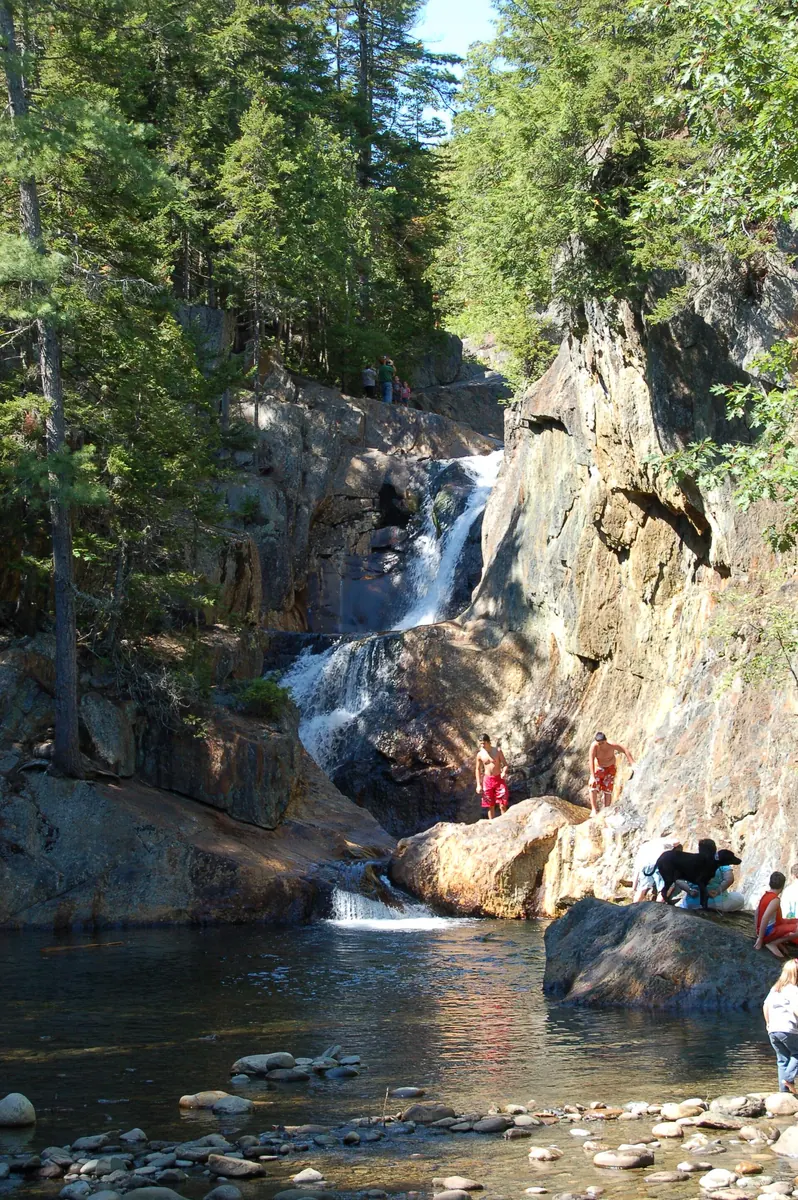
Smalls Falls in Township E, near Rangeley, is a four-tier waterfall on the Sandy River just off Route 4. There’s a pool at the base of each drop, and the lowest fall ends at a rocky beach with a kid-friendly pool. That lower pool is the place to swim. Stay out of the pools above the drops, where a slip can carry you over the edge.
The state keeps a small rest area with a footbridge at the top; its sign is small and easy to miss. Walk upstream along the granite bank to the pools. It’s all very sunny, so the granite gets hot and the water stays cold.
- Best for
- Wading and swimming in the lower pools
- Depth
- Varies; some pools deep, some shallow
- Effort
- Short walk from the rest area
- Access
- Route 4 rest area, Township E
People have been badly hurt and killed at Smalls Falls. In 2022 a woman died after she slipped in a pool above the falls and fell about 30 feet. Jumping into the pools from the rocks above is highly dangerous: don’t do it. Stay behind the fences, keep out of the upper pools, and get into the water feet first only at the lower pool.
4. Screw Auger Falls (Grafton Notch)
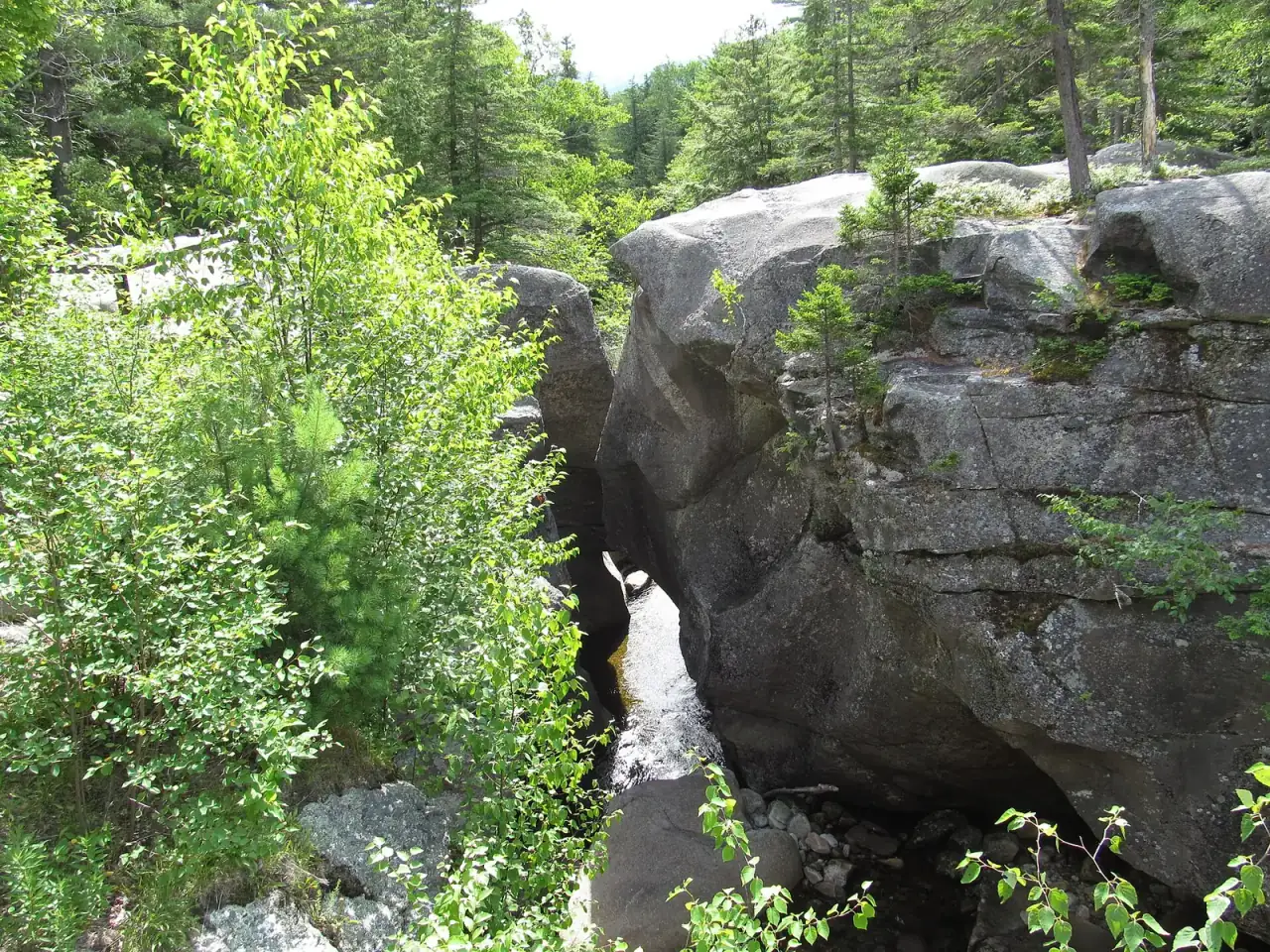
Screw Auger Falls in Grafton Notch State Park is a photogenic 23-foot cascade that has carved deep potholes into the Bear River’s granite bed. Don’t confuse it with the Screw Auger Falls at Gulf Hagas.
The pools below the main drop are shallow and rocky, fine for wading but not real swimming; stay out of the pools above it. People still swim because the setting is gorgeous; just don’t expect a deep plunge. The park’s parking lot is right on Route 26, so this is an easy stop on the drive through the notch.
- Best for
- Wading and sightseeing
- Depth
- Shallow, rocky pools
- Effort
- Short, paved walk from the lot
- Access
- Route 26; state park day-use fee
The potholes at Screw Auger Falls have killed visitors. The stone is polished smooth by water and gets extraordinarily slippery. Stay back from the edge. Do not wade in the main cascade. The shallow-looking pools have strong currents that have pulled adults under.
5. Gulf Hagas
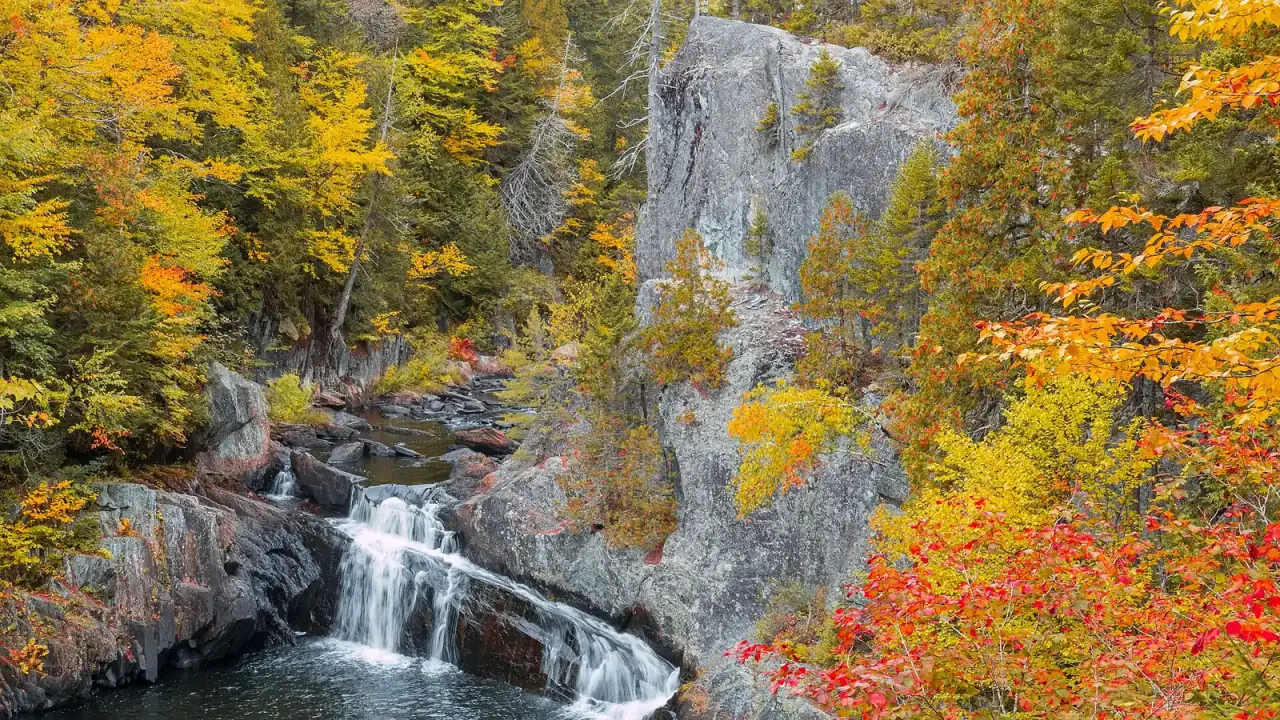
Gulf Hagas, reached from Brownville and Katahdin Iron Works, is called the “Grand Canyon of Maine,” which overstates it but gets the idea across. It’s a 2.5-mile slate canyon cut by the West Branch Pleasant River in the 100-Mile Wilderness, with six named waterfalls, most with pools below.
The Gulf Hagas Screw Auger Falls has a gorgeous plunge pool, and some hikers cool off in calm pools in low summer water. This is a remote gorge with cold water, slick slate and no lifeguards, and the river rises fast after rain. Never jump or dive, never get in above a falls, and stay out of chutes like The Jaws, where the river squeezes between stone walls 25 feet apart.
- Best for
- An adventurous day-hike swim
- Effort
- Long hike; full loop about 8 miles
- Time
- 5 to 8 hours, depending on how far you go
- Fee
- KI Jo-Mary checkpoint: $13 Maine resident, $18 non-resident per day
Drive in on Katahdin Iron Works Road through the checkpoint, which takes cash or check only (North Maine Woods rates), then hike the Gulf Hagas Trail or Rim Trail. Carry water and food.
6. Jewel Falls (Portland)
- Best for
- A quick dip near the city
- Depth
- Wading
- Effort
- 0.5-mile walk
- Access
- End of Hillcrest Avenue
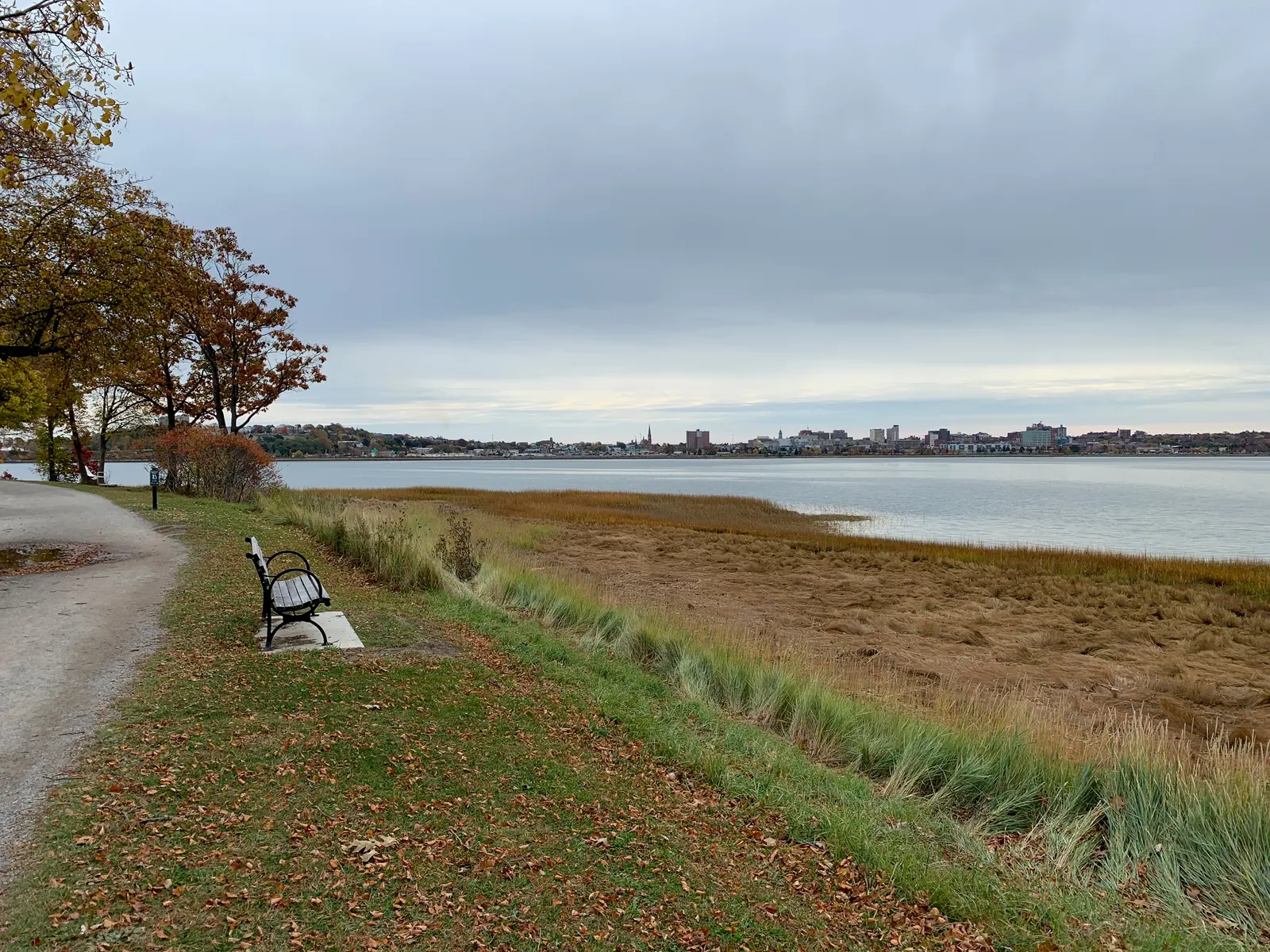
Jewel Falls hides inside Portland’s Fore River Sanctuary, a few minutes from Rosemont or I-295. A small cascade drops into a modest pool in the woods. It isn’t a destination swim, but for Portland residents who want to cool off without driving an hour, it’s the option that exists. Walk in from the end of Hillcrest Avenue; Rowe Avenue has two accessible spaces.
The water isn’t tested regularly, so use your judgment, especially after heavy rain brings urban runoff. Wading is more practical than swimming.
7. Houston Brook Falls
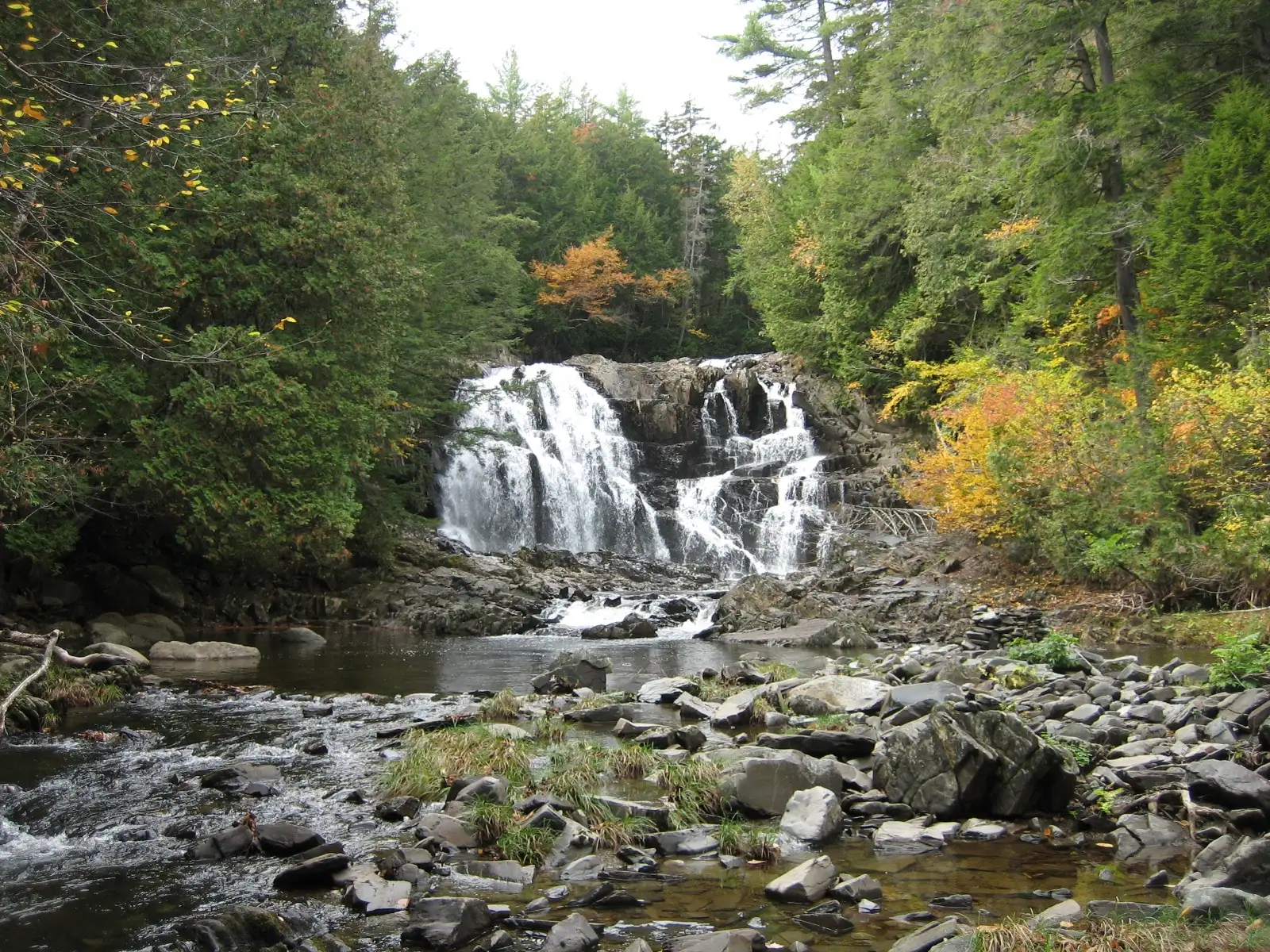
Houston Brook Falls in Pleasant Ridge Plantation is a tall, nearly vertical waterfall that locals know and most tourists don’t. Stay out from under the falling water itself. A little way downstream, a shallow channel (New England Waterfalls) is the spot to wade and cool off, and it’s easiest to reach in low water; depth and current change with the flow. Mist from the falls keeps the nearby rocks slick, so watch your footing. The falls are on private timberland where the public is currently welcome.
The walk in is easy and flat. A sign marks the trailhead, and the path is well worn.
- Best for
- A shallow cool-off below the falls
- Depth
- Shallow; changes with the flow
- Effort
- 10 minutes on a flat trail
- Access
- Pleasant Ridge Road off Route 16; signed trailhead by the transfer station
8. Step Falls Preserve
- Best for
- Tiered cascade, many pools
- Depth
- Varies by pool
- Effort
- Short trail, steep near the top
- Access
- Small free lot on Route 26
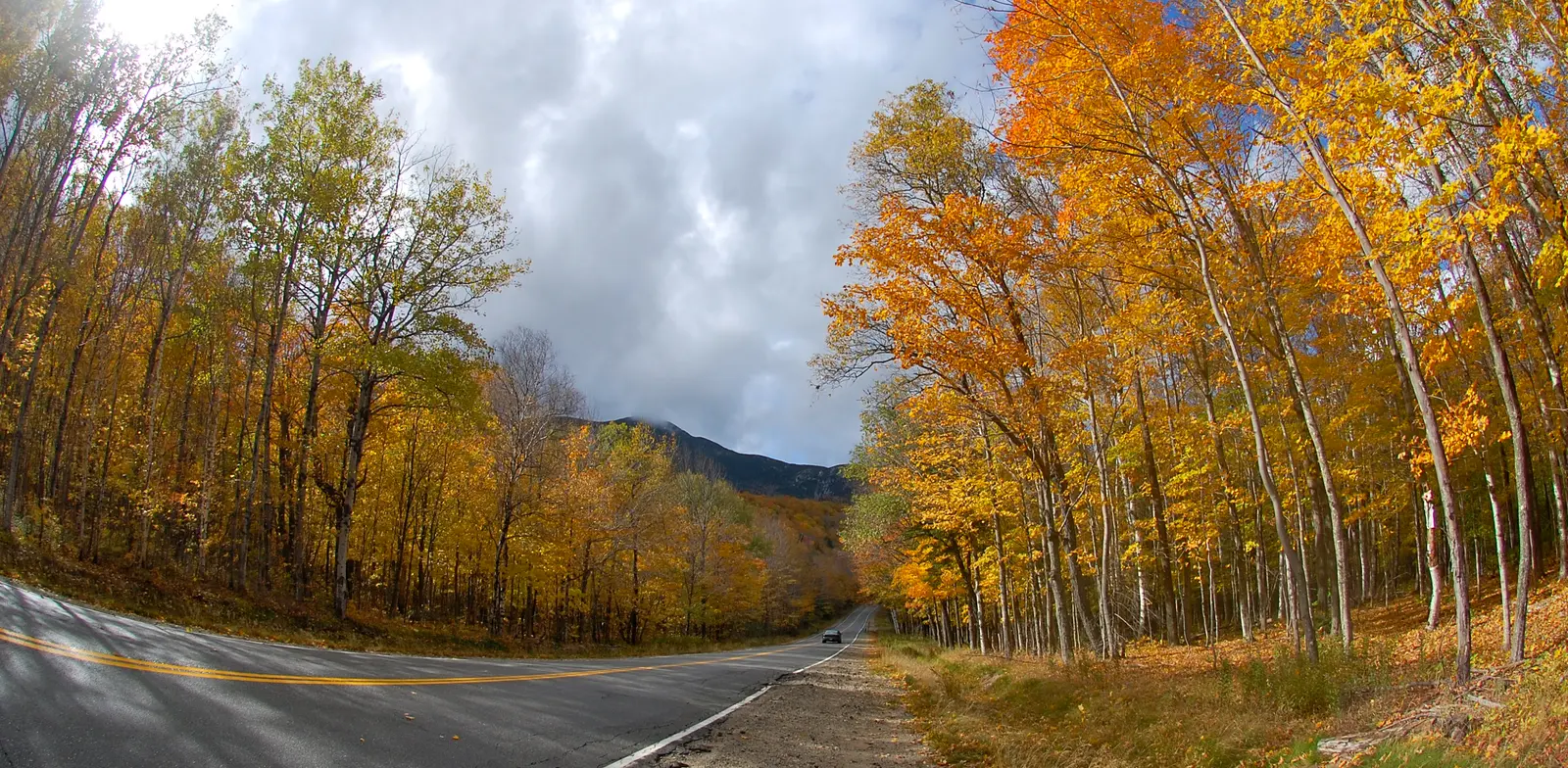
Step Falls is a 250-foot run of cascades and pools on Wight Brook, owned by the Mahoosuc Land Trust since The Nature Conservancy handed it over in 2012. It’s one of Maine’s most photogenic cascades, and the land trust calls its pools suitable for wading and swimming. It’s smaller and quieter than nearby Screw Auger Falls, and the granite slabs are perfect for drying off.
The trail follows the brook up from the small lot on Route 26 in Newry, just south of Grafton Notch State Park, gets steeper near the top, and comes back down the same way. The land trust lists it as a three-quarter-mile trail without saying whether that’s one way or round trip; either way, it’s short. The lot fills fast on hot weekends, and parking on the road or in neighbors’ driveways isn’t allowed. Stick to the pools near the bottom and stay out of any pool above a drop. The ledges are slick and the brook runs fast after rain, so get in feet first and never jump.
9. Rattlesnake Pool
- Best for
- A cold dip in an emerald pool
- Land
- Private, open to hikers
- Effort
- About 1 mile
- Access
- Stone House Road, Stow
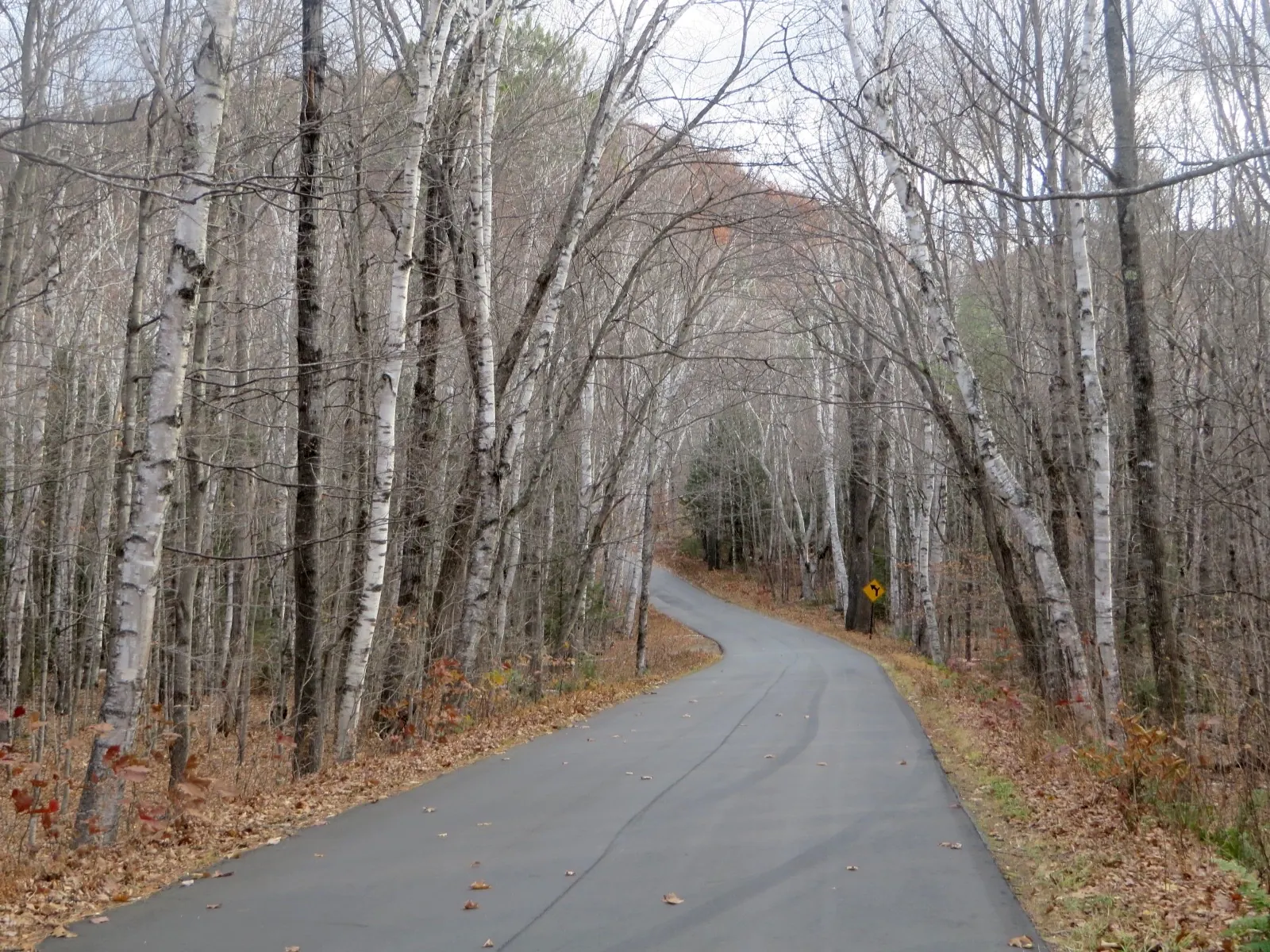
Rattlesnake Pool, at the foot of Blueberry Mountain in Stow, is a small emerald pool below a mossy cascade, as pretty as a calendar. The water stays very cold even in late summer. The rocks around it are very slippery and the depth changes with the water level, so get in slowly and feet first, and never jump.
The pool and the start of the trail are on private land that the owners keep open to hikers (The Outbound), so stay on marked trails and keep dogs leashed. Park at the gate on Stone House Road (Shell Pond Road) and walk about a mile on the Stone House Trail. Make a day of it: Rattlesnake Pool, the narrow Rattlesnake Flume just downstream (look, don’t climb in), and Blueberry Mountain if you want a longer hike.
Worth a Stop, Not a Swim
These three show up on swimming-hole lists, but they’re better as views.
Snow Falls
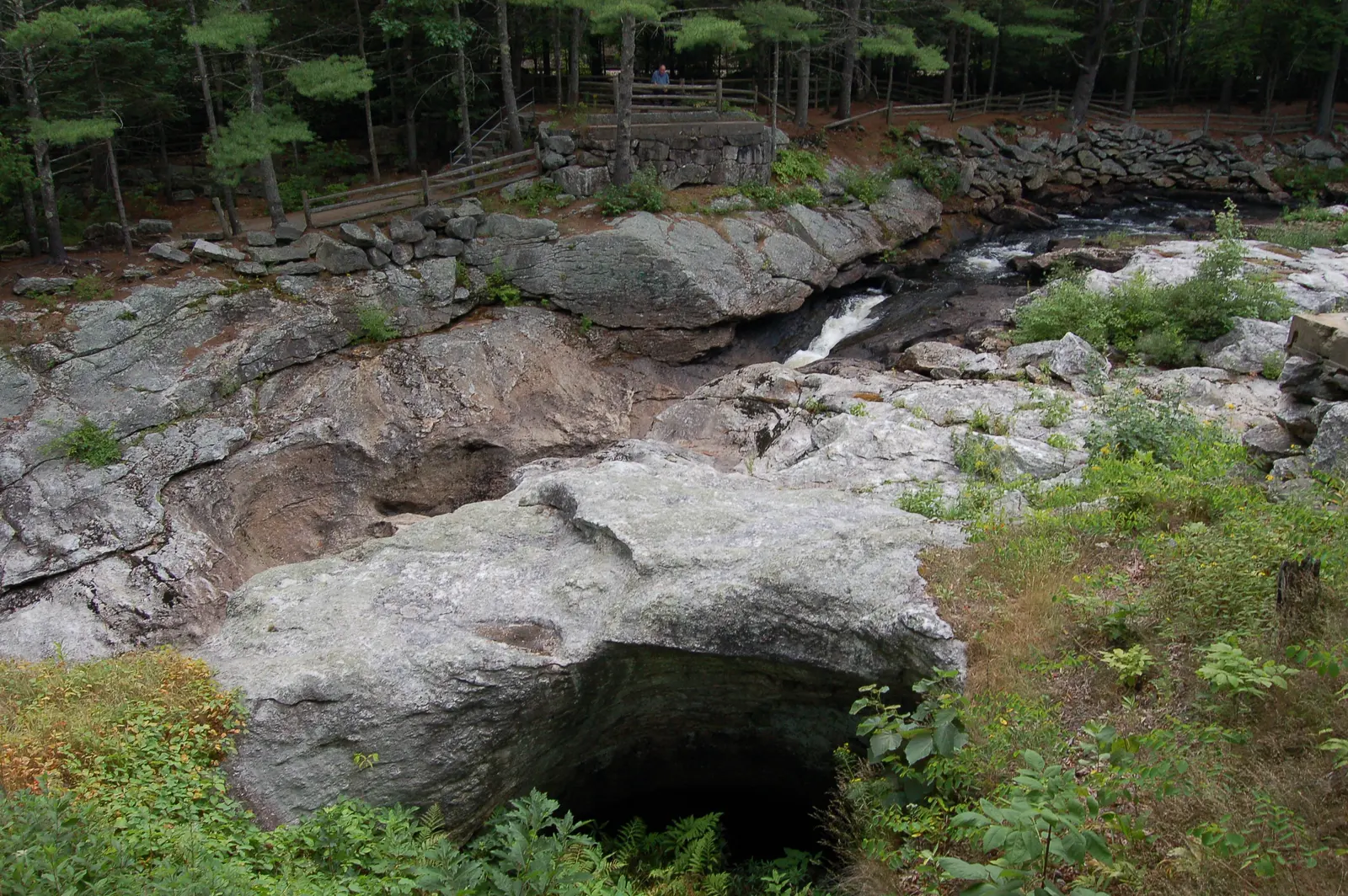
Snow Falls in West Paris isn’t a swimming hole, but it’s worth a stop if you’re driving Route 26 between Paris and Bethel. The Little Androscoggin River drops about 25 feet through a narrow rock gorge in a series of cascades, and the best views are from the bridge and the overlooks at the rest area. The gorge is fenced, and its walls are steep and slippery, so stay behind the fence and enjoy it from above.
- Best for
- A roadside stop on Route 26
- Swimming
- No; the gorge is fenced, view only
- Effort
- Roadside
- Access
- State rest area in West Paris with picnic tables and free parking
Moxie Falls
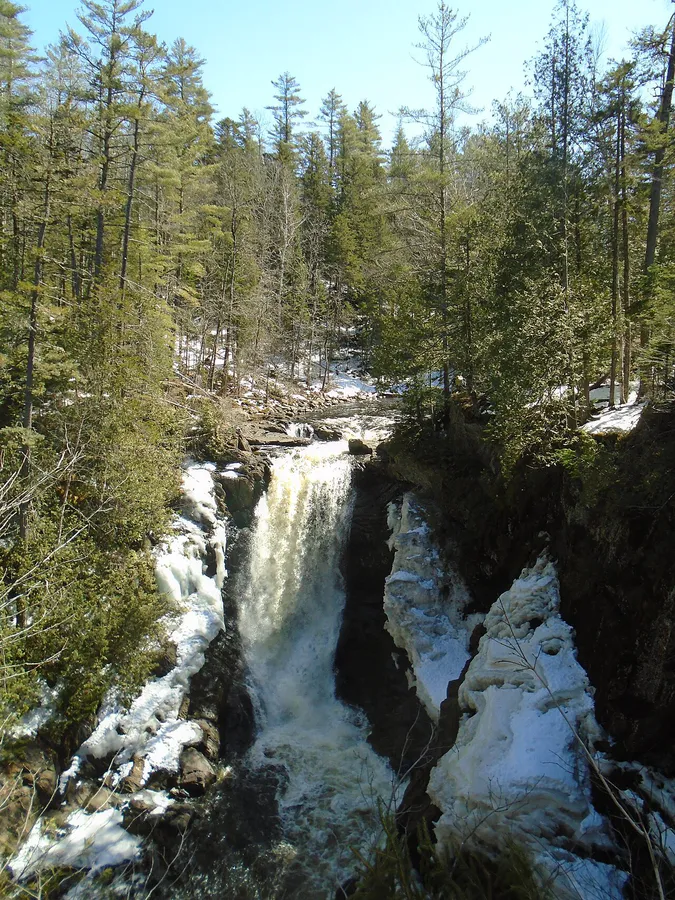
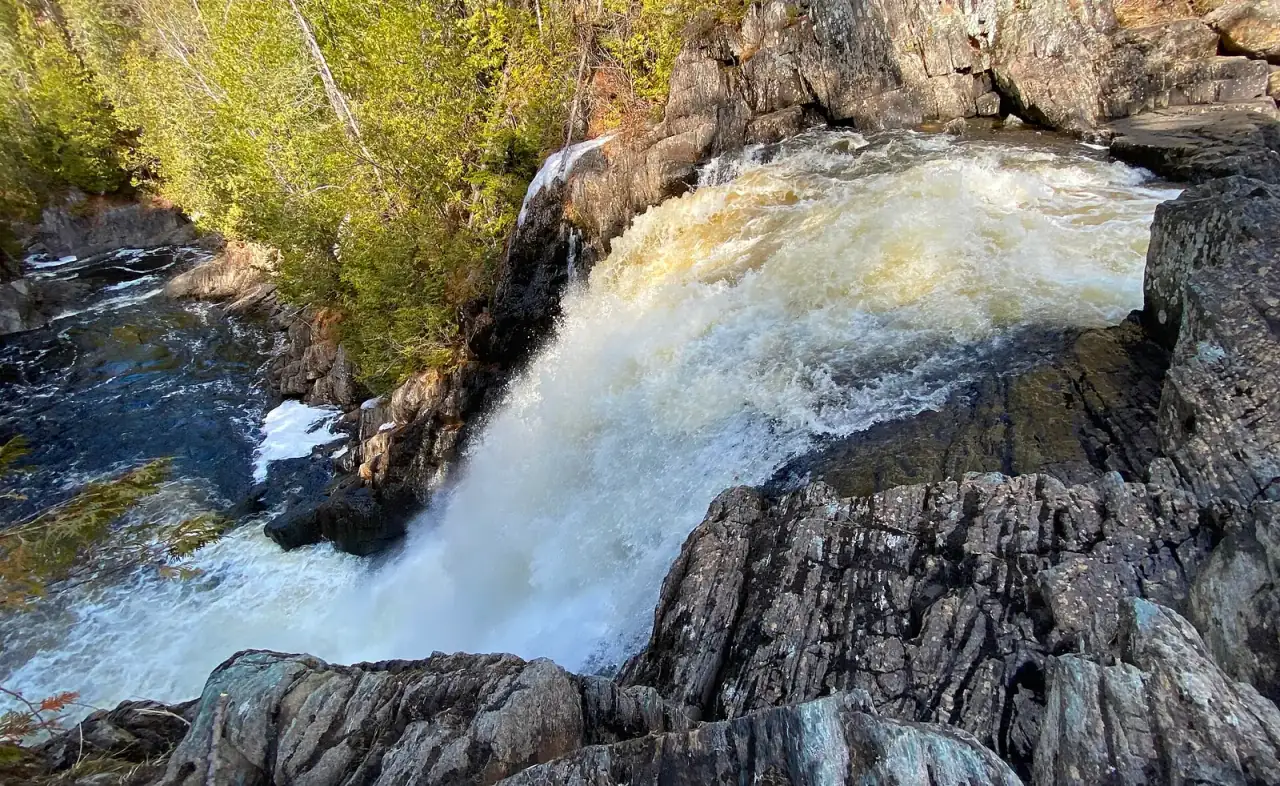
Moxie Falls near The Forks is one of New England’s tallest, a 90-foot plunge on Moxie Stream into a narrow gorge. The state, which manages the trail, says swimming is allowed only with due caution, but there’s no safe path from the platforms down to the water, and people have been hurt climbing past the railings. A well-kept trail leads to the viewing platforms; stay on the boardwalk and stairs, and never get in the stream above the falls.
- Best for
- The view from the platforms
- Swimming
- No safe path into the gorge
- Effort
- About 1-mile trail to the platforms
- Access
- Trailhead off Lake Moxie Road (FR 81), The Forks
- Best for
- Photography
- Pool
- Shallow and rocky
- Trail
- 1.1 miles round trip, three stream crossings
- Access
- Bemis Road off Route 17, south of Houghton
Angel Falls
Angel Falls in Township D, west of Rangeley, drops 90 feet down a rock face in a thin ribbon, most striking in late spring when flow peaks. The pool below is shallow and rocky, not a swim, but on a hot day the spray is cool and the setting feels remote. The trail crosses Mountain Brook three times; the crossings are easy rock-hops in summer but can be hard after rain or snowmelt.
What to Bring
- Water shoes or old sneakers Granite gets slippery, and some popular spots have sharp rocks or broken glass. Don't swim barefoot. Our Maine water shoes guide covers pairs that grip wet ledge.
- A quick-dry towel Microfiber packs small and dries faster than cotton.
- A waterproof bag or bin For your phone, keys and snacks while you swim.
- Layers The walk in can be warm. After 58-degree water, you'll shiver until the sun warms you back up.
- Sunscreen Most swimming holes sit in granite bowls with no shade. You'll burn faster than you expect.
- A trash bag Pack out everything. These places stay beautiful only because everyone pitches in.
Best Time of Year
Mid-July through August is prime. Early in the season, pools can run dangerously high and fast.
June
JuneHigh snowmelt water and the most impressive waterfalls, but brutal mid-50s water. For photographers, not swimmers.
July
JulyLevels drop, the water clears and exposed pools warm into the low 60s. Peak season starts mid-July.
August Best swimming
AugustWarmest water, lowest and clearest flows, long days. Most swimming holes are at their best.
September
Through mid-SeptemberCrowds thin after Labor Day. Swimmable through mid-month, then it cools fast. Foliage starts up high.
Rain changes everything. After heavy rain, flows can double or triple within hours, turning gentle pools into dangerous currents and muddy brown water. Check stream gauge data (USGS) or simply avoid swimming holes for 24 to 48 hours after significant rainfall.
What is the best swimming hole in Maine?
Frenchman's Hole in Newry is the most popular and arguably the best for a combination of easy access and setting. For a more rugged adventure, Gulf Hagas is stunning, but it is remote, so swim there only in calm pools in low water, if at all. Smalls Falls has the most variety with multiple tiers, but people have been hurt and killed there, so swim only in the lower pool.
Are swimming holes in Maine safe?
None of them is guaranteed safe. Injuries and deaths come from jumping and diving, slipping on wet rock, swimming in pools above waterfalls or below active falls, fast water after rain, and cold-water shock. Don't jump or dive, get in feet first, stay out of pools above drops and away from the base of large falls, and do not swim alone in remote spots. Cold water shock is real even in August; the water in most Maine swimming holes stays in the 50s and 60s.
Are there free swimming holes in Maine?
Yes, almost all of them. Frenchman's Hole, Coos Canyon, Smalls Falls, Houston Brook Falls and Step Falls Preserve are all free. Grafton Notch State Park (Screw Auger Falls) charges a day-use fee. Gulf Hagas charges the KI Jo-Mary day-use fee at the Katahdin Iron Works checkpoint. Rattlesnake Pool is on private land with free parking at the Stone House Road gate; the trailhead isn't on the White Mountain National Forest fee-site list.
How cold is the water at Maine swimming holes?
Most are in the mid-50s to low-60s Fahrenheit even in August. Deep, shaded pools like those at Gulf Hagas and Moxie Stream stay coldest, and sunny, shallow pools warm up a little in late summer. Plan to swim for short bursts with warm-up breaks between.
Can you jump off the rocks at Maine swimming holes?
No. Don't jump or dive anywhere. Depths change with the water level, rocks hide below the surface, and currents can pull you under. Waterfall guides call jumping into the Smalls Falls pools highly dangerous, and people are hurt or killed at New England swimming holes every year. Get in feet first from the edge instead.
What time of year is best for swimming holes in Maine?
Mid-July through August is prime. June has the strongest flows but coldest water. September is pleasant but cools off quickly. Early in the season, pools can be dangerously high and fast; late in the season, flows drop but pools stay swimmable through Labor Day.
Do I need special gear for swimming holes?
Water shoes are the most useful item. The rocks are slippery and sometimes sharp. A quick-dry towel, a waterproof bag for your phone, and a warm layer for after your swim are the other essentials. Most swimming holes require a short walk on a trail, so pack accordingly.