

US Route 1 runs from Key West, Florida to Fort Kent, Maine. The Maine stretch is 527 miles, and the coastal portion from Kittery to Lubec is the one people come for. It is not a fast road. It was not designed to be. Route 1 threads through downtowns, crosses drawbridges, and doubles as Main Street in a dozen towns. That is the point. If you want speed, take I-95. If you want Maine, take Route 1.
The honest version of this trip is a week. Seven days minimum. You can do it in three if you skip most of it, but then you have not really done it. Here is how to break it into five segments, what to see in each, and where to slow down.
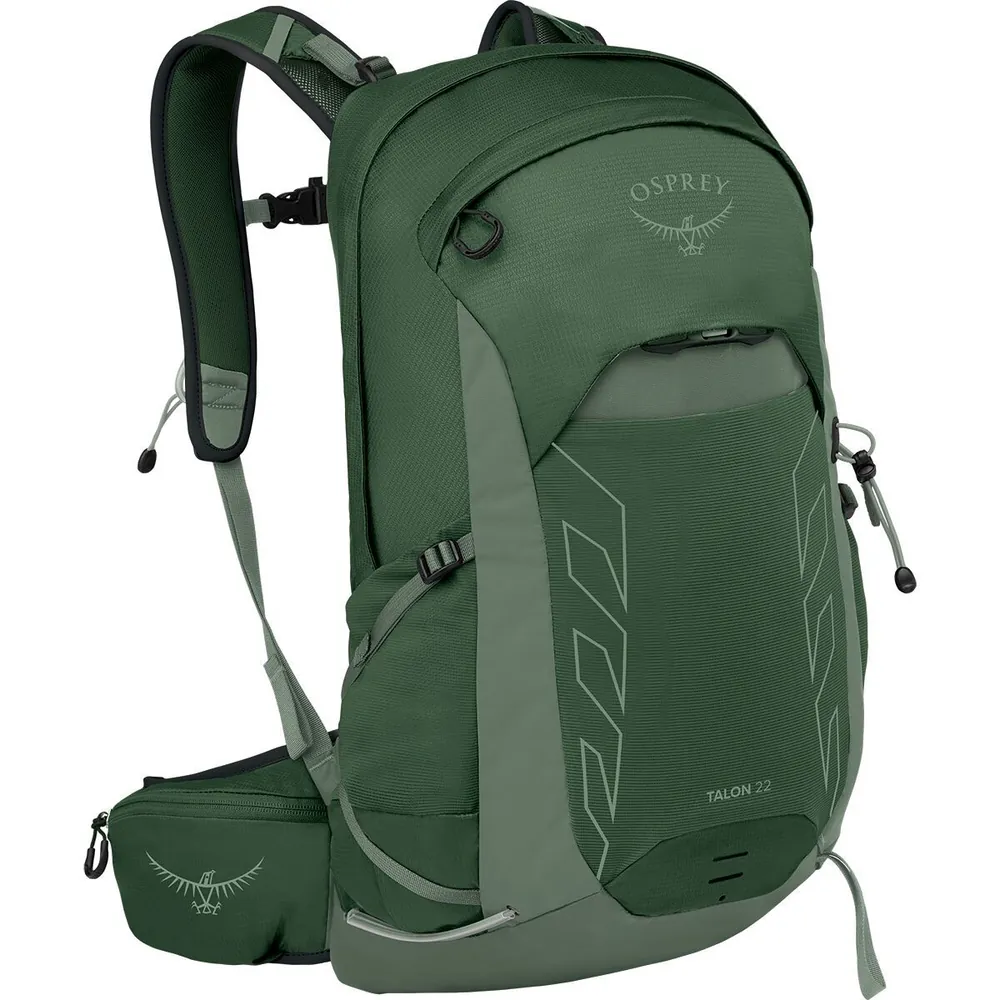
Half the value of Route 1 is what you do on foot once you park: the Marginal Way cliff walk, the Rockland breakwater, the trails at Fort Williams. A comfortable daypack for water, layers, a camera, and a lobster roll keeps your hands free for all of it.
#1Mid-range
Osprey Talon 22
Who it’s forDay hikes & scrambles
Why we picked itExcellent ventilation with AirScape backpanel
Pros
- Body-hugging fit stays stable on scrambles
- Versatile 22L capacity hits the sweet spot
- Hipbelt pockets for snacks and phone
Know before you buy
- Not enough space for overnight gear
- Mesh back collects sweat in high humidity
Overview: The Five Segments
| Segment | Miles | Drive Time (No Stops) | Plan For | Theme |
|---|---|---|---|---|
| Kittery to Portland | 50 | 1h 15m | 1-2 days | Beach towns and lobster shacks |
| Portland to Bath / Wiscasset | 40 | 1h | 1 day | Food, shopping, peninsulas |
| Wiscasset to Rockland | 45 | 1h 15m | 1-2 days | Harbors and lighthouses |
| Rockland to Bar Harbor | 75 | 2h | 2-3 days | Midcoast villages and Acadia |
| Bar Harbor to Lubec | 95 | 2h 30m | 1-2 days | Down East wilderness |
The farther north you drive, the fewer people you will see. Traffic thins noticeably past Ellsworth. By the time you hit Machias, you are in a different Maine than the one on postcards.
Drive south to north. You end at the easternmost point in the United States with the coast on your right the whole way. Most drivers go north to south starting from Bar Harbor; going against that current means emptier roads and restaurants with open tables.
Segment 1: Kittery to Portland (50 miles)
This is the most tourist-heavy stretch of Route 1, and it is still worth your time. You cross into Maine at the Piscataqua River bridge and immediately hit Kittery, which is essentially a 2-mile-long outlet mall. Some people love it. Skip it unless you need boots.
The real start of the trip is the York coast, about 10 minutes north.
York
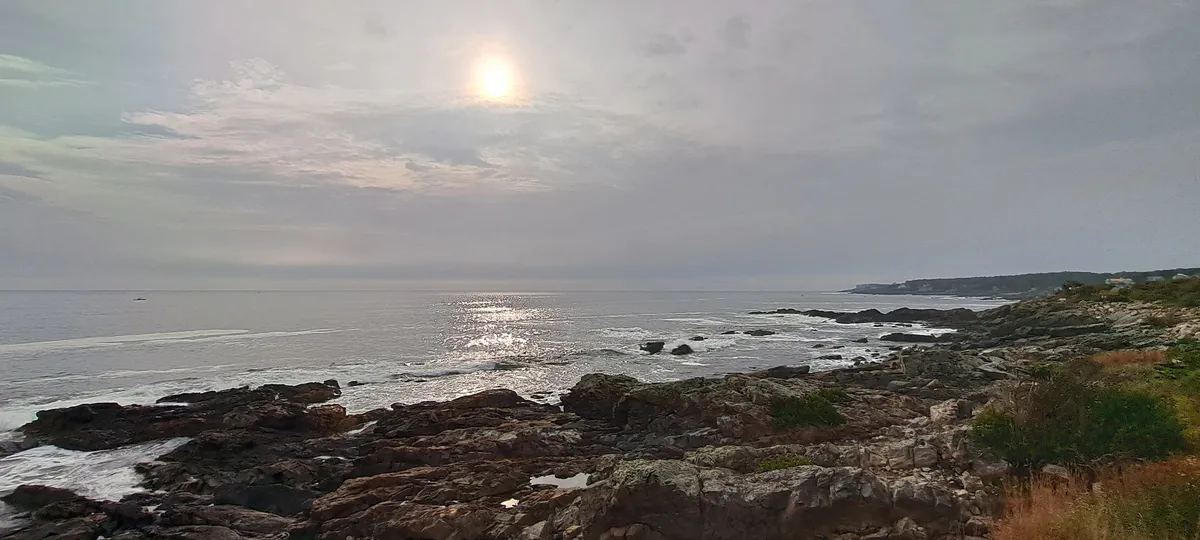
Long Sands Beach runs for almost two miles along Route 1A, parallel to Route 1. Take 1A. The slight detour adds five minutes and puts the ocean directly on your right. Short Sands is the next cove up, smaller and surrounded by the small commercial district of York Beach.
Park in York Beach and walk to Nubble Light, one of the most photographed lighthouses in America. The light itself sits on a small rock island 100 yards offshore. You cannot walk to it. The view is from Sohier Park on the mainland.
Ogunquit
Ogunquit is the first town on the coast that feels like a proper destination. The Marginal Way is a 1.25-mile paved cliff walk from downtown Ogunquit to Perkins Cove. Do it. Start from the north end (the downtown end) because parking is easier and the walk gets more scenic as you go. Perkins Cove has lobster rolls and a pedestrian drawbridge that tourists love to photograph.
Ogunquit Beach is 3 miles of white sand, which is unusual for Maine. Most Maine beaches are pebble or coarse sand. Ogunquit is the exception.
Kennebunkport
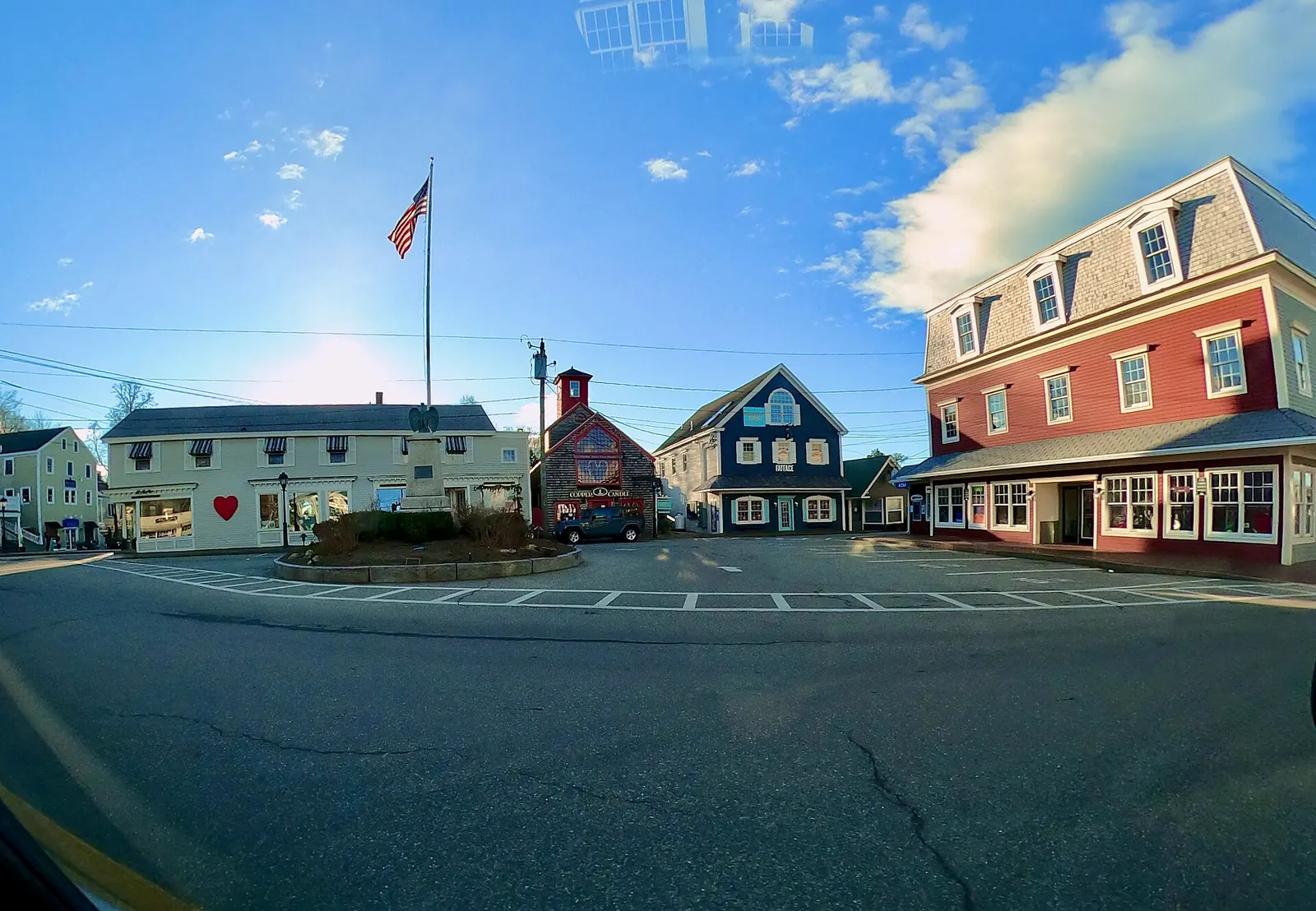
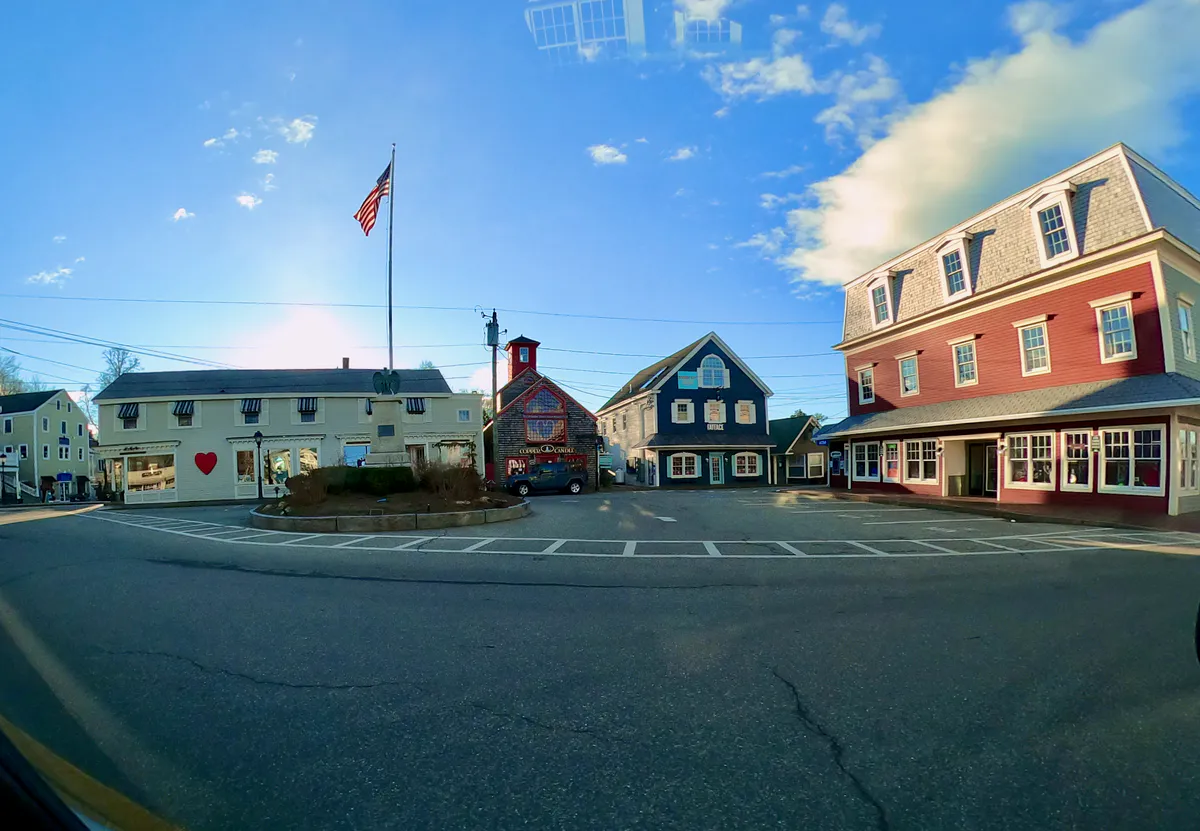
Kennebunkport is where Route 1 pulls slightly inland. To see it properly, turn off onto Route 9 or Ocean Avenue. The Bush family compound at Walker’s Point is visible from the road. You cannot visit, but you can pull off at the Walker’s Point overlook for a photo.
Dock Square in the middle of Kennebunkport is the commercial heart. It is touristy. It is also genuinely pretty. Goose Rocks Beach and Gooch’s Beach are both excellent if you have beach time.
Old Orchard Beach
Old Orchard Beach is a 7-mile sand beach with a pier, carnival rides, and French-Canadian tourists speaking Quebecois. It feels like a New Jersey boardwalk that accidentally ended up in Maine. If you have kids, stop. If you do not, keep driving.
Portland
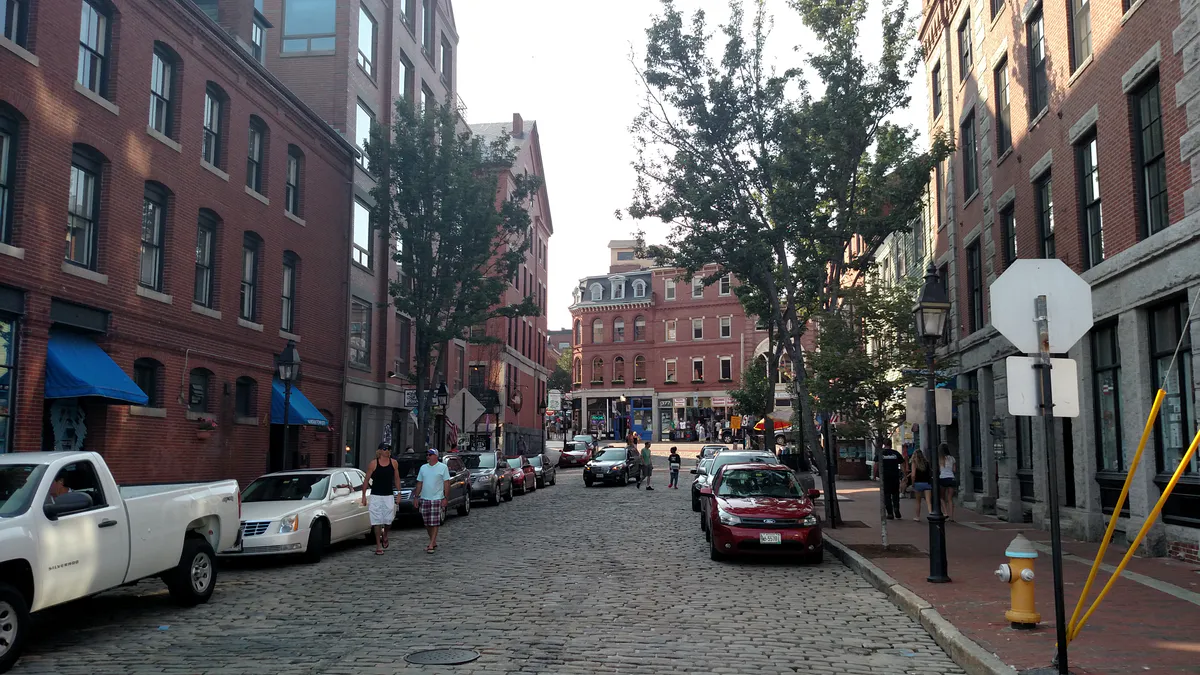
Portland is the food capital of New England and a legitimate reason to stop for a full day. The Old Port is the cobblestone district by the water. Commercial Street runs along the working waterfront. The East End neighborhood has the best walking and the Eastern Promenade, a mile of oceanfront park with a city skyline at one end and Casco Bay at the other.
Dinner reservations at Fore Street, Eventide, or Drifters Wife need to be made in advance. Walk-in options are abundant but less famous. Duckfat is walk-in only and has the best fries in New England.
Eat at least one meal outside the Old Port. Washington Avenue, Woodfords Corner, and the West End all have restaurants that locals prefer. The Old Port is great but it is where every tourist eats, which means wait times and higher prices.
Segment 2: Portland to Wiscasset (40 miles)
This stretch has some of the best short detours on the whole route. Plan to get off Route 1 a lot.
Portland Head Light and Cape Elizabeth
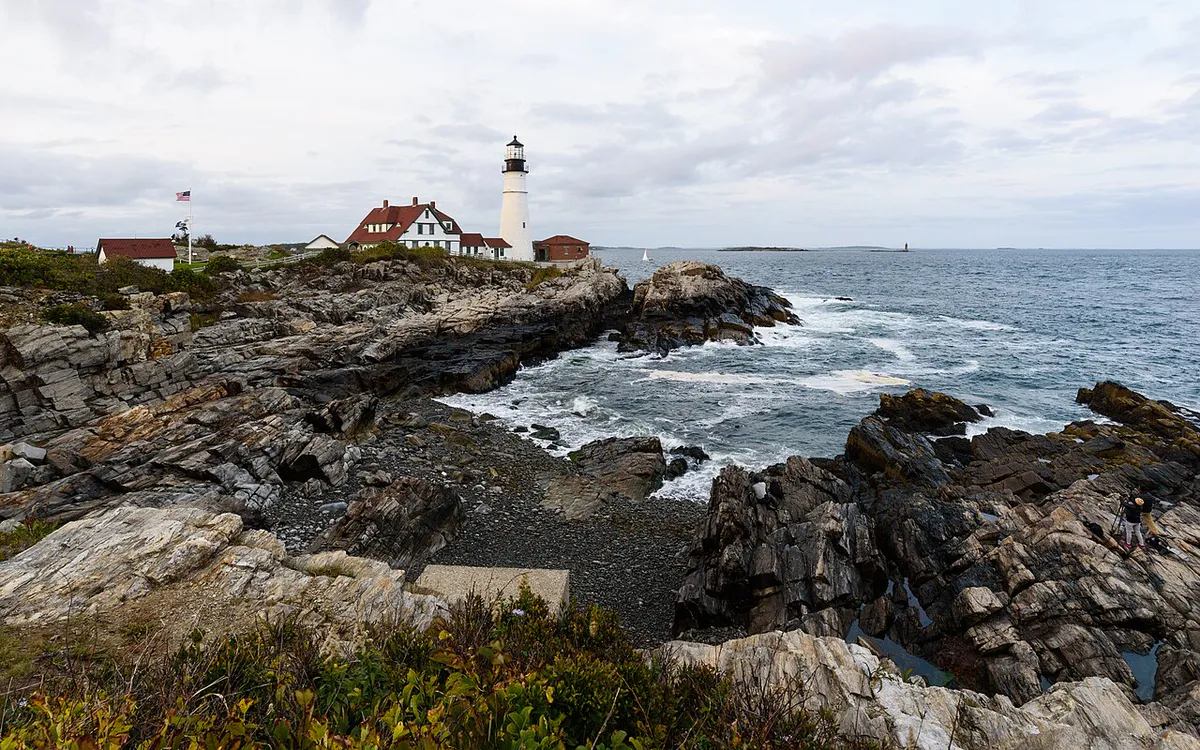
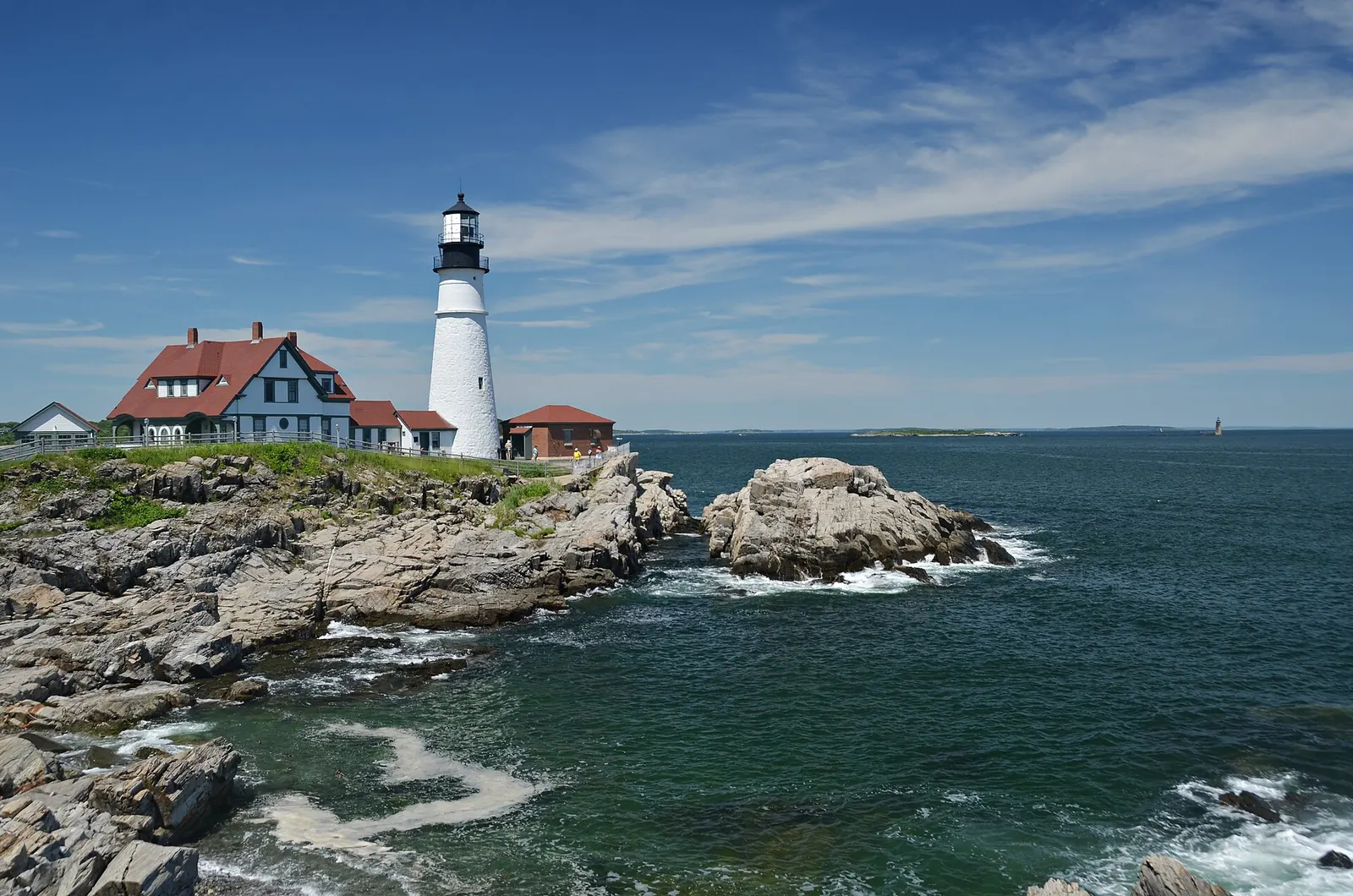
Before leaving the Portland area, take the 15-minute detour to Portland Head Light at Fort Williams Park in Cape Elizabeth. Built in 1791, it is the oldest lighthouse in Maine and possibly the most photographed in the country. The park is free. Park in the main lot and walk the coastal paths.
Freeport
Freeport is home to the LL Bean flagship store, which is open 24 hours a day, every day of the year. You do not have to buy anything to appreciate how thorough this place is. Just north of town, Wolfe’s Neck Woods State Park has easy coastal trails along Casco Bay with views of Googins Island and nesting ospreys. Worth the 10-minute detour.
The Harpswell and Phippsburg peninsulas
This is where Route 1 starts to cut corners, and you have to decide how much of the coast you want to actually see. Below Route 1, a series of fingered peninsulas jut south into the ocean. Harpswell, Phippsburg, and Georgetown each end in fishing villages and quiet beaches.
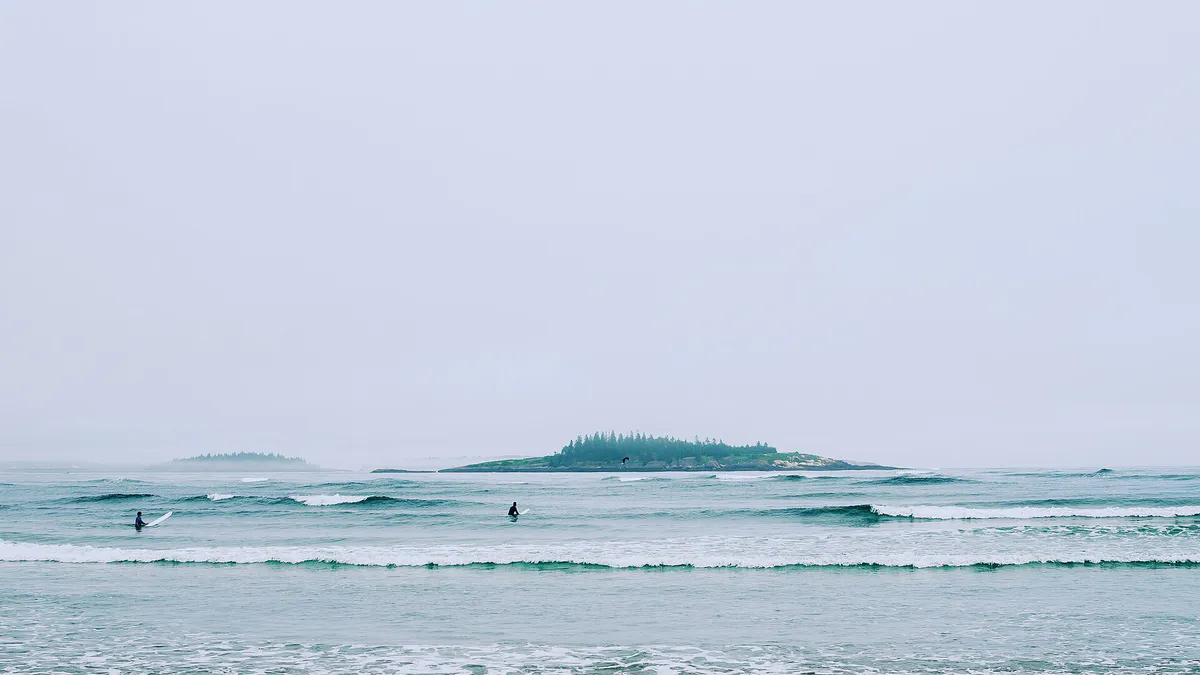
Popham Beach State Park on the Phippsburg peninsula is one of the finest beaches in New England. A 3-mile stretch of sand at the mouth of the Kennebec River, with a tidal sandbar you can walk to a small island at low tide. Reid State Park on the next peninsula over (Georgetown) has two sand beaches separated by a granite outcrop. Pick one. Both are a 25-minute detour from Route 1.
Bath
Bath is the shipbuilding town. Bath Iron Works is the largest private employer in Maine and builds destroyers for the US Navy. You can see the giant blue cranes from Route 1. The Maine Maritime Museum south of downtown is excellent if you like boats. If you do not, keep driving.
Wiscasset
Wiscasset bills itself as “the prettiest village in Maine.” It is a bold claim and a defensible one. Route 1 goes directly through downtown, which means every summer weekend creates a traffic jam. Red’s Eats is a tiny lobster roll shack on the main drag. The line is famously long. The lobster roll is famously good. Sprague’s Lobster, directly across the street, is almost as good with a fraction of the wait.
If you hit Wiscasset between noon and 3 PM on a summer Saturday, budget an extra 30 minutes just for the traffic jam. Or take the detour via Routes 218/27 through Alna and Newcastle. The detour is slightly longer in miles but usually faster in time, and takes you past the Alna Center Meeting House which is worth a photo stop.
Segment 3: Wiscasset to Rockland (45 miles)
The midcoast is where lighthouses start stacking up. You could visit a different one every hour and not run out.
Damariscotta
Damariscotta sits at the head of a tidal river and is known for oysters. Pemaquid oysters are among the best in the country. Ask for them by name. Route 1 bypasses the downtown, but the short detour is essential.
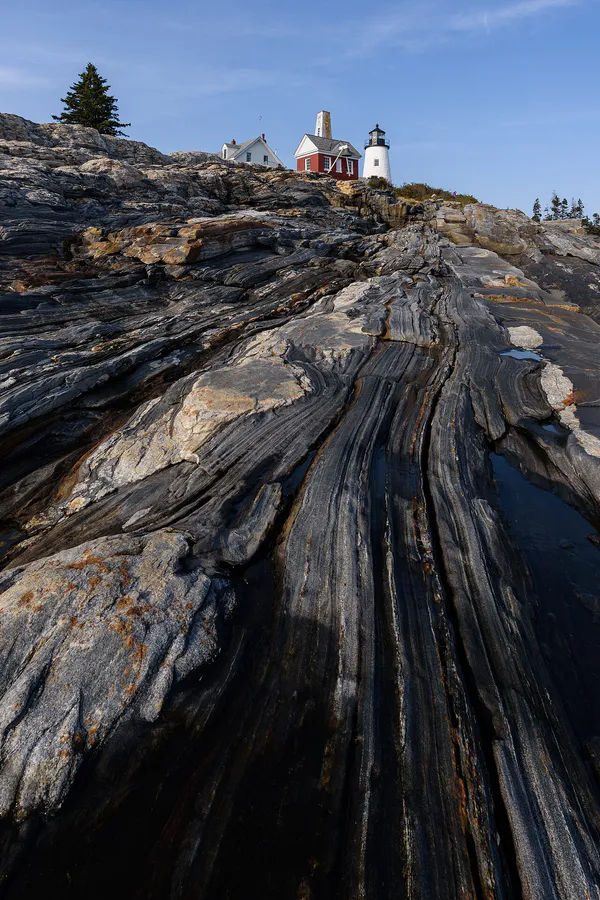
From Damariscotta, take Route 130 south for 15 miles to Pemaquid Point Lighthouse. This detour is the second-best on the entire Maine coast. The lighthouse sits on dramatic folded granite ledges that drop straight into the Atlantic. It is on the Maine state quarter for a reason. Budget two hours round trip from Route 1.
Boothbay Harbor
Boothbay Harbor is another south-of-Route 1 detour, about 30 minutes one way on Route 27. It is one of the most picturesque working harbors in Maine, with a footbridge across the harbor that has been there since 1901. The Coastal Maine Botanical Gardens just outside town are the largest botanical gardens in New England and genuinely worth a half day. The holiday light show in November and December (Gardens Aglow) draws people from across New England.
Skip this detour if you are tight on time. It doubles back.
Rockland
Rockland is the midcoast’s cultural anchor. Home to the Farnsworth Art Museum, which has the country’s best Wyeth family collection. The downtown has rebuilt itself over the last 20 years from a depressed fishing port into a genuine destination, without losing the fishing port underneath. Lobster boats unload directly onto the pier.
The Rockland Breakwater Lighthouse sits at the end of a nearly mile-long granite breakwater you can walk out on. The walk is bumpy (the blocks are not perfectly flat) but the lighthouse at the end is worth it. Low tide is easier. High tide can splash over the sides.
Marshall Point Lighthouse in Port Clyde, 15 miles south of Rockland, is where Forrest Gump ended his run. The long wooden walkway out to the tower is the iconic shot.
Segment 4: Rockland to Bar Harbor (75 miles)
This is the midcoast pastoral stretch. Rolling hills, saltwater farms, and villages that look carefully preserved because they are. Plan at least two days. This section has more good small towns than any other.
Camden and Rockport
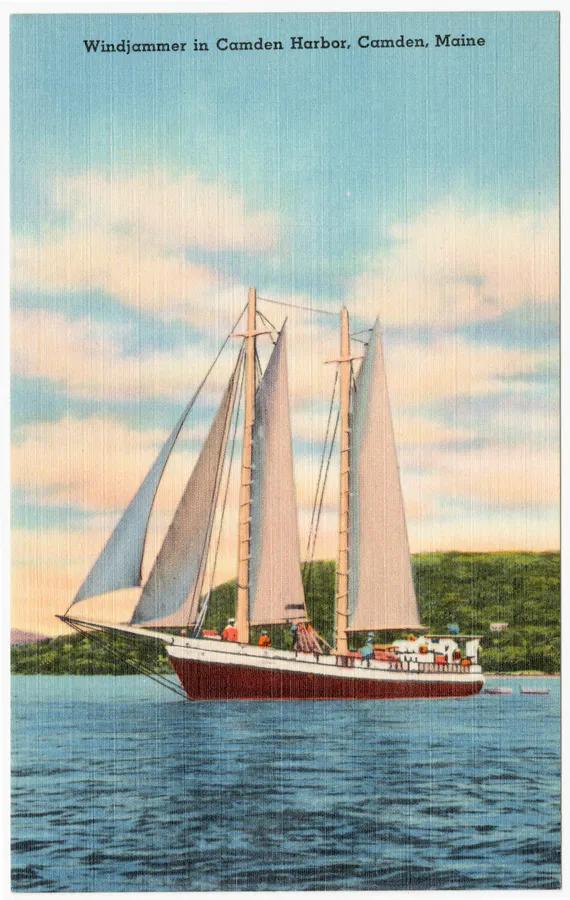
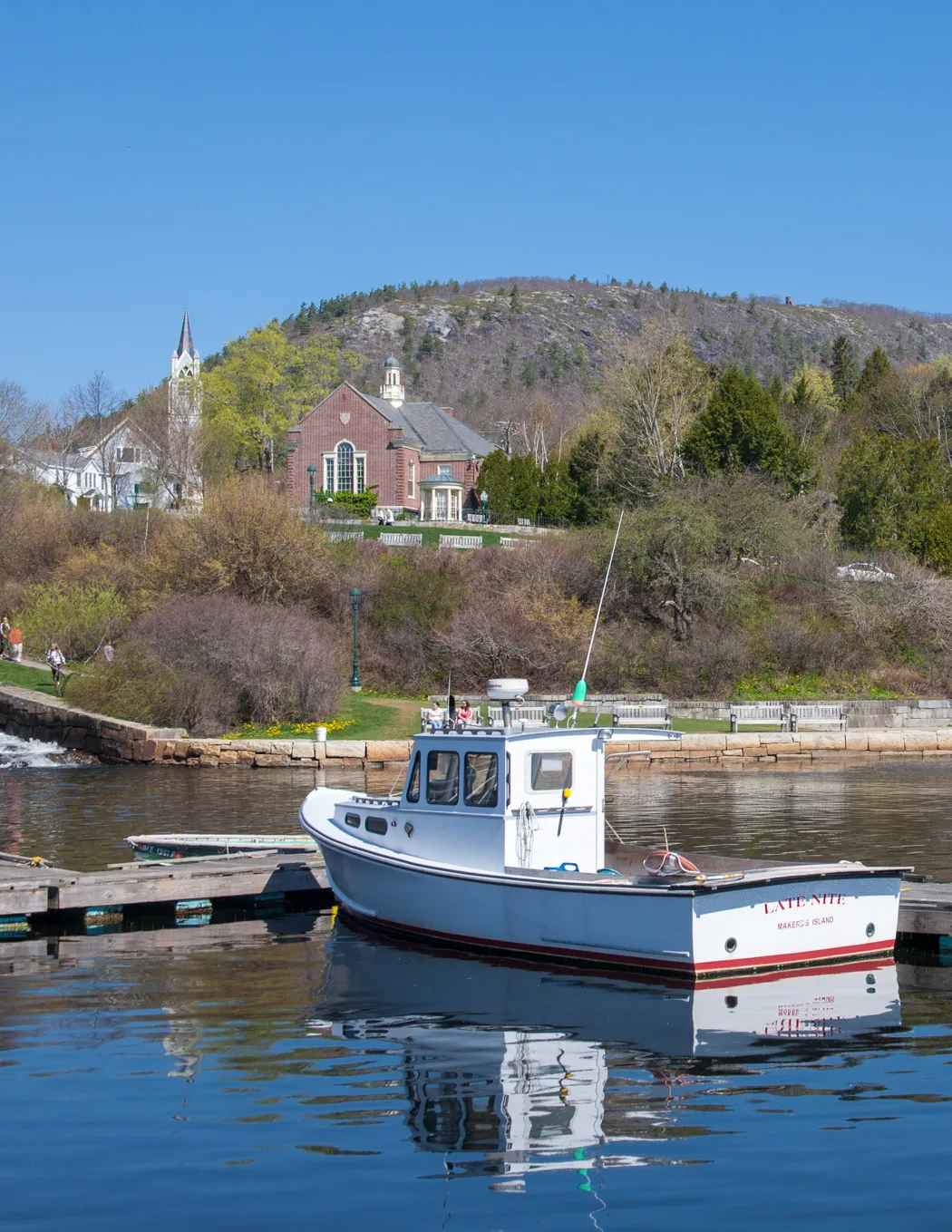
Camden might be the prettiest harbor town on the east coast. Sailing schooners (windjammers) dock right downtown. The harbor is tight and mountainous, hemmed in by Mount Battie and Mount Megunticook. Drive to the top of Mount Battie via the auto road in Camden Hills State Park. The view from the summit tower looks straight down on the harbor. Take a short hike first if you have the time. The Mount Battie Trail from the base is 1.8 miles round trip.
Rockport, the next town over, is quieter and worth a 20-minute walk through Marine Park. Andre the Seal has a statue there. Long story.
Belfast and Searsport
Belfast is small, artsy, and underrated. The downtown has more working painters per capita than almost any town in New England. Good bookstores. A harbor walk. Searsport, the next town, was once “the town that built half of America’s deep-water shipping.” The Penobscot Marine Museum there is excellent and almost never crowded.
The Blue Hill Peninsula
Here is where Route 1 makes its big decision. The main road continues straight to Bar Harbor. But if you turn right at Bucksport and take Route 175/15, you drop onto the Blue Hill peninsula, which contains Castine (a former capital, now a picture-perfect college town), Stonington (a working lobstering village at the very end of Deer Isle), and Deer Isle itself.
The Deer Isle bridge is a suspension bridge that feels wildly out of scale for the traffic it carries. Crossing it is one of the moments of the trip.
The Blue Hill peninsula detour adds at least a full day to your trip, but it is the best detour on the coast. Stonington is about as far from the tourist path as you can get while still being on pavement. The Isle au Haut mail boat leaves from Stonington and takes you to the least-visited section of Acadia National Park.
Ellsworth and Bar Harbor
Ellsworth is the junction town. Big-box stores, chain hotels, and the last Walmart for the next 100 miles. Use it as a supply stop.
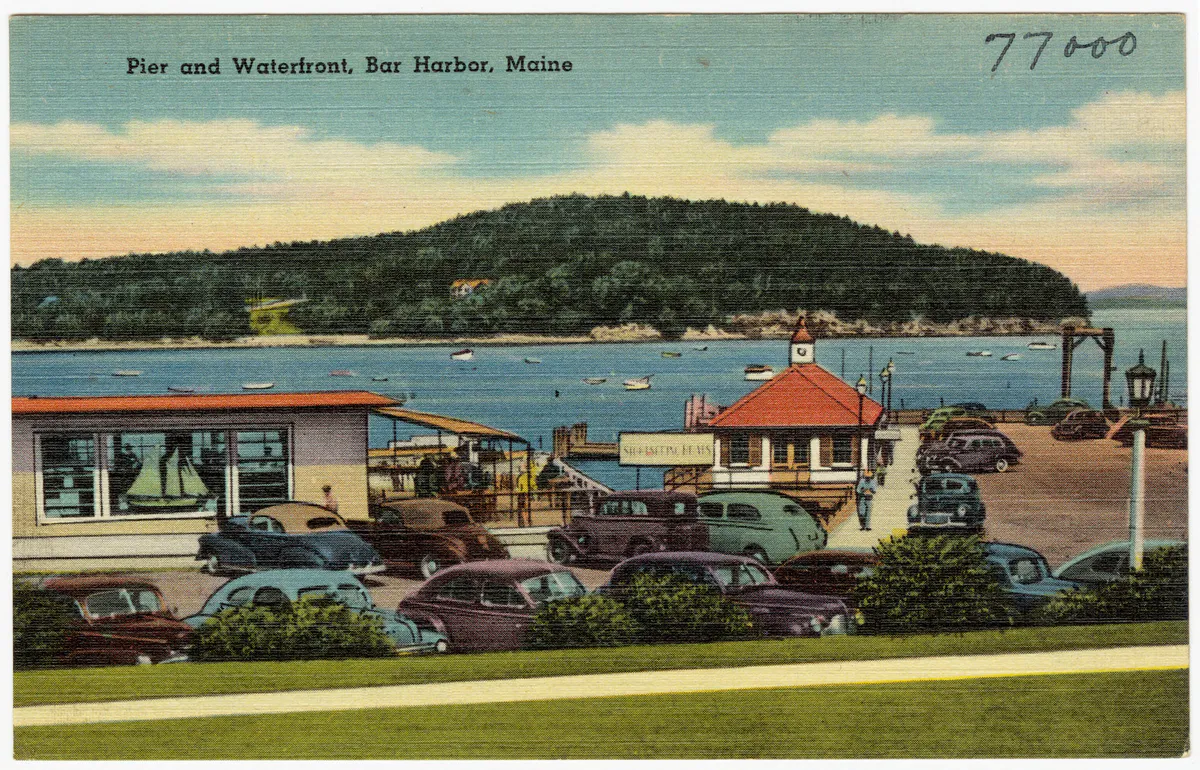
Bar Harbor sits on Mount Desert Island next to Acadia National Park. It is the most visited town in Maine by a large margin. In July and August it is slammed. In June and September it is merely busy. In October the foliage is spectacular and the crowds have thinned by about 60 percent.
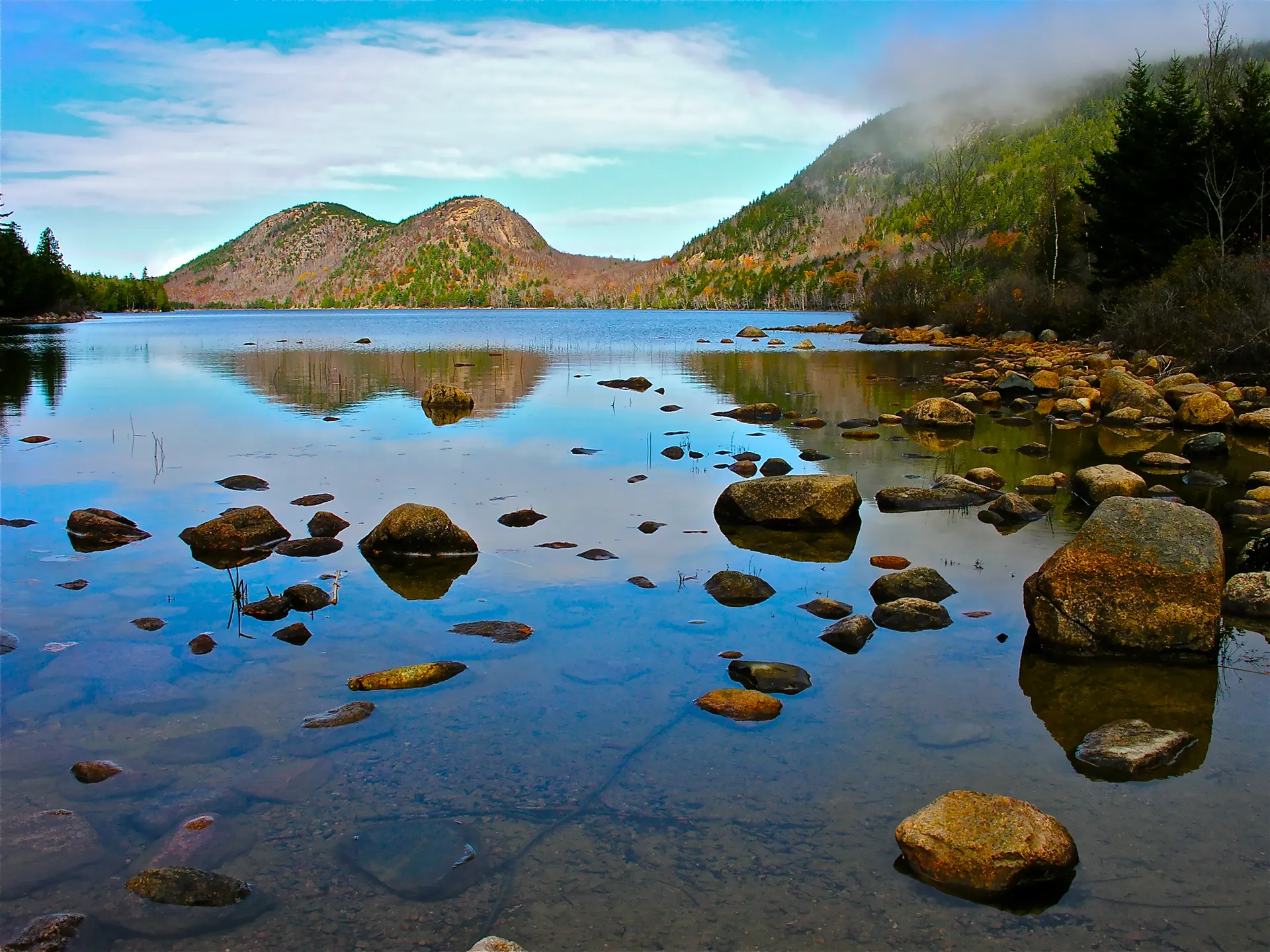
Plan two full days minimum for Acadia. Three is better. Cadillac Mountain, Park Loop Road, Jordan Pond, Thunder Hole, Sand Beach, the Beehive. You will not see it all. That is fine.
Segment 5: Bar Harbor to Lubec (95 miles)
This is the Down East stretch. The section most visitors skip. Which is exactly why you should drive it.
Schoodic Point
Schoodic Point is the only piece of Acadia National Park on the mainland, across Frenchman Bay from Mount Desert Island. One-way road loop around a peninsula. Dramatic granite ledges getting pounded by surf. Barely anyone there, even in August. Go.
Winter Harbor, Milbridge, Machias
These are working towns. Fishing towns. Not set-decorated for tourists. The restaurants are fine, not famous. The motels are clean and cheap. The views are unedited.
Blueberries grow wild across the Down East barrens. If you drive this stretch in late July or early August, you will pass fields of low-bush blueberries with rakers bent over pulling fruit. You can buy a quart at a roadside stand for less than a bottle of water costs in Bar Harbor.
Cobscook Bay
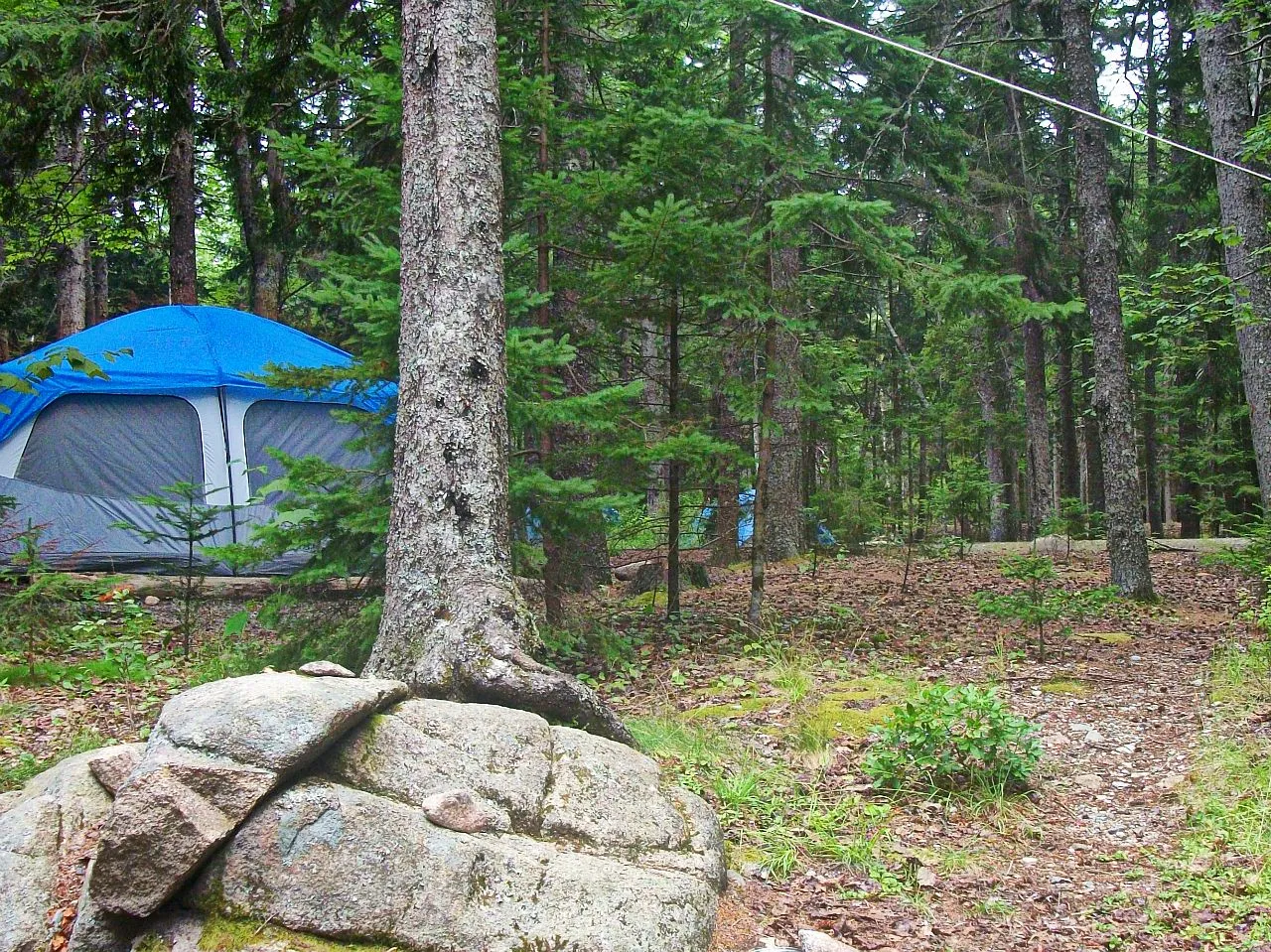
Cobscook Bay State Park is quiet, wooded, and pressed up against a tidal bay with 24-foot tides. The park has the best camping on the Down East coast. Loons call at night. The campground is full only on the biggest summer holiday weekends. Every other time, you can show up and get a site.
The Cutler Coast public land preserve has some of the most dramatic sea cliffs in Maine. The coastal trail is a rugged 4 to 10 mile hike with bluff-top views of the Bay of Fundy. If you are willing to hike, this is the best stop on Down East.
Lubec and West Quoddy Head
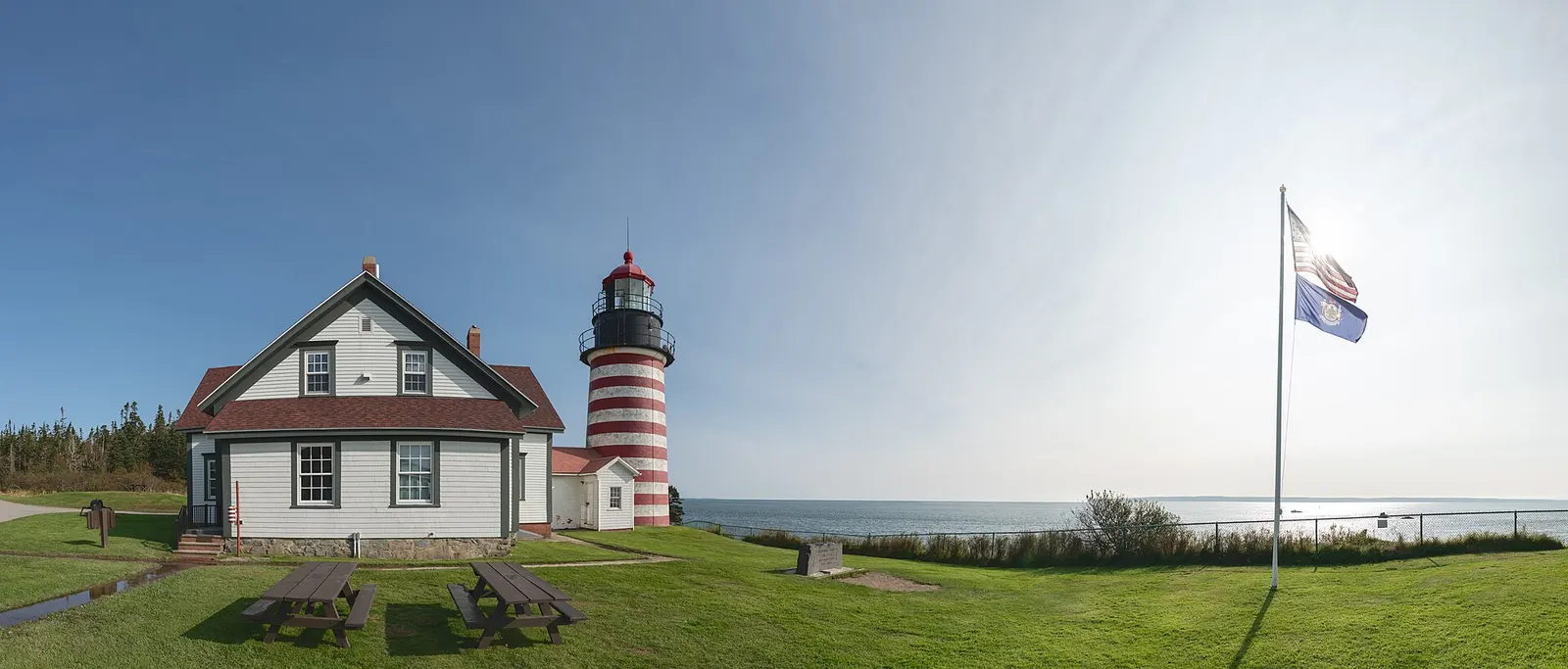
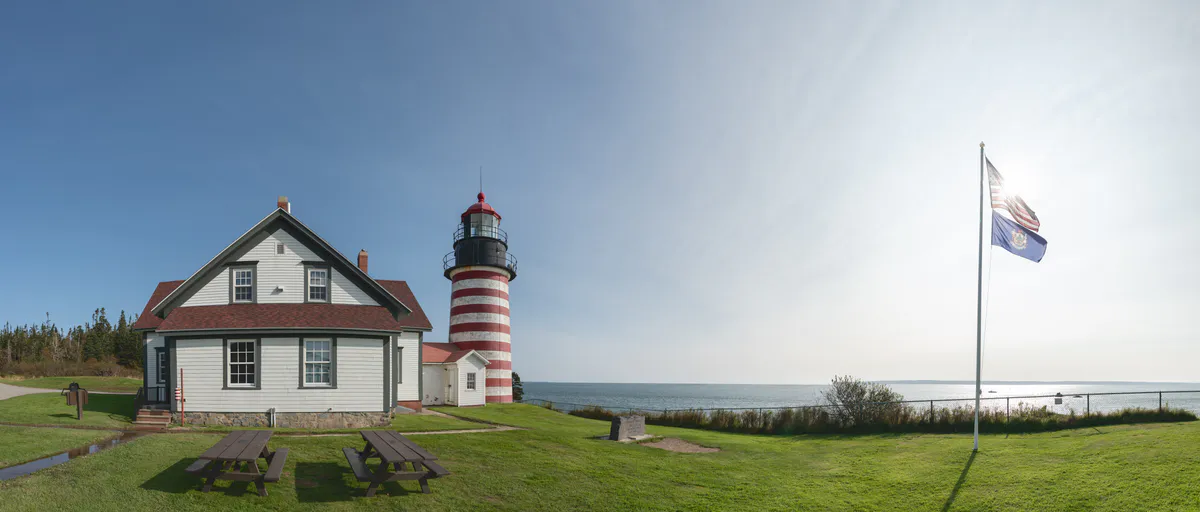
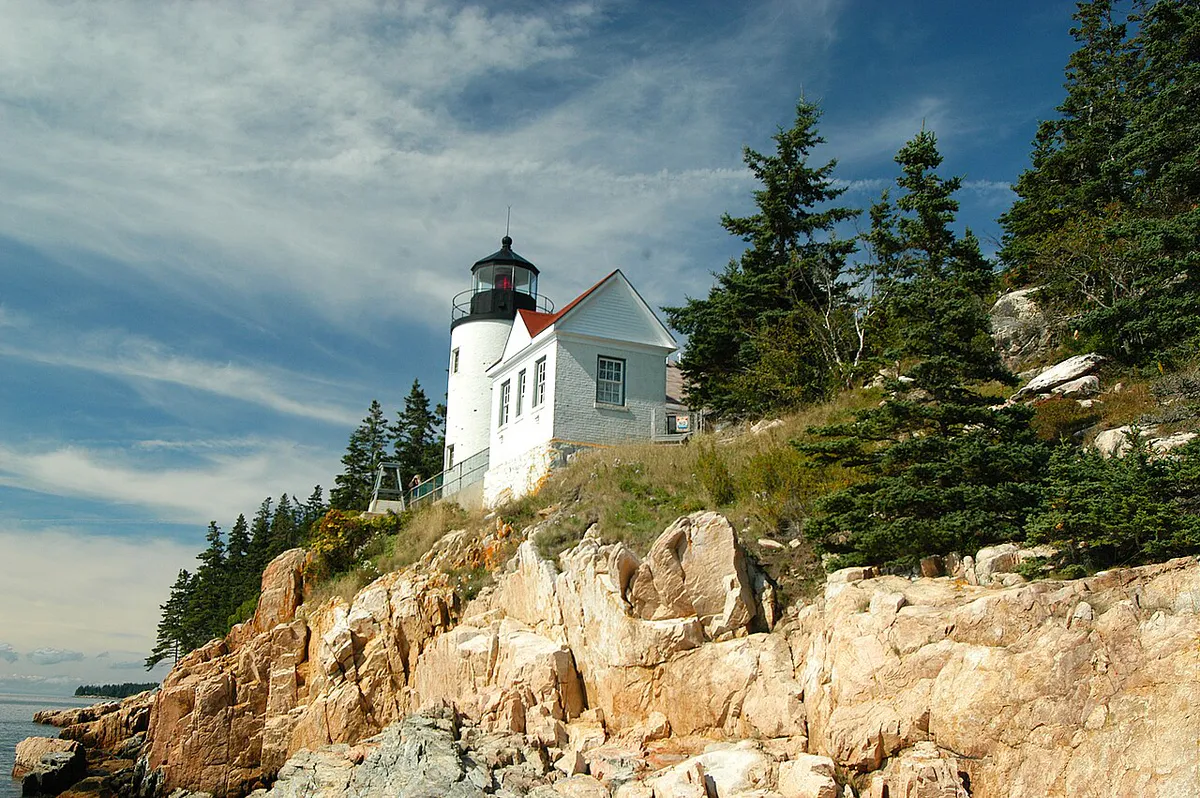
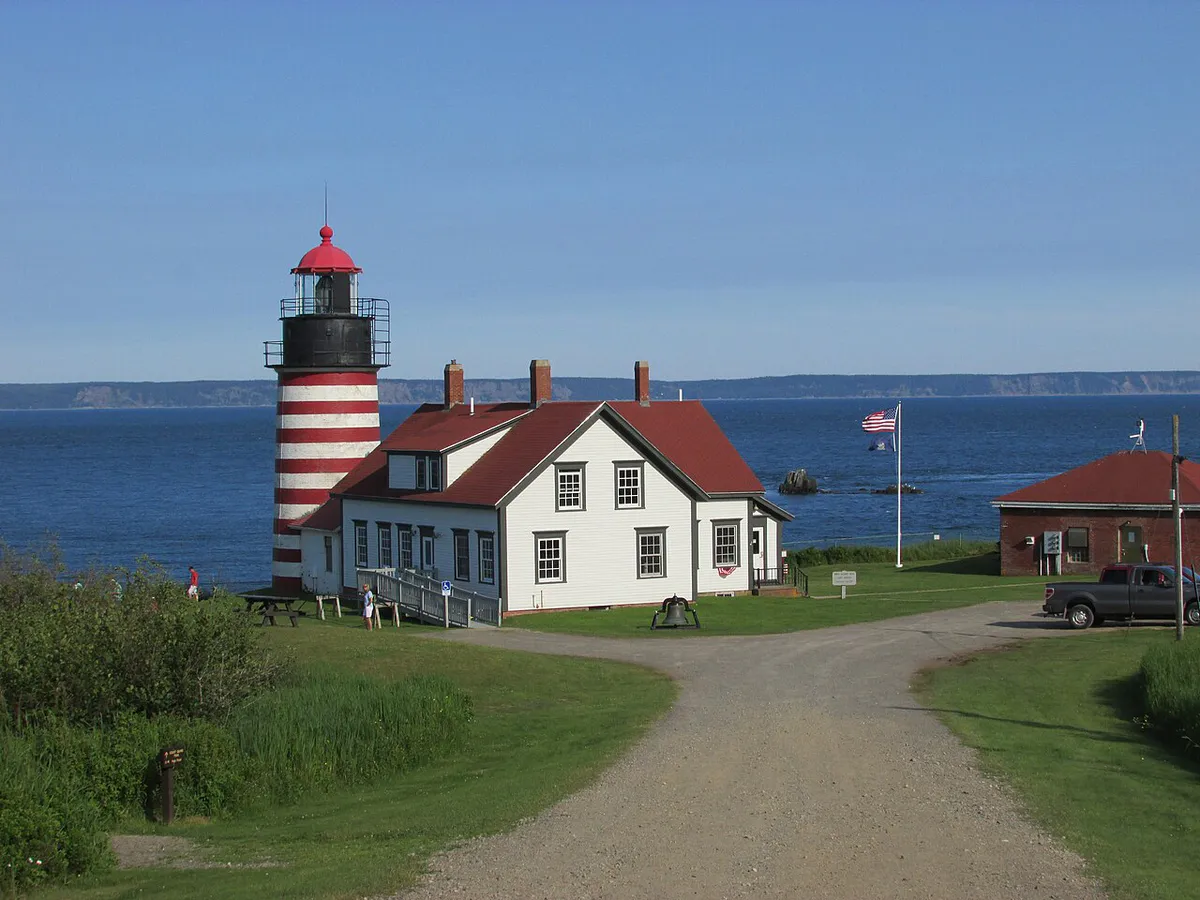
Lubec is the easternmost town in the continental United States. About 1,300 residents. The bridge to Campobello Island in Canada leaves from right downtown. West Quoddy Head Lighthouse at Quoddy Head State Park is the candy-striped red and white beacon that marks the absolute easternmost point in the country. The light station grounds are open daily; the tower itself is not typically open to visitors, but the coastal trails are.
Stand at the point at sunrise. Before any other American sees the sun, you have.
Eastport
Eastport is across a bay from Lubec. As the crow flies, about 3 miles. By road, 40 miles. That is Down East logistics. Eastport claims the deepest natural harbor on the east coast. The old downtown is a compact set of brick buildings with art galleries and one of the best small bakeries in Maine (Moose Island Bakery).
How Many Days Do You Need?
Absolute minimum: 5 days. You will skip a lot. Plan to do Portland to Bar Harbor and little else. Lubec will not happen.
Comfortable: 7 days. One full day Portland. One day Boothbay/Pemaquid. One day Camden/Rockland. Two days Acadia. One day Down East to Lubec. One travel/buffer day.
Unhurried: 10 days. Now you can take the Blue Hill peninsula detour, spend a full day at Pemaquid, do Acadia right, and still have time to sit on a porch in Lubec for an afternoon.
From mid-June through Labor Day, coastal Maine lodging is nearly fully booked. Book at least 2 to 3 months in advance for July and August, especially in Bar Harbor, Camden, and Boothbay Harbor. Down East (past Ellsworth) has more last-minute availability. Lubec itself rarely fills completely.
Best Time of Year
June: Cool, occasionally foggy, everything is open, crowds are thin. The best trade-off month.
July and August: Warmest water, all attractions open, heavy traffic, highest lodging prices, Wiscasset becomes a parking lot. Avoid July 4th weekend specifically.
September: Warm days, cool nights, crowds start thinning after Labor Day. Arguably the best month if you can handle slightly earlier sunsets.
October: Foliage peaks inland and works its way to the coast late in the month. Thin crowds. Many restaurants and inns start closing after Columbus Day. Down East is particularly empty.
November through April: Much of the coast is closed. Bar Harbor is a ghost town. Only attempt if you want solitude and do not mind that most restaurants are shuttered.
Where to Stay
Budget: State park campgrounds. Sebago Lake, Camden Hills, Lamoine, and Cobscook Bay are all good. Reserve through CampWithME.
Mid-range: Classic Maine inns. Grey Havens Inn in Georgetown, The Inn at Isle au Haut, the Blue Hill Inn.
High-end: Press Hotel in Portland, Samoset Resort in Rockport, Bar Harbor Inn.
Spread out. Do not make Bar Harbor your base for the whole trip. It is too far from the southern and midcoast sections. Plan at least three different lodging stops: somewhere in the York/Ogunquit area, Rockland or Camden, and Bar Harbor or Lubec.
How long does the Maine Route 1 coastal drive take?
The coastal Route 1 from Kittery to Lubec is about 310 driving miles and takes 7 to 8 hours with no stops. Nobody drives it without stops. Plan a minimum of 5 days, ideally 7 to 10 days, to actually see the coast rather than just pass through it.
Can I do Maine Route 1 in a weekend?
Not really. You could do the southern portion (Kittery to Portland) in a weekend. Trying to reach Bar Harbor or Lubec in a weekend means driving all day and seeing very little. Pick a segment and do it well rather than rushing the whole thing.
What is the best time to drive the Maine coast?
September is generally considered the best month. Warm days, cool nights, thinned crowds after Labor Day, and restaurants still open. June is a close second with cooler weather. July and August have the warmest water but the heaviest traffic. October is beautiful for foliage but many businesses start closing.
Is Route 1 in Maine scenic the whole way?
No. Route 1 bypasses several parts of the coast and runs through commercial strips in places like Ellsworth and Rockland. The scenic stretches are genuinely scenic, but you have to be willing to get off Route 1 for the best views. Specifically, detour to Pemaquid, Schoodic, and Down East beyond Machias.
Do I need a car for the Maine coast road trip?
Yes. Public transit along the coast is limited. Portland has an airport with rental cars. Amtrak's Downeaster reaches Brunswick but stops there. From Brunswick north, you need a car. Bar Harbor has a seasonal airport but most visitors drive.
What is the easternmost point in the US?
West Quoddy Head in Lubec, Maine. The lighthouse at Quoddy Head State Park marks the spot. Sunrise there is earlier than anywhere else in the lower 48. Bring a jacket; it is almost always cool and windy on the point, even in August.
Are there tolls on Route 1 in Maine?
No. Route 1 is a toll-free state and federal highway. Tolls in Maine are on I-95 (the Maine Turnpike) and the Piscataqua River Bridge on I-95. If you stay on Route 1, you will not hit a toll booth.
Is it worth driving past Bar Harbor to Lubec?
Yes, if you have the time. The Down East coast from Ellsworth to Lubec is the least touristed and most peaceful section of the drive. You trade restaurants and amenities for space, quiet, and dramatic cliffs. Most visitors turn around at Bar Harbor, which is exactly why Down East is worth the extra two days.