





Maine is one of the best states to hike with a dog. The trails are generous about off-leash rules in many areas (always check the specific trail), the water access is endless, and the cold-weather seasons make for dog-comfortable temperatures most of the year. But Maine also throws specific challenges at dogs: wet granite that slides paws out from under them on Acadia, salty winter sidewalks that burn paws, hot tar parking lots in August, lake water that gets seriously cold even in June, and the occasional moose or porcupine that turns a casual hike into an emergency vet visit.
We researched the dog hiking gear that holds up to Maine conditions, weighing materials, design, and aggregated owner reviews. The gear below is what we would put on a Maine dog, ordered roughly by importance.
| Item | Pick | Price | Priority |
|---|---|---|---|
| Harness | Ruffwear Front Range | Mid-range | Buy first |
| Hiking Pack | Ruffwear Approach | Mid-range | After basics |
| Paw Boots | Ruffwear Grip Trex | Mid-range | Year-round in Maine |
| Paw Wax | Musher's SecretSearch Amazon | Budget | Winter / salt |
| Life Jacket | Ruffwear Float Coat | Mid-range | Any water dog |
| Sleeping Bag | Ruffwear HighlandsSearch Amazon | Mid-range | Camping only |
| LED Collar Light | Nite Ize SpotLit | Budget | Buy first |
| Collapsible Bowl | Kurgo Collaps A BowlSearch Amazon | Budget | Buy first |
| Lead | Long Paws 10 ftSearch Amazon | Budget | Buy first |
1. Harness (Buy This First)
A real harness is the single biggest dog gear upgrade. Collars work for neighborhood walks. On a trail, with a dog who pulls toward a squirrel, the harness distributes load and prevents neck injury. It also gives you a handle to grab the dog quickly, useful on cliff edges, near moose, or when the dog needs help over a ledge.
The Ruffwear Front Range is the harness we recommend most. Two leash attachment points (front clip for pullers, back clip for casual walking), padded chest, reflective trim, and a sizing range that fits almost any dog. The Kurgo Tru-Fit Smart Harness is a cheaper alternative around $30 if budget matters.
#1Mid-range
Ruffwear Front Range Dog Harness
Who it’s forBest overall dog hiking harness
Why we picked itTwo leash attachment points (front and back) for pull control
Pros
- Padded chest and belly for all-day comfort
- Reflective trim for visibility on dawn/dusk hikes
- Sized for almost any dog (XXS through XL)
Know before you buy
- Buckle plastic feels less premium than competitors
- Cannot be loosened beyond preset adjustment range

2. Hiking Pack (Once the Dog is Mature)
Dogs over 18 months in good shape can carry their own water and snacks. The pack reduces what you have to carry, gives the dog a job (working dogs are happier dogs), and the saddlebags double as a way to organize gear.
Two rules:
- Pack weight should never exceed 25% of the dog’s body weight. For most adult medium-large dogs, that is 1 to 1.5 liters of water plus snacks, enough for a full day.
- Wait until the dog is over 18 months old. Puppies still developing joints should not carry weight.
The Ruffwear Approach Pack is the standard. Integrated harness, padded back, removable saddlebags, multiple compression straps to prevent gear from bouncing. The Kurgo Baxter is the value alternative at $70.
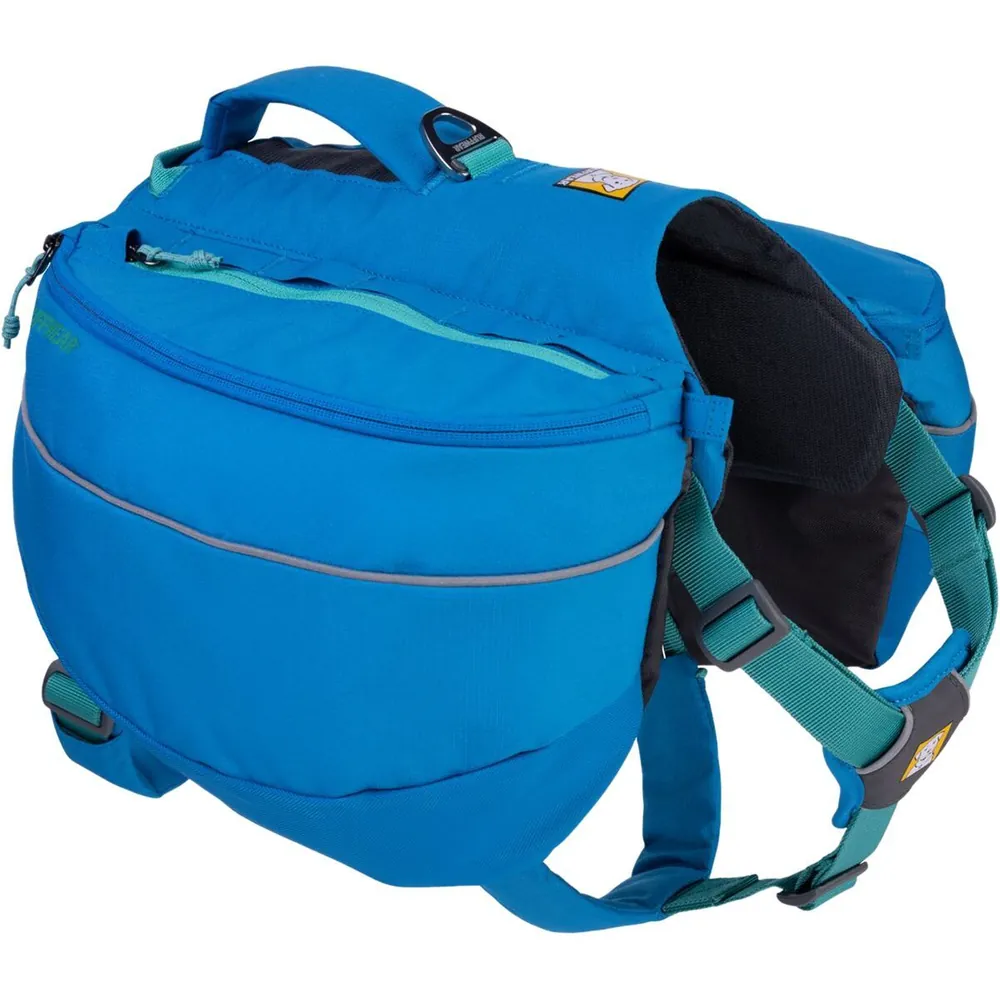
Mid-range
Ruffwear Approach Dog Pack
Who it’s forBest dog day-hiking pack
Why we picked itLets dogs carry their own water and snacks, up to 25 percent body weight
Pros
- Multiple compression straps prevent gear bouncing
- Removable saddlebags simplify cleaning
- Integrated harness means no separate gear is needed
Know before you buy
- Not for puppies with developing joints
- Sized for medium and large dogs only

3. Paw Protection (Bigger Deal in Maine Than You Think)
Maine throws hard surfaces at dogs year-round:
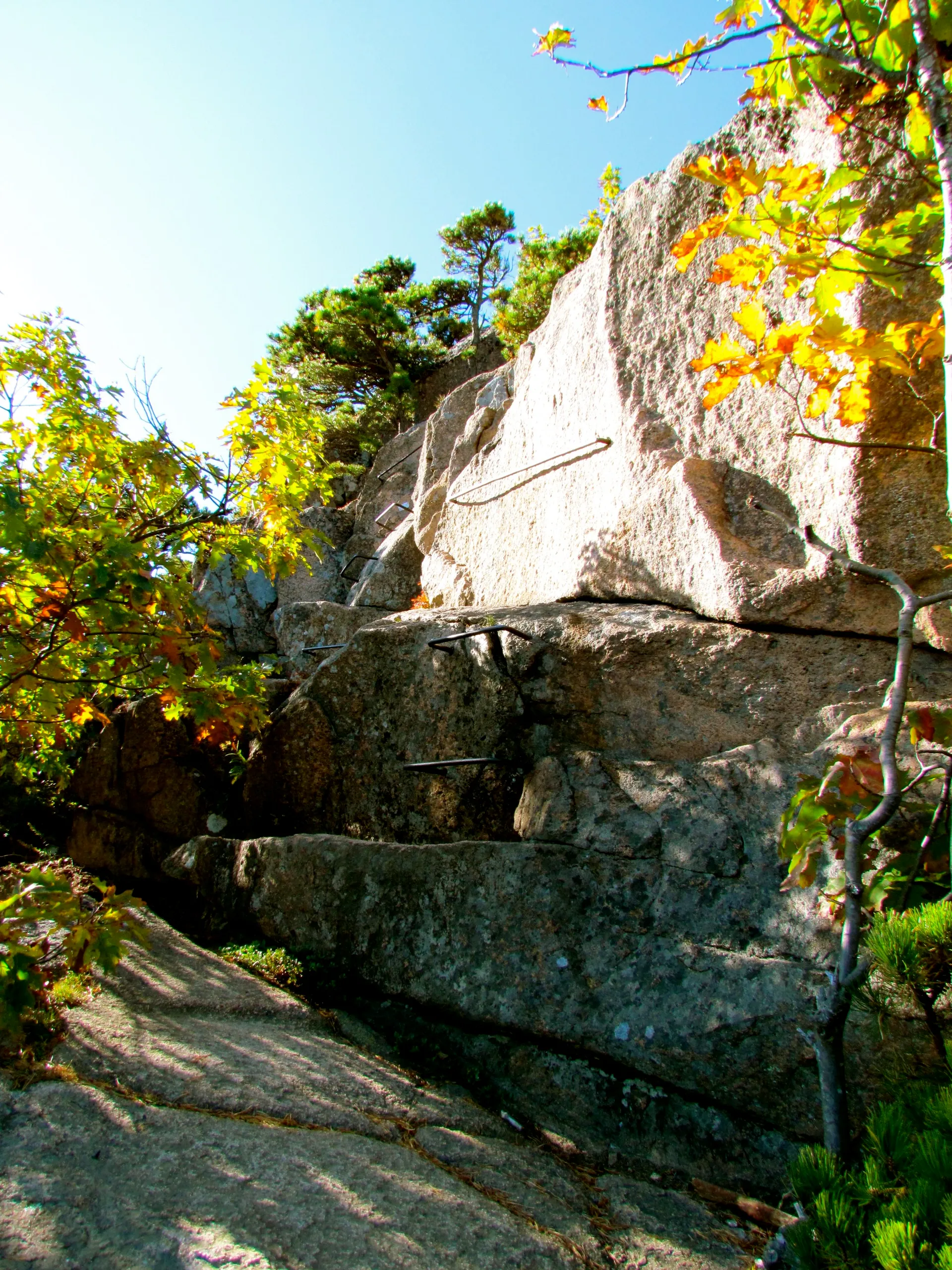
- Acadia granite: Slick when wet, hot in summer sun, abrasive over distance
- Salt and ice melt: Burns paws all winter on sidewalks, parking lots, plowed roads
- Sharp rocks on coastal trails: Slice pads on barnacles, rough granite, and broken seashells
- Hot pavement: Driveways and parking lots in July hit 130°F+ surface temp
Two options for protection:
Boots (Best Coverage)
#3Mid-range
Ruffwear Grip Trex Dog Boots (Set of 4)
Who it’s forBest dog boots for Maine
Why we picked itVibram outsole grips wet granite (a real Maine concern)
Pros
- Breathable mesh upper drains water
- Hook-and-loop closures stay on through mud and water
- Protects paws from hot pavement, sharp rocks, and ice melt
Know before you buy
- Dogs need a few wears to adjust
- Sized by paw measurement, not breed; measure carefully
Ruffwear Grip Trex boots have Vibram soles that grip wet granite, the same rubber compound used in adult Vibram hiking shoes. They prevent pad cuts on rough trails and protect against salt in winter. Sizing is by paw measurement, not breed; measure carefully and size up if between.
Most dogs need 2 to 3 wears before they walk normally in boots. Start them in the yard for short sessions.
Paw Wax (Easier, Less Protective)
Musher’s Secret is a natural wax that creates a barrier on the pads. It is easier than boots, apply once before the walk, no convincing the dog to wear gear, but it wears off in a few hours and does not protect against cuts.
Use boots for: coastal trails, summer pavement, sustained winter walks on salted streets. Use Musher’s Secret for: casual winter walks, short summer outings, dogs who refuse boots.
The hot pavement test: place the back of your hand on the pavement for 10 seconds. If you cannot keep it there, the surface is too hot for dog paws. This rule alone prevents a lot of summer paw burns. Walk dogs early morning or late evening in July and August, or use boots.
4. Life Jacket (For Any Water Dog)
Maine has more water access than any other state in the Northeast. If your dog swims, fishes, or rides in a kayak or canoe, a life jacket is real safety gear, not gear-bro stuff.
The Ruffwear Float Coat is the standard. The lift handle on the back is the feature that matters most. It lets you grab the dog out of the water from a kayak deck without leaning over and tipping yourself. The cheaper Outward Hound Granby PFD works well for casual swimming dogs and is half the price.
Dogs who swim well still need life jackets in cold water (Maine lakes stay cold into July) because they tire faster than warm-water swimming. Exhausted dogs in early-June lake water that could not have made it back without help are exactly the scenario a float coat is for.
#4Mid-range
Ruffwear Float Coat Dog Life Jacket
Who it’s forBest dog life jacket for Maine
Why we picked itLift handle helps recover a dog from a kayak without tipping
Pros
- Adds flotation when cold water speeds fatigue
- Works for dogs that swim, fish, or ride in a kayak or canoe
Know before you buy
- Costs more than the casual-swimming alternative
5. Cold-Weather Gear
Maine winter is real. Dogs vary in cold tolerance, huskies and Bernese Mountain Dogs handle below-zero, short-coated dogs (boxers, vizslas, greyhounds) need real protection. Three layers to consider:
Insulated Dog Jacket
For short-coated dogs in temperatures below 30°F, a real insulated jacket prevents shivering and cold injuries. Ruffwear Powder Hound, Hurtta Extreme Warmer, and Carhartt Dog Coat are the standards. Skip the cute fleece, get something with real fill rating and water-resistant shell.
Sleeping Bag for Camping
The Ruffwear Highlands Dog Sleeping Bag is overkill for casual camping and essential for cold-weather camping. Dogs cool faster than humans because of their higher surface-area-to-body-mass ratio. A dog sleeping bag adds 20 to 30°F of comfort.
Booties (Snow + Salt)
See paw protection section above. Critical for any extended winter walking on plowed/salted streets.
6. Visibility (Cheap and Important)
A $10 LED collar light is the cheapest piece of safety gear you can buy. Visible from 100+ feet at night, runs for months on a CR2032, clips to any collar. Get one for each dog and a spare.
For low-light hiking (dawn, dusk, late fall when sunset is at 4 PM), the collar light combined with a reflective harness makes the dog visible to drivers, hunters, and other hikers.
#5Budget
Nite Ize SpotLit LED Collar Light
Who it’s forBest dog collar light
Why we picked itVisible from more than 100 feet at night
Pros
- Clips to any collar
- Runs for months on a CR2032 battery
- Adds visibility for drivers, hunters, and other hikers
7. Hydration
Dogs drink more on trail than you expect, especially in summer. Plan for 1 to 1.5 ounces of water per pound of dog per day at rest, double that on active days.
Carry it in the dog’s pack (in a soft collapsible bottle) or in your own. A collapsible bowl makes drinking faster and less wasteful than pouring water on the ground.
#6Budget
Kurgo Collaps A Bowl
Who it’s forBest collapsible water bowl
Why we picked itGives a dog a clean drink without wasting carried water
Pros
- Collapses for easy pack storage
- Makes trail drinking stops faster
Do not let dogs drink from Maine streams, ponds, or lakes. Giardia, blue-green algae (especially in late summer), and parasites are real risks. Carry water for the dog separately and use a collapsible bowl. Treat any water you would drink yourself.
8. Leash That Holds Up
Retractable leashes fail at exactly the wrong moments. The thin cord catches and burns hands, the locking mechanism breaks, the housing cracks if you drop it on granite. We would not recommend retractables on Maine trails.
The Long Paws Locking Lead is the kind of leash to replace a retractable with. Heavy braided rope, locks at any length from 4 to 10 feet, padded handle for long walks. For most Maine hikes, 6 to 8 feet is the right length: long enough to let the dog explore, short enough to maintain control.
Maine-Specific Trail Considerations
Ticks
Ticks are bad in Maine. Lyme disease and anaplasmosis are real risks for dogs. Three layers of protection:
- Year-round flea and tick medication (Bravecto, NexGard, or similar from your vet)
- Tick check after every hike, between toes, in ears, around collar, under tail
- Trail strategy, stay on the trail, avoid tall grass and ferns when possible
For tick prevention, see our Lyme disease guide for Maine hikers and protect dogs from ticks post.
Porcupines
A porcupine quill incident is one of the most common vet emergencies for hiking dogs in Maine. Quills get embedded in face, mouth, and paws. Removal usually requires sedation. Keep dogs on leash in areas with known porcupine activity (especially around large hemlocks and in late fall when porcupines are mating).
Moose
A 1,200-pound bull moose with a dog in his face is a worst-case Maine encounter. Cow moose with calves in spring are equally dangerous. If you see a moose, leash the dog immediately and back away slowly. Most dogs cannot resist chasing moose; the dog usually loses.
Off-Leash Rules
Maine off-leash rules vary by trail:
- National parks (Acadia): Dogs must be on leash 6 ft or shorter, no exceptions
- State parks: Most require leash; check specific park rules
- State land (MDIF&W lands, public reserved lands): Often off-leash okay; check signage
- Local trails: Highly variable
When in doubt, leash. See our dog-friendly hikes in Maine guide for vetted off-leash trails.
A Dog First Aid Kit for Maine
Beyond gear, every Maine dog hiker should carry a basic first aid kit:
- Tweezers or tick key
- Cohesive bandage (Vetrap) for paw injuries
- Antiseptic wipes
- Liquid bandage for small cuts
- Benadryl tablets (consult vet for dose; useful for bee stings)
- Hydrogen peroxide (induces vomiting if dog eats something toxic; consult vet first)
- Emergency contact for nearest vet and Maine Poison Control
The Adventure Medical Kits Adventure Dog Series First Aid Kit is the pre-built version for around $30. Worth having in the car if not on your back.
Can dogs hike in Acadia National Park?
Yes, dogs are allowed on most Acadia carriage roads and many trails, but must be on a 6-foot or shorter leash at all times. Dogs are prohibited on: ladder/iron-rung trails (Beehive, Precipice, Jordan Cliffs), Wild Gardens of Acadia, Echo Lake Beach in summer, and inside the Park Loop Road auto road shoulders. See our Acadia dog-friendly guide for full details.
How much weight can my dog carry in a hiking pack?
Up to 25% of body weight for a healthy adult dog over 18 months. For a 60 lb lab, that is 15 lb max, usually 1 to 1.5 liters of water plus snacks. Start with 10% and build up over multiple hikes. Never load weight on puppies (under 18 months) or senior dogs with joint issues.
Do dogs need hiking boots in Maine?
For most casual hiking, no, dogs have evolved tough paw pads. For specific conditions, yes: hot summer pavement, salted winter streets, sharp coastal rocks, or any dog with paw pad injuries or sensitivity. Many Maine dogs go their whole lives without boots. The Acadia granite trails are abrasive enough that boots help on long days.
Is Lyme disease a serious risk for dogs in Maine?
Yes. Maine has one of the highest rates of Lyme disease in the country, and dogs are at high risk. Year-round flea and tick medication is essential, not optional. Tick checks after every hike. The Lyme vaccine for dogs is available and recommended by most Maine vets for hiking dogs. Watch for symptoms: lameness, lethargy, fever within 2 to 5 months of a tick bite.
Can I take my dog kayaking in Maine?
Yes, with a life jacket and gradual training. Start with calm shallow water near a beach so the dog can swim back if they jump out. Build up to longer trips. Lake water in Maine stays cold even in summer, so a swimming dog can tire fast, the life jacket prevents emergencies. Avoid open ocean kayaking with dogs; tides and currents are too unpredictable.