


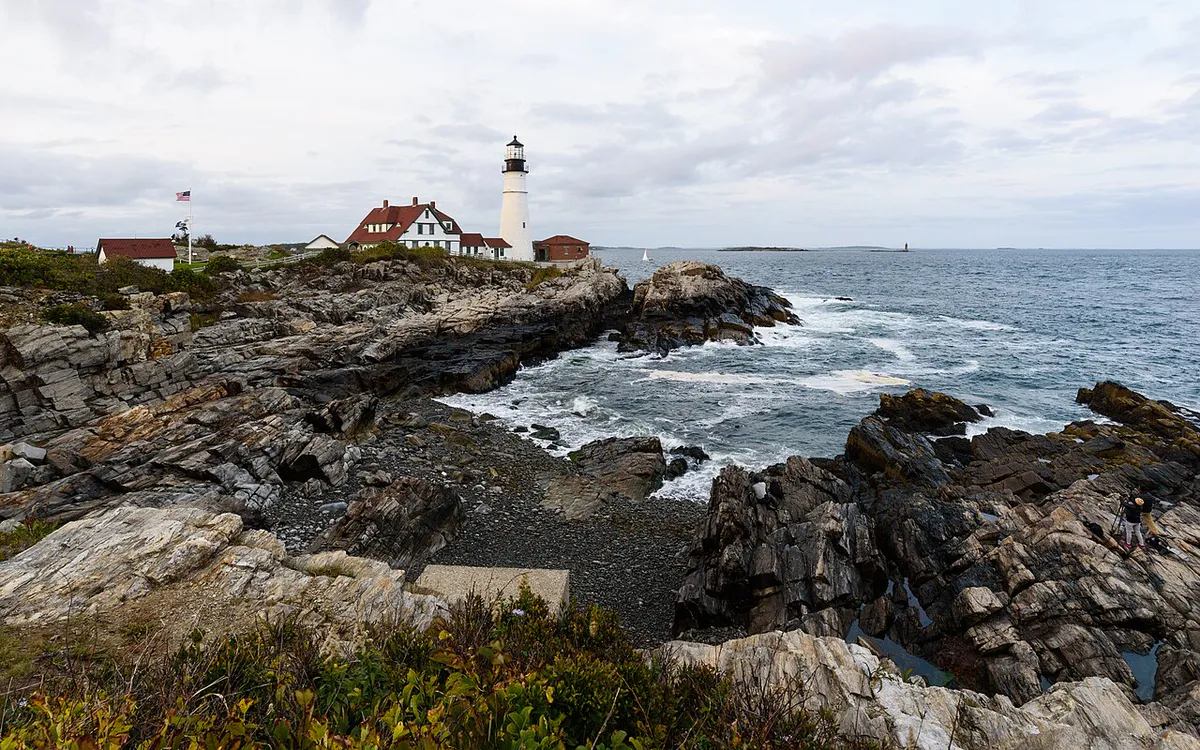
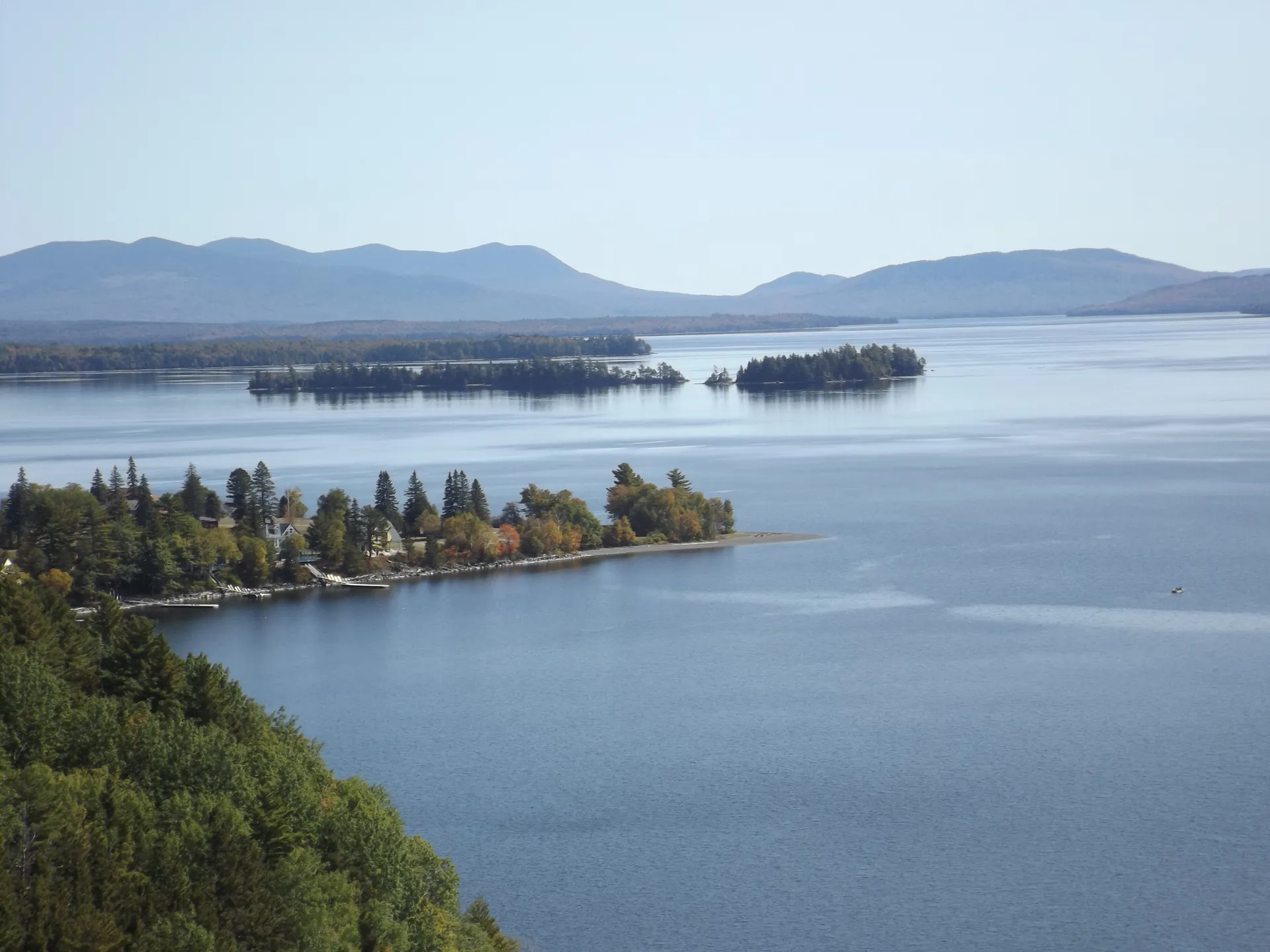
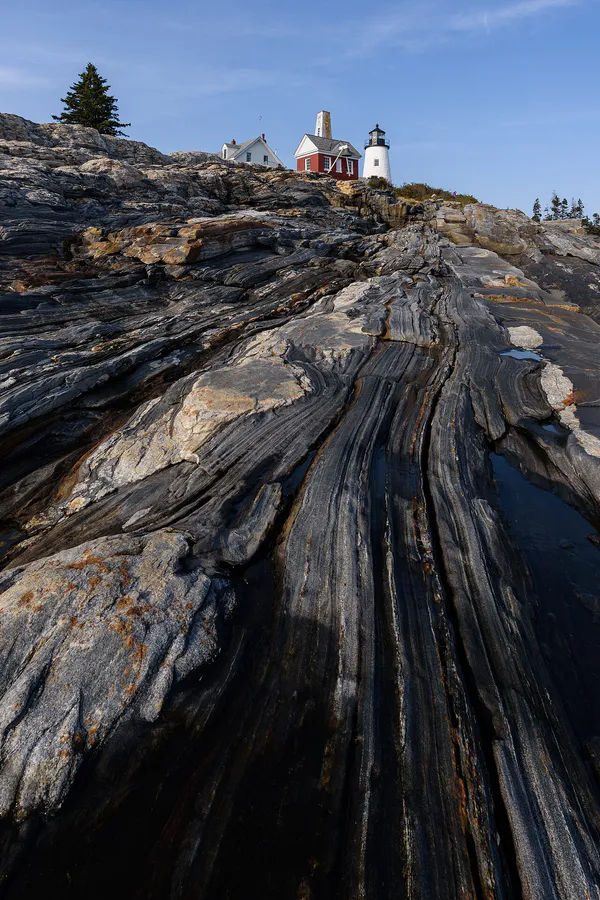
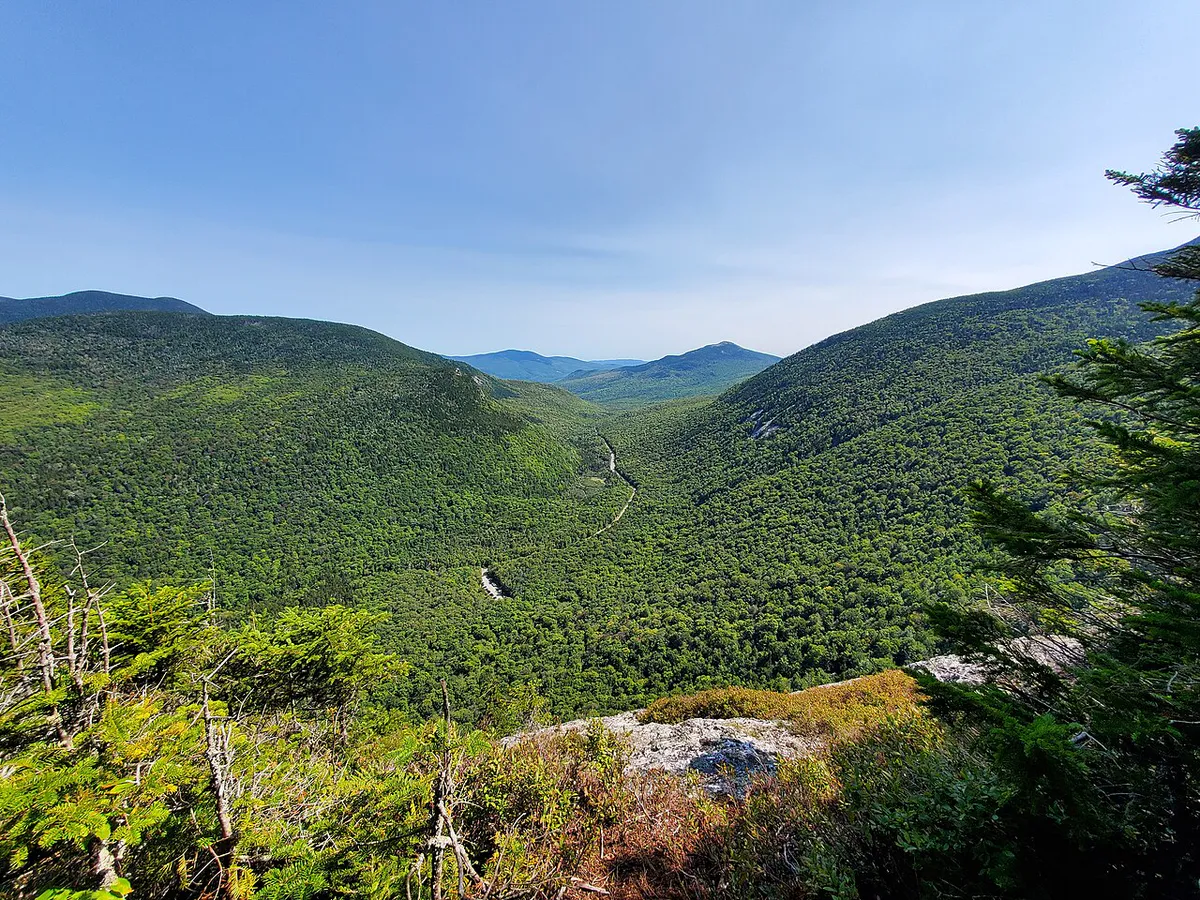
Hiking with kids in Maine works. It just does not work the way most trail guides suggest. The kid hiking blogs love to recommend trails by mileage, like a 2-mile loop is automatically fine for a five-year-old. In Maine, 2 miles can mean a flat boardwalk through a bog, or it can mean granite slabs, mud pits, and ladder rungs that drop your kid into tears within twenty minutes.
We have hiked most of the trails in this guide with kids ranging from a 3-year-old riding in a carrier to a stubborn 9-year-old who refused to admit she liked it. The trails below are ones that actually work. The gear and tactics that follow are what we learned the hard way.
The 8 Best Trails for Hiking with Kids in Maine
| Trail | Region | Distance | Why Kids Like It | Age Range |
|---|---|---|---|---|
| Jordan Pond Path | Acadia | 3.3 mi loop | Flat, lake, popovers at the end | All ages |
| Ocean Path | Acadia | 4.4 mi OB | Thunder Hole , tide pools, paved | 3+ |
| Wonderland Trail | Acadia | 1.4 mi RT | Tide pools at the end | All ages |
| Ship Harbor Trail | Acadia | 1.3 mi loop | Coastal scrambling, no cliffs | 4+ |
| Mackworth Island | Portland area | 1.5 mi loop | Fairy village in the woods | All ages |
| Bradbury Mountain | Freeport area | 0.6 mi RT | Real summit, 20 minutes up | 4+ |
| Mount Battie via auto road + summit | Camden | 0.3 mi | Walk up the last bit, big view | All ages |
| Step Falls | Western Maine | 0.6 mi RT | Waterfall slides at the end | 5+ |
1. Jordan Pond Path (Acadia National Park)
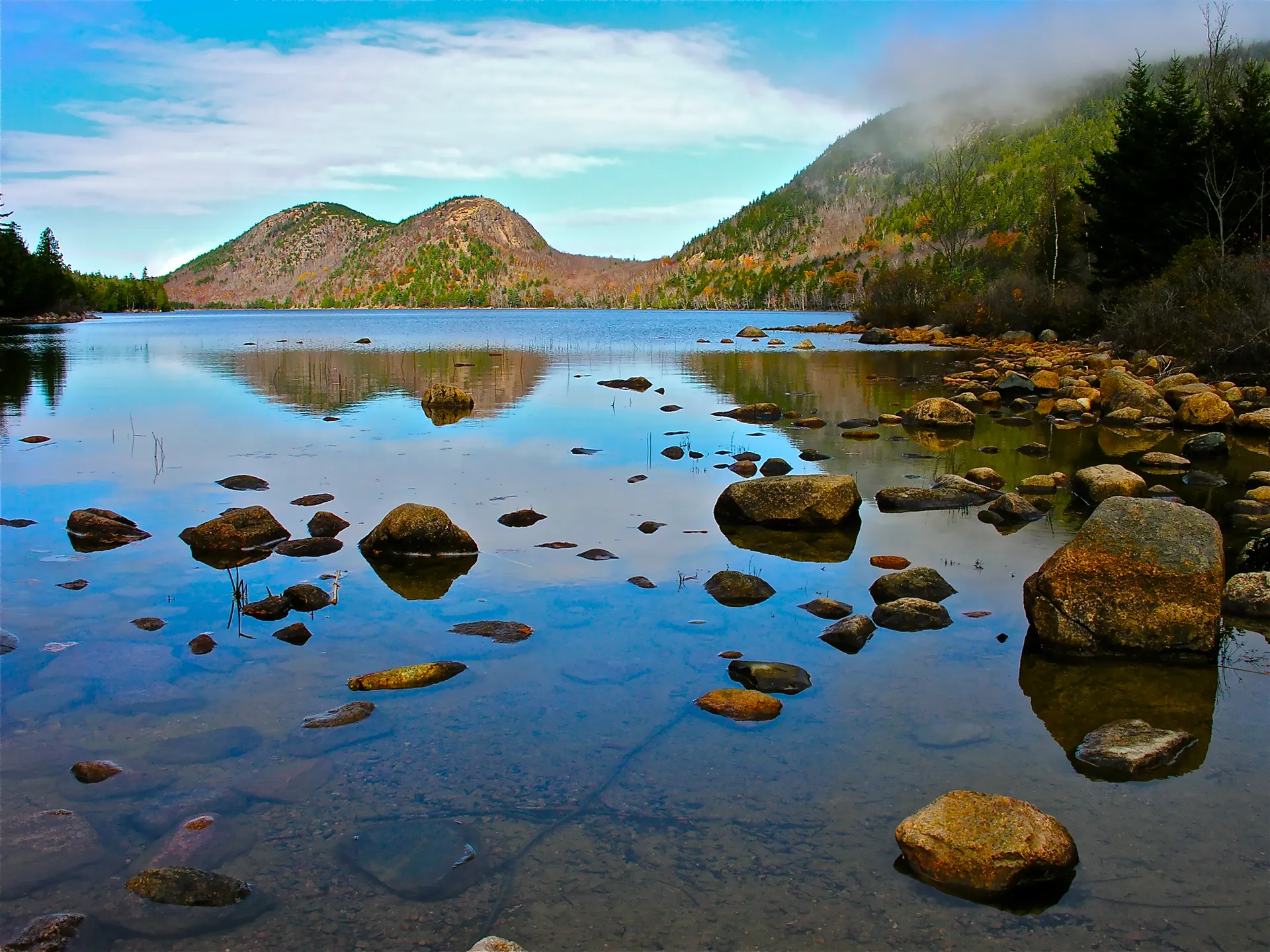
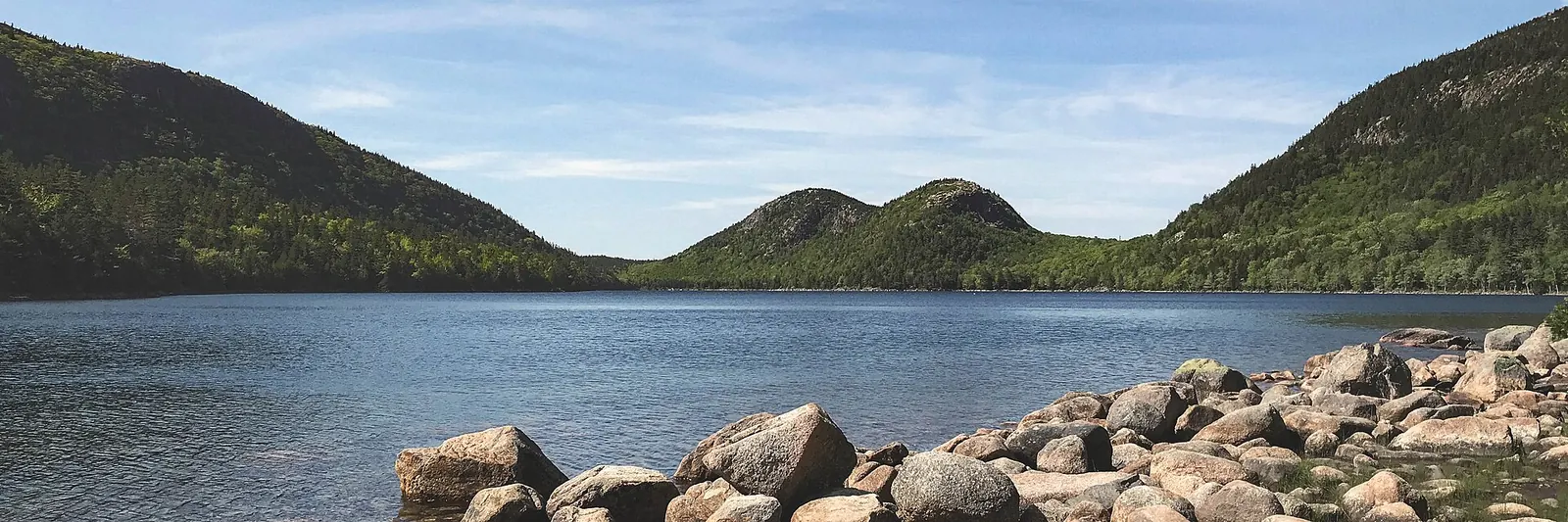
Jordan Pond Path is the trail you suggest when you want zero risk. The east side is paved or boardwalk for most of its length. The west side is rougher with some root sections, but nothing technical. Kids love it because the pond is the centerpiece the entire time, the Bubbles loom in the distance, and you can bribe them with popovers at the Jordan Pond House at the end. Acadia has enough gentle trails that we ranked them separately in our kid-friendly hikes in Acadia guide.
The full loop is 3.3 miles. If a younger kid runs out of legs, you can turn around at the north end and walk back the same way. There is no penalty for going partway.
2. Ocean Path (Acadia National Park)
Ocean Path is paved, mostly flat, and dotted with reasons to stop. Thunder Hole roars on the right tide. Monument Cove looks like a hidden beach you discovered. Boulder Beach is exactly what it sounds like. The trail runs 4.4 miles round trip but works equally well as a 1-mile out-and-back from any of the four parking lots along Park Loop Road.
The cliffs along Ocean Path are unfenced and the granite gets slick in fog or after rain. This is not a trail to let kids run ahead. Hold hands or stay within arm’s reach at the overlooks.
3. Wonderland Trail (Acadia National Park)
Wonderland is the under-the-radar Acadia trail for families. It is on the quieter west side of Mount Desert Island. The walk is 0.7 mile each way through low pines and ends at a granite shoreline with extensive tide pools at low tide. Bring a small bucket. Bring two hours of patience. The kids will not want to leave.
4. Ship Harbor Trail (Acadia National Park)
Ship Harbor is the figure-eight loop near Wonderland. Same general area, same west-side quiet. The loop adds a section through forest and brings you out at a sheltered cove with safer water for kids to wade in. Total distance is around 1.3 miles. Stroller-unfriendly because of roots, but doable in a kid carrier.
5. Mackworth Island (Falmouth, near Portland)
Mackworth Island is the easiest first hike for any Maine kid. The 1.5-mile perimeter trail circles a small island connected to the mainland by a causeway. It is flat, packed-dirt, and shaded. Halfway around there is a fairy village built into the roots of the trees by visitors over decades. Kids spend more time at the fairy village than walking. The whole trip from Portland takes an hour door to door.
6. Bradbury Mountain (Pownal, near Freeport)
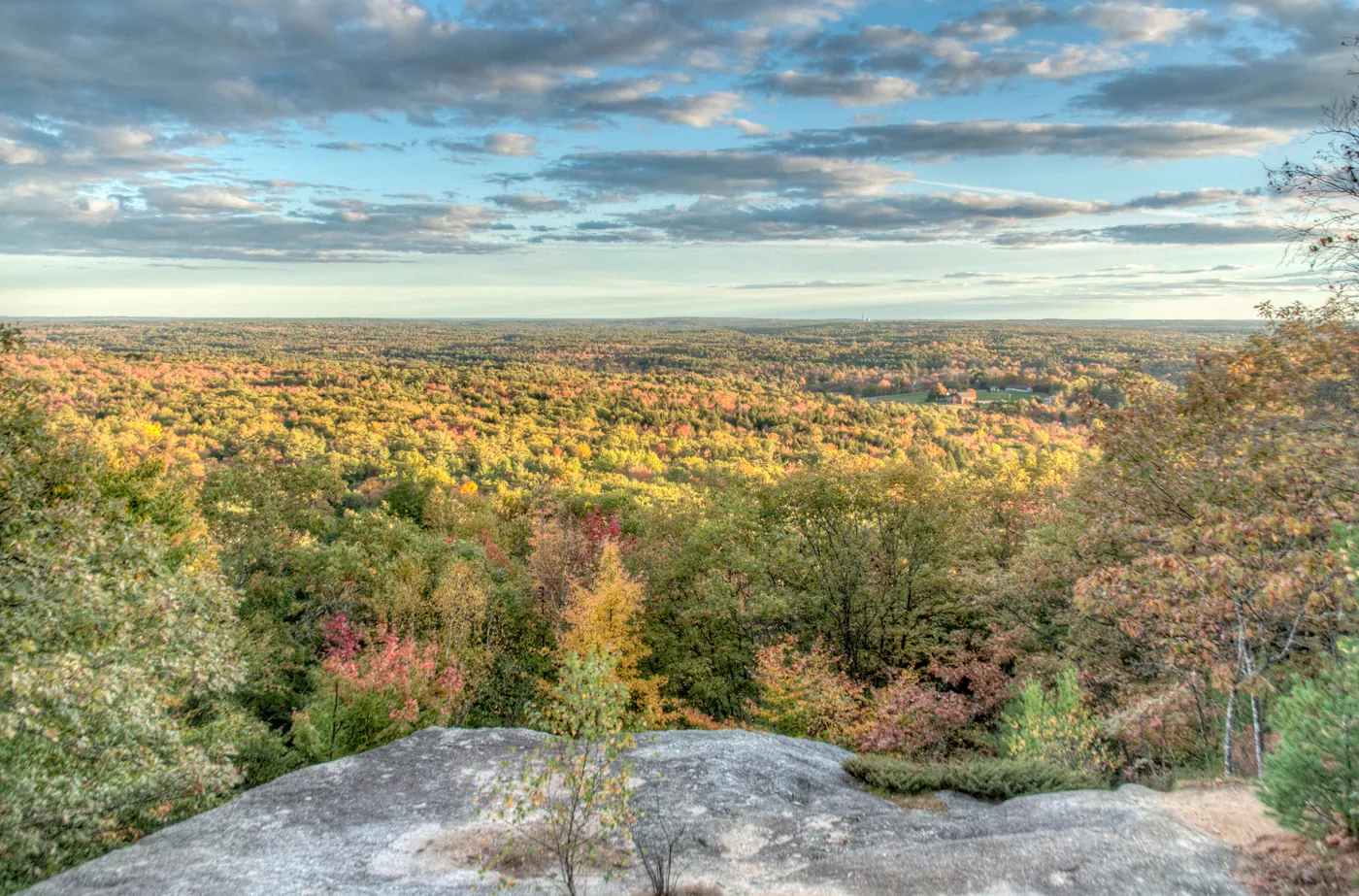
Bradbury Mountain has the best return on effort of any summit in Maine for small kids. The Summit Trail is 0.3 miles one way. It climbs steadily through pine and over some rooty steps. At the top, granite ledges open onto a view that stretches to Portland and Casco Bay. It is a real summit experience compressed into twenty minutes of walking. Park at the state park entrance, $4 in season.
7. Mount Battie Summit (Camden)
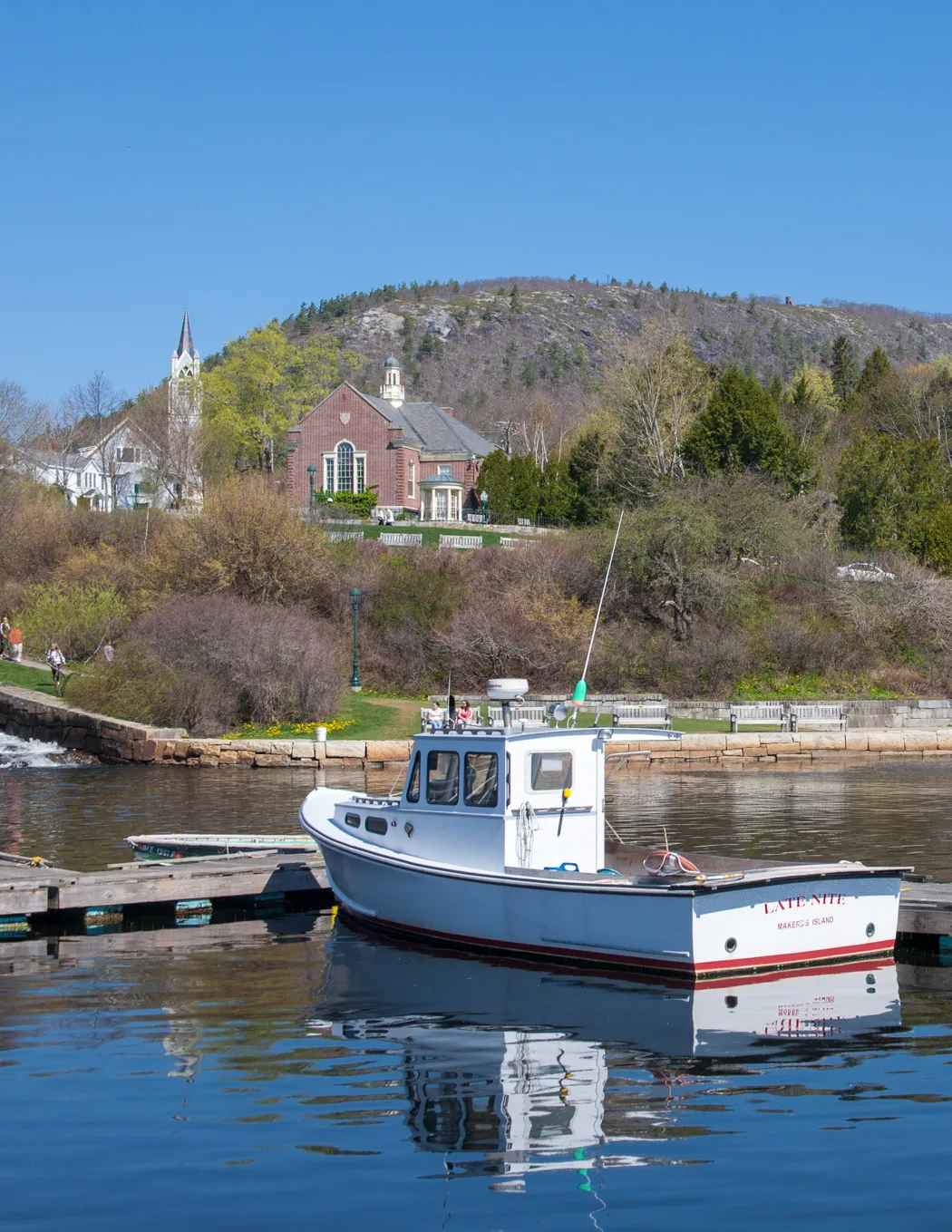
Mount Battie has two ways up: the Mount Battie Trail (0.6 mi each way, steeper) or the auto road to the summit followed by a short walk to the stone tower. For kids under 6, take the road, walk the last bit, and call it a hike. The view over Camden Harbor with sailboats below is one of the best in Maine.
8. Step Falls (Newry, Western Maine)
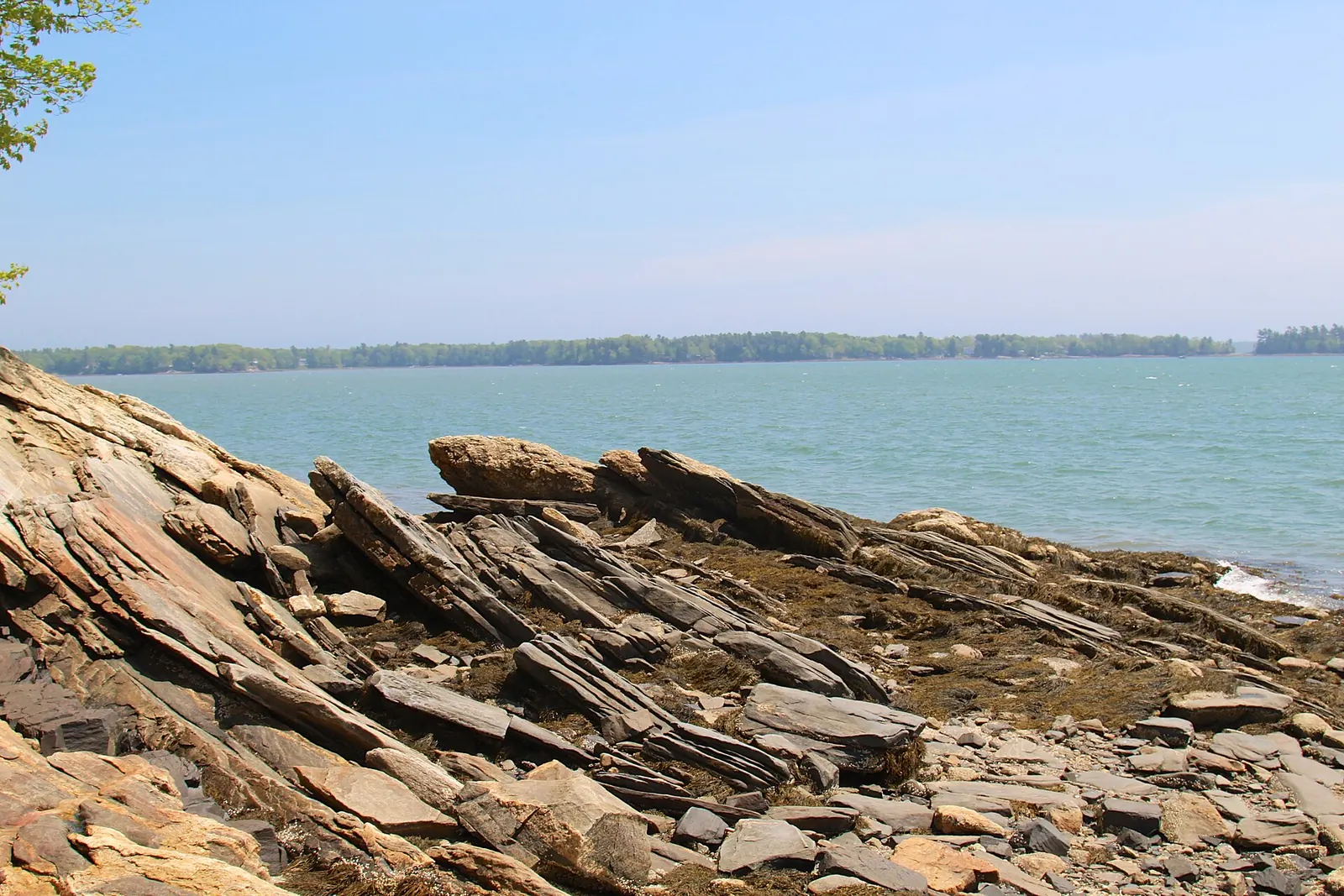
Step Falls ends at a series of granite ledges with natural slides and pools. The trail is 0.6 miles round trip, mostly flat. Kids hike in the easy way, swim in the falls, and hike back out happy. Bring water shoes because the rocks are sharp.
Order matters. If you start with a trail that has a payoff like a waterfall or tide pools at the end, kids associate hiking with reward. Start with a hard summit on day one and you have created the kid who tells everyone for the next five years that hiking is boring.
What to Pack for Hiking with Kids in Maine
The official “Ten Essentials” list assumes adults. Hiking with kids in Maine requires a different version.
The Kid-Hiking Pack List for Maine
- More water than you think (kids dehydrate faster, especially in summer)
- More snacks than you think (snacks are 80% of trail morale)
- Permethrin-treated clothes or socks (ticks are bad April through October)
- Picaridin or DEET-free repellent for kids (bugs, especially May–July)
- Sunscreen reapplied every 2 hours
- Rain shell per kid (Maine weather changes fast)
- First aid kit including tick remover and tweezers
- Phone with downloaded map (cell service is spotty inland)
- Whistle for each kid
- Spare socks (mud is real here)
- Headlamp per person (in case the hike runs long)
- Cash or card for parking and post-hike ice cream
The Tick Issue
Maine has one of the highest rates of Lyme disease in the country. Kids are at higher risk because they are closer to the ground and worse at noticing ticks on themselves. Read our Lyme disease guide for Maine hikers before your first trip. The short version: treat clothes with permethrin (kills ticks on contact, lasts through six washes), use picaridin on skin, do a full tick check at the car before you drive home, and again at bath time.
One bottle treats two outfits per kid for the season
Permethrin goes on clothes, not skin. Treat pants, socks, long-sleeve shirts, and the kid carrier the day before the hike. Let it dry overnight. The smell is gone within a few hours. We treat one set of “hiking clothes” per kid and reuse the same outfit all season.
Kid-safe alternative to DEET, no greasy feel
Picaridin is the bug repellent pediatricians recommend over DEET for kids. It works as well, smells better, does not melt plastic, and is safer to reapply. The lotion form is easier to control on small faces than the spray.
The Weather Issue
Maine weather flips on you. A bluebird morning on Cadillac becomes a hailstorm by 2 PM. We always pack rain shells for every kid, even on forecast-clear days. The packable kind that stuffs into a fist-sized bag works fine. A wet kid in cool wind is a 911 call waiting to happen, even in July.
The Snack Strategy
Snacks are the single most important variable in family hiking. The right snacks, served at the right times, will get you through a hike that “logically” was beyond a kid’s range. Wrong snacks or no snacks, and a 1-mile flat hike becomes a meltdown.
Our rules:
- Snacks every 25 to 30 minutes for kids under 8
- Real food works better than candy (cheese sticks, jerky, salami, apple slices)
- Save the best snack (M&Ms, gummy bears) for the summit or turnaround
- Pack two extra “emergency snacks” per kid that you never planned to use
Safety Stuff That Actually Matters
Cell service is spotty
Most of inland Maine has poor or no cell coverage. Acadia is mixed. Anything north of Bangor or west of Bethel is a coin flip. Download offline maps before you leave. We use Gaia GPS or AllTrails Pro with downloaded regions.
Bears are not the problem
Black bears in Maine avoid humans and groups. We have never had an incident with kids on the trail. The animal that actually causes problems is the moose, especially cow moose with calves in spring. Give moose 50 yards minimum and never get between a cow and her calf.
Water from streams is not safe
It looks clean, the kids are thirsty, do not let them drink from a stream. Maine streams carry giardia from beavers and other wildlife. Pack enough water that you never have to consider it. For longer hikes, carry a water filter and treat anything before kids drink.
Falling is the actual risk
The number one injury on family hikes in Maine is not bears or weather. It is a kid tripping on a root or slipping on wet granite. Wet rock especially. Acadia’s granite turns into ice when wet. We do not let kids run ahead on Acadia trails. Speed comes from confidence, and a kid bombing down a slab they can’t read will fall.
Gear Categories Worth the Money
If you are buying kids’ outdoor gear from scratch, here is where to spend and where to save.
Worth it:
- Real waterproof hiking shoes or boots (see our best kids’ hiking shoes guide)
- A proper rain shell (cheap rain shells leak; the kid gets cold; the day ends)
- Quality kid carrier if you have a toddler (Osprey Poco or Deuter Kid Comfort hold up for years)
- Permethrin-treated socks for tick areas
Skip:
- “Kid hiking pants”, leggings or athletic pants are fine and cost a third as much
- Branded kid hiking gear sets (you are paying for the name)
- Anything in adult ultralight materials, kids destroy gear; buy durable
Buy hiking shoes a half size up so they last through the season. Kids’ feet grow fast, and a snug boot in June will be unwearable in August. The extra room also lets you double-sock for cold-weather hikes.
Hiking with a Toddler in a Carrier
The 1- to 3-year-old phase changes how you hike. You are not really “hiking with” the kid. You are hiking while wearing the kid. That means:
- Carrier weight starts to matter on hikes over 2 miles. Get a real hiking carrier (Osprey Poco, Deuter Kid Comfort, Thule Sapling), not a soft front carrier.
- Sunshade and rain cover are not optional. Most quality carriers include both.
- Hike slower than you think. The carrier adds 20 to 30 pounds and the balance changes on rough terrain.
- Plan toddler breaks. Every 45 minutes, find a safe spot, take the carrier off, and let the kid walk for 15 minutes. Kids in carriers all day get cranky.
Best lightweight kid carrier for day hikes (3.7 lb)
The Poco LT is the carrier we recommend most for Maine day hiking. It is light enough to use without exhausting the parent, has a built-in sunshade, fits kids up to about 48 pounds, and survives years of use. The full-size Poco Plus has more storage and a kickstand but is heavier.
Trails to Avoid with Kids in Maine
Some popular Maine trails are not appropriate for kids regardless of age. Skip these until kids are older teens with real trail experience:
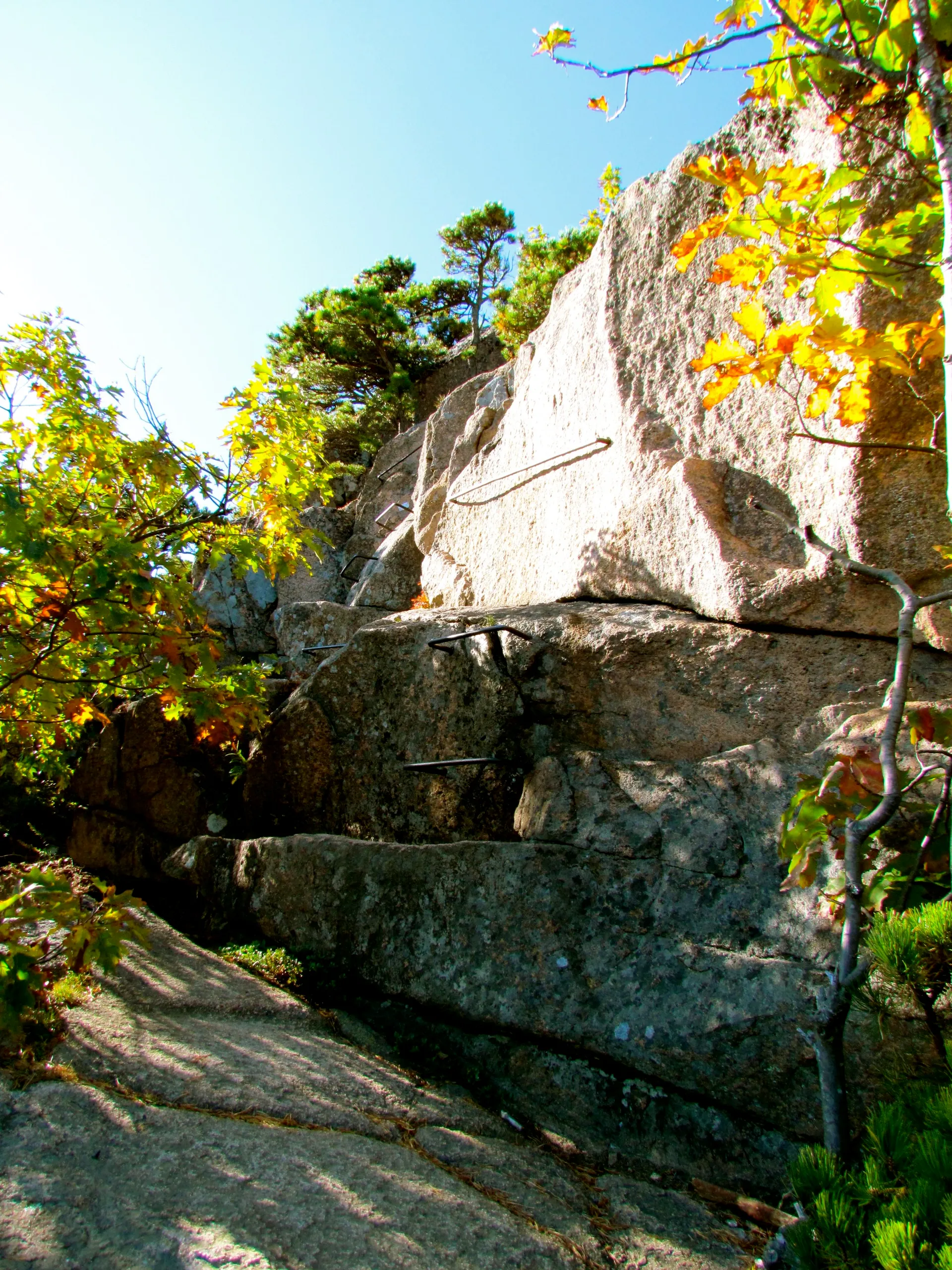
- The Beehive Trail (Acadia): Iron rungs on near-vertical granite. We have seen 8-year-olds finish it, but the consequence of a fall is serious. We say no until 12+ and even then, only confident scramblers.
- The Precipice Trail (Acadia): Same warning as the Beehive, harder. Closed in summer for falcon nesting anyway.
- Knife Edge on Katahdin: Adult terrain only. There is no kid-appropriate version of Knife Edge.
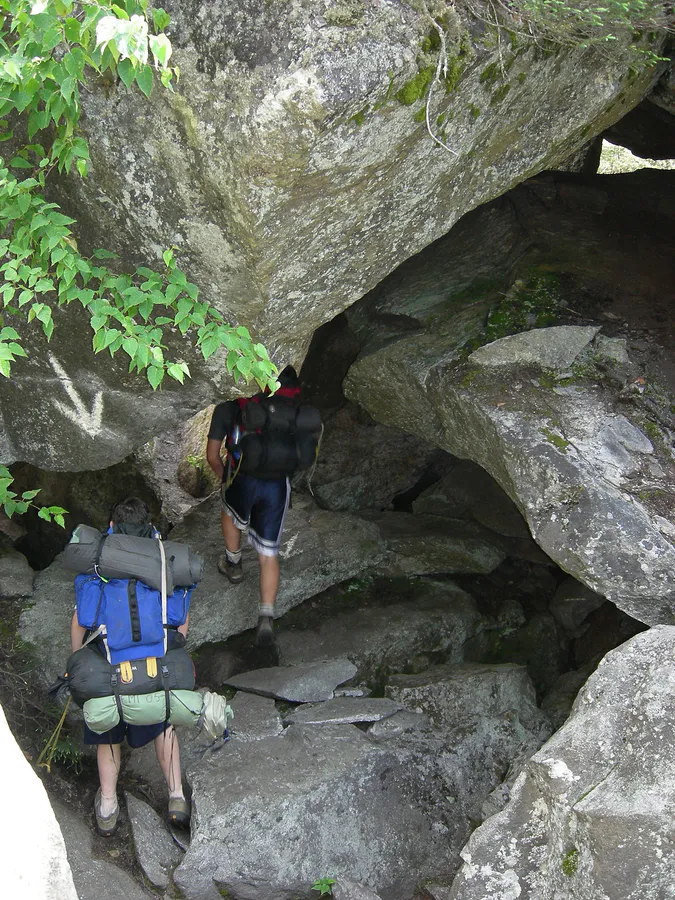
- Mahoosuc Notch (AT): Boulder caves where adults get stuck. Kids cannot handle it.
- Tumbledown Loop (full): The Loop Trail has a 100-yard rock chimney scramble. The Brook Trail or Pond Trail are fine alternatives.
What to Do When the Kid Bonks
Every parent who hikes with kids has had the moment. A perfectly fine kid stops cold, sits down, and refuses to move. Sometimes it is tired legs. Sometimes it is low blood sugar. Sometimes it is “I am five and I have had enough.”
Our checklist before getting frustrated:
- Snack and water. Eight times out of ten, this fixes it within five minutes.
- Layer change. Cold or overheated kids are miserable. Add or remove a layer.
- Distraction. Switch to a game. We count squirrels. We name colors. We sing.
- Carry. Adults can carry an 8-year-old 0.5 miles. Plan around that. If you are more than half a mile out and the kid is done, accept that you are now the pack mule.
- Bail. It is not failure. Better to end a hike at mile 1.5 of a 4-mile loop and have a happy kid than to drag a crying child to the finish.
Photograph the kid at the trailhead. Then photograph them at the summit, the lake, the waterfall, wherever the hike’s payoff is. They will remember the hike forever as the time they did the thing in the photo. The 90 minutes of complaining will fade. The photo will not.
Building Hiking Stamina in Kids
Kids who hike regularly handle longer trails better. Two things help:
- Hike before vacation. If you are planning a week in Acadia in July, hike short trails near home in May and June. Even 1-mile neighborhood walks build the habit of walking with a purpose.
- Let them carry a pack. A small kid daypack with their own water, a snack, and a stuffed animal gives them ownership of the hike. They walk further when they feel like a real hiker.
For under-6: a 5-liter kid pack with a hydration bladder is enough. For 6 to 10: bump up to 10 to 12 liters so they can carry a layer and lunch.
Best first hiking pack for kids 4-10
The Mini M.U.L.E. is the kid hydration pack we see most on Maine trails. 50 oz reservoir, durable build, fits kids 4 to 10. Kids who can drink whenever they want without asking complain less.
What age can you start hiking with kids in Maine?
You can hike with babies from about 6 months in a soft carrier on easy flat trails like Mackworth Island or Jordan Pond Path. Toddlers do well in a structured kid carrier (Osprey Poco, Deuter Kid Comfort) on any trail you would hike. Independent kid hiking starts around 3 to 4 years old on easy trails like Wonderland or Ocean Path, with frequent snack breaks and short distances.
What is the best easy hike in Maine for a 5-year-old?
Jordan Pond Path in Acadia is the safest, scenic-payoff trail for a 5-year-old. The east side is paved, the views are spectacular, and there are popovers at the Jordan Pond House at the end. Mackworth Island near Portland is the equivalent for kids outside Acadia.
Are Maine trails safe from bears for kids?
Maine has a healthy black bear population, but bear encounters on trails are extremely rare. Black bears in Maine avoid humans. The real wildlife risk is cow moose with calves in spring; give moose a wide berth. Ticks, dehydration, and falls are bigger actual risks than bears.
When is the best time of year to hike with kids in Maine?
Late June through early October is the sweet spot. Black flies peak in late May to mid-June and can ruin a kid hike. July and August are warm and bug-tolerable with repellent. September is the best month: warm days, cool nights, fewer bugs, no crowds. Foliage peaks in early October in the mountains and late October on the coast.
What should I do if my child gets a tick on a Maine trail?
Use fine-tip tweezers or a tick key to grasp the tick as close to the skin as possible. Pull straight up with steady pressure. Do not twist. Save the tick in a sealed bag and contact your pediatrician if symptoms (rash, fever, fatigue) develop within 30 days. Maine has a high rate of Lyme disease; do full tick checks every time you get back to the car.