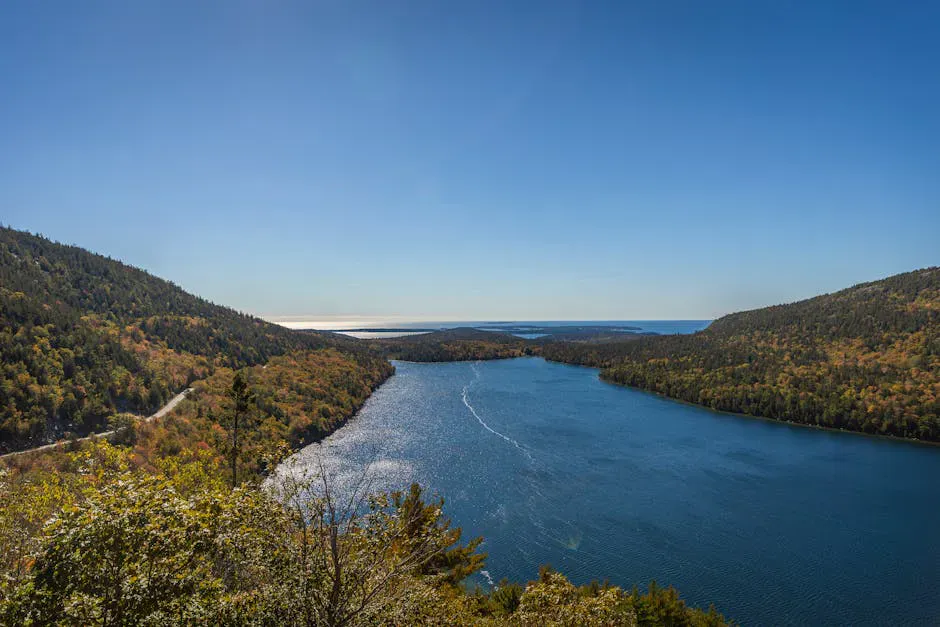

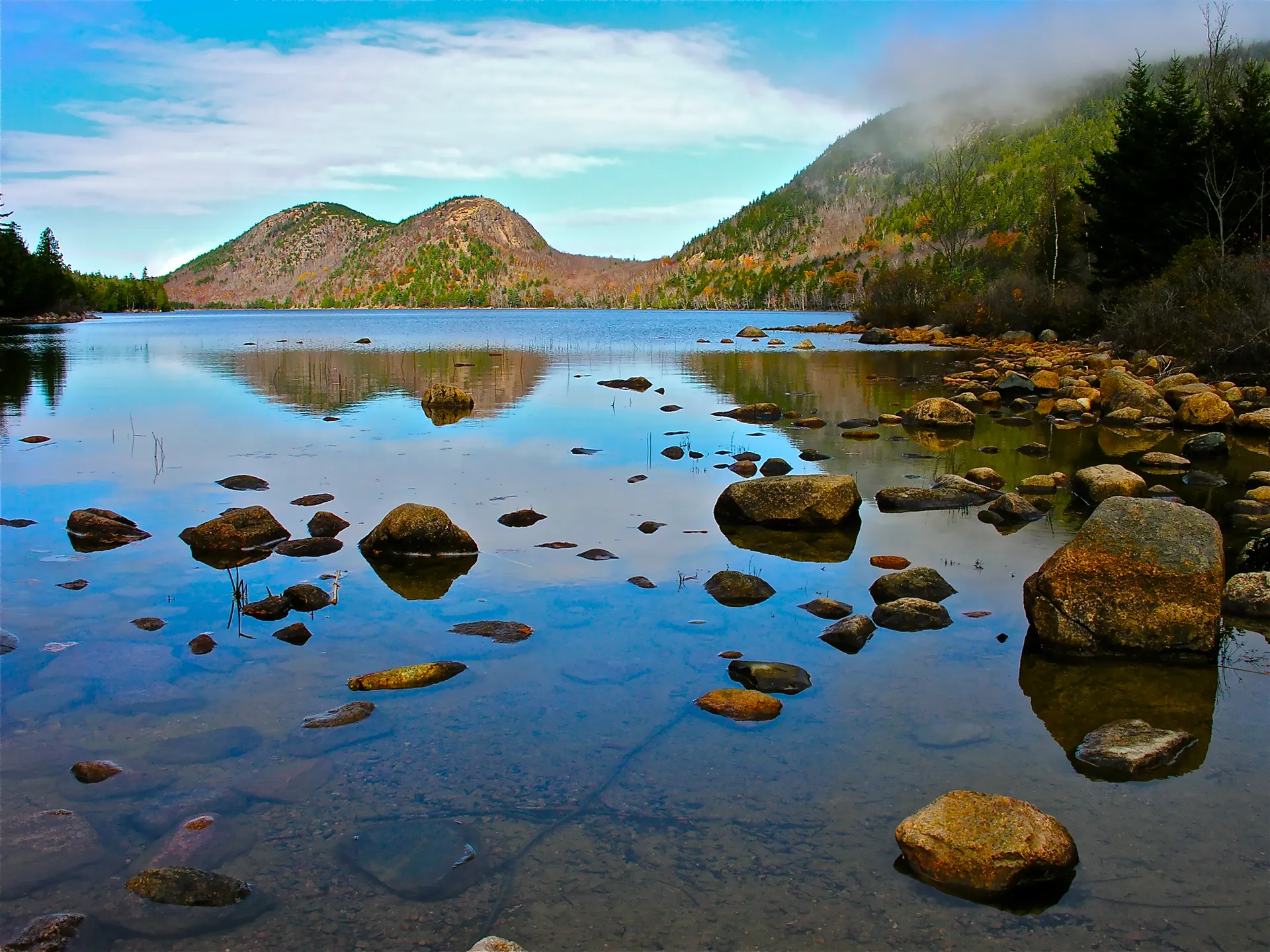







The single most underrated piece of Maine hiking gear is the pair of microspikes you wish you had brought. Picture the Jordan Pond Loop in Acadia in late March, where the carriage road looks dry until you hit the shaded section under the cliffs and suddenly there’s a forty-foot stretch of glare ice that decides whether your day continues or ends on your hip. Or the descent off Tumbledown in early December, where every flat slab is a sheet of frozen runoff and a single slip would slide a long way. Or the iced-over ledges on the Mount Battie summit road in February, where the views are spectacular and the footing is murderous.
Maine’s hiking season for ice is much longer than the official winter. Shoulder-season freeze-thaw turns trails into rinks from October through May, and even summer trips into the deeper backcountry can encounter persistent ice on north-facing ledges. The five options below cover everything from “I’m walking the dog on an icy sidewalk” to “I’m climbing Tumbledown in February.” None of them is the right answer for every situation. Most Maine hikers eventually end up with two pairs for different conditions.
| Traction System | Price | Weight (pair) | Best For | Rating |
|---|---|---|---|---|
| Mid-range | 12 oz | All-around winter hiking | 4.8 | |
| Mid-range | 14 oz | Steep ice ascents | 4.7 | |
| Mid-range | 8 oz | Mixed terrain & trail running | 4.5 | |
| Yaktrax ProSearch Amazon | Budget | 6 oz | Sidewalks & easy carriage roads | 4.0 |
| Black Diamond Distance Spike | Mid-range | 8.5 oz | Trail running on packed snow | 4.4 |
How We Chose
Microspikes look like simple gear, but the differences between them are bigger than they seem on the rack. We weighted four factors: spike length and bite, harness durability and cold-tolerance, ease of getting on and off in the field, and the size of the conditions window where the system actually works.
The bite-versus-bulk trade-off is the real story. Aggressive 3/4” teeth (Hillsound) grab steep ice the way a flatter spike pattern (EXOspikes) cannot, but they’re overkill for a flat carriage road and they wear faster on the inevitable bare-rock stretches Maine trails throw in between ice patches. Coil-based traction (Yaktrax) is light and cheap but won’t hold on glare ice. Spike-based traction (MICROspikes, EXOspikes, Distance Spike) is the right answer for anything beyond sidewalks, with the only real question being how aggressive a spike you actually need.
Harness materials matter more in cold than you’d think. The elastomer rubber on Kahtoola MICROspikes is rated to -22F and stays flexible. Cheaper imitations get hard and brittle below freezing and tear when you stretch them over a boot. This is the kind of detail that doesn’t show up in product photos but matters the first time you try to put spikes on at 5F with stiff hands.

The Picks
Kahtoola MICROspikes, Best All-Around
#1Mid-range
Kahtoola MICROspikes
Who it’s forIcy trails & winter hiking
Why we picked itAggressive grip on ice
If you only own one pair of traction devices in Maine, MICROspikes are the right pair. Twelve 3/8” stainless steel spikes per foot, welded chain harness, and a reinforced elastomer band that flexes onto any boot or trail runner. They handle everything from icy carriage roads to moderately steep frozen trails up Tumbledown or the Camden Hills, and they last for years of regular use.
The spike length is the right compromise for general winter hiking. Long enough to bite hard ice with confidence. Short enough that you can walk across bare rock sections without losing your footing or destroying the spikes. The chain links connecting the spikes flex over irregular ground and don’t catch the way the rigid plate designs sometimes do.
The honest weakness is bare-rock wear. Maine winter trails routinely mix ice patches with exposed granite, especially on the south-facing pitches that thaw first. Every step on rock with spikes on dulls the points slightly. Over years of use, the spikes get noticeably shorter and less aggressive. The fix is to take them off when you hit a sustained dry section, but most people don’t bother for a 50-foot stretch and the spikes shorten accordingly. Replacement chains are sold by Kahtoola and easy to swap.
For most Maine hikers, this is the default winter traction. If you’re choosing between this list and have any uncertainty about conditions, get MICROspikes first.
Hillsound Trail Crampon Ultra, Best for Steep Ice
#2Mid-range
Hillsound Trail Crampon Ultra
Who it’s forMost aggressive teeth for hardpack ice
Why we picked itLongest teeth on this list bite deeply into hardpack ice
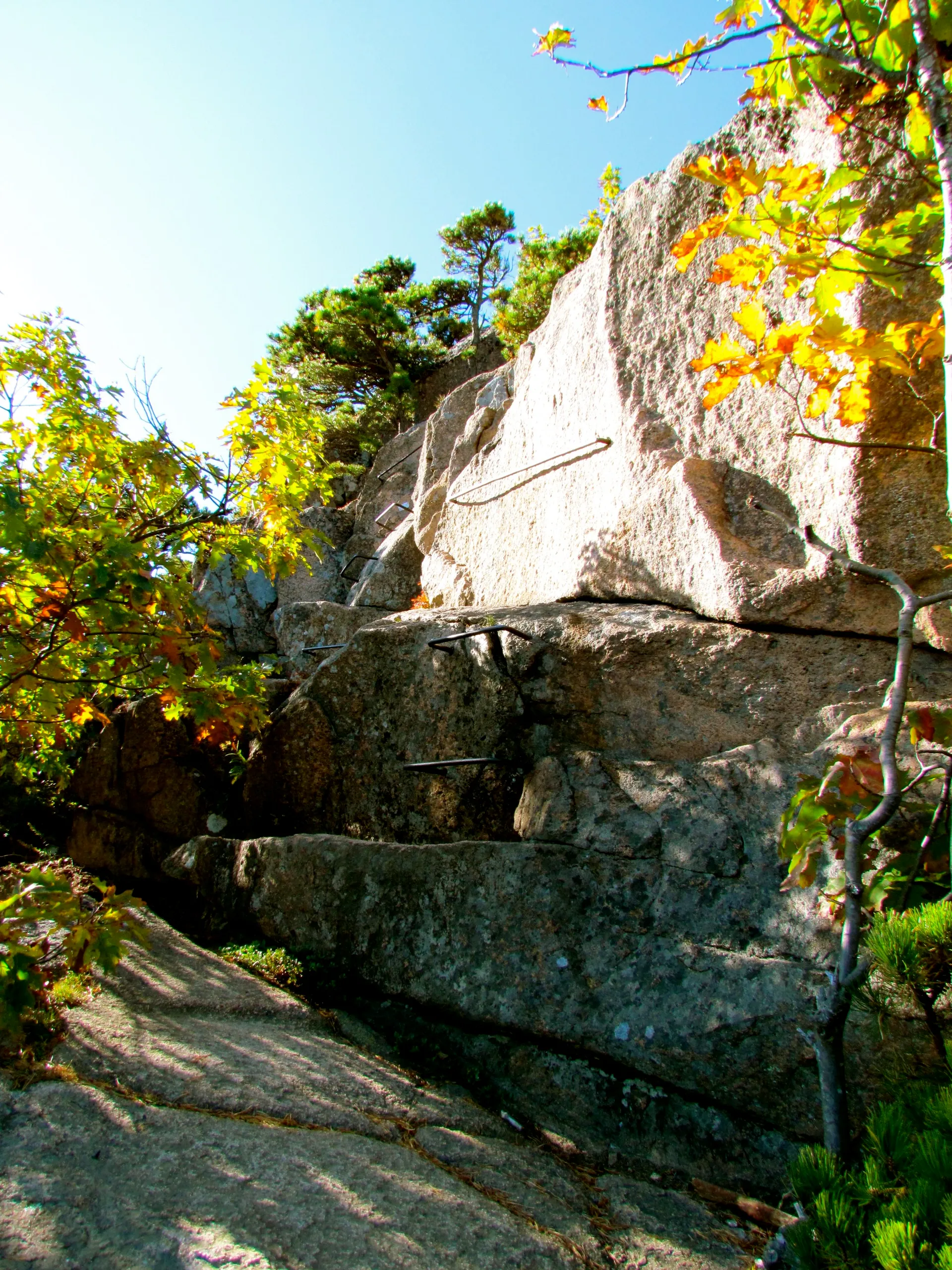
The Trail Crampon Ultra is the more aggressive cousin of the MICROspikes. The teeth are longer (about 1/2”), made of harder carbon steel, and the velcro instep strap is the feature that separates this from every other product in the category. The strap pulls the harness tight against your boot and eliminates the slight rotation that can happen when you side-step on a steep slope. For sustained icy climbs, say, the upper third of the Loop Trail on Tumbledown in February, or the bare ledges on the Precipice Trail on a frozen January morning. That anti-rotation feature is the difference between confident climbing and constant re-adjustment.
The trade-off is that the longer teeth are uncomfortable on flat carriage roads. You feel them poking up against your foot through the boot sole on hardpack snow. They are also overkill for routine winter hiking on moderate terrain. We’d pack the Hillsounds specifically for trips where steep frozen pitches are part of the day, and use MICROspikes the rest of the time.
The carbon-steel construction is the other thing worth knowing. Carbon steel holds a sharper point than stainless steel does, which is why these bite ice so well. The cost is that carbon steel rusts. After a wet day on the trail, dry the spikes thoroughly before putting them away, and lightly oil them every few seasons.
Kahtoola EXOspikes, Best for Mixed Terrain
#3Mid-range
Kahtoola EXOspikes
Who it’s forMixed terrain and trail running
Why we picked it12 short tungsten carbide spikes in a TPU plate
EXOspikes are MICROspikes’ lighter, plate-based cousin, and they’re better than the chain design at a specific thing: mixed rock-and-ice terrain. The 12 short tungsten carbide spikes set in a TPU plate don’t catch on rock the way chains can, and they’re significantly lighter and more pack-friendly. For a trail run on a frozen January morning, or a fast day hike where you’re going to be in and out of icy sections, the EXOspikes are the better choice.
The trade-off is bite. The spikes are short. On steep, sustained ice, the EXOspikes are noticeably less confident than MICROspikes or Hillsounds. They’re also less durable in heavy use. The TPU plates eventually wear and the spikes loosen. For occasional use across mixed conditions, this is fine. For someone who lives in microspikes from November through April, the chain-based designs hold up better long-term.
We’d specifically choose EXOspikes for the Acadia carriage roads in early winter, where the surfaces are mostly packed and easy with intermittent icy patches, and the weight savings over MICROspikes are appreciated on the long miles.
Yaktrax Pro, Best Budget for Easy Use
#4Budget
Yaktrax Pro
Who it’s forBudget pick for sidewalks and easy trails
Why we picked itLightest and cheapest option on this list
The Yaktrax Pro use steel coils wound around a rubber harness instead of actual spikes. The coils grip packed snow well, the harness is comfortable, and the price is a third of what real microspikes cost. For walking the dog on icy sidewalks, navigating a snow-packed campground road, or walking the flat sections of a carriage road on a low-stakes day, the Yaktrax do the job.
The hard limit is glare ice. The coils have no bite the way a real spike does. On a sheet of frozen runoff or a glazed-over rock slab, the Yaktrax slip in a way that microspikes simply don’t. This isn’t a minor difference. For anything beyond casual winter walking, this is the wrong choice. We list them because the casual-walking use case is real and the price is honest, not because we’d take them up a winter hike.
If you’re choosing between Yaktrax Pro and the cheapest MICROspikes, save up for the MICROspikes. The price gap is smaller than the safety gap.
Black Diamond Distance Spike, Best for Trail Running
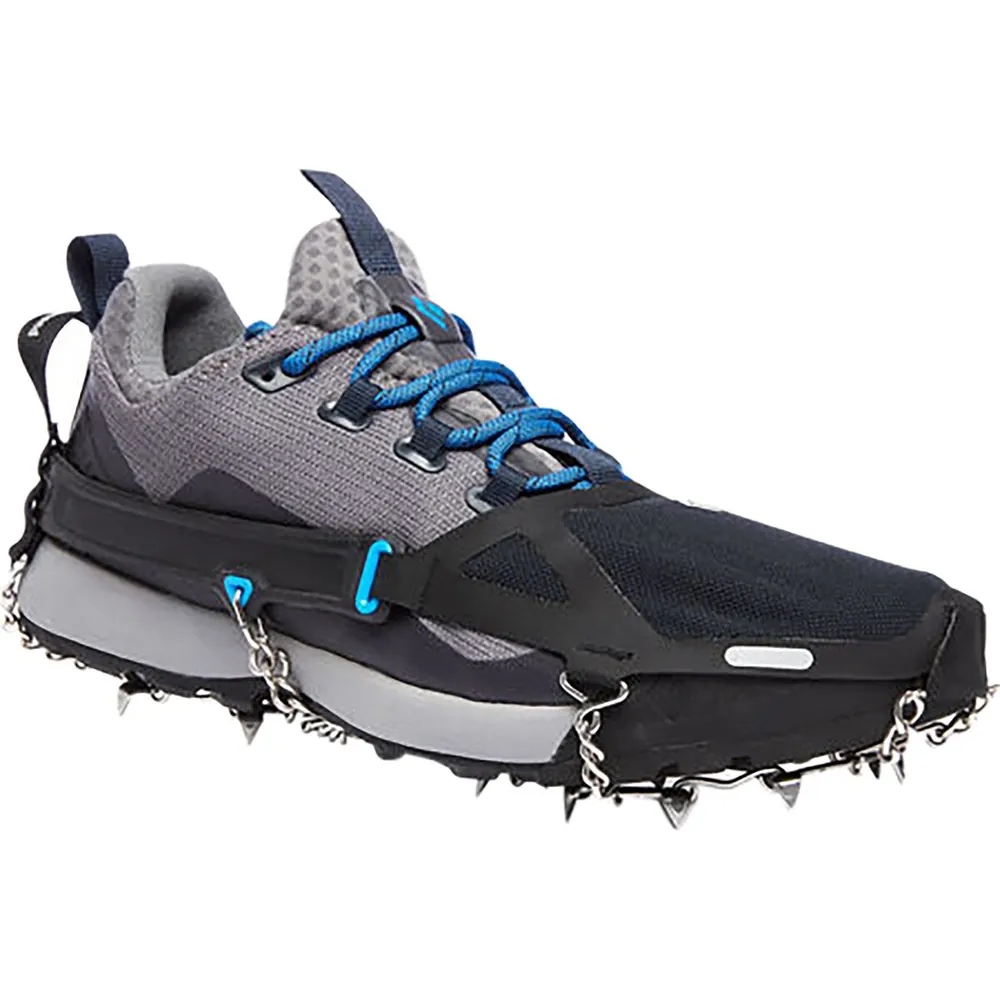
#5Mid-range
Black Diamond Distance Spike
Who it’s forTrail-running and fast moving on packed snow
Why we picked itDesigned for running, lighter than MICROspikes
The Distance Spike is the running-focused option in the category. Short stainless steel spikes set in a flexible Dyneema mesh harness, designed to slide over a trail-running shoe and stay put through bouncy footfall. The pack-flat profile is a real advantage for runners who don’t always want to wear spikes for the whole route. They go in a vest pocket and come out when conditions warrant.
The bite is closer to EXOspikes than MICROspikes, which is appropriate for running. Aggressive spikes on a running stride would be uncomfortable and would wear quickly on the bare-rock sections that running pace makes harder to avoid. The Distance Spike is the right tool for moving fast on packed snow with occasional ice.
The Dyneema mesh is more delicate than chains or TPU plates. It will eventually wear through if you treat it like MICROspikes and walk it across granite. For its intended use (trail running on packed snow with intermittent ice) it lasts well. For winter hiking, the MICROspikes are still the better answer.
The single most common microspike mistake is waiting until you’ve already fallen to put them on. By that point your hands are cold, you might be hurt, and the slope you’re now sitting on is the same slope you have to put the spikes on with one hand while bracing with the other. If you see ice ahead or you’ve already hit a patch, stop on safe ground and put them on. It takes 30 seconds. The fall takes longer than that to recover from.
How to Choose for Maine Conditions
Match the Spike Length to the Terrain
The single most important spec is spike length, and it follows a clear scale:
- Coils only (Yaktrax): Sidewalks, town walking, easy carriage roads. Not for any meaningful trail.
- Short spikes, 1/4” or less (EXOspikes, Distance Spike): Mixed terrain, packed snow with occasional ice, fast-moving running.
- Medium spikes, 3/8” (MICROspikes): General winter hiking, moderate ice, the default for most Maine winter conditions.
- Long spikes, 1/2” or more (Hillsound Trail Crampon Ultra): Steep ice, sustained frozen pitches, technical winter terrain.
For Maine specifically, where most winter hiking is moderate terrain with intermittent steep icy sections, MICROspikes are the default. Hillsounds are the answer for known-steep trips. EXOspikes and Distance Spikes are the answer when the day involves more dry trail than ice. Yaktrax are for civilization.
Shoulder-Season Freeze-Thaw Is the Trickiest
Mid-November through mid-December and early March through April are the harder seasons to choose for. Daytime temperatures might be in the 40s, but morning shade can hold ice from the previous night. South-facing slopes thaw and refreeze daily. North-facing ledges hold ice for weeks longer than you expect.
Three rules help:
- If you might encounter ice, bring traction. A pair of MICROspikes weighs 12 ounces and packs flat against your pack. Carrying them on a sunny April day is light insurance against the shaded north-face section where the trail is still frozen.
- Put them on before sketchy ground, not after. The mistake is the one in the ProTip above.
- Take them off on dry rock. Bare-rock walking with spikes accelerates wear and is less stable than rock with bare boot rubber. Pull them off for sustained dry stretches.
Crampons Are a Different Tool
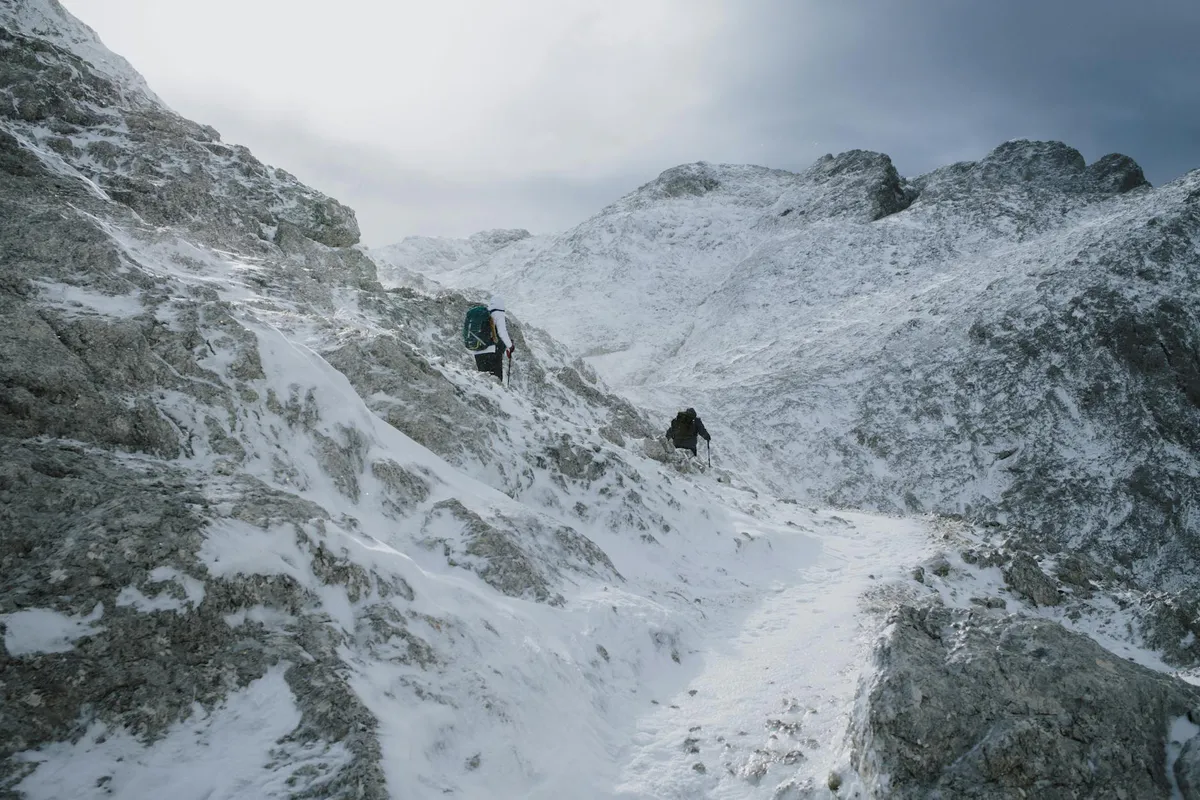
Microspikes and crampons are not the same thing, and the difference matters in Maine. Real mountaineering crampons (Petzl, Grivel, BD Sabretooth) have inch-plus rigid steel teeth, including forward-facing teeth for kicking into vertical ice. They’re for technical winter terrain, ice climbing, glaciers, steep alpine snow. The presidential ridge in winter is crampon terrain. The Knife Edge on Katahdin in February is crampon terrain.
For everything else in Maine, including the steep frozen pitches of Tumbledown, the icy summit cone of Cadillac in March, and the bare-rock-and-ice mix of the Camden Hills, microspikes are the right tool. If you’re heading into terrain that needs crampons, you need to know that already, and you’re not making the call from this article.
In the Camden Hills we run microspikes from mid-November through mid-April basically by default. The summit ledges hold ice longer than the trails below, and there’s nothing more unsettling than walking up a sunny dry trail and topping out onto a glazed slab with no traction in your pack. Carry them. Even when you don’t think you need them.

Where You’ll Use Them
A few specific Maine scenarios where microspikes earn their weight:
The Acadia carriage roads, November through April. Beautiful and largely flat, but the shaded sections under the cliffs hold ice longer than the open sections. The Jordan Cliffs Trail area in particular sees ice well into spring.
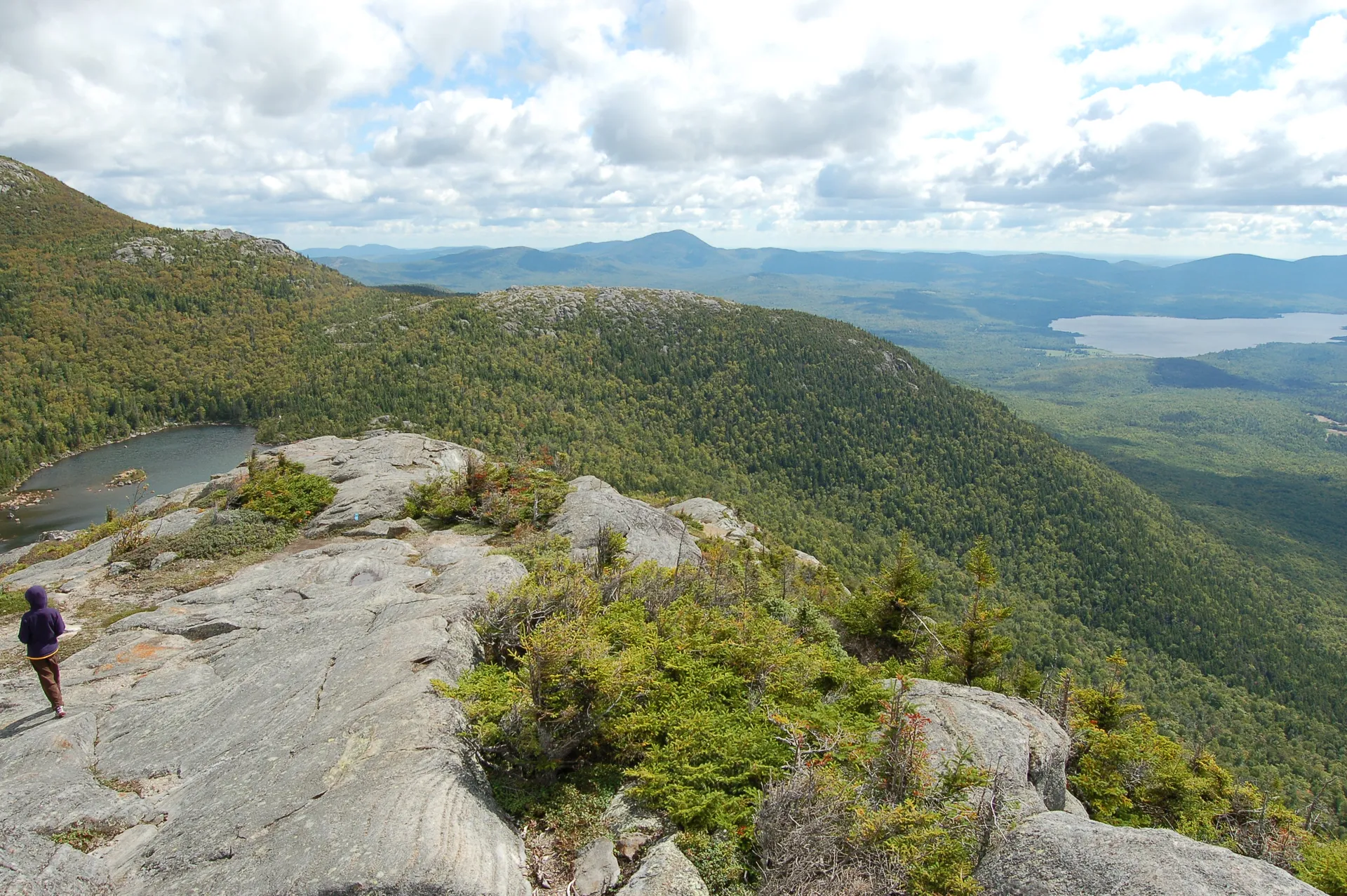
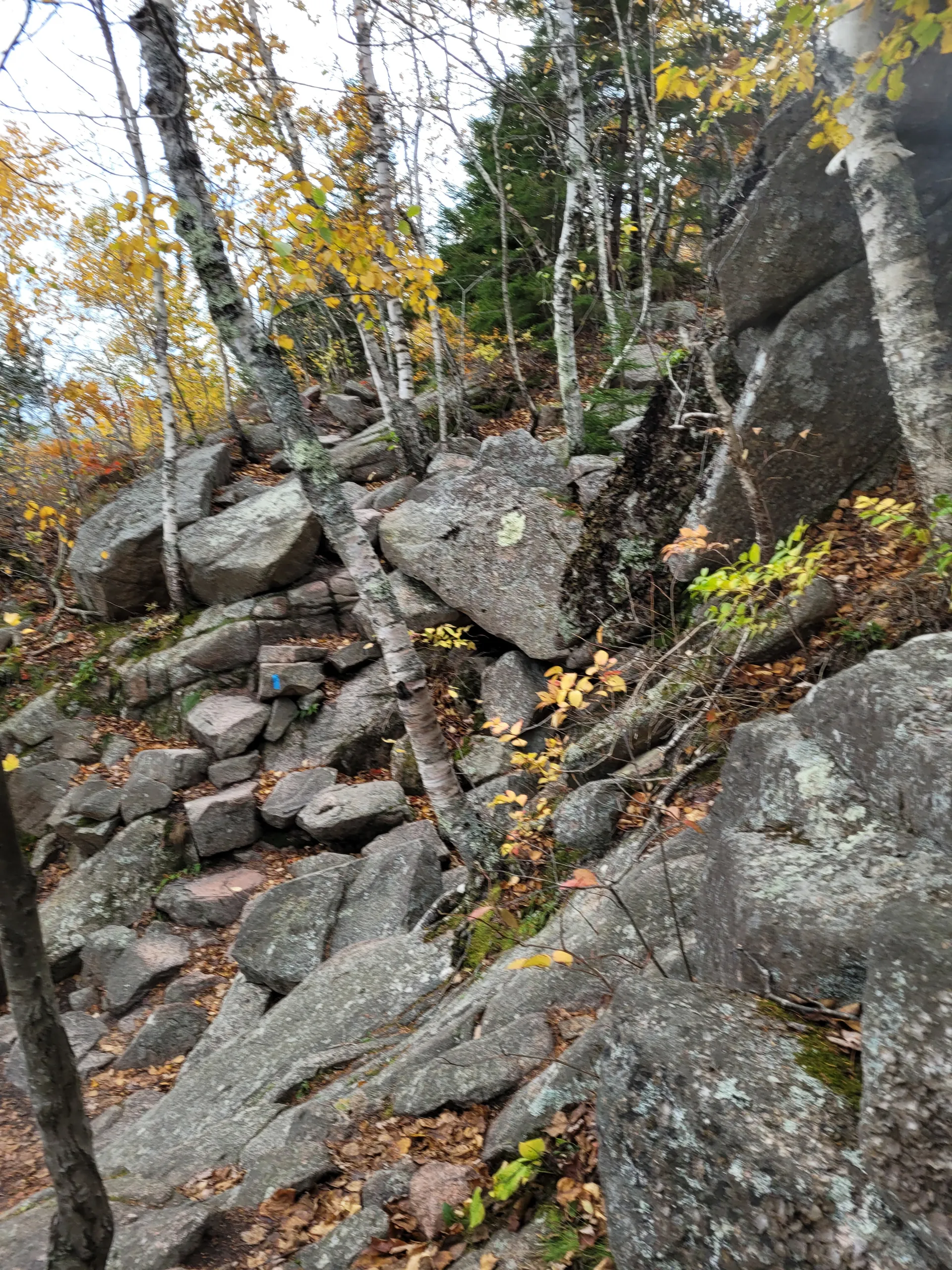
Tumbledown summit ledges, December through April. The Loop Trail and the Brook Trail both end on bare ledges that ice over and stay iced through winter. Without microspikes, the top half is dangerous.
Camden Hills, basically all winter. Mount Battie and the trails over to Megunticook hold ice on the rocky summit areas long after lower trails are dry.
Cadillac Mountain summit road, late fall through spring. Closed to cars but open to walkers in winter. The pavement ices in shaded sections and the wind keeps the higher elevations frozen.
Sunrise hikes anywhere in winter. Pre-dawn hiking means hiking on the coldest, iciest version of the trail. Carry spikes even if the forecast says above freezing.
What Else Belongs in the Kit
Trekking poles with snow baskets. Microspikes give you bite. Poles give you balance. Together, they make icy descents that would otherwise be sketchy into routine walking. The winter hiking gear guide covers pole choice in more detail.
Insulated boots or boots with room for warm socks. Microspikes work with any boot, but cold feet ruin winter hikes faster than any other failure. Choose footwear with insulation rated to the conditions you’re heading into.
Gaiters. Microspikes throw snow up your shin in deeper snow conditions. Gaiters keep your feet dry. Mid-height gaiters are enough for most Maine winter hiking.
A small bag for wet spikes. When you take spikes off at the end of a hike, they’re often wet and muddy. A ziplock or a dedicated stuff sack keeps the inside of your pack from turning into a swamp. Dry them at home before storing.
If you’re piecing together a full winter setup, the winter hiking gear guide and the best hiking boots for Maine cover the foundation. The headlamps guide covers the lighting question that becomes critical with shorter daylight.
Do I need microspikes or full crampons for Maine winter hiking?
For nearly all Maine winter hiking, microspikes are the right tool. Real mountaineering crampons are for technical alpine terrain, ice climbing, steep snow, vertical ice. The day you genuinely need crampons in Maine is the day you'll already know that. For Tumbledown, the Camden Hills, the Acadia ledges, the Bigelows, and most other classic winter hikes, MICROspikes or equivalent are the right call.
When in the year do I need traction in Maine?
The conservative answer is November through April, but realistically anywhere from mid-October through early May can see overnight ice on shaded trails and ledges. South-facing trails clear earlier than north-facing trails. Higher elevations hold ice longer. Even in late summer, persistent shade on a north-facing ledge can hide a patch of ice on a trip into the deeper backcountry. If conditions feel marginal, carry them.
How do I size microspikes?
Sizing is based on shoe size and follows manufacturer charts. The elastomer harness has some stretch, so the size ranges overlap by a half size or so. Try them on before a trip with the boots you'll actually wear. Put them on at home, walk around, make sure they don't rotate or come off when you stomp. The Hillsound Trail Crampon Ultra's velcro strap eliminates rotation. The Kahtoola design relies on a snug elastomer fit.
How long do microspikes last?
Kahtoola MICROspikes and the Hillsound Trail Crampon Ultra are good for many seasons of regular use if you take them off on bare rock. The spikes are the wear item, and they shorten gradually with each step on hard surfaces. Chains and harnesses are replaceable. EXOspikes and Distance Spikes wear faster because the spikes are set in plastic plates that eventually loosen. Yaktrax Pro have the shortest lifespan.
Are microspikes safe to run in?
Yes, but use traction made for running. The Black Diamond Distance Spike and Kahtoola EXOspikes are designed for running and don't have the long teeth that would be uncomfortable at running pace. MICROspikes and Hillsound Trail Crampon Ultra work for hiking pace and slower running but get uncomfortable at faster paces. Plan for the kind of movement you'll be doing.
Can I use microspikes on packed snow without ice?
Yes, but you don't necessarily need to. On packed snow without an icy crust, bare boot lugs grip well. Microspikes add some bite but also concentrate weight on the spike points, which is slightly less stable than the full boot footprint. For sustained packed snow, you can leave the spikes off. The moment you hit ice, even a small patch, put them on. Don't wait to find out if it's slippery.