





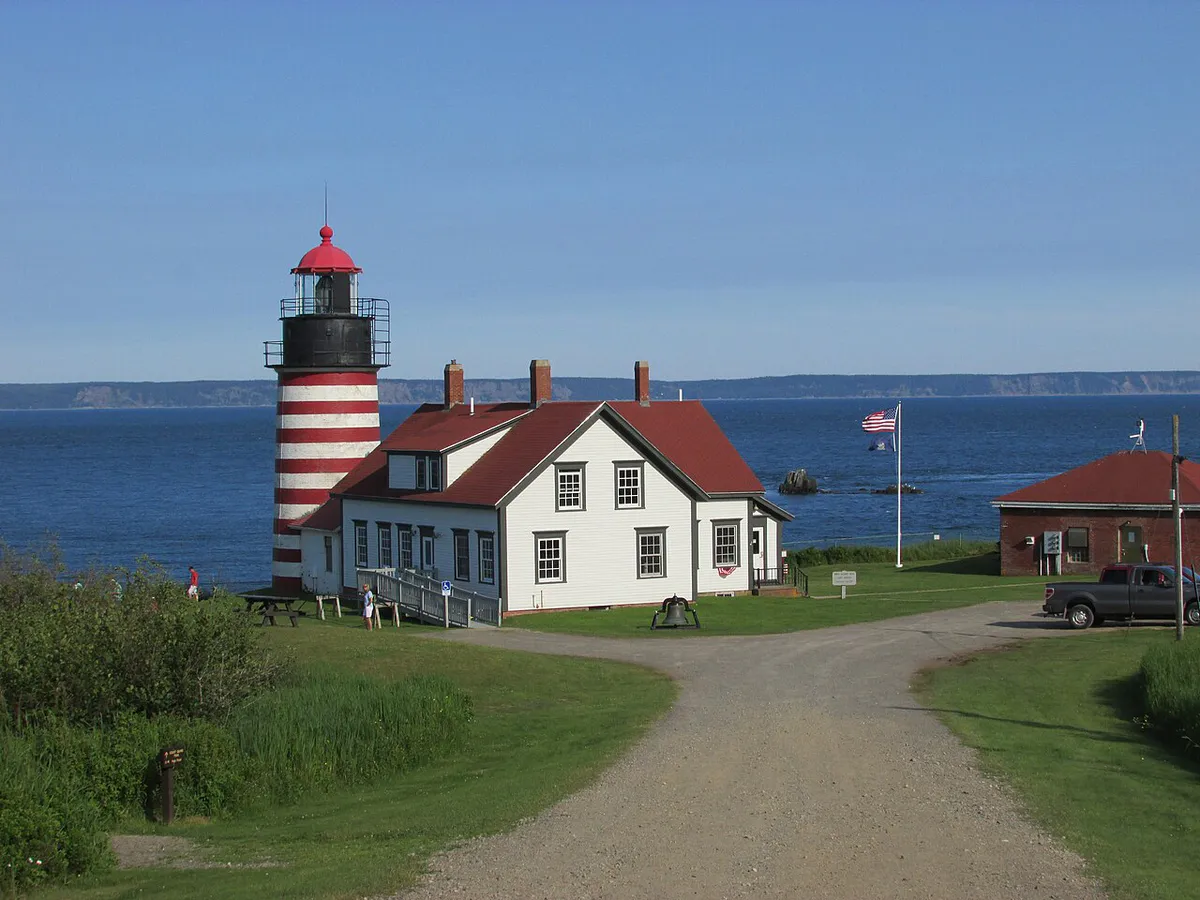

The first time most people need a headlamp in Maine, they aren’t expecting to. A morning hike up Cadillac Mountain that started at 9 turned into a longer ridge traverse than the map suggested, and now you’re descending granite slabs in fading light with a phone flashlight as the only backup. Or it’s an October afternoon on Tumbledown, where the sun drops behind the western ridge at 4 and you suddenly have an hour less daylight than you planned for. Or you’re tucked into a tent at Chimney Pond and the boots you need to find are somewhere outside in the dark.
A headlamp is the cheapest piece of safety gear you can carry, and the difference between a good one and a phone flashlight is enormous. Maine adds a few twists most reviews skip: coastal fog and rain that wreck non-waterproof lights, cold mornings that punish weak batteries, and after-dark walks back from summits where you actually need real distance throw on the beam. The six picks below cover the realistic situations Maine hikers run into.
| Headlamp | Price | Max Lumens | Best For | Rating |
|---|---|---|---|---|
| Mid-range | 400 | All-around hiker | 4.6 | |
| Mid-range | 600 | Hybrid battery | 4.7 | |
| Budget | 400 | Ultralight | 4.5 | |
| Mid-range | 500 | Camp comfort | Not rated | |
| Mid-range | 1500 | Brightest | 4.6 | |
| Black Diamond Storm 500-R | Mid-range | 500 | Waterproof | 4.5 |
How We Chose
We looked at four things, in this order: real waterproof rating (not marketing claims), beam pattern for actual trail use, battery system, and red-light availability for camp. Maine punishes the first one the hardest. Coastal fog and the wet shoulder-season storms that hit the western mountains will kill any headlamp that isn’t built to handle moisture, and IPX4 rated “splash-resistant” lights are not enough. We weighted IP67 (full submersion at 1 meter) heavily, and we eliminated several otherwise-decent lights for falling short.
The second filter was beam pattern. A lot of headlamps in the 200 to 400 lumen range are bright on paper but throw a wash that’s useless for picking out trail markers at distance. For Maine, where you might be looking for a cairn through fog on the Mahoosuc ridge or trying to find blue blazes in dense spruce, you want either a real spot beam or a flood-plus-spot dual mode.
Battery system is the third one, and it matters more in cold weather. Pure-rechargeable lights tend to die fast below freezing. Hybrid designs (that can also run on AAAs) give you a way out when the battery quits at 10F.

The Headlamps We’d Pack
Black Diamond Spot 400-R, Best All-Around
#1Mid-range
Black Diamond Spot 400-R
Who it’s forBest rechargeable all-around headlamp
Why we picked it400-lumen rechargeable upgrade of the most popular trail headlamp
The rechargeable update to Black Diamond’s most popular headlamp keeps everything that worked about the AAA-powered Spot 400 and fixes the one real annoyance: dead-battery dread on long trips. The Spot 400-R is 400 lumens of clean spot-and-flood combination, IP67-rated for full water resistance, and the PowerTap touch panel on the side lets you snap to full brightness without scrolling through modes. Red, green, and blue night-vision modes preserve dark adaptation around camp.
The dimming range is the part most reviews underrate. The lowest setting is genuinely dim, which sounds backwards until you remember that for tent tasks, finding the bathroom at 2am, or reading at camp, you don’t want 80 lumens in your face. The Spot 400-R goes from a faint glow to floodlight without making you scroll past intermediates you don’t want.
The honest downside is shared with every sealed-battery headlamp: when the rechargeable dies on a long trip, you’re done unless you brought a power bank. For most weekend trips this is a non-issue. For multi-day backcountry trips, the Petzl Actik Core is the better answer.
Petzl Actik Core, Best Hybrid Battery
#2Mid-range
Petzl Actik Core
Who it’s forNight hikes & camping
Why we picked itHybrid Core battery (USB-C) or 3 AAA fallback in the field
The Actik Core is the headlamp we’d reach for on a four-day trip into the 100-Mile Wilderness or any trip where running out of light would be a real problem. The Core battery is USB-C rechargeable, but the housing also accepts three AAAs as a drop-in replacement when the battery dies. You pull the Core out, slide in three alkalines, and you’re back to full operation. That single design choice solves the failure mode that kills every other rechargeable headlamp on long trips.
The 600-lumen high mode is a real 600 lumens, with a spot beam that reaches well down a trail. The reflective strap is the small thing you don’t think about until you’re walking a roadside in fog and a passing car actually sees you. Petzl’s strap design is the most stable on this list. It doesn’t loosen on bouncy descents the way the BD Spot occasionally does.
The trade-off is that the high mode burns the Core battery fast. You won’t get the advertised runtime if you’re running on full brightness, and that’s true for every headlamp at this output. Most hiking is fine on medium (about 250 lumens), and the Core lasts overnight on a single charge at that setting.
Nitecore NU25 UL, Best Ultralight
#3Budget
Nitecore NU25 UL
Who it’s forLightest rechargeable headlamp for thru-hikers
Why we picked itUnder 1 oz, the lightest serious headlamp on this list
At under an ounce, the NU25 UL is the headlamp you carry when you almost weren’t going to carry a headlamp. It’s the right answer for fast day hikes where you’re not expecting to use it, ultralight overnight trips where every gram matters, and as the backup headlamp in a partner’s pack. 400 lumens out of a piece of gear that weighs less than a granola bar is genuinely impressive.
The strap is minimal, which is the trade-off for the weight. On rough downhill descents the lamp bounces more than the BD or Petzl options. For walking out at dusk on a maintained trail or for camp tasks, it is plenty stable.
We’d specifically pack this as the second headlamp on any group trip. Two NU25s together still weigh less than a single Spot 400-R, and having a backup light when something dies is worth the redundancy.
BioLite Range 500, Best for Camp Comfort
#4Mid-range
BioLite Range 500
Who it’s forLow-profile camp headlamp with white and red flood
Why we picked itDimmable white flood and red flood on a 2.6 oz, IP67 light
The Range 500 takes over this spot from BioLite’s older HeadLamp 425, and it earns it the same way: comfort over a long evening. BioLite pairs a low-profile front with a moisture-wicking woven band, and the whole light weighs 2.6 ounces. That is the kind of headlamp you leave on through dinner, dishes, and an hour by the fire instead of pulling it off between tasks.
For camp, the mode list matters more than the peak number. Alongside the 500-lumen white spot, the Range 500 has a dimmable white flood for lighting a picnic table or the inside of a tent, and a red flood that keeps your night vision intact. BioLite rates it at 200 hours on low and 6 hours on high, with a reserve mode that gives one more hour at 5 lumens when the battery runs down. It is also rated IP67, submersible to 1 meter for 30 minutes, so a foggy night at an Acadia campground or a drop at the lake edge is not the end of it.
Two trade-offs. There is no rear red light, so on a roadside walk back to a parking area you are lit only from the front; BioLite steers people who want rear visibility to its Dash 450. And the battery is built in, with no AAA fallback. BioLite says it charges from empty to 80 percent in 30 minutes over USB-C, which a small power bank covers on a weekend. On a long, cold backcountry trip, the Petzl Actik Core’s AAA option is the safer call.
Fenix HM65R-T, Brightest for Late-Day Descents
#5Mid-range
Fenix HM65R-T
Who it’s forBrightest output for after-dark descents
Why we picked itDual-beam design (flood + spot) covers near and far at once
The Fenix HM65R-T is what we’d pack if “hiking out in the dark” is a realistic part of the plan. 1500 lumens of dual-beam (flood + spot) output is a different category from the 400 to 500 lumen lights above. The aluminum housing survives the kind of drops onto granite that crack a polycarbonate Spot, and the 21700 rechargeable battery has more capacity than anything else on this list.
This is overkill for most hikers most of the time. Where it earns the weight is on long after-dark descents, say, walking out from a sunset on top of Katahdin or finishing a long Mahoosuc traverse at dusk. The flood-plus-spot combination lets you see both your feet and the next blaze, which a single-beam light cannot do as well at distance.
If you mostly hike in daylight and want one light for everything, this is the wrong call. If you regularly find yourself walking out after sunset, it is the right one.
Black Diamond Storm 500-R, Most Waterproof
#6Mid-range
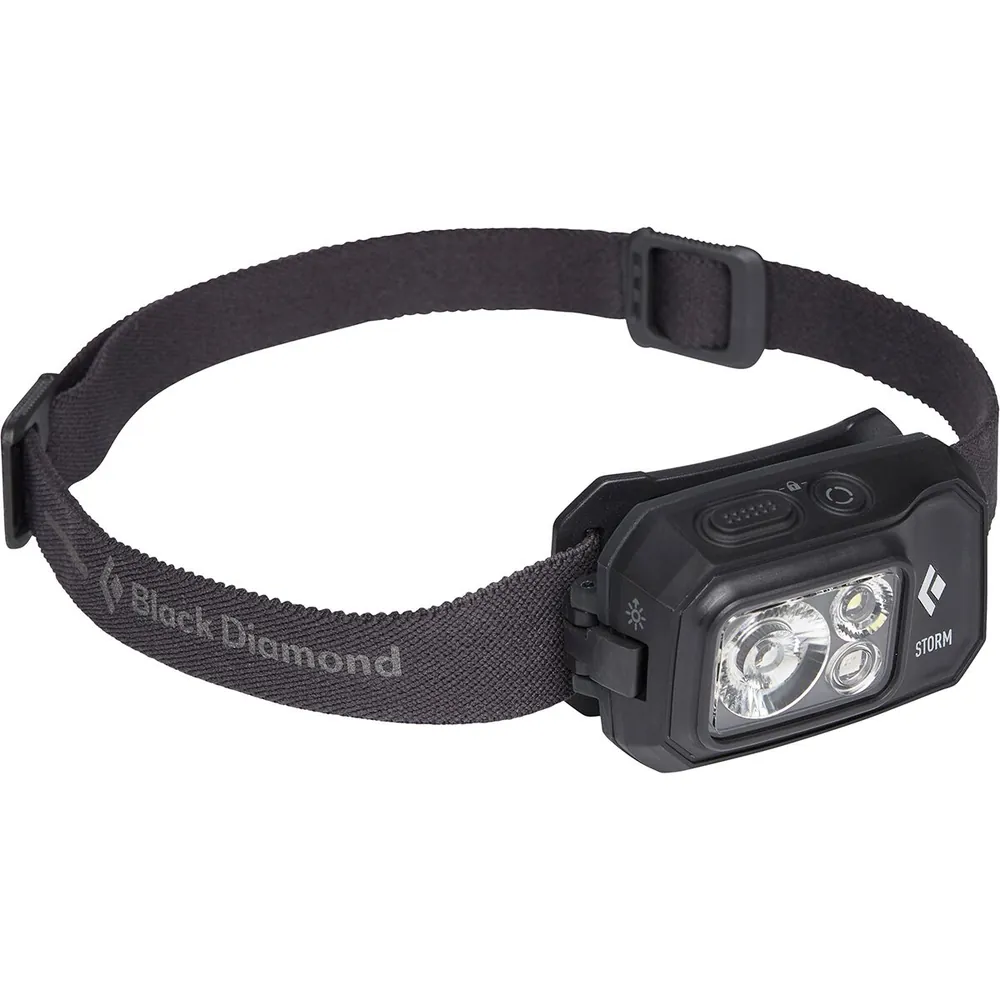
Black Diamond Storm 450 Headlamp
Who it’s forMost waterproof headlamp for wet coastal hikes
Why we picked itIP67-rated, the most water-resistant headlamp on this list
The Storm is built for the conditions that ruin other headlamps. The IP67 rating means it can sit submerged in a foot of water for half an hour and keep working. In Maine coastal fog or a steady April rain on the Precipice Trail, this is the headlamp that doesn’t care.
500 lumens, red and green night-vision modes, USB-C rechargeable with AAA backup capability, and a heavy-duty strap that stays put on rough trail. It has more features than most hikers will ever use, including a battery-lock mode for travel and a brightness memory so it returns to your last setting when switched on.
The cost is bulk. The Storm is noticeably bigger than the Spot 400-R for similar performance in normal conditions. For trips where you know weather will be ugly, that bulk buys you reliability. For dry summer hiking, you’re carrying extra weight you don’t need.
Switch to red mode the moment you don’t need full brightness. Red light preserves your night vision, doesn’t blow out your tent partners’ adjusted eyes, and uses dramatically less battery. Find your sleeping bag, check the time, walk to the latrine, all of it happens better in red than in 200 lumens of white floodlight. Every headlamp on this list except the Nitecore has a real red mode.
How to Choose for Maine Conditions
Waterproof Ratings That Actually Matter
Headlamp waterproofing is rated on the IP scale, and the difference between adjacent numbers is enormous:
- IPX4 (splash-resistant): Will survive light rain. Will not survive being submerged or run for hours in steady rain. Don’t trust these in Maine.
- IPX7 (waterproof to 1m): Survives being briefly submerged. Handles steady rain and the kind of weather that doesn’t quit. Good enough for most Maine hiking.
- IP67: Same depth rating as IPX7 plus full dust resistance. The standard for serious outdoor headlamps. The BD Spot 400-R, Storm 500-R, and BioLite Range 500 all hit this.
The catch is that many headlamps drop their IP rating once the battery door has been opened and closed a few times. The seal degrades. If you regularly swap batteries (or use AAA backup batteries), expect the real-world waterproofing to be a step lower than the marketing number. This is another reason rechargeable-only models tend to age better in wet climates.
Cold-Weather Battery Behavior
Lithium-ion batteries lose capacity in cold weather. At 20F, a fully-charged headlamp battery will give you maybe 60 to 70% of the runtime it would deliver at room temperature. At 0F, that drops further. For Maine shoulder-season and winter trips, this matters:
- Hybrid headlamps win in cold. The Petzl Actik Core’s ability to run on AAAs is a real advantage when the rechargeable battery quits at the wrong time. Lithium AAAs (not alkaline) handle cold much better.
- Keep batteries warm. Sleep with the headlamp inside your sleeping bag on cold nights. Carry the spare battery in an inside pocket close to your body.
- Expect lower output. A cold headlamp will not hit its advertised lumens. Plan around real-world performance, not marketing numbers.
Beam Pattern for Real Trail Use
Lumens are the spec everyone focuses on, but beam pattern matters more for actual visibility. There are three patterns to know:
- Flood: Wide, even wash. Good for camp tasks, reading, cooking, finding things in a tent. Bad for picking out trail markers at distance.
- Spot: Tight, focused beam. Good for trail use, spotting cairns and blazes. Bad for nearby tasks where it makes a hot spot.
- Flood plus spot (dual beam): Both at once. Best of both worlds, more expensive, slightly heavier. The Fenix HM65R-T is the example.
For Maine hiking specifically, where trails can be poorly marked and routefinding through fog is realistic, lean toward spot or dual-beam designs. The BioLite Range 500 backs its spot with a dimmable white flood for close work, which is part of why it’s our camp pick rather than our hiking pick.
We carry two headlamps on every guided trip. The primary is whatever the client needs, but the backup is always a Nitecore NU25 that lives in the lid of the pack and weighs nothing. The day you actually need a backup headlamp is the day you’d give a lot to have one.


When You’ll Actually Need a Headlamp in Maine
The obvious answer is night hiking, but the realistic answers cover more ground:
Late-summer and fall descents. Daylight drops noticeably after late August. A 5pm finish from Cadillac Mountain in September can easily turn into a headlamp descent. Carry one even on day hikes.
Coastal fog walks. Acadia campgrounds are a short walk from the trail system but unlit at night. The walk from your tent to the campground bathroom in fog with no moon is a 200-lumen situation.
Pre-dawn summit starts. A sunrise on Cadillac means starting up the South Ridge in pitch black at 4am.
Power outages while camping. A storm rolls through, the campground loses power, and now you need real light to cook dinner and pack up.
Finding gear inside a tent. Tent zippers, sleeping bag drawstrings, water bottles, boots, all easier with hands free and a red light.
A headlamp is one of the few pieces of gear that earns its weight on basically every trip. Even if you never plan to use it, the day you need it you’ll be glad you brought one.
What Else Belongs in the Lighting Kit
A spare battery (or a second headlamp). Rechargeable lights die. AAAs run out. The fix is either a USB-C power bank with the right cable or a second headlamp. The Nitecore NU25 weighs so little that “second headlamp” is the right answer for most trips.
A small flashlight as backup. A keychain flashlight in the hip belt pocket is the third layer. If both headlamps fail, you still have light.
Headlamp-compatible glasses or a brim. Hat brims throw shadows that block headlamp beams. A baseball cap worn under a headlamp pushes the beam down and forward, which actually helps with footing. Try this if you haven’t.
A lantern for the campsite. A headlamp is for hands-free tasks and trail use, but for lighting the whole tent or a picnic table while you cook and play cards, a lantern does the job better and saves your headlamp battery. Our roundup of the best camping lanterns for Maine covers the picks that handle damp coastal nights.
If you’re piecing together a complete kit, the best daypacks for Maine and the essential camping gear guide cover the rest. For winter hiking specifically, the winter hiking gear guide covers the cold-weather complications that affect headlamp battery life too.
How many lumens do I actually need for hiking in Maine?
200 lumens is enough for most maintained trails. 400 lumens is comfortable for routefinding through dense woods or fog. 1000-plus lumens is overkill unless you're regularly walking out after dark on technical terrain. Beam pattern matters more than raw output. A 400-lumen spot beam shows you more useful information than a 1000-lumen flood.
Should I get a rechargeable headlamp or one that uses AAAs?
Hybrid designs (Petzl Actik Core, Black Diamond Storm 500-R) are the best of both. You get the convenience of USB-C charging at home and the safety net of AAA backup in the field. Pure rechargeable lights are fine for weekend trips but become a liability on longer backcountry trips where you can't recharge.
How do I keep a headlamp battery from dying in the cold?
Sleep with the headlamp inside your sleeping bag on cold nights. During the day, carry spare batteries in an inside pocket close to your body. Lithium AAAs (not alkaline) handle cold much better and are worth the upgrade for shoulder-season and winter trips. Expect real-world runtime to be 30 to 40 percent shorter than the rated number in cold weather.
Why do I need a red-light mode?
Red light preserves night vision (your eyes don't have to re-adapt to darkness every time you switch the light off), uses dramatically less battery than white mode, and doesn't blow out the dark-adjusted eyes of anyone near you. For camp tasks, finding the bathroom at night, and reading in a tent, red mode is the right setting.
Is IPX4 waterproofing enough for Maine?
No. IPX4 means splash-resistant. It handles a sprinkle but will fail in a steady rain or coastal fog. For Maine, look for IPX7 or IP67 ratings. The Black Diamond Spot 400-R, Storm 500-R, and the Petzl Actik Core all hit at least IPX4 with the Storm reaching IP67. Don't trust marketing language that says 'water-resistant' without an IP number.
Can I just use my phone's flashlight as a headlamp?
Only as a last-resort emergency option. Phone flashlights drain the battery you need for navigation and communication, can't be aimed hands-free, and produce a flood beam that's useless at any distance. A dedicated headlamp weighs three to four ounces and costs as little as $40. It is one of the few pieces of gear we genuinely consider non-negotiable.