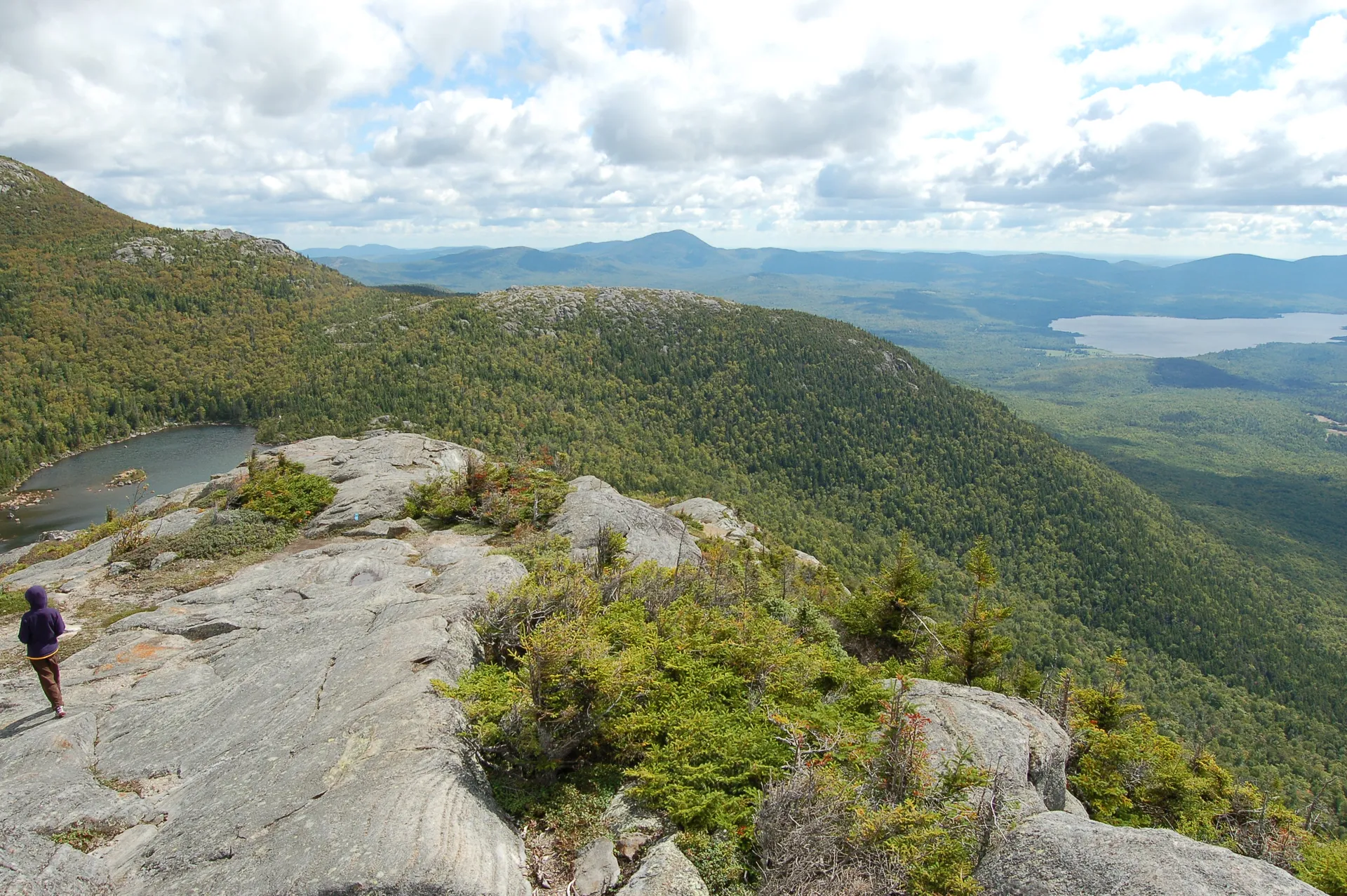
The first time most people understand why trekking poles matter in Maine, they are halfway down a slab of wet granite with their knees screaming. Picture the descent off Cadillac Mountain on a damp September afternoon, where the trail is less a path than a tilted sheet of pink granite slick with fog. Every step down is a controlled drop onto one knee, and by the time you reach the trailhead your quads are shot and your knees feel like they will never forgive you. A pair of poles turns that descent from a grind into a manageable walk by putting two more contact points on the rock and letting your arms absorb a real share of the load.
Maine punishes hikers in ways that flatter, smoother trails do not. The granite scrambles in Acadia demand poles that lock solid and never collapse when you weight them on a steep ledge. Mud season turns the trails up Tumbledown and through the Gulf Hagas gorge into ankle-deep slop where a pole tip is the difference between staying upright and going down hard. River and stream crossings, which you hit constantly in the western mountains and the 100-Mile Wilderness, are far safer with two poles braced against the current.
We compared trekking poles against the realistic conditions Maine hikers actually face, weighing material, lock type, weight, packability, and how each one holds up when you slam it down on granite for the hundredth time. The picks below cover everything from a knee-saving descent off Katahdin to a fast-and-light day on the Beehive.
| Poles | Price | Material | Lock | Rating |
|---|---|---|---|---|
| Black Diamond Trail Ergo CorkSearch Amazon | Mid-range | Aluminum | Lever | 4.7 |
| Leki MakaluSearch Amazon | Premium | Aluminum | Lever | 4.6 |
| REI Co-op Trailmade | Mid-range | Aluminum | Lever | 4.4 |
| Cascade Mountain Tech Carbon | Budget | Carbon | Lever | 4.3 |
| Black Diamond Distance Carbon FLZ | Premium | Carbon | Folding | 4.6 |
How We Chose
We evaluated each pole against the real Maine terrain it would face, not abstract bench numbers, drawing on material specs, lock design, weight, and aggregated owner and hiker reviews.
Granite descents and scrambles: Cadillac Mountain, the Beehive in Acadia, and the boulder fields on Katahdin. These reward poles with locks that hold solid under hard downward load and shafts that survive repeated impacts on rock. This is where lock reliability matters most, because a pole that collapses mid-step on a ledge is dangerous, not just annoying.
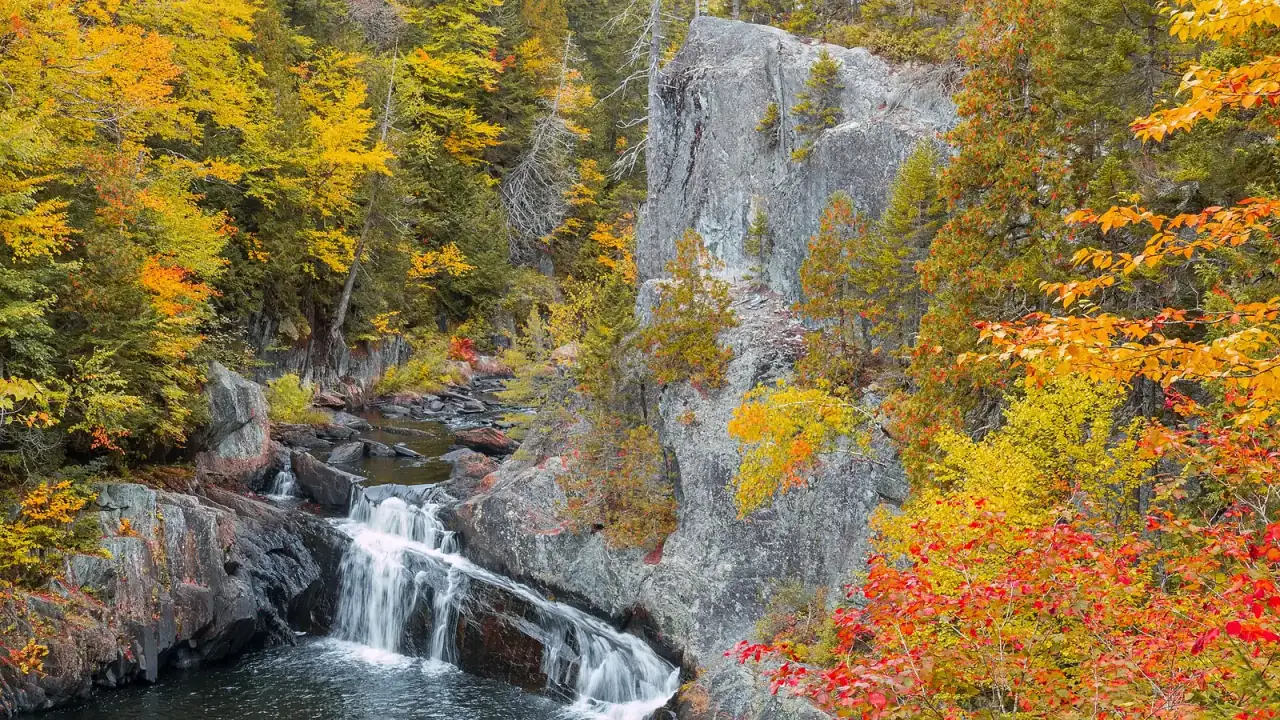
Mud-season stability: Tumbledown and the approaches through Gulf Hagas in April and May, when the trails turn to deep mud and standing water. Here you want carbide tips that bite, baskets that keep the pole from sinking, and a length you can adjust fast as the terrain changes.
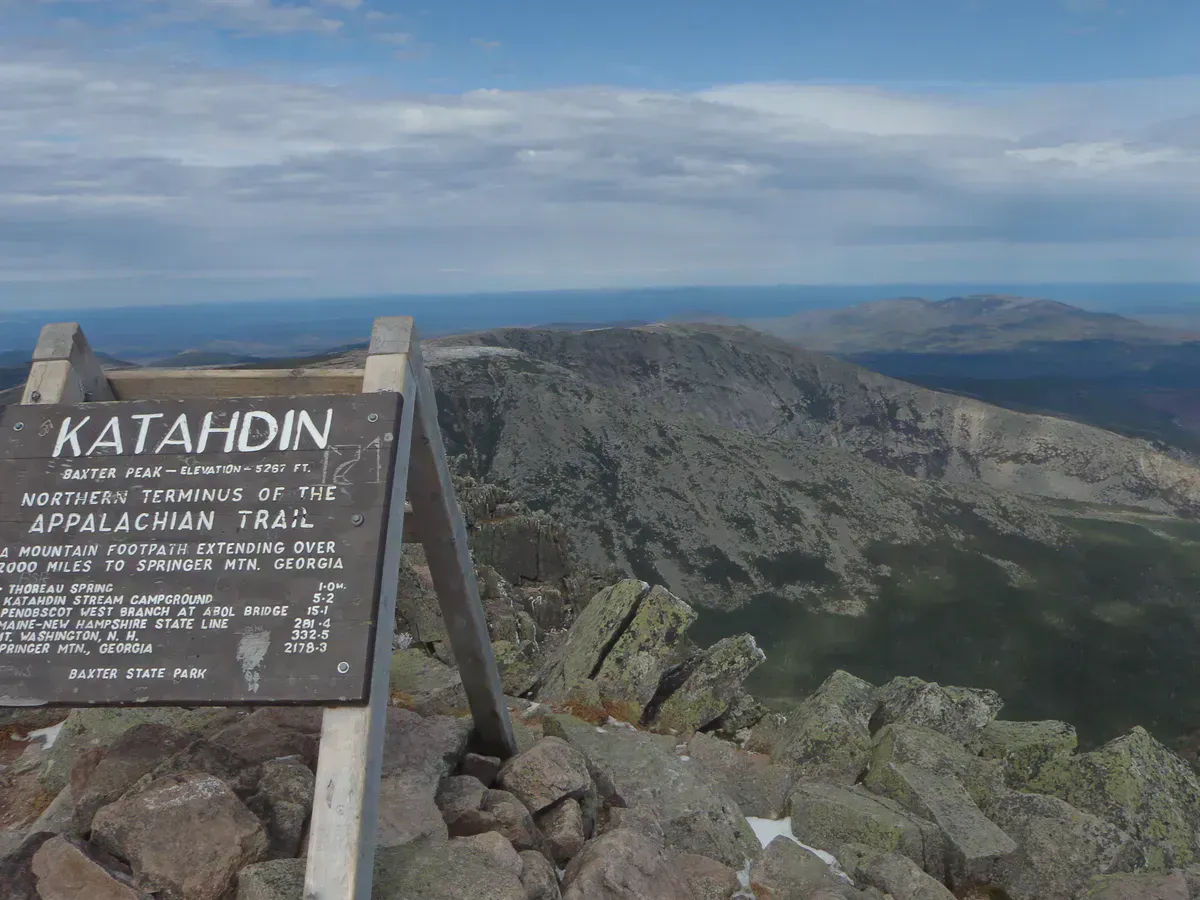
Knee-saving descents: The long haul down the Hunt Trail off Katahdin, where research consistently shows poles cut the compressive load on your knees by a meaningful margin over thousands of steps. Comfort grips and good wrist straps matter most on these.
River and stream crossings: The western mountains and the 100-Mile Wilderness, where you cross water constantly and a third and fourth point of contact keeps you upright in current.
In short, we weighed material durability, lock type and reliability, weight, packability, grip comfort, and how each pole handles Maine’s granite, mud, and water.

The Poles We Recommend
Black Diamond Trail Ergo Cork - Best Overall
Best all-around trekking poles for Maine hiking
The Trail Ergo Cork is the pair we would hand to almost any Maine hiker without a second thought. The aluminum shafts are the key. On a descent off Cadillac where you are planting hard onto granite hundreds of times, aluminum flexes and absorbs the shock without the risk of a sudden carbon crack. The FlickLock lever adjusters are external cam levers that you can see and feel lock down, and they do not slip when you put your full weight on a pole on a steep ledge.
The cork grips are the detail that earns this pole its place at the top. Maine summers are humid and the granite holds moisture, so your hands sweat and the rock weeps fog. Cork wicks that moisture away instead of turning slick the way hard rubber does, and the 15-degree angled grip keeps your wrist in a natural position so you are not fighting strain on a long descent. There is an extended grip section below the main grip too, so you can choke down without re-adjusting the pole length when the trail pitches up.
The honest trade-off is weight. At roughly 18 ounces per pair, these are heavier than any of the carbon options, and they telescope rather than fold, so they do not pack as compact for stowing on a daypack during a scramble. For hikers who want one durable, comfortable, do-everything pole, that weight is a fair price. For ounce-counters and folks who need to stow poles for hand-over-hand sections, the folding carbon options below are the better answer.
Leki Makalu - Best for Steep Technical Terrain
Best durable poles for steep, technical terrain
The LEKI Makalu is an adjustable aluminum trekking pole with an Aergon Air grip and Speed Lock Plus adjustment. The Cressida is a separate model with a shorter adjustment range; check the fit of each rather than treating their names as interchangeable. Stow poles when a scramble requires both hands, and check the locks before use. No pole is guaranteed to support your full body weight.
The Aergon Air grip is the other standout. It is an ergonomic foam grip with an extended section, so you can grab lower on the shaft for a steep uphill pitch without breaking stride to re-adjust the length. The wrist straps are wide and supportive, which matters more than people expect. On a long descent, a good strap lets the load hang from your wrist rather than forcing you to grip white-knuckle the whole way down.
The trade-off is that you pay a premium price for an aluminum pole, and aluminum is heavier than the carbon competition. For a hiker who values long-term durability and lock reliability over saving a few ounces, that is money well spent. Inspect the shafts, tips and locks regularly, especially after a fall.
REI Co-op Trailmade - Best Value
Best value poles for casual Maine hikers
The Trailmade proves you do not need to spend big to get a solid, reliable pole. These are aluminum, lever-locked, and built for the hiker who wants poles that work without becoming a hobby. On a moderate day hike up Tumbledown or a flat walk into Gulf Hagas, the Trailmade does everything you need: it adjusts fast, locks tight, and the cork-and-foam grip stays comfortable across a full day.
The lever locks are the smart pick for Maine’s cold shoulder seasons. You can flip them open and re-set the length with gloves on, which is something twist-lock poles make miserable when your fingers are stiff in April. The grip blends cork and foam, which gives you the moisture-wicking benefit of cork up top and a softer foam section for choking down on a climb.
Where you notice the price is weight and packed size. These are heavier than carbon poles, and the telescoping design does not collapse as small as a folding Z-pole. For a casual hiker or someone buying their first real pair, none of that matters. The Trailmade delivers the core function of a trekking pole at a price that does not sting.
For Maine’s rocky terrain specifically, the carbon-versus-aluminum question matters more than it does on smoother trails. Carbon is lighter and absorbs trail vibration well, but it fails suddenly: if a carbon shaft gets wedged in a granite crack and you lever it sideways, it can snap clean without warning. Aluminum bends before it breaks, which gives you a chance to limp out instead of being left poleless on a ledge. If you do a lot of hard scrambling on Acadia or Katahdin, aluminum is the safer call. If you mostly hike maintained trails and care about weight, carbon is fine, just be deliberate about never prying it sideways against rock.
Cascade Mountain Tech Carbon - Best Budget Carbon
Best budget carbon trekking poles
The Cascade Mountain Tech Carbon poles are the answer for anyone who wants the light weight of carbon without the premium price tag. At roughly 16 ounces per pair, they are noticeably lighter than the aluminum picks above, and they come out of the box with cork grips and a full set of swappable tip baskets, including mud baskets for shoulder season and snow baskets for winter. For a fraction of what the name brands cost, that is a lot of pole.
On a typical Maine day hike, like a loop around the carriage roads near Cadillac or a moderate climb where you are not levering the poles against rock, these perform far above their price. The quick-lock levers are simple and tool-free, and the cork grips give you the same moisture-wicking benefit as the more expensive options.
The honest caveats come with the budget carbon territory. The carbon shafts can crack if you wedge them in a granite crack and torque them hard, the same risk as any carbon pole but worth extra care given the price point. And the lever mechanisms, while fine, do not have the long-haul durability of Black Diamond’s FlickLock or Leki’s SpeedLock. For the hiker who wants to try carbon without committing premium money, these are an easy recommendation.
Black Diamond Distance Carbon FLZ - Best Ultralight Folding
Best ultralight folding poles for fast hiking
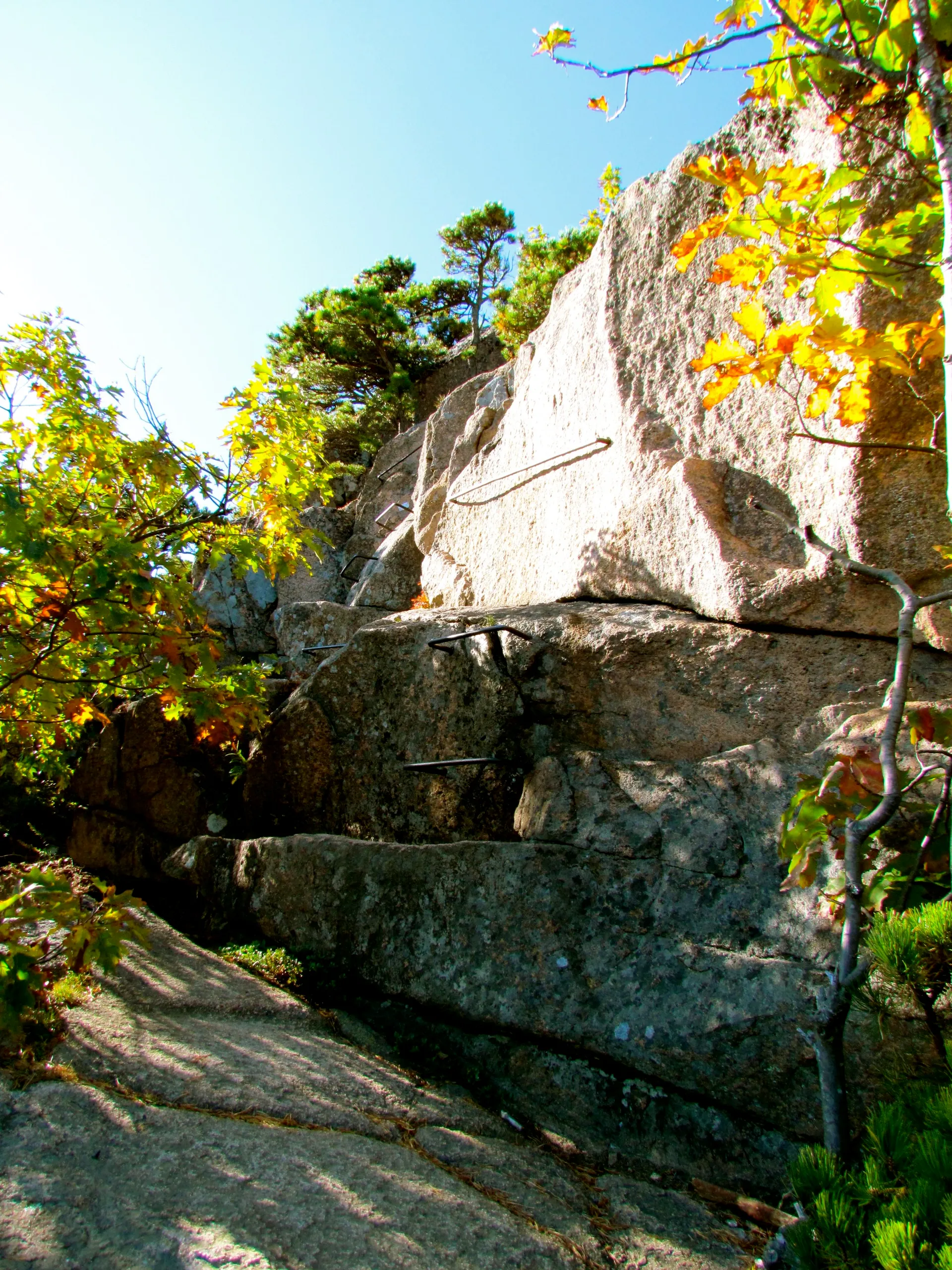
The Distance Carbon FLZ is the pole for fast-and-light days and any trail with hand-over-hand sections. It uses a folding Z-pole design, the three shaft segments connect with an internal cord and snap together with the push of a button, so the pole collapses to barely over a foot long. On the Beehive, where you hit iron-rung ladders and exposed scrambling that demand both hands, you can break these down and stash them on your pack in seconds, then snap them back together at the top.
The weight is the headline. At around 12 ounces per pair, these are dramatically lighter than the aluminum options, and you genuinely stop noticing them in your hands on a long day. For a fast push up Cadillac before the crowds or a quick loop where you want poles for the descent but not the bulk, this is the tool.
Unlike Black Diamond’s fixed-length folding poles, the FLZ adds a FlickLock adjuster with 15 cm of length range, so you can run them long for steep descents and short for the climbs, a real advantage on Maine’s up-and-down granite. The trade-offs are the price and the material: like all carbon, the shafts are less forgiving than aluminum if you smack them hard against sharp granite. Treat them with a little care and they will reward you with the lightest, most packable pole on this list.
Never trust a pole that you have not heard and felt lock. On steep granite descents off Katahdin or Acadia, a pole that collapses mid-step because the lever was not fully seated can put you on the ground fast. Before any descent, push down hard on each planted pole to confirm the lock holds, and re-check lever tension at the start of every hike. Locks loosen over a season, and a quick test costs you nothing.
We tell every client the same thing before the Hunt Trail descent off Katahdin: lengthen your poles a couple of inches for the way down. People set their length for the climb and forget to change it, then wonder why their knees are wrecked at the bottom. On a long descent you want the poles a little longer so you can plant them below you and let your arms take the load before your knee does. It is the single easiest thing you can do to save your knees on Maine’s big descents.
FAQ
Do I really need trekking poles for hiking in Maine?
For Maine's steep granite descents, you will feel the difference immediately. Poles cut the compressive load on your knees on long downhills like the Hunt Trail off Katahdin, add stability on mud-season trails and river crossings, and give you two extra points of contact on slick granite slabs. They are not mandatory, but on Maine's rocky, steep terrain they pay for themselves the first time your knees survive a descent that would otherwise have left them aching.
Carbon or aluminum trekking poles for Maine?
Aluminum for hard scrambling on Acadia and Katahdin, carbon for weight-conscious hiking on maintained trails. Carbon is lighter and dampens vibration, but it can snap suddenly if levered sideways against a granite crack. Aluminum bends before it breaks, so it gives you a warning and a chance to limp out. If you do a lot of technical granite, the durability of aluminum is worth the extra weight.
What lock type is best for steep terrain?
External lever locks (Black Diamond's FlickLock, Leki's SpeedLock) are the most reliable for steep Maine terrain because you can see and feel them lock, and they hold under hard downward load without slipping. Twist locks save weight but can creep loose and are miserable to adjust with cold gloves. For descents where a collapsing pole is dangerous, lever locks are the safer choice.
Should I use folding or telescoping poles?
Folding Z-poles pack much smaller, which is a real advantage on Maine trails with hand-over-hand scrambles like the Beehive, where you need to stow poles fast and grab the rungs. Telescoping poles adjust over a wider length range and tend to be more durable. For scramble-heavy hiking, folding wins on packability.
How long should my trekking poles be?
With the pole tip on the ground, your elbow should sit at roughly a 90-degree angle on flat terrain. On Maine's terrain, shorten the poles a couple of inches for steep climbs and lengthen them for long descents so you can plant them below you and let your arms take the load. Adjustable poles make this easy, which is one reason fixed-length poles are less forgiving on big elevation changes.
Will trekking poles help on mud-season trails?
Yes. Maine's mud season turns trails on Tumbledown and into Gulf Hagas into ankle-deep slop and standing water, and a pole tip gives you a stable third and fourth point of contact through it. Use the wider mud baskets so the tips do not sink, and let the poles probe ahead for hidden rocks and deep spots. For river and stream crossings, two poles braced against the current make a huge difference in staying upright.