



Where the Tide Runs Backward
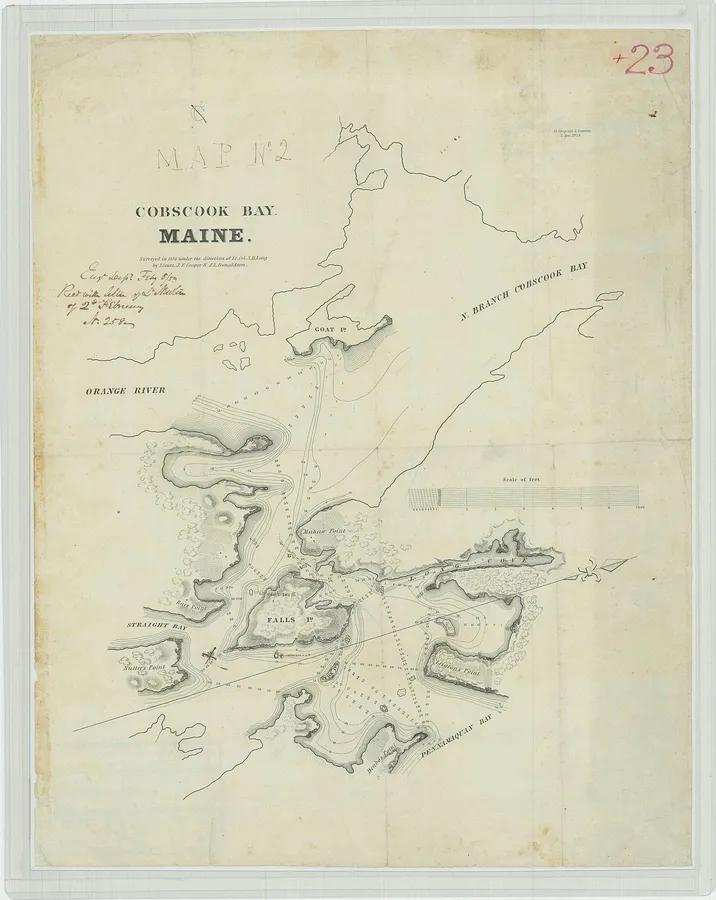
In the narrow channel between Mahar Point and Falls Island in Pembroke, the tides of Cobscook Bay perform something unusual. Twice a day, as the tide changes direction, the current flowing through this constricted passage reverses course. For a brief period around mid-tide, the water builds into standing waves, whirlpools spin on either side of the channel, and the surface roils with visible energy. Then it settles, and the current begins running the opposite direction, funneling billions of gallons through a gap barely a hundred feet wide.
Reversing Falls Park is a small municipal park on the shore of this channel, providing a front-row seat for one of the more dramatic tidal displays on the Maine coast. Cobscook Bay has some of the highest tidal ranges in the United States, routinely exceeding 20 feet, and the volume of water that moves through this narrow passage with each tide cycle is enormous. The result is a natural spectacle that does not require any hiking, equipment, or special timing beyond knowing when mid-tide occurs.
Understanding the Phenomenon
The reversing falls are not a waterfall in the traditional sense. They are a tidal rapid, created when a large volume of water is forced through a narrow opening by the rising or falling tide. The effect is similar to squeezing a garden hose: the same volume of water moves faster through a smaller opening.
During the incoming tide, water from the outer bay rushes through the channel into the inner basin. At high slack tide, the current stops briefly. Then, as the tide falls, the trapped water in the inner basin pours back through the same channel. The reversal is most dramatic at mid-tide, roughly three hours after high or low tide, when the difference in water levels between the inner and outer basins is greatest and the current velocity peaks.
What You See
At peak flow, the water moves through the channel at speeds up to six or seven knots, which is fast for tidal current. Standing waves form where the channel narrows, and whirlpools appear on the downstream side as the current eddies against the rocky shoreline. On large tide days, especially around the new and full moons when tidal ranges are greatest, the display is genuinely impressive.
Between tide changes, the channel is calm, and you might wonder what the fuss is about. Timing is everything here. Visit at slack tide and you will see a quiet saltwater channel. Visit at mid-tide and you will see why people drive the extra miles to get here.
Eagles are common over the channel. Harbor seals work the current for fish, appearing and disappearing in the turbulent water. Osprey nest in the area and dive into the churning water for prey that the current disorients.
The Park
Reversing Falls Park is a simple town park, maintained by the Town of Pembroke. There is a gravel parking area, a short path to the shoreline viewing area, picnic tables, and an interpretive sign explaining the tidal phenomenon. That is about it, and that is all it needs to be. The attraction is the water itself.
The viewing area is on a rocky point with clear sightlines up and down the channel. You can see Falls Island directly across the narrows and watch the current patterns develop across the full width of the passage. The site is exposed, so bring layers on windy days.
When to Go
Summer
Best weather for an extended viewing session. Longest days give the most flexibility for catching mid-tide. Eagles and osprey are active. Bring bug spray for the wooded edges.
Fall
Excellent conditions with fewer visitors. The surrounding forest turns color. Clear autumn air sharpens the views.
Spring
Spring tides can produce the strongest currents. Water temperatures are cold. Bird migration adds shorebird sightings.
Winter
The park is accessible year-round but the road may not be plowed promptly. Extreme tides in winter can create dramatic displays. Dress for cold and wind.
Getting There
From Route 1 in Pembroke, turn south onto Leighton Point Road. Follow it for about 3.3 miles to the park entrance on the right. The road is paved but narrow. The parking area accommodates about 10 cars. From Eastport, the drive is approximately 20 minutes. From Lubec, about 30 minutes.
GPS coordinates: 44.9621, -67.1641
Checklist
What to Bring
- Check tide chart for Eastport before departing
- Arrive approximately 3 hours after high or low tide
- Bring binoculars for eagle and seal watching
- Pack layers for wind exposure at the point
- Bring a picnic for extended viewing
- Camera with video capability for the whirlpools
- Wear shoes with good grip on wet rock
- Allow at least 1-2 hours for the full tidal display
- Combine with a visit to Quoddy Head State Park nearby
- Check road conditions in winter before driving out
FAQ
When is the best time to see the reversing falls?
At mid-tide, approximately three hours after high tide or three hours after low tide. The current is strongest and whirlpools most visible during this period. The display lasts roughly two hours. Check the Eastport tide chart before visiting.
Is there a fee to visit?
No. Reversing Falls Park is a free municipal park maintained by the Town of Pembroke. It is open year-round.
Is this a real waterfall?
Not in the traditional sense. It is a tidal rapid where the current reverses direction through a narrow channel. The standing waves and whirlpools can be dramatic, but there is no vertical drop like a river waterfall.
How far is the reversing falls from Eastport?
About 20 minutes by car. Many visitors combine it with a trip to Eastport, Lubec, or Quoddy Head State Park.
Can you kayak through the reversing falls?
Only experienced paddlers should attempt this, and only at or near slack tide when the current is minimal. During active tidal flow, the currents are dangerously strong and the whirlpools are real hazards. This is not a beginner kayaking destination.
While in the Downeast area, visit Quoddy Head State Park in Lubec, about 40 minutes south, for the easternmost point in the United States.