

Maine has real free camping. It also has less of it than the mountain West, and the best of it sits behind logging-road gate fees. The word “free” does a lot of quiet work up here, so it is worth pulling apart before you drive four hours north.
On Maine’s Public Reserved Lands you can pitch a tent at a lakeside site with a fire ring and a privy and pay nothing. That part is genuinely free. But the gravel road that gets you there often crosses private timberland with a checkpoint, and that checkpoint charges a per-person day fee. So the campsite is free and the road to it is not. “Free” is also not the same as “camp anywhere.” Maine is not the open, roll-in-anywhere BLM West. On public land you camp at authorized, designated sites, not wherever you can park a truck.
This guide sorts Maine camping by what it actually costs and who controls the gate, not by region. Read it that way and you will know, before you leave the pavement, whether the night is free, gated, or paid.
Genuinely free: primitive camping on Public Reserved Lands
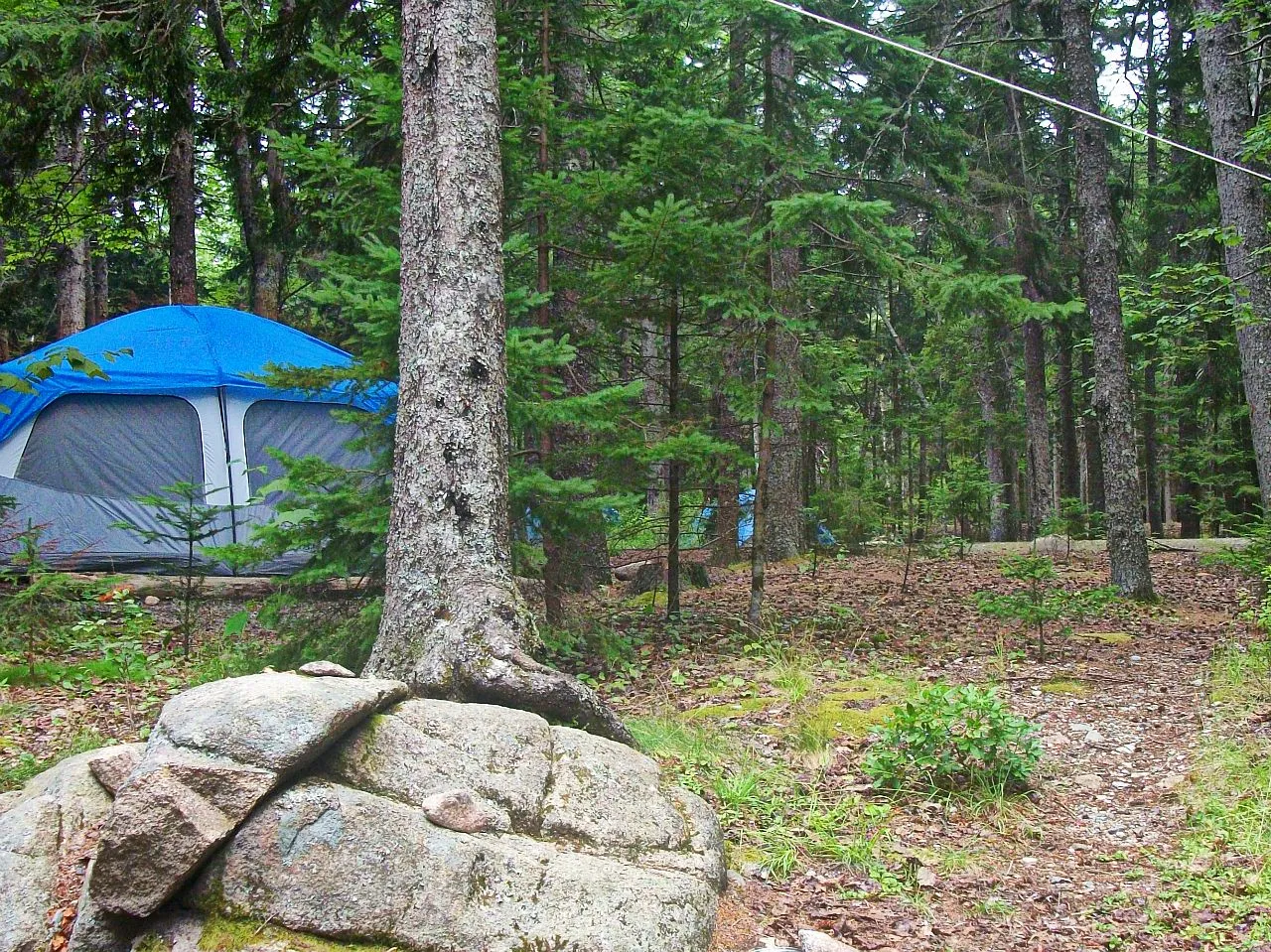
Maine’s Bureau of Parks and Lands manages hundreds of thousands of acres of Public Reserved Lands, and primitive camping at designated sites on these units is free, first-come first-served, no reservation and no camping fee. The trade-off is that “primitive” means primitive: a cleared tent spot, usually a fire ring, sometimes a pit privy, and no water, power, or host. You pack in everything and pack out everything.
Two rules apply to all of it. You may stay no more than 14 days in any 45-day period on public lands without written permission from the Bureau. And you use dead-and-down wood only for fires; cutting live trees is prohibited.
The best-known genuinely-free units:
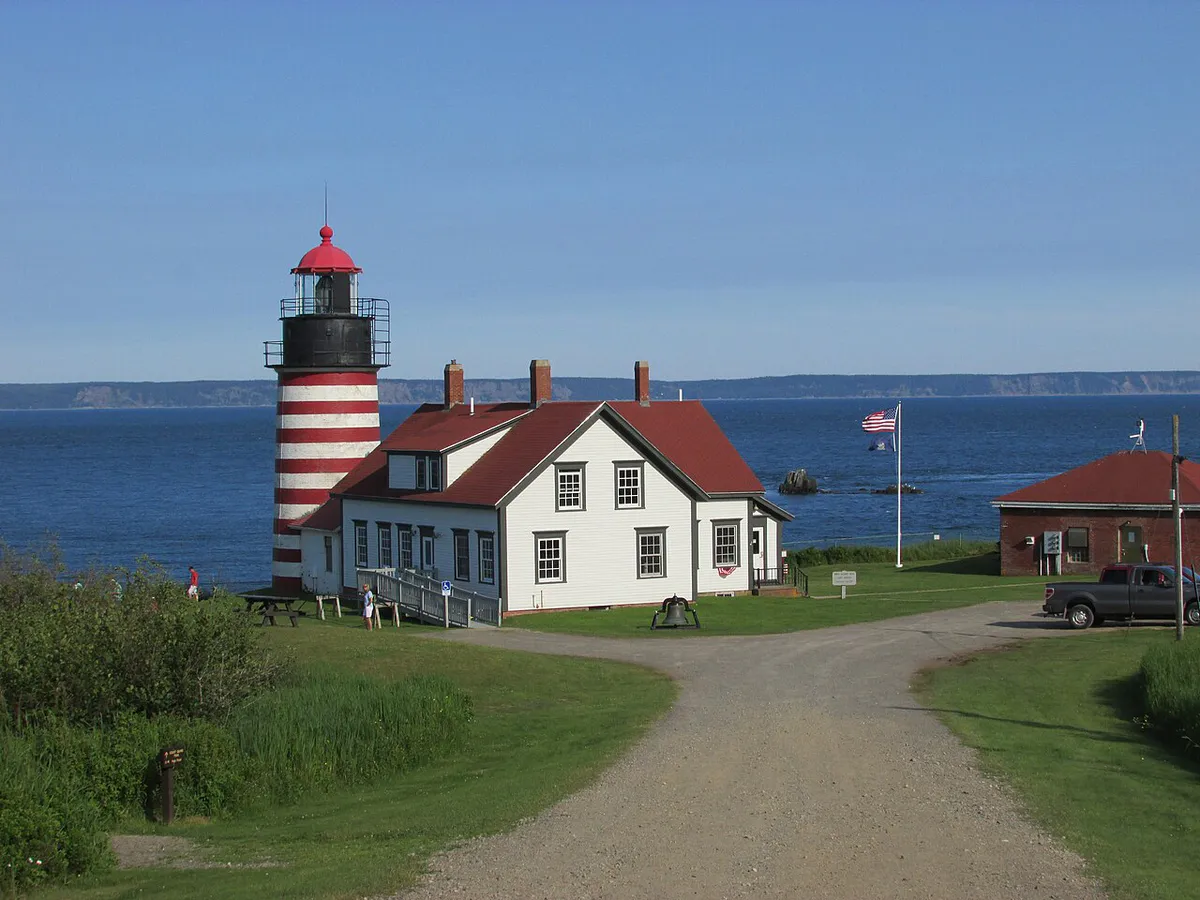
- Cutler Coast is the showpiece: five backcountry campsites (Fairy Head, Long Point, and Black Point Cove) set on dramatic ocean cliffs, reached by a 4-to-5-mile hike in from the Route 191 trailhead. Sites are first-come, first-served with primitive privies and no fee.
Campfires are prohibited at Cutler Coast. You cook on a self-contained camp stove only, and you carry in all your water. This is a strict, site-specific ban that overrides the general state campfire rules below. Plan for a stove, not a fire ring.
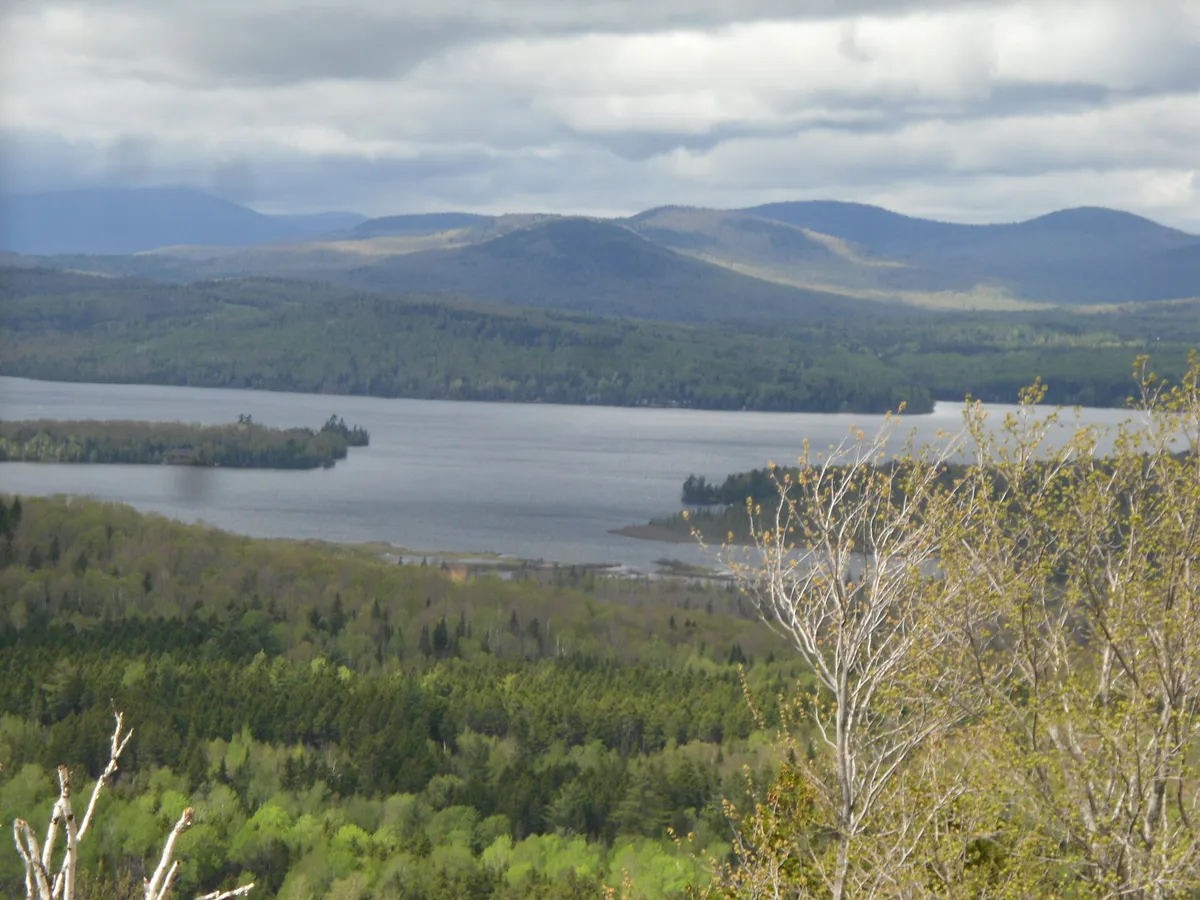
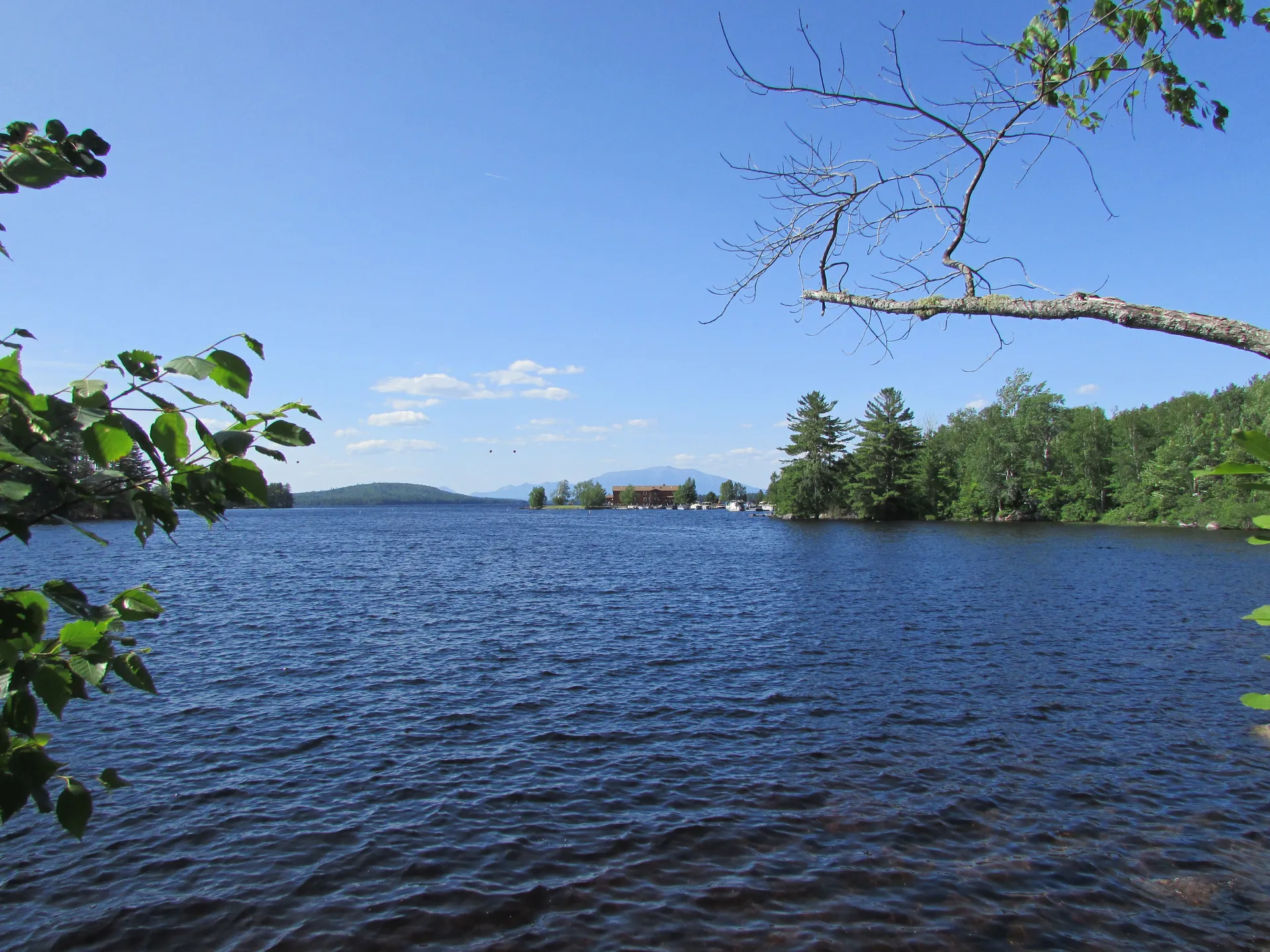
- Bigelow Preserve has the friendliest free camping in the state for first-timers. The Round Barn area on Flagstaff Lake has about a half-dozen single-party tent sites plus a large group site, all free and first-come, first-served, with fire rings and pit toilets. You drive to the parking area and walk a short shoreline trail to the sites, so it is close to car camping without the fee.
Beyond those two, the same free-and-primitive pattern repeats at units like Rocky Lake near East Machias, Chain of Ponds up Route 27, Seboeis Public Lands, Scraggly Lake near Baxter, and the walk-in and boat-in sites at Donnell Pond. Access and conditions vary unit to unit, so read the specific unit’s page before you commit to a long drive north.
North Woods access roads are private logging roads, and conditions, gates, and ownership change season to season. Before you rely on any remote unit, confirm the current road access with the Bureau of Parks and Lands regional office for that unit. Free camping is not much good if you cannot reach the trailhead.
The campsite is free, the road isn’t
This is the nuance most “free camping in Maine” lists miss, and it is the whole reason to read the fine print.
Some of the best public land in the state, including the Deboullie and Nahmakanta units, sits inside timberland managed for public access by North Maine Woods and the neighboring KI Jo-Mary territory. The camping on the Public Reserved Land itself carries no campsite fee. But you reach it through a checkpoint gate, and the checkpoint charges a per-person, per-day day-use fee. On top of that, sites managed by North Maine Woods add a nightly camping fee.
As of July 2026 the KI Jo-Mary schedule runs $13 per day for Maine residents and $18 per day for non-residents, with day use free for anyone under 18 or 70 and over, plus $15 per night to camp at a managed site. Checkpoints take cash or check only. One quirk worth budgeting for: in the Nahmakanta area you are charged for the day you enter the unit and the day you exit, regardless of how long you stay in between.
The honest framing: the campsite is free, the road to it is not, and the gate fees are what make a “free” Downeast-to-Katahdin trip cost real money. Fee schedules change; verify the current numbers at northmainewoods.org before you count on them. The 100-Mile Wilderness corridor borders this same gated country, and much of its overnight camping runs through KI Jo-Mary the same way.
What free camping actually costs
| What | Cost (checked July 2026) | Notes |
|---|---|---|
| Public Reserved Lands primitive sites | Free | First-come, first-served, no reservation; 14 days per 45 |
| North Maine Woods / KI Jo-Mary day use | $13 resident / $18 non-resident, per person per day | Free under 18 and 70+; cash or check only at checkpoints |
| North Maine Woods managed camping | + $15 per night | Added on top of the per-day gate fee |
| Baxter State Park tent site | $38 per night | Reservation required; ME residents free at gate, non-residents $20 per vehicle |
| Allagash Wilderness Waterway | $6 resident / $12 non-resident, per person per night | Under 10 free; gate fee and 9% lodging tax not included |
| Burn permit (campfire over 3 ft) | Free | maineburnpermit.com, or the local forest ranger in the Unorganized Territories |
Not free, and worth saying plainly
A few options get called “free” by people who have not actually been. They are not:
- Baxter State Park is reservation-only and charges $38 per night for a tent site. Maine residents enter the gate free; non-residents pay $20 per vehicle. Baxter is a superb, strictly-managed wilderness park, but it is a paid, planned trip, not a roll-up. Note that even the Appalachian Trail lean-tos inside Baxter follow Baxter’s rules and fees, not the free-shelter norm.
- The Allagash Wilderness Waterway charges a nightly per-person camping fee: $6 for residents, $12 for non-residents, with kids under 10 free. The North Maine Woods gate fee and the state lodging tax are on top of that.
- North Maine Woods managed sites and every private campground are paid, full stop.
One that needs a careful word: the Richardson Lake Public Reserved Land is free to access, with no entrance gate on the land itself. But most of the developed lakeside campsites there are managed by South Arm Campground, a private operation, by reservation and for a fee. “Free drive-in camping at Richardson” is not reliably true for the good lake sites. If a specific site’s cost matters to your plan, confirm it with the Western Region Public Lands office before you go.
Dispersed camping in the White Mountain National Forest
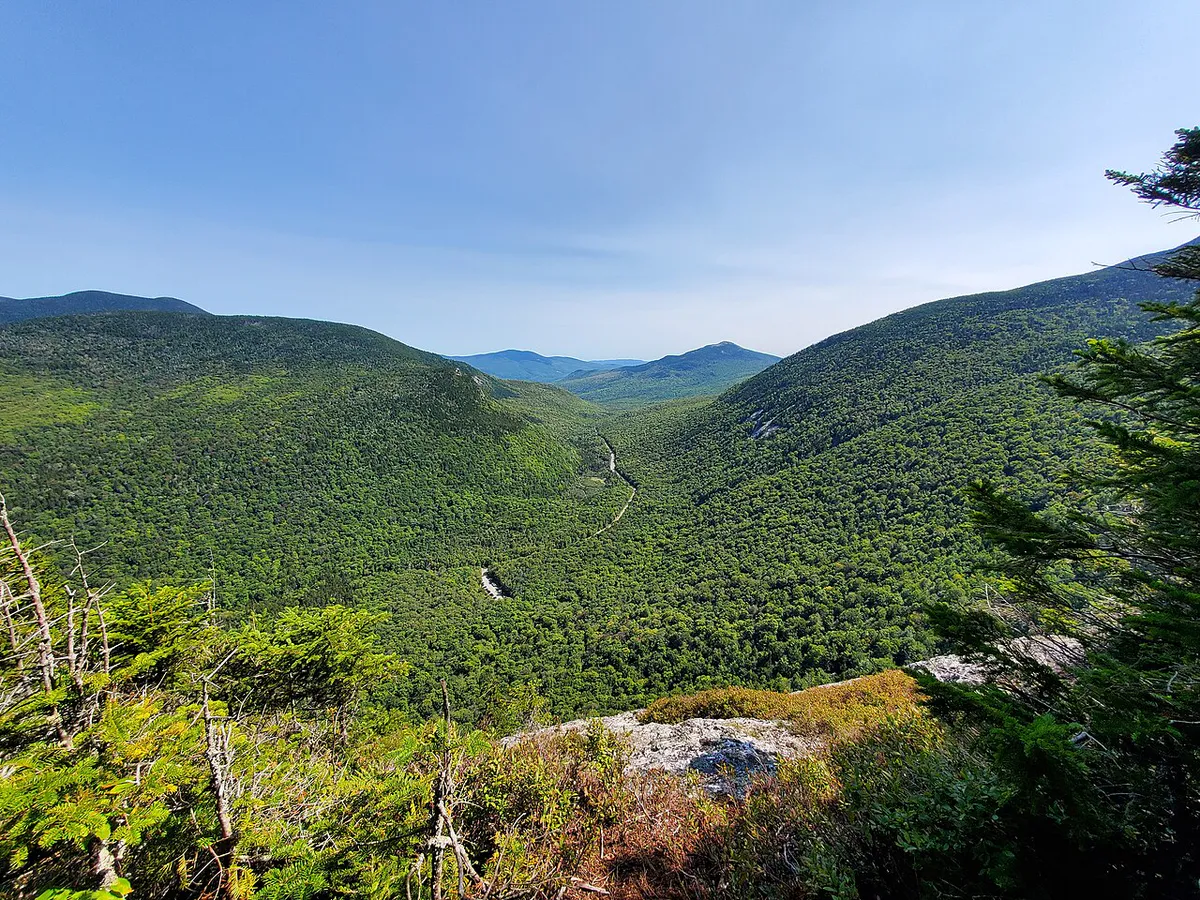
The Maine side of the White Mountain National Forest, around Evans Notch, allows dispersed (backcountry) camping with no permit required and no fee. What it asks in return is distance. Camping and fires are prohibited within 200 feet of certain trails and water bodies, within a quarter mile of backcountry facilities such as shelters, huts, and trailheads, and within a quarter mile of certain roads. Camping is also banned in the alpine zone, defined as where the trees are eight feet tall or less. The stay limit is 14 days.
Some fragile or heavily-used stretches are designated Forest Protection Areas, which layer on extra limits, including caps on party size and restrictions on wood or charcoal fires. Check the current Forest Service maps for the exact areas before you pick a spot, because the rules there are stricter than the forest-wide defaults.
Appalachian Trail lean-tos
Maine’s stretch of the Appalachian Trail, from Katahdin down to Grafton Notch, is maintained by the Maine Appalachian Trail Club, which looks after more than 40 campsites and a string of lean-to shelters. Most of these shelters are free and first-come, first-served for AT hikers, with large groups expected to tent rather than fill a lean-to.
Hedge before you count on it, though, because it is not uniformly free. Some shelters carry a caretaker and a fee, including Horn Pond in the Bigelows, and from Speck Pond south through the Mahoosucs most of the shelters are staffed and charge. And, as noted, Baxter’s AT sites follow Baxter’s fee structure. If you are stitching together a multi-day walk, our Maine backpacking guide and the roundup of remote wilderness camping spots cover which corridors are genuinely free and which are staffed.
Campfires: the rule that trips people up
Maine’s open-burning law changed on October 25, 2023 (LD 24), and the practical upshot is simple to state and easy to get wrong. Under the state law, a small recreational campfire (flame no more than 3 feet high and 3 feet in diameter) does not require a burn permit. Anything larger does. Permits are free, issued online at maineburnpermit.com in participating towns; in the Unorganized Territories, where most of the free remote sites are, the Maine Forest Service issues them through the local forest ranger, not the website.
Three things override that permit rule, and this is where people get in trouble:
- Land-manager rules win. On Public Reserved Lands you may have fires only at authorized, designated sites, using the fire rings provided, with dead-and-down wood only. Some sites ban fires outright regardless of size, as Cutler Coast does. A site-specific ban beats the state permit rule every time.
- Red Flag Warnings shut it all down. When the National Weather Service issues a Red Flag Warning for an area, it is unlawful to burn out of doors there at all, small campfire included, for the duration.
- Out-of-state firewood is banned. Bringing firewood across the state line moves invasive pests, so it is prohibited. Buy firewood local to where you are camping, or gather dead-and-down on site where that is allowed.
Even where a fire is legal, the North Woods spends stretches of every summer bone dry. When the ground and duff are that dry, a stove is the responsible call whether or not a Red Flag Warning is posted. The people who lose access to free camping for everyone are the ones who light a fire they should have skipped.
Myths that get people fined or moved along
- Town parks, beaches, and roadside pullouts are not legal overnight camping. They are day-use spaces, and most are posted.
- Walmart and big-box “boondocking” is store-and-ordinance dependent. In Maine it is often not allowed. Scarborough bans overnight parking by town ordinance, with posted signs and active enforcement, so the Walmart and Cabela’s there are off-limits. Always call the specific store and check the town rules before you assume a lot is open.
- Highway rest areas are generally posted no-camping and no-overnight.
- “Public land means camp anywhere” is false in Maine. On Public Reserved Lands you camp at authorized sites only, not wherever you wander.
Near Portland
Set expectations here too: as of July 2026, we found no verified legal free camping within about 45 minutes of Portland. The genuinely free sites are north and Downeast, on the public lands and in the forest, not in the built-up southern coast. If you are basing near Portland, plan on a paid campground and treat the free camping as a separate, farther-north trip; a paid site close to the city is the realistic move.
Is there free camping in Maine?
Yes. Primitive camping at designated sites on Maine's Public Reserved Lands is free and first-come, first-served, with no reservation and no camping fee. Cutler Coast, Bigelow's Round Barn, and units like Rocky Lake and Scraggly Lake are genuinely free. The catch: some of the best public land is reached through private-timberland checkpoints that charge a per-person day fee, so the campsite is free but the road to it may not be.
Do I need a permit for a campfire in Maine?
A small recreational campfire, no more than 3 feet high and 3 feet in diameter, does not require a state burn permit; larger fires do, and permits are free at maineburnpermit.com or, in the Unorganized Territories, from the local forest ranger. But a Red Flag Warning makes all outdoor burning illegal in that area, and a land manager can ban fires outright, as Cutler Coast does. Use dead-and-down wood only and never bring firewood from out of state.
Is Baxter State Park free?
No. Baxter is reservation-only and charges $38 per night for a tent site. Maine residents enter the gate free; non-residents pay $20 per vehicle. It is a paid, planned trip, not a place to roll up and camp for free.
Is camping in the North Maine Woods free?
The Public Reserved Land campsites inside that territory carry no campsite fee, but access runs through checkpoint gates that charge a per-person day-use fee, currently $13 per day for Maine residents and $18 for non-residents, with sites managed by North Maine Woods adding $15 per night. Day use is free for anyone under 18 or 70 and over, and checkpoints take cash or check only. Verify the current schedule at northmainewoods.org.
How long can I camp for free on Maine public land?
No more than 14 days in any 45-day period on public lands without written permission from the Bureau of Parks and Lands. The same 14-day limit applies to dispersed camping in the White Mountain National Forest.
Can I camp overnight at a beach, town park, or Walmart in Maine?
Generally no. Town parks, beaches, and roadside pullouts are day-use areas, usually posted against overnight camping. Big-box overnight parking is store- and ordinance-dependent; Scarborough, for example, bans it by town ordinance with posted signs and enforcement. Check the specific store and town before assuming a lot is open.
What's the best free spot for a first-timer?
The Round Barn campsites at Bigelow Preserve on Flagstaff Lake: free, first-come, first-served, with fire rings and pit toilets. You drive to a parking area and walk a short shoreline trail to the sites, so it is nearly car camping without the fee. Arrive early in peak season; the sites fill.
Free camping in Maine rewards the people who read the rules first. Know which nights are free, which are gated, and which are paid, respect the fire law and the 14-day limit, and start with our camping guides to match a specific unit to your trip.