Picture this: you unpack a cheap pop-up canopy at Popham Beach, the August sun is cooking, and a 20-knot southwest wind is rolling straight off the Gulf of Maine. You turn to stake the thing down and the canopy is already cartwheel-tumbling down the beach toward the waterline, taking your towels with it. The family next to you is watching. It is not your best moment.
Maine beaches are different from the sheltered coves you see in beach-tent marketing photos. Popham, Reid State Park, Old Orchard Beach, Ferry Beach, and Crescent Beach all sit on open Atlantic exposure. The Gulf of Maine funnels southwest sea breezes directly onto these beaches on sunny summer days, often right when everyone wants to be there. A budget pop-up with thin plastic stakes becomes a sail. An umbrella without an auger anchor becomes a spear. You need gear that is actually designed to stay put.
The cold Gulf of Maine also changes how you use shade here. Water temperatures peak in the low 60s at Popham in August, which is what most people call cold. You spend more time on the blanket, under your shelter, watching the waves, than you do swimming. That makes your canopy setup your home base for the day, not just a five-minute break from the sun. And at Popham and Reid, the parking lots are a real walk from the best spots. Every pound of gear matters.
We researched and compared six shelters, beach tents, hybrid umbrella-shelters, and umbrellas, against these specific Maine conditions: coastal wind, long carry distances, and a cold-water culture that means you stay under the shade longer than you swim.
| Shelter | Price | Best For | Wind Anchoring | Rating |
|---|---|---|---|---|
| Mid-range | Overall best, families | Sand-fill bags | 4.7 | |
| Budget | Solo or couple trips | Sand-fill bags | 4.6 | |
| Premium | Larger groups | Sand-fill bags | 4.8 | |
| Budget | Hybrid umbrella-shelter | Spike + guylines | 4.4 | |
| Budget | Lightweight solo umbrella | Integrated anchor | 4.4 |
How We Chose These
We evaluated each shelter against the actual conditions on Maine’s open-coast beaches, not manufacturer marketing specs. The selection criteria:
Wind anchoring over aesthetics. On a 15 to 20 knot beach day, anchoring is everything. We looked at whether each shelter uses sand-fill bags (fills with local sand for weight), a deep auger anchor that screws into wet sand, supplemental guyline points, or simple spike stakes that pull out in loose dry sand. Anything that relies solely on plastic spike stakes in dry powder got downgraded.
Pack size and weight. Popham Beach State Park’s main parking lot is a real walk from the best spots at the north end, and the sand is soft. Reid State Park has two separate beach sections and the best tide-pool areas require a second carry. We gave real weight to the question of whether you can actually haul this across the beach.
Coverage and UPF. Maine summer sun is real. The Gulf of Maine cold-water temperature means people lounge under their shade longer than they swim, so coverage area matters. UPF 50+ fabric blocks the UV that reflects off sand and water even on partly cloudy days.
Family versus solo use. A couple doing a day trip to Old Orchard Beach does not need the same shelter as a family of five setting up camp for the day at Crescent Beach.
The Shelters We Recommend
Neso Grande Beach Tent, Best Overall
Mid-range
Neso Grande Beach Tent
Who it’s forBest overall Maine beach shade for families and couples
Why we picked itSand-fill anchor bags at all four corners hold in coastal wind without stakes
Pros
- 9x9 ft footprint fits three to five adults with gear
- UPF 50+ fabric and waterproof construction
- Packs small and light enough for Popham's long sand walk
Know before you buy
- Open on all four sides, a windbreak and shade, not a full tent
- The filling-and-dumping anchor routine adds time to pack-up
If you are going to one of Maine’s bigger family beaches, Popham, Reid, or Old Orchard, and you want proper shade that is actually going to stay put, the Neso Grande is the answer most experienced Maine beachgoers land on.
The anchoring system is the key. Four corner bags fill with sand you scoop from right under your feet. There are no stakes to drive into compact-or-loose sand, no guessing about depth. On a southwest wind day at Popham, the kind that starts off moderate at 10 AM and builds through the afternoon, a properly filled Neso holds without drama. Reviewers who use it on open-coast beaches consistently report that it handles sustained wind that rolls cheaper shelters and umbrellas.
At 9x9 feet, the Grande fits three to five adults comfortably with a cooler and a few chairs underneath. The pole keeps the center of the canopy at a height where most adults can walk in without ducking. The UPF 50+ fabric is waterproof, which matters on the Maine coast where a midday fog bank can push in off the water with no warning.
Pack-wise, it compresses to a carry bag that most people sling over a shoulder, and it is light enough that the walk from parking to the waterline at Popham does not punish you. The trade-off: it is open on all four sides, which is shade and some wind deflection but not a full enclosed shelter. And the anchor-bag fill-and-empty adds time to both setup and teardown.
Neso 1 Beach Tent, Best Budget Pick
Budget
Neso 1 Beach Tent
Who it’s forBest budget pick for solo or couple beach days
Why we picked itOne of the lightest full-shade options on this list
Pros
- 7x7 ft coverage for one to three people
- Patented sand-anchor system keeps it down without ground stakes
- UPF 50+ and waterproof
Know before you buy
- Too small for a family of four with cooler and chairs
- Lower peak means taller adults stoop under the center
The Neso 1 is the same anchoring concept as the Grande but scaled down for one to three people and priced accordingly. At 7x7 feet of coverage and a light packed weight, this is the right answer for a couple doing a solo day trip to Ferry Beach or Crescent Beach without a caravan of gear.
Same patented sand-fill bags at the corners. Same UPF 50+ waterproof fabric. The anchoring works identically on coastal wind, fill the corners, and the tent stays. On a carry to the beach, the compact bag is barely noticeable.
The limits are real though. At 7x7 feet, four adults and a cooler do not fit. The peak height means taller adults stoop at the center. For a family of four it is undersized; the Grande is the right upgrade. But for a solo or couple looking to pack light and still have real shade and wind anchoring on an exposed beach, the Neso 1 lands squarely in the right zone.
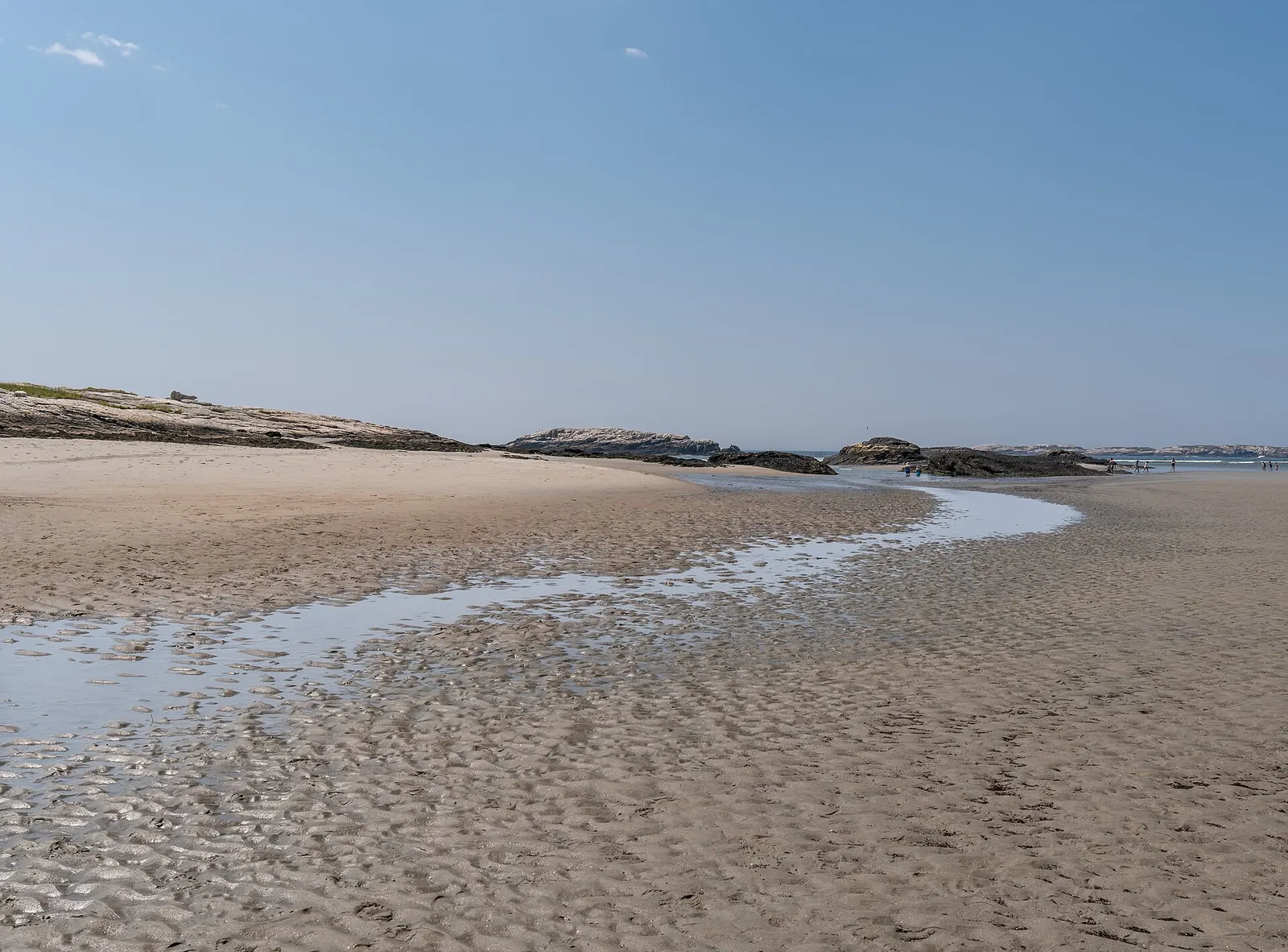
Popham Beach has distinct sand zones. The upper dry-sand zone near the dune grass is loose and powder-soft, metal stakes pull out with almost no resistance in even moderate wind. The wet-sand zone closer to the waterline compacts better and holds stakes, but the tide will reach you by afternoon if you set up too far down. The safest play: set up in mid-beach at low tide, use a sand-fill bag system, and fill the bags from the nearest patch of damp sand if the dry zone is too loose.
Neso Gigante Beach Tent, Best for Larger Groups
Premium
Neso Gigante Beach Tent
Who it’s forBest for larger families and group beach days
Why we picked it11x11 ft shade fits a full family plus chairs, cooler, and wet suits
Pros
- Tall peak so adults stand fully upright
- Rust-proof aluminum pole and sand-anchor bags built for coastal wind
- UPF 50+ fabric
Know before you buy
- Heaviest beach tent here, noticeable for Popham's long walk across sand
- Largest footprint on the list, close quarters on busy beach days
The Neso Gigante is the Grande taken up one size for bigger families and group beach days. At 11x11 feet and a tall peak, it covers a real family setup, four to six adults with chairs, a large cooler, wet suits, and a bag of beach toys, without anyone sitting in direct sun at the edges.
The aluminum pole is rust-proof, which matters on the Maine coast where salt air and salt water will eat a steel pole within a couple of seasons. The sand-anchor corner bags work identically to the Grande and Neso 1 versions: fill them on site, dump them at the end of the day. Owners who use it on windy open-coast beaches report it handles sustained gusts better than umbrella-style shelters of similar footprint, because the lower profile does not catch wind the same way a vertical canopy does.
The weight is the honest trade-off. For Popham’s long beach walk with a full family load of gear, the Gigante is heavier than the Grande and you will feel it. If you are parking close at Old Orchard Beach or Reid State Park during a slow morning, it is no big deal. If you are hauling to the far north end of Popham at peak summer heat, plan for it.
A beach umbrella without a proper anchoring system is a safety hazard on Maine’s open-coast beaches. In strong wind, a standard umbrella with a shallow spike anchor can invert and launch at speed. Several people are injured by runaway beach umbrellas every summer on the East Coast. If you use an umbrella, get one with an auger or deep sand anchor and add sandbags to the pole base. Skip anything that relies on a single short plastic stake.
Sport-Brella Super-Brella 8-Foot Beach Shelter, Best Hybrid Option
Budget
Sport-Brella Super-Brella 8-Foot Beach Shelter
Who it’s forBest hybrid umbrella-shelter for midsize Maine beach days
Why we picked itUmbrella plus side panels, functions as a sun shelter and windbreak
Pros
- UPF 50+ and water-repellent polyester fabric
- Standard umbrella spike setup, fast to plant
- Guylines included for extra wind anchoring
Know before you buy
- Spike-only anchoring struggles in dry or soft sand without sandbags added
- Heavier than it looks packed
- Side panels reduce airflow on calm days
Not everyone wants a Neso-style tent. If you prefer the umbrella form factor but want actual windbreak coverage, the Sport-Brella Super-Brella is the bridge product that gets used by a lot of regulars at places like Old Orchard Beach.
The design is an 8-foot canopy umbrella with side panels. On a beach day when the wind is coming from the ocean, you angle the canopy into the wind, drop the side panels on the upwind sides, and you have a reasonable three-sided windbreak plus overhead shade. The polyester fabric is UPF 50+ and water-repellent. Guylines are included to stake the shelter and reduce lateral movement in gusts.
The honest limitation: the pole goes into the sand like a standard umbrella, spike-only, no auger. On compact wet sand it holds adequately with the guylines staked. On Popham’s dry upper-beach powdery sand, you need to add sandbags around the base pole or it will walk. If you own the Super-Brella, bring a small sandbag kit or a collapsible bag you can fill. On calm or moderate days, it holds without issue; on serious coastal wind days without supplemental weight, it struggles.
At Popham in late July and August, the southwest sea breeze usually kicks in late morning and builds through the afternoon. Set up early, anchor your tent correctly before the wind arrives, and you will not be chasing it down the beach. The north end of the beach near the river mouth gets more wind exposure than the main area near the parking lot. If this is your first time, set up in the middle section until you know the beach.
Tommy Bahama Sand Anchor 7-Foot Beach Umbrella, Best Lightweight Solo Option
Budget
Tommy Bahama Sand Anchor 7-Foot Beach Umbrella
Who it’s forBest lightweight umbrella for a solo or couple day trip
Why we picked itLight enough for a solo beach day
Pros
- Integrated sand anchor base, no separate hardware needed
- Tilt mechanism follows the sun through the day
- 7-foot diameter canopy, good coverage for one to two people
Know before you buy
- No side panels, little windbreak value on open ocean beaches
- Inverts in strong gusts without supplemental sandbags
- Coverage too small for a family
The Tommy Bahama Sand Anchor umbrella is the right answer for one specific use case: a solo beachgoer or a couple who wants something light, fast to set up, and easy to carry, on a day when the wind is moderate and shade coverage for one to two people is enough.
It is the lightest option on this list. The integrated sand anchor base is a step up from a bare spike, it provides some additional resistance in sand, and the tilt mechanism lets you chase the sun angle through the day to keep the shadow on your chair. The 7-foot diameter is enough for two chairs and a bag.
The limits are also clear. No side panels means no windbreak, this is shade, not shelter. On a real Maine wind day at Ferry Beach or Crescent Beach, the exposed canopy will want to invert without added sandbags around the base. Owners report it handles light-to-moderate wind reliably and struggles with sustained gusts without supplemental weight. For families, the coverage is too small. For a couple doing a relaxed half-day in mild conditions, it is the right tool.
Beach Tent vs. Canopy vs. Umbrella: Which Format Is Right for Maine?
Beach tents (Neso-style): A canopy with poles that anchor to the ground via sand bags or attached stakes. Low profile, good wind resistance, sand-anchor systems work in all sand types. Main trade-off is pack size and the fill-and-dump anchor routine. Best for dedicated beach days and families.
Hybrid umbrella-shelters (Sport-Brella): An umbrella pole with a larger canopy and side panels. Sets up faster than a tent, works as a shade umbrella without the side panels deployed. Anchoring is weaker than dedicated beach tents. Best for people who want flexibility between umbrella and shelter modes.
Standard beach umbrellas (Tommy Bahama): The lightest and fastest option. No windbreak. Anchoring depends entirely on how deep you drive the spike or auger into sand. Best for mild days and solo or couple use.
For Maine’s open-coast beaches with consistent afternoon wind, the Neso-style sand-bag tent format is the most reliable. Umbrella-style shelters and standard umbrellas work fine on calm days and become problems on wind days without proper supplemental anchoring.
What to Know About Maine Beach Wind
The dominant pattern at Maine’s south and midcoast beaches is a southwest sea breeze that develops as the land heats up in the morning and draws cooler marine air onshore. At Popham and Reid, both on exposed peninsulas, this breeze reliably builds through the afternoon.
The Gulf of Maine stays cold all summer, in the upper 50s to low 60s at most beaches even in August. That cold-water upwelling actually intensifies the temperature differential that drives the sea breeze. The warmer the air on a given day, the stronger the afternoon wind tends to be.
What this means practically: if you arrive early on a sunny summer day, conditions at Maine beaches may be calm, beautiful, and feel totally manageable with any shelter. By early afternoon, you will understand why everything needs to be properly anchored.
What to Bring
- Check the wind forecast before you pack, NOAA coastal wind forecast covers all Maine beaches
- Fill sand anchor bags in the damp sand zone, not the dry powder near the dunes
- Stake all guylines if your shelter has them, even on calm arrival mornings
- Add a collapsible sandbag to your beach kit if using an umbrella-style shelter
- Set up shelter before unloading all your gear, anchor it first while your hands are free
- Know the tidal cycle at the beach you are visiting, incoming tide can reach mid-beach by afternoon
- Bring a small hand shovel for faster sandbag filling at Popham and Reid
- Never leave a shelter or umbrella unattended in the wind, even briefly
Where to Use Shade at Maine Beaches
Popham Beach State Park (Phippsburg): Maine’s best barrier beach and one of the windiest. Long sandy approach from the main lot to the best spots. The Neso Grande or Gigante is the right tool here, enough coverage to be your base camp for the day, and the sand-anchor system handles the afternoon southwest wind without drama. Read our Maine beach day packing list before your first trip; Popham rewards preparation.
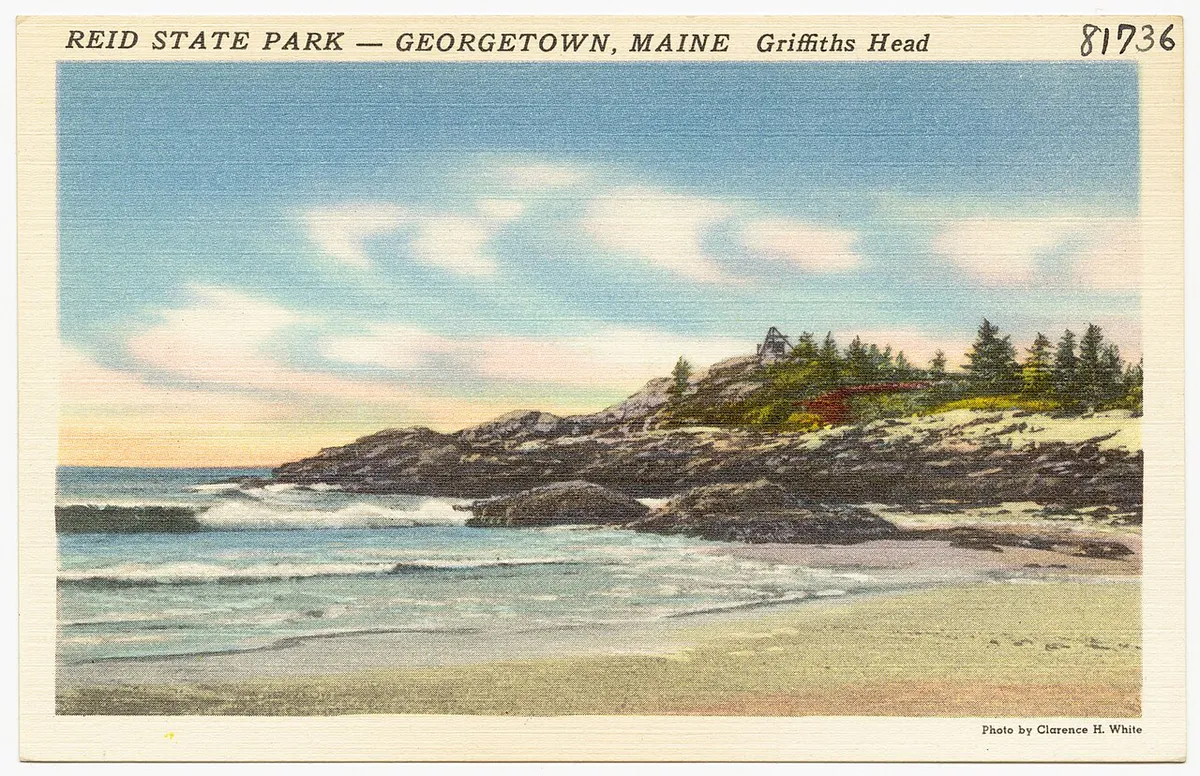
Reid State Park (Georgetown): Two beach sections, Mile Beach and Half Mile Beach, separated by a rocky headland. Both are open-ocean exposure. Reid tends to get a bit more wind than Popham on a typical south wind day. Same advice applies: anchored beach tent, get there early for parking and a good spot.
Old Orchard Beach: Miles of sand with parking close to the beach, which changes the gear calculus. A heavier umbrella shelter is manageable when you do not have to carry it far. The beach gets crowded, which means less space per setup, a large Gigante might feel cramped on a packed summer weekend.
Ferry Beach State Park (Saco) and Crescent Beach State Park (Cape Elizabeth): Both state park beaches with the same morning-calm-afternoon-wind pattern. Crescent Beach gets more families from Portland because of its proximity. Ferry Beach tends to be quieter. Both reward the same approach: anchored tent, early arrival.
If you are planning a family beach day at any of these locations, start with our guide to Maine’s best beaches for families. For gear beyond your shade setup, our Maine beach day packing list covers what actually matters, and water shoes are worth a look for Maine’s rocky and pebbly stretches.
What is the best beach canopy for wind at Maine beaches?
The Neso Grande is the most consistent performer on Maine's open-coast beaches. Its four-corner sand-bag anchors fill with local sand and weigh the shelter down from all sides, which is more effective than spike stakes in the loose or mixed sand at Popham, Reid, and Ferry Beach. The Neso Gigante is the step up for larger families.
Do I need sandbags for a beach umbrella in Maine?
Yes, strongly recommended. Maine's coastal beaches develop a reliable southwest sea breeze in the afternoon, and on a windy day a standard umbrella with a spike anchor in dry sand can invert or pull free. If you use an umbrella, add sandbags around the base pole. A collapsible mesh bag you can fill with sand on site weighs almost nothing and makes a real difference.
Can I use a pop-up canopy at Popham Beach or Reid State Park?
A basic pop-up canopy (the square frame type sold for backyard parties) is a real problem on open-ocean Maine beaches. Without substantial ballast on all four legs, a straight-sided canopy acts as a sail in even moderate wind. If you own one and want to use it, you need very heavy sandbags on all four legs, not the lightweight mesh bags, but the kind rated for event use. A Neso-style beach tent in the same price range is a better choice for the beach.
How far do I have to carry gear at Popham Beach?
From the main parking lot, a good spot on the main beach section is a short walk across sand. The far north end near the river mouth is farther. Pack weight matters because the sand is soft. The lighter Neso tents are manageable; the larger Gigante you will feel on a hot day with everything else you are carrying.
What UPF rating do I need for a Maine beach?
UPF 50+ is the standard to look for, and all the products on this list meet it. UPF 50+ blocks over 98% of UV rays. Even on overcast Gulf of Maine days, UV exposure from light scattered off the sand and water adds up over a long beach day. Any shade with a UPF 50+ rating is fine; do not pay extra for claims above that threshold.
Is a beach tent necessary at Maine beaches compared to southern beaches?
The cold Gulf of Maine water means people spend less time in the water and more time on the beach under their shelter than at warmer beaches. At a Florida beach you might be in the water half the day; at Popham you might swim for a short while and spend the rest of the day on the blanket. That makes your shade setup more important, not less, than at warmer-water beaches.