

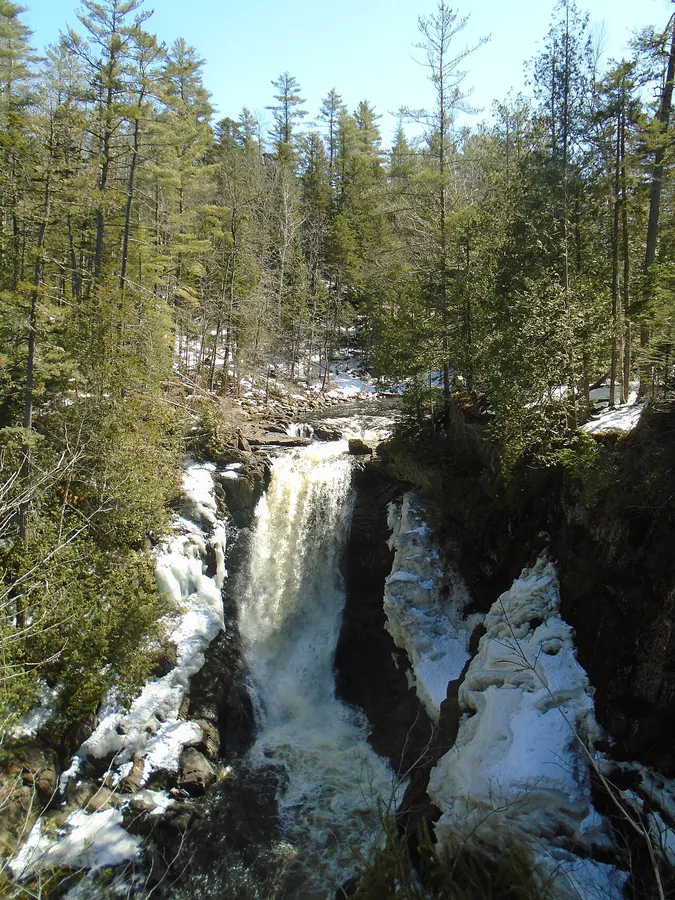










Maine still has the wild brook trout water that the rest of the Northeast lost decades ago. Small streams in the Roxbury Pond country hold natives that have never seen a hatchery truck. The Rapid River grows brook trout to sizes that sound made up until you hook one. Landlocked salmon run the Kennebec and the rivers around Sebago every spring and fall, and the tributaries feeding Moosehead fish well all season. All of it is open to anyone with a license and a fly rod.
The question is which fly rod. Buy too heavy and you will overpower every brook trout you touch. Buy too light and the first decent salmon will run you into your backing with nothing left to turn it. This guide settles the rod question first, then builds out the rest of the setup: waders, a starter fly box, and a net that will not kill the fish you are required to release.
We cover spinning tackle separately in our Maine fishing gear guide, and chasing striped bass from the beach is its own game with its own rules, covered in our surf striper setup guide. This page is all fly.
| Gear | Price | Best For | Type | Rating |
|---|---|---|---|---|
| Premium | Trout and salmon | Rod & Reel | 4.6 | |
| Mid-range | Beginner value | Rod & Reel | 4.4 | |
| Premium | River wading | Waders | 4.5 | |
| Budget | Starter fly box | Flies | 4.3 | |
| Mid-range | Catch & release | Net | 4.6 |
What Weight Fly Rod for Maine?
A 9 foot 5 weight handles most of what Maine throws at a fly angler. It is light enough to cast a dry fly to a 10 inch brook trout rising on a pond at dusk, and it has enough backbone to fight a 20 inch landlocked salmon in the current of the Kennebec. If you own one fly rod for Maine, make it a 9 foot 5 weight. Every complete outfit in this guide is built around that configuration for a reason.
The 5 weight is still a compromise on the smallest water. Maine’s classic brook trout streams, the kind you can step across in spots, fish better with a 3 weight. A 3 weight loads with ten feet of line out, drops a fly under an alder branch at twenty feet, and makes an eight inch native feel like a fish worth talking about. The little streams feeding the Moosehead region, the brooks in the hills around Roxbury Pond, and most of the small water in the western mountains all fit this picture. If you fall for that kind of fishing, a 3 weight is a worthy second rod. It should not be your first.
Landlocked salmon push in the other direction. A 5 weight handles them in most water, and a 6 weight buys extra margin on big rivers when you are swinging streamers in heavy spring flow. Grand Lake Stream regulars often carry both. You do not need to. Start with the 5 weight, fish it for a season, and let the water you keep returning to decide what comes next.
The Setups We Recommend
Orvis Clearwater Fly Rod Outfit - Best Overall Setup
Premium
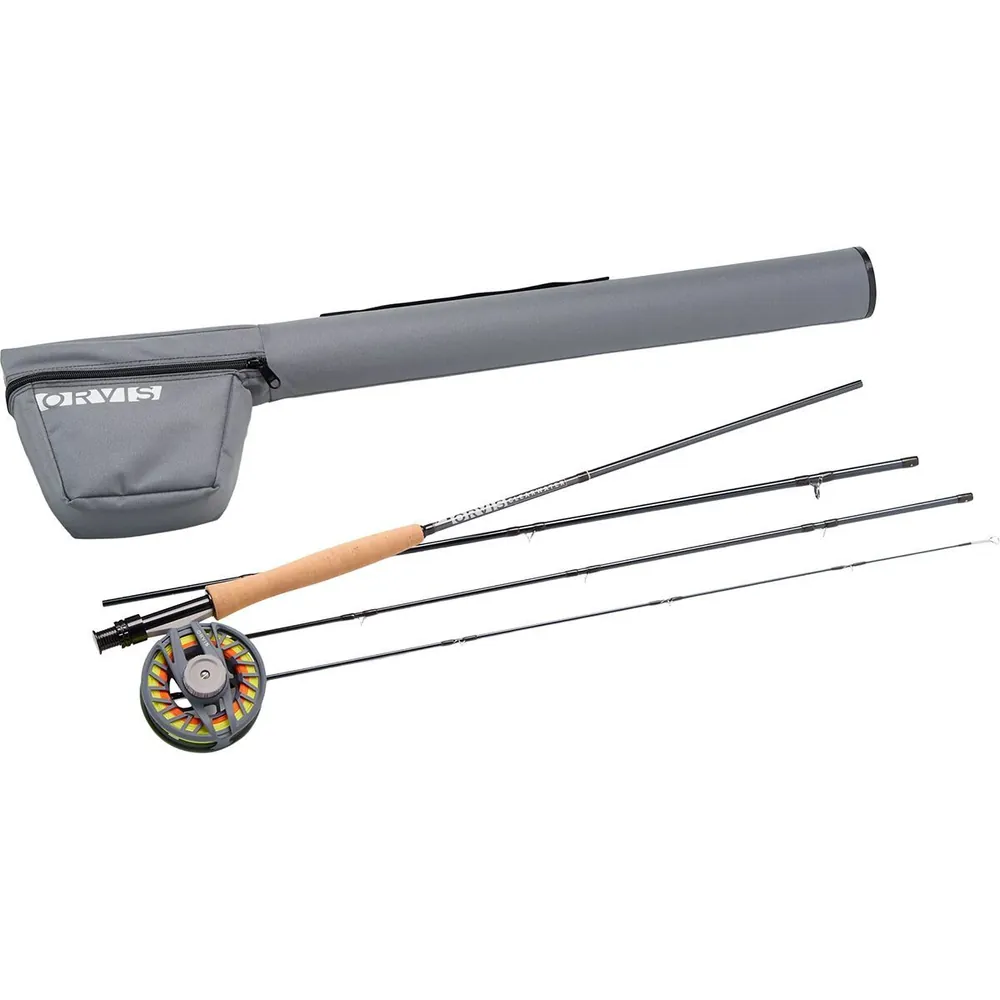
Orvis Clearwater Fly Rod Outfit
Who it’s forBest fly fishing setup for Maine trout and salmon
Why we picked itComes ready to fish with rod, reel, line, and leader
Pros
- Excellent casting accuracy for the price
- 25-year guarantee
- Versatile 5-weight handles trout and salmon
Know before you buy
- Expensive for beginners
- Reel is basic compared to rod quality
The Clearwater is the rod we point people to when they tell us they are serious about learning. Orvis matched the rod, reel, line, backing, and leader at the factory, so the outfit casts the way the rod designer intended on day one. That matters more than beginners realize. Half the frustration of a first season comes when a mismatched line makes a decent rod feel broken.
The action is the other reason it earns the top spot. The Clearwater is forgiving enough to smooth out a beginner’s timing problems but crisp enough to punch a fly through the wind that comes up on Sebago region ponds most afternoons. On a pool at Grand Lake Stream you can fish a streamer for salmon in the morning and a size 14 dry for brook trout in the evening without feeling under-gunned or over-gunned either way.
The 25-year guarantee is the quiet argument for spending more. Snap a tip in a car door, and Orvis repairs or replaces the section for a modest fee. Cheap rods become landfill the day they break. This one does not.
The weak point is the reel. It is serviceable, with a drag that handles Maine trout and salmon fine, but it lacks the sealed construction of pricier reels. That is the correct place for Orvis to have saved money. A reel is easy to upgrade later. A rod is not.
Redington Crosswater Fly Fishing Outfit - Best Value Full Setup
Mid-range
Redington Crosswater Fly Fishing Outfit 9' 5WT
Who it’s forBest value full fly setup for beginners
Why we picked itComplete setup with line already spooled
Pros
- Forgiving medium action that helps beginners feel the cast
- Durable enough to live in a truck all season
- Honest performance at a fair price
Know before you buy
- Reel is basic with a simple drag
- Included line is adequate, not great
The Crosswater is the setup we recommend most often, because most people asking are not sure yet how much they will fish. It is a 9 foot 5 weight that arrives with the reel mounted and the line spooled. Pull it out of the package, tie on a leader, and you are fishing.
The action is slightly softer than the Orvis, and for a beginner that is a feature. A softer rod lets you feel the line load on the back cast, which is the single thing new casters struggle to learn. On a pond in the Sebago region or a slow pool on a Moosehead tributary, the Crosswater will lay out the 25 to 40 foot casts that catch nearly every trout in Maine. Long, pretty 70 foot casts are for fly shop parking lots. Real Maine fishing happens close.
Durability is better than the price suggests. This is a rod that can ride in a truck bed all summer, get fished in the rain, and keep working. Redington built it for exactly that kind of owner.
The compromises are where you would expect. The reel is a basic model with a simple drag, fine for trout, adequate for salmon if you let the fish run. The included line works but coils more than a premium line, and replacing it after a season is a cheap upgrade that transforms the rod. Neither issue should stop you. As a first fly rod for Maine rivers and ponds, the Crosswater is the best money-to-fishing ratio on this page.
Simms Freestone Stockingfoot Waders - Best Waders
Premium
Simms Freestone Stockingfoot Waders
Who it’s forBest waders for Maine rivers and streams
Why we picked itFour-layer construction that takes years of abuse
Pros
- Breathable enough for warm fall afternoons
- Reinforced knees for rocky river bottoms
- Simms repair program backs them up
Know before you buy
- Wading boots sold separately
- Too warm for midsummer wet wading weather
Maine fly fishing is a wading game. The best lies on the Kennebec, the Rapid, and the Moosehead tributaries sit out of reach of dry feet, and the water stays cold enough that wet wading is only comfortable in the warmest weeks of summer. Waders are where cheap gear punishes you the hardest, because a leak does not break the trip the way a broken rod does. It just makes you cold and miserable for six straight hours.
The Simms Freestone is the pair we recommend because it is built like the company expects you to wear it a hundred days a year. The four-layer fabric is waterproof and breathable at the same time, so a September afternoon hiking a riverbank does not leave you soaked in your own sweat. The knees are reinforced for kneeling on rock to release fish, which Maine rivers demand constantly. Simms also runs a genuine repair program, so a puncture from a streamside snag is a fix, not a replacement.
These are stockingfoot waders, so budget for separate wading boots. That stings at checkout, but boot-foot waders trade away ankle support and traction, and Maine river bottoms are slick enough to make that trade a bad one.
Maine river currents are stronger than they look, and dam-controlled rivers like the Kennebec can rise while you are standing in them. Always wear the wading belt that comes with your waders, cinched at the waist. It keeps water out of the legs if you go down, and that is the difference between a cold swim and a genuine emergency.
BASSDASH Assorted Flies Kit - Starter Fly Box
Budget
BASSDASH Fly Fishing Assorted Flies Kit (64 pcs)
Who it’s forBest starter fly box for Maine water
Why we picked it64 flies covering dries, nymphs, and streamers
Pros
- Comes organized in a usable box
- Cheap enough that losing flies to alders does not hurt
- Includes most of the classic patterns that work in Maine
Know before you buy
- Tying quality varies fly to fly
- Hooks are softer than premium flies
Walking into a fly shop with no idea what to buy is intimidating, and filling a box one fly at a time costs real money. The BASSDASH kit solves the cold start problem with 64 flies in an organized box, a mix of dry flies and subsurface patterns that covers most of what Maine trout eat.
Are these flies as well tied as the ones at the shop in Greenville? No. Some will shed material faster, and the hooks are a step softer. Here is the thing about your first season, though: you are going to donate a lot of flies to alder branches, submerged logs, and bad knots. Losing a fly that cost pennies teaches the same casting lesson as losing one that cost four dollars. Fish this box hard, learn which patterns the fish actually take, then restock those specific patterns with better versions.
The box itself is genuinely useful and keeps living in vests long after the original flies are gone. For a beginner assembling a fly fishing setup for Maine rivers and ponds without draining a wallet, this is the right call.
Fishpond Nomad Mid-Length Net - Catch and Release Done Right
Mid-range
Fishpond Nomad Mid-Length Net
Who it’s forBest catch-and-release net for Maine trout
Why we picked itRubber mesh protects the slime coat on released fish
Pros
- Light frame clips to a vest and disappears
- Floats if you drop it in current
- Built to outlast several rods
Know before you buy
- Real money for a landing net
- Basket can feel small on fish over 20 inches
Much of Maine’s best trout water is catch-and-release by law, including the Rapid River’s famous brook trout fishery. A net is how you honor that rule without harming the fish. Standard knotted nylon nets scrape away the slime coat that works as a trout’s immune system, and a fish that swims off looking healthy can die days later from the damage.
The Fishpond Nomad uses smooth rubber mesh that slides off fish without stripping slime. The composite frame weighs so little you forget it is clipped to your vest, and the mid-length handle reaches fish from a wading position without forcing you to chase them into deeper water. It also floats, which sounds trivial until the first time a net slips off your shoulder in fast current and bobs politely in an eddy instead of disappearing downstream.
It costs real money for a net. It is also the last net you will buy, and the fish you release will be alive next season because of it. On catch-and-release water, we consider rubber mesh non-negotiable.
The Flies That Work in Maine
You do not need 200 patterns. Maine trout see fewer anglers than trout in famous western rivers, and the classics still work here because nobody ever gave the fish a reason to stop eating them.
Hornberg. The signature Maine fly. Fish it dry on the surface until it sinks, then swing it like a streamer. It imitates enough different food that the trout fill in the blanks. If you fish only one pattern on a Maine stream, make it this.
Woolly Bugger. Olive or black, sizes 8 to 10. It suggests a leech, a baitfish, or a big nymph depending on how you strip it. Brook trout and landlocked salmon both eat it without hesitation.
Elk Hair Caddis. Sizes 12 to 16. The workhorse dry fly for Maine’s summer evenings, when caddis come off most moving water in the state.
Hare’s Ear nymph. Sizes 12 to 16. The fly to tie on when nothing is rising, which is most of the day. Dead drift it through the deeper slots.
The BASSDASH box covers several of these. Fill the gaps at a local fly shop, where the person behind the counter knows what hatched on the nearby water this week.
The Gray Ghost streamer was invented at Upper Dam in the Rangeley region a century ago, and it still takes landlocked salmon there today. Buy a couple any time you fish western Maine in spring. Trolling speed or strip retrieve, it works either way.

License and Season Basics
Everyone 16 and older needs a Maine fishing license, resident or not. Buy it online from the Maine Department of Inland Fisheries and Wildlife before you drive north, because the store you assume will sell licenses near a remote pond may be closed when you get there. Wardens do check, especially on well-known water.
Open water season in Maine generally runs through spring, summer, and fall, with many waters opening in April. The important part: rules vary water by water. Some streams are fly-fishing-only, some are catch-and-release, and bag limits change across the state.
MDIFW publishes current fishing regulations online with a search tool for specific waters. Check the exact water you plan to fish before you go. The Rapid River, Grand Lake Stream, and many Moosehead area tributaries carry special regulations, and not knowing is not a defense.
Where to Take This Setup First
Start somewhere forgiving. Ponds in the Sebago region give a new caster room to practice with trout that see less pressure than river fish. The tributaries around Moosehead offer classic small-stream brook trout fishing once your casting settles. When you are ready for the famous water, the Kennebec’s salmon runs and the Rapid River’s brook trout will test everything in this guide. Our Maine fishing guide breaks down the best water region by region.
One more piece of honest advice: Maine weather turns fast, and a fly angler standing in a river has nowhere to hide from it. A real rain shell belongs in your pack every trip. We cover the ones that hold up in our Maine rain gear guide.
What to Bring
- Maine fishing license (everyone 16 and older, via MDIFW)
- 9 foot 5 weight fly rod outfit, strung and ready
- Spare leaders in 4X and 5X
- Fly box with hornbergs, buggers, caddis, and hare's ears
- Waders with the belt actually worn
- Rubber mesh net for catch-and-release water
- Polarized sunglasses for spotting fish and protecting eyes
- Rain shell and a warm layer
- Bug repellent (black flies own June)
- Current regulations for the specific water you are fishing
What size fly rod for trout streams?
For small trout streams, a 7.5 to 8.5 foot rod in a 3 or 4 weight is ideal because it casts accurately at short range and protects light tippet. For an all-around rod that also covers rivers, ponds, and landlocked salmon, a 9 foot 5 weight is the standard answer, and it is what we recommend Maine beginners buy first.
What is the best fly rod for Maine trout streams overall?
The Orvis Clearwater outfit is the best setup if you are committed, because the matched components and the 25-year guarantee make it a long-term purchase. The Redington Crosswater delivers most of the same fishing for less money and is the better buy for a first season.
Do I need waders to fly fish in Maine?
Not always. In the warmest weeks of summer you can wet wade many streams in quick-dry pants and wading boots. Spring and fall water is cold enough to require waders, and dam-fed rivers like the Kennebec stay cold all year. If you plan to fish beyond midsummer, buy waders.
What flies should a beginner carry in Maine?
A hornberg, an olive woolly bugger, an elk hair caddis, and a hare's ear nymph cover most Maine situations. Add Gray Ghost streamers if you are after landlocked salmon. A pre-stocked assortment like the BASSDASH kit plus a few local-shop patterns is a sensible starting box.
Do I need a license to fly fish in Maine?
Yes. Anyone 16 or older needs a Maine fishing license for any water in the state. Buy one online through the Maine Department of Inland Fisheries and Wildlife or at larger retailers. Many premier waters also carry special regulations, so check the rules for your specific destination.