




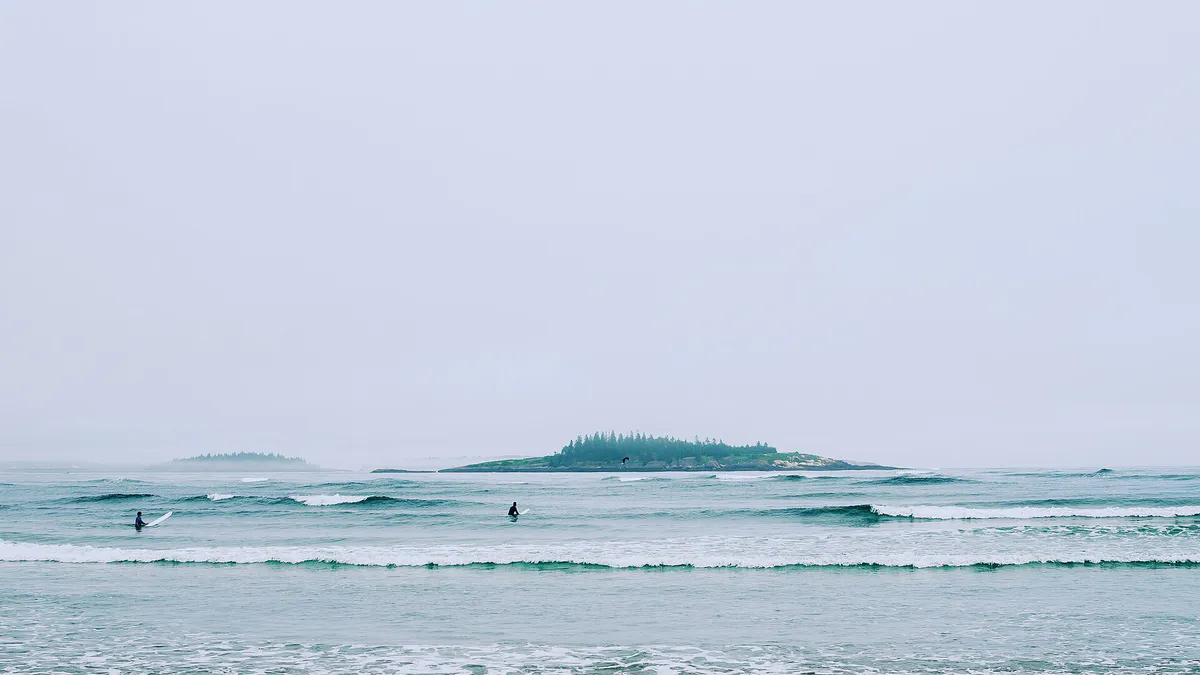





The Gulf of Maine runs cold all summer, often in the low to mid 50s on the outer coast even in July. Penobscot Bay in June sits colder still. Moosehead Lake, even in August, stays cool at depth. These are not swimming-pool temperatures. They are cold-shock temperatures. In water that cold, your body can be incapacitated within minutes before hypothermia even sets in, a danger that affects even strong swimmers.
That is why the single most important thing about a PFD is not what it is made of or how many pockets it has. It is whether you are wearing it when you go in. A life jacket stowed under your kayak hatch does nothing. A comfortable, well-fitting PFD that you actually wear from the moment you put the kayak in the water is the one that keeps you safe.
We reviewed the best PFDs and life jackets for Maine’s conditions: sea kayaking on Casco Bay and the Penobscot coast, flatwater paddling on Sebago and Moosehead, kayak fishing on the Allagash and Kennebec, paddleboarding on lakes, and paddling with kids. The picks below cover every major use case, from budget recreational vests to purpose-built fishing PFDs and women’s-specific fits.
| PFD | Price | Best For | High-Back Seat | Rating |
|---|---|---|---|---|
| Premium | Overall kayaking | Yes | 4.8 | |
| Mid-range | Kayak fishing | Yes | 4.7 | |
| Mid-range | Women's kayaking | Yes | 4.4 | |
| Budget | Recreational flatwater | Yes | 4.3 | |
| Mid-range | Experienced adults | Inflatable | 4.2 | |
| Budget | Kids | N/A | 4.5 |
Why Cold Water Changes the Calculation
Cold water shock hits within seconds of immersion. Your body involuntarily gasps, which can cause drowning before you even have a chance to think. Your muscles cool rapidly, and swimming ability drops fast in water below 60 degrees. Orientation and decision-making deteriorate.
The Gulf of Maine and Maine’s deep inland lakes stay cold long after air temperatures climb. The outer coast can stay below 55 degrees into July. Lake temperatures at depth on Moosehead stay cold all summer. Even on the Allagash and Kennebec rivers, snowmelt keeps water temperatures low through June.
What this means practically: paddling in Maine calls for a PFD worn on your body, not stowed. Inflatable PFDs (which deploy on immersion) are an option for experienced adult swimmers on calm water, but they come with real limitations detailed below. For recreational paddlers, kids, anyone who is not a strong swimmer, and anytime you are on exposed coastal water or moving rivers, a foam vest is the right tool.
Cold-water shock can cause involuntary gasping and loss of muscle control within seconds of immersion. In the Gulf of Maine or on cold inland lakes, a PFD stowed in your hatch or clipped to your deck will not reach you in time. Wear it.
How We Chose These
We evaluated each PFD against the situations Maine paddlers actually face, drawing on manufacturer specifications, verified retailer listings, expert kayaking reviews, and real user feedback.
Sea kayaking on the Maine coast: Casco Bay crossings, day trips along the Penobscot Bay islands, and downeast passages where you are dealing with tidal currents, cold water, boat traffic, and genuine exposure. A vest needs to be comfortable enough to wear all day and visible enough to matter if you need rescue.
Kayak fishing: The Kennebec, Moosehead, and countless smaller lakes. Anglers need pockets for tools and tackle, freedom of movement for casting, and a high-back design that clears the kayak seat. A vest that forces you to choose between wearing your PFD and fishing comfortably is a vest that gets left behind.
Women’s fit: Generic sizing puts foam in the wrong places. Women’s-specific PFDs keep the flotation where it matters without pinching, riding up, or compromising the high-back clearance kayak seats require.
Paddling with kids: Maine law requires children 12 and under to wear a USCG-approved PFD while on a watercraft underway. Kids will fight a vest that is uncomfortable. Fit, warmth, and ease of wear matter as much as the flotation rating.
Budget reality: Good PFDs exist at multiple price points. We included one budget option because not every recreational paddler needs a premium vest, but we are honest about where the tradeoffs land.
The PFDs We Recommend
NRS Ninja PFD, Best Overall
Premium
NRS Ninja PFD
Who it’s forBest overall kayaking PFD for Maine paddlers
Why we picked itLow-profile design with wide arm openings for unrestricted paddling strokes
Pros
- Compartmentalized front clamshell pocket with dual-entry zippers
- PFAS-free materials and recycled fabric
- Mesh back panel keeps you cool on long crossings
Know before you buy
- Premium price point, one of the more expensive vests here
- Front pocket slightly smaller than the previous Ninja model
The NRS Ninja is one of the most popular paddling PFDs on the water, and the design addresses the real frustrations paddlers have with high-performance vests. The arm holes are cut wide and low so your stroke never catches on the vest edge. The mesh back panel ventilates well on the long crossings between Casco Bay islands in July. The cross-chest cinch straps prevent the vest from riding up when you are bracing and rolling.
The front clamshell pocket has internal organization with dual-entry zippers, the kind of detail that matters when you are trying to grab a snack or your water bottle without taking your eyes off a tidal rip. The hand warmer pocket doubles as a spot for throw rope or webbing. The foam is PFAS-free and made with recycled materials, a spec that matters more now that the gear industry is reckoning with fluorinated chemicals in outdoor products.
The reflective accents are not just marketing. On a foggy morning on Penobscot Bay or a late return from a Sebago Lake paddle, being visible to powerboat traffic is meaningful. At a premium price point, the Ninja is the vest you buy when you paddle enough to care about quality.
Stohlquist Fisherman PFD, Best for Kayak Fishing
Mid-range
Stohlquist Fisherman PFD
Who it’s forBest fishing PFD for Maine kayak anglers
Why we picked itDual front tool pouch pockets big enough for tackle and tools
Pros
- High back flotation design clears most kayak seat backs
- USCG Type III approved
- Ergonomic torso shaping stays put when casting and reeling
Know before you buy
- Heavier than minimalist kayak vests, not ideal for athletic touring
- Tool pouches can snag fly lines when repositioning a rod
Most standard kayak PFDs fail anglers in the same two ways: pockets that are too small for real fishing gear, and foam panels that sit right where kayak seat backs hit. The Stohlquist Fisherman addresses both.
The dual front tool pouch pockets are genuinely large. Reviewers consistently note they hold full-size items like pliers, a boga grip, or a sandwich. That is not a given in fishing PFD design. The high back flotation is positioned to clear kayak seat backs without bunching or pushing you forward, which is the configuration you need to actually stay in the vest all day on a long float on the Kennebec or an Allagash lake section.
Stohlquist’s USCG Type III approval and ergonomic torso shaping give you real freedom of movement for casting and reeling. This is not a generic vest with an angling label on it; it is built around the actual biomechanics of kayak fishing. The graded sizing system means you can get a fit that actually works over a wading jacket or insulation layer, which matters in April on Maine lake systems when the water is still dangerously cold.
Real tradeoff: if you are a touring paddler who wants a light, minimal vest, this is not it. The extra pockets add weight and bulk. For pure paddling, the NRS Ninja is better. For fishing, the Stohlquist is the pick.
Before buying any PFD for kayak use, check whether the back foam panel clears your specific seat back. Most high-quality kayak PFDs are now designed with high-back cut patterns for this reason. A vest that bunches against the seat will ride up constantly and get left behind. The Stohlquist Fisherman, the Stohlquist Cruiser, and the NRS Ninja all use high-back designs for this reason.
Stohlquist Cruiser Women’s PFD, Best Women’s Fit
Mid-range
Stohlquist Cruiser Women's PFD
Who it’s forBest women's PFD for Maine kayaking and canoe tripping
Why we picked itWomen-specific graded sizing with softer, form-fitting foam pads
Pros
- High back placement clears kayak seat backs without bunching
- Adjustable shoulder pulls for a dialed fit over layers
- Mesh back and padded shoulders stay comfortable on multi-hour paddles
Know before you buy
- Not designed for technical rescue or whitewater
- Fewer storage pockets than fishing-specific vests
A unisex PFD is typically a men’s PFD with a range of sizes. The foam panels are placed for a male torso. On a woman, that means flotation in the wrong places, straps that do not seat correctly, and a vest that is either too loose in the shoulders or too tight across the chest. On a long paddle across Moosehead Lake or a multi-day Allagash trip, that discomfort compounds into a vest that comes off.
The Stohlquist Cruiser Women’s uses graded sizing and softer, form-fitting foam pads designed for a female torso. The high back placement is tuned to clear kayak seat backs without riding up. Adjustable shoulder pulls let you set the fit precisely over different thicknesses of base layers and insulation. Reviewers confirm that arm mobility for a full forward stroke is unimpeded.
This is not a minimalist race vest. It is a workhorse touring PFD designed to stay on your body comfortably for the long crossings of Sebago Lake or the day-long island paddles in Casco Bay. No technical rescue features, and fewer pockets than a fishing vest, but those are not what this vest is for.
Onyx MoveVent Dynamic, Best Budget
Budget
Onyx MoveVent Dynamic Paddle Vest
Who it’s forBest budget PFD for recreational flatwater paddling
Why we picked itMesh lower back specifically designed to clear canoe and kayak seat backs
Pros
- Ventilated channels make it comfortable on warm summer days
- USCG approved for paddling
- Good entry-level pick for recreational flatwater paddling
Know before you buy
- Less comfortable and durable than NRS or Stohlquist vests
- Minimal storage compared to higher-end vests
- Better brands are worth the step up if you paddle regularly
The honest truth about entry-level PFDs: most are uncomfortable enough that paddlers leave them in the car. The Onyx MoveVent Dynamic clears the minimum bar that actually matters. It has a mesh lower back cut to clear most kayak and canoe seat backs, ventilated channels that keep you from roasting on flat summer days on Sebago, and USCG approval for paddling use.
It is a recommended value PFD that offers essential comfort, ideal for recreational paddlers seeking just the basics. There is minimal storage. The foam and stitching are noticeably below the quality of Stohlquist or NRS. Experienced paddlers are consistent that better brands are worth the step up if you paddle regularly.
But if you need a vest for the family canoe on Moosehead or occasional flatwater days on Sebago Lake and you are not ready to spend mid-range prices, this is the pick that will actually be worn. A comfortable budget PFD worn is better than a premium vest left on shore.
Mustang M.I.T. 100 Inflatable PFD, For Experienced Adult Paddlers
Mid-range
Mustang M.I.T. 100 Inflatable PFD
Who it’s forExperienced adult swimmers on flat or sheltered coastal water
Why we picked itLow-profile membrane inflatable, far less bulk than a foam vest
Pros
- Auto and manual inflation, provides 28 lbs of buoyancy when deployed
- Comfortable to wear all day, so it is more likely to actually stay on
- Good choice for experienced adult swimmers on flatwater and sheltered coastal touring
Know before you buy
- Not approved for children under 16, non-swimmers, or whitewater
- Relies on a CO2 cartridge that must be checked and re-armed after any deployment
- A foam vest is the safer choice in cold water for all but strong swimmers
The Mustang M.I.T. 100 is the kind of PFD you wear all day on a sea kayak tour of the Penobscot Bay islands and genuinely forget is there. Its membrane inflatable design sits low-profile and out of the way of your stroke until it deploys, so there is far less bulk and heat than a foam vest. On a hot July day paddling the outer islands of Casco Bay, that is meaningful, a vest you will actually keep on all day instead of taking off when it gets warm.
When deployed, it provides 28 pounds of buoyancy. The system inflates on submersion with auto and manual options, plus an oral inflation backup.
Read these limitations before buying one. Inflatable PFDs generally are not approved for children under 16. They are not appropriate for non-swimmers or weak swimmers, because an inflatable only helps if it deploys correctly and you stay composed enough to use it during cold-water shock. They are not for whitewater paddling. The US Coast Guard states inflatable PFDs are not approved for whitewater or high-impact water activity. And because they rely on a CO2 cartridge, you have to check and re-arm them, where a foam vest simply works.
For the right paddler, an experienced adult swimmer on flatwater or sheltered coastal touring, this is an excellent option. For paddling with kids, for anyone who is not a strong swimmer, for river paddling, or for open ocean exposure, a foam vest is the correct tool.
Inflatable PFDs are not approved for children under 16, non-swimmers, or whitewater paddling. They depend on a CO2 cartridge that you must inspect and re-arm after any deployment. They do not satisfy Maine’s requirement for children 12 and under to wear a USCG-approved PFD while on a vessel underway. A foam vest is the correct tool for kids, weak swimmers, and any moving water.
Old Town Inlet Jr. Kids’ Life Jacket, Best for Children
Budget
Old Town Inlet Jr. Kids' Life Jacket
Who it’s forBest kids' PFD for Maine's lakes and coastal paddling
Why we picked itAdjustable shoulder, side, and waist straps fit growing kids and layered clothing
Pros
- Fleece-lined hand warmer pocket keeps small hands warm in cool Maine air
- Zippered chest pocket for small essentials
- Durable nylon construction
Know before you buy
- Sizing is youth-specific, check the weight rating before ordering
- Hand warmer pocket is for comfort, not cold-water immersion protection
Maine law requires children 12 and under to wear a USCG-approved PFD at all times while on a watercraft that is underway, including kayaks and paddleboards (Maine Title 12, section 13068-A, effective January 1, 2026, which raised the age from 10). The vest must be worn, a spare PFD in the bow compartment does not satisfy the requirement for a child.
The Old Town Inlet Jr. earns the pick because of adjustability. Growing kids and layered clothing are a moving target. The shoulder, side, and waist straps let you dial the fit across a range of sizes and layers, so the vest that fits in June over a swimsuit also fits in September over a fleece. The nylon construction holds up to the kind of abuse kids give gear. The fleece-lined hand warmer pocket is a practical detail, Maine mornings on Moosehead or Sebago are cold even in summer, and a kid with cold hands fights their vest.
Check the weight rating carefully before ordering. Youth PFDs are sized by weight, not age, and a correct fit means the vest cannot be pulled up past the chin when you lift by the shoulders.
Check the fit by lifting the PFD from the shoulders with the child wearing it. If the vest slides up past the chin or covers the face, it is too big or not cinched properly. A properly fitted PFD stays in place. Do this check every time you put a child in a life jacket, not just when you buy it. Kids grow, and the fit you verified last August may not be right this June.

USCG PFD Types: What Matters for Maine Paddling
The US Coast Guard classifies PFDs by type, and the type determines when and where you can legally and safely use them.
Type III is what you want for recreational kayaking, canoeing, fishing, and SUP in calm to moderate conditions. Type III PFDs are designed for conscious wearers in calmer, inland, or near-shore waters where there is a reasonable chance of quick rescue. They provide at least 15.5 lbs of buoyancy and are designed for extended wear. Every foam vest in this guide that carries a USCG Type III approval is a correct choice for Maine’s lakes, rivers, and sheltered coastal paddling.
Type V designates special-use PFDs that must be worn to count as approved. Many high-performance kayaking and rescue vests are Type V. If you buy a Type V vest and stow it, it does not satisfy the USCG carriage requirement.
Inflatable PFDs carry a USCG designation but are not Type III foam vests, and high-performance paddling vests like the NRS Ninja are often Type V, which means they only count as approved when worn (exactly what you should do anyway). The limitations above apply regardless of which specific approval an inflatable carries. For children 12 and under, Maine law makes a USCG-approved foam PFD worn on the body the safe and compliant choice, not an inflatable.
What to Bring
- Wear your PFD from the moment the boat is in the water, not just when conditions look rough
- Fit check: can you lift the vest up past the child's chin? Tighten or resize
- Foam vests for kids, non-swimmers, and anyone paddling moving water
- Confirm Maine's current youth life-jacket age requirement before your trip
- High-back PFD for kayak use, clears the seat back without bunching
- Rinse your PFD in fresh water after saltwater paddling and let it air dry
- Check the inflation cartridge date on inflatable PFDs before every paddle season
- Cold water (below 60F): dress for the water temperature, not the air temperature
Where to Paddle in Maine and What That Water Temperature Means
Casco Bay sea kayaking: Portland Harbor out to the Calendar Islands and Eagle Island. Open Atlantic water, boat traffic, tidal currents, and surface temperatures that stay cold through July on the outer bay. A foam vest is non-negotiable here. The crossing from South Portland to Peaks Island takes you through active ferry traffic. See our full guide to sea kayaking the Maine coast for route planning.
Penobscot Bay: Some of the finest sea kayaking in the Northeast, from Camden out to the Fox Islands and beyond. Cold water, consistent southwesterly winds in the afternoon, and real tidal rips between islands. This is for experienced paddlers who know the water and tides; it is not the place for an untested inflatable or a budget vest that does not fit.
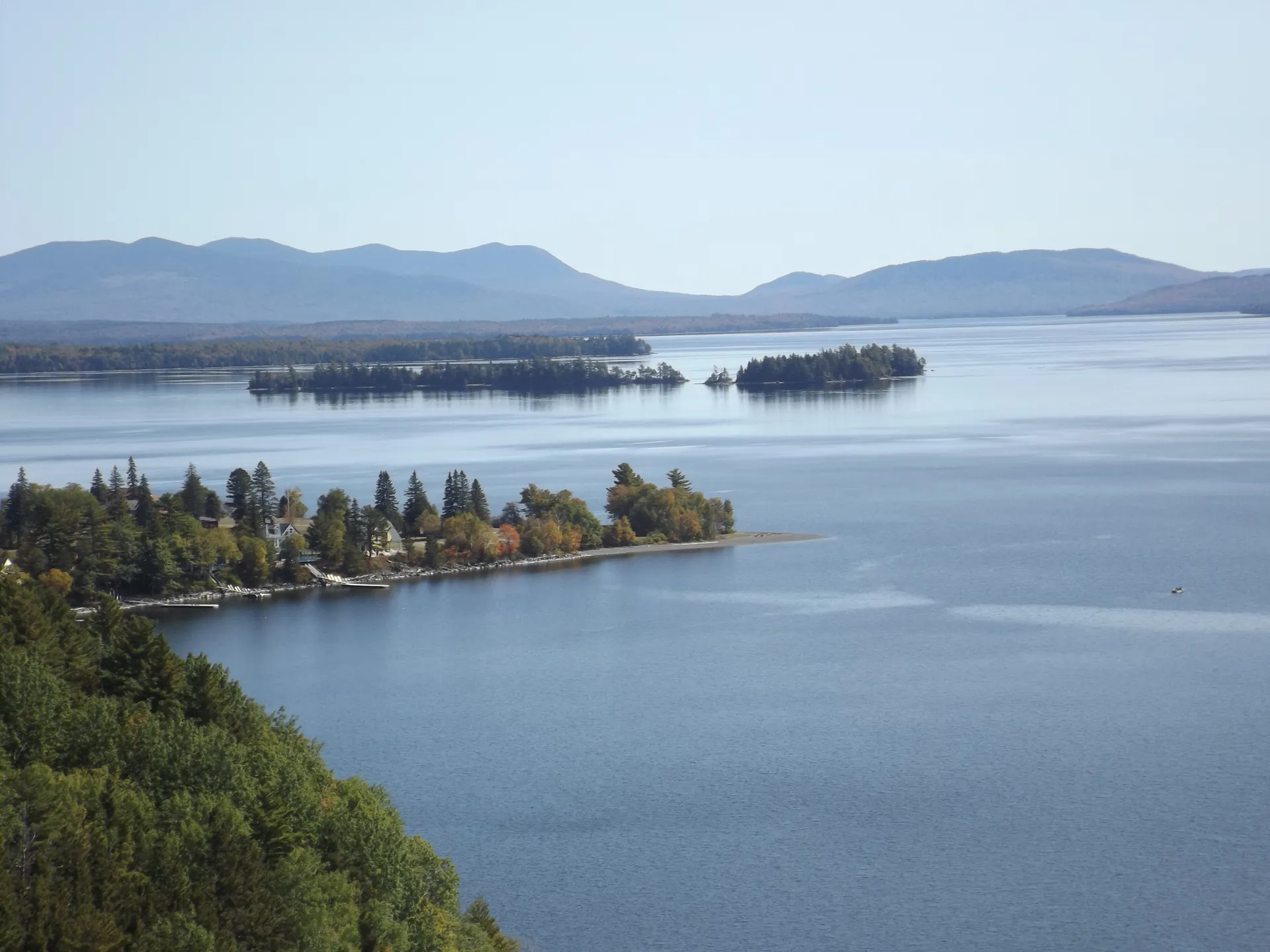
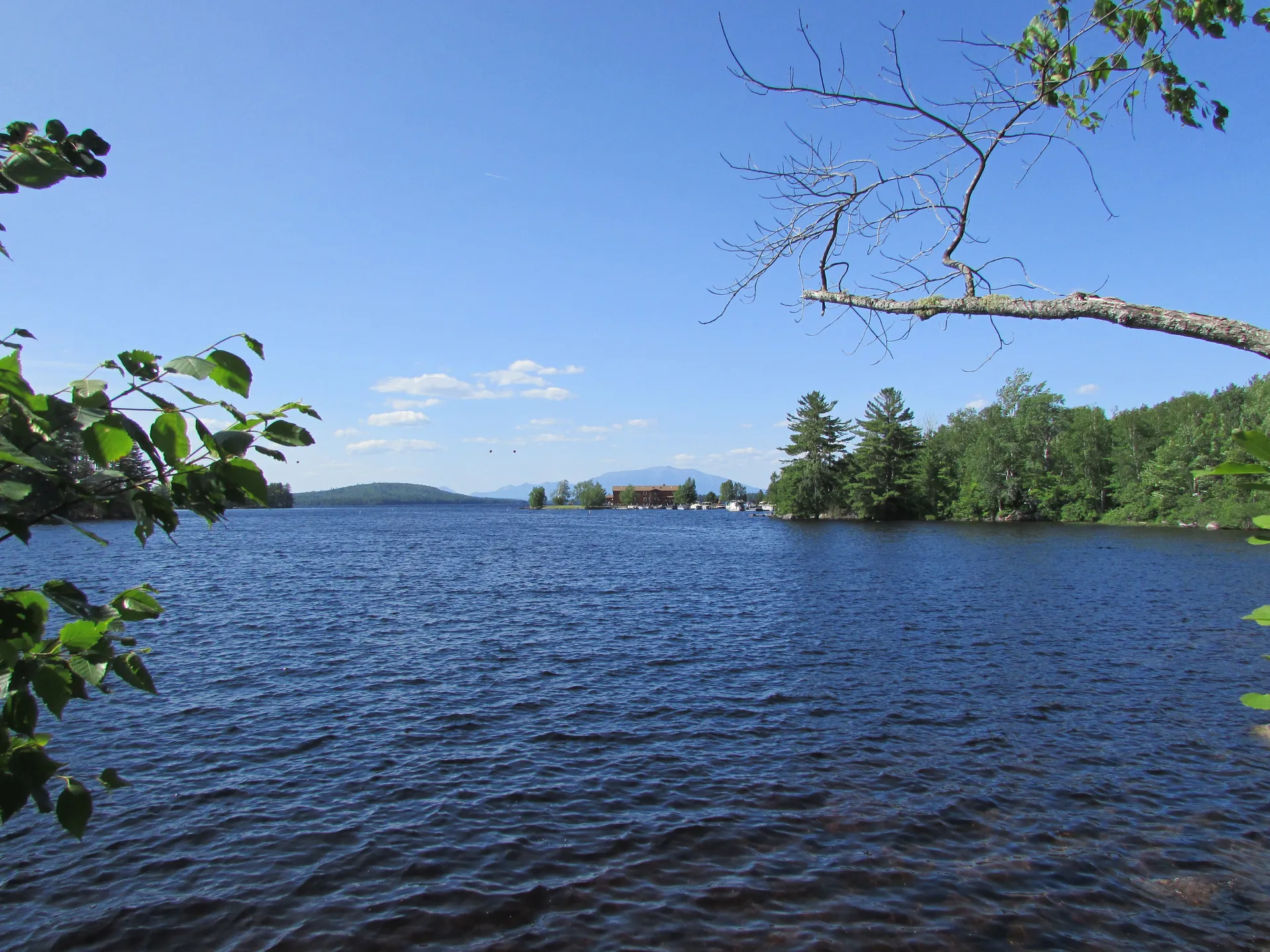
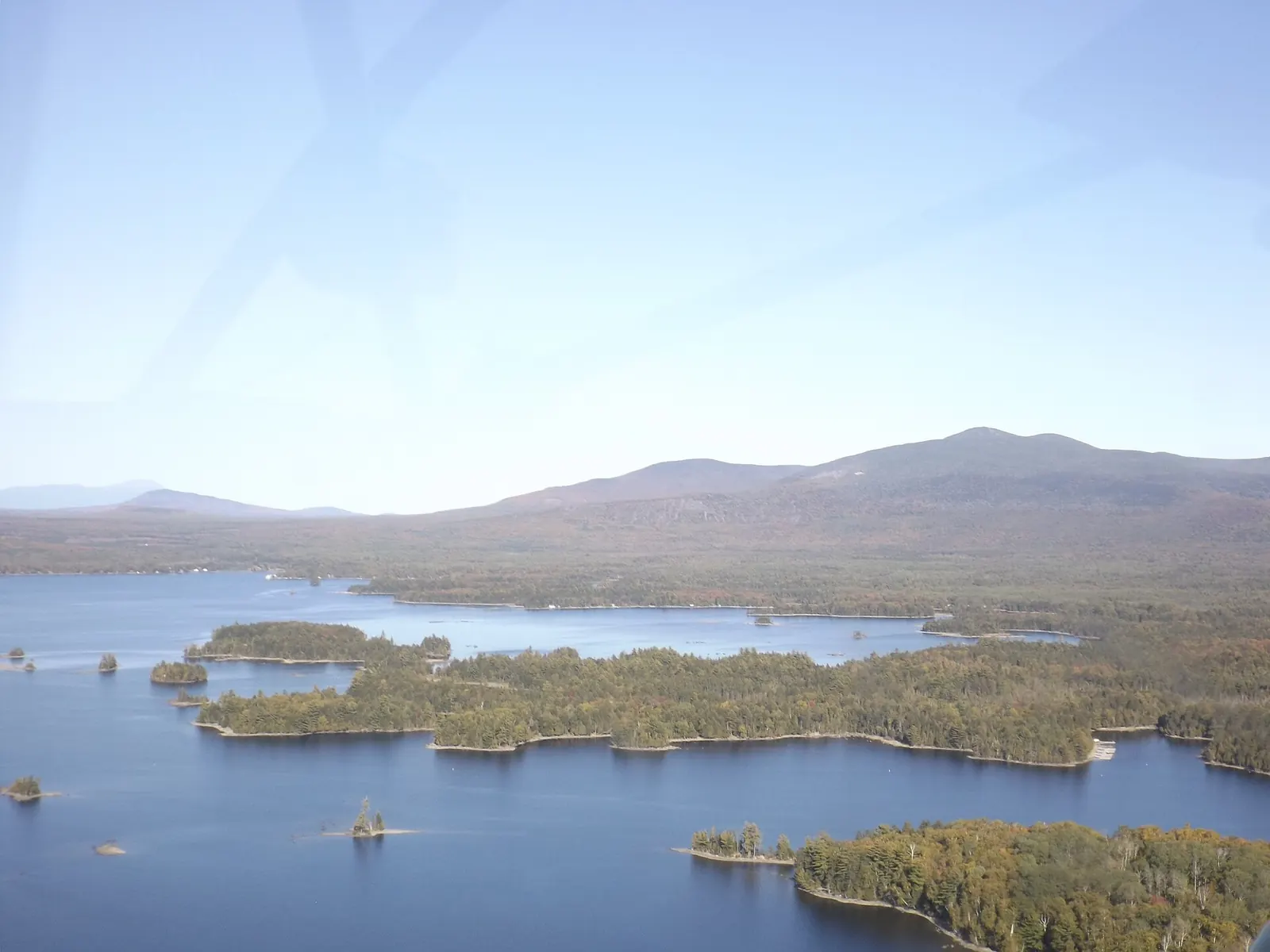
Moosehead Lake: The largest lake in Maine and one of the largest in the eastern United States. Open water crossings of two miles or more are common, and afternoon thunderstorms build fast over the mountains to the west. Moosehead’s depth keeps water temperatures cool all summer. Paddlers doing the lake’s touring routes should treat this water with the same respect as coastal Maine.
Sebago Lake: The most popular boating lake in southern Maine. Water temperatures are more moderate than Moosehead, but it is a busy, open lake with significant motorboat traffic. See our guide to Sebago Lake swimming and boating for access points and conditions.
Allagash Waterway: The Allagash canoe route runs through remote wilderness with cold river water, modest rapids on several sections, and no quick rescue available. A quality foam vest that you wear is the standard here. Inflatable PFDs are not appropriate for river sections with any whitewater.
For more destinations, our best kayaking spots in Maine guide covers lakes, rivers, and coastal routes across the state with access, skill requirements, and seasonal timing.
The most common cold-water accident pattern: a paddler launches on a warm June day in shorts and a t-shirt, the air feels fine, and then they go in. On Penobscot Bay in June, the water is in the low 50s. Cold shock hits in seconds. Dress for the water temperature with a wetsuit or drysuit whenever the water is below 60 degrees, regardless of air temperature, and always wear your PFD.
Gear to Pair with Your PFD
A PFD is your first layer of safety on Maine waters. The rest of your kit matters too. See our best kayaking gear guide for Maine lakes and coast for paddles, dry bags, bilge pumps, and safety gear. If you run the Allagash or another lake-and-river canoe route, our best canoe gear guide for Maine covers paddles, portage packs, and tie-downs for tripping. If you paddle a board, our best paddle boards for Maine lakes guide covers SUP requirements and the best boards for Maine’s varied water. For kayak anglers, our best fishing gear guide for Maine covers rods, reels, and tackle for lake and river trout, bass, and landlocked salmon.
What is Maine's life jacket law for children?
Maine law requires children 12 and under to wear a USCG-approved PFD at all times while on any watercraft that is underway, including kayaks, canoes, and paddleboards. This is set in Maine Title 12, section 13068-A, effective January 1, 2026, which raised the age from 10 to 12. A spare PFD stowed in the boat does not satisfy the requirement, it must be worn.
Do I need a PFD on a paddleboard in Maine?
Yes. Maine law requires every vessel to carry one USCG-approved PFD per person on board, and paddleboards count as vessels. Children 12 and under must wear theirs. Adults are not always legally required to wear a PFD on a SUP, but on cold Maine water, particularly on any open coastal or lake paddling, wearing it is the safe choice.
What does USCG Type III mean for a kayaking PFD?
Type III PFDs provide at least 15.5 lbs of buoyancy and are designed for conscious wearers in calmer or inland waters where rescue is reasonably quick. They are the standard for recreational kayaking, canoeing, fishing, and SUP. Type III vests are not designed to turn an unconscious wearer face-up in rough water, for that you need a Type I or II. For most Maine recreational paddling, Type III is the correct category.
Are inflatable PFDs safe for kayaking in Maine?
Inflatable PFDs are an option for experienced adults on calm water but carry important restrictions. They are not approved for children under 16, non-swimmers, or any whitewater paddling, and they rely on a CO2 cartridge that must be checked and re-armed after any deployment. For coastal Maine and inland lake paddling by experienced adult swimmers, they are a viable option. For anyone else, a foam vest is the right choice.
What is cold-water shock and why does it matter for Maine paddlers?
Cold-water shock is an involuntary physiological response to sudden immersion in cold water, below 60 degrees Fahrenheit. It causes an uncontrollable gasp reflex, hyperventilation, and rapid loss of muscle control that can cause drowning within the first minute, before hypothermia sets in. Maine's coastal and inland lake temperatures stay well below 60 degrees through early summer. Wearing a foam PFD keeps your head above water during those first critical seconds when your body cannot respond normally.
What size PFD do I need for my child?
Youth PFDs are sized by weight, not age. Most kids' vests are rated for weight ranges like 30 to 50 lbs or 50 to 90 lbs. Fit check: put the vest on your child, tighten all straps snugly, then lift the vest by the shoulders. If it slides up past the chin or covers the face, it is too big or not cinched tightly enough. Do this every time, not just when you buy, because kids grow between seasons.