



Maine ice fishing is its own world. The lakes freeze deep, the season runs from late December through March on the big water and longer on the small ponds, and the species mix is unlike anywhere else in the country. Brook trout in the western mountains. Salmon and lake trout on Sebago and Moosehead. Perch and pickerel on every pond with a name. You can ice fish two miles from a paved road on a state-stocked pond or snowmobile six miles back to a remote lake where you might not see another flag flying all day.
The gear matters in Maine more than most places because the cold is real, the ice gets thick, and an underbuilt setup means a long, miserable day. This guide is the setup we would build, drawn from gear specs, what Maine ice anglers actually run, and aggregated owner reviews, plus the order to buy it in if you are starting from zero.
| Category | Pick | Price | When to Buy |
|---|---|---|---|
| Tip-Ups | Jack Traps (Made in Maine)Search Amazon | Budget | First |
| Auger (powered) | Eskimo Mako 43ccSearch Amazon | Premium | Second |
| Auger (hand) | Strikemaster Lazer 6Search Amazon | Mid-range | Alternative to powered |
| Shelter | Eskimo QuickFish 3iSearch Amazon | Premium | Third |
| Rod/Reel Combo | Clam Jason Mitchell ProSearch Amazon | Mid-range | First (for jigging) |
| Sonar (Flasher) | Vexilar FL-8SESearch Amazon | Premium | After basics |
| Sonar (LCD) | Garmin Striker 4 IceSearch Amazon | Premium | Beginner alternative |
| Safety Suit | Striker Ice PredatorSearch Amazon | Premium | Early/late season |
| Skimmer | Frabill Pro ThermalSearch Amazon | Budget | First |
The Order to Buy In
If you are building an ice fishing kit from scratch, do not buy everything at once. Spend money in this order:
- Tip-ups + bait + skimmer + manual ice spud or pre-drilled hole access, gets you fishing
- Rod and reel combo for jigging, adds active fishing alongside flags
- Ice auger (hand or powered, your call), independence
- Shelter, comfort and longer fishing days
- Sonar, sees what is under you, sets you apart from random fishermen
- Safety suit, early and late ice insurance
You can ice fish productively for years with just steps 1 to 3. Steps 4 to 6 are upgrades, not requirements.
1. Tip-Ups: Buy Maine-Made Jack Traps
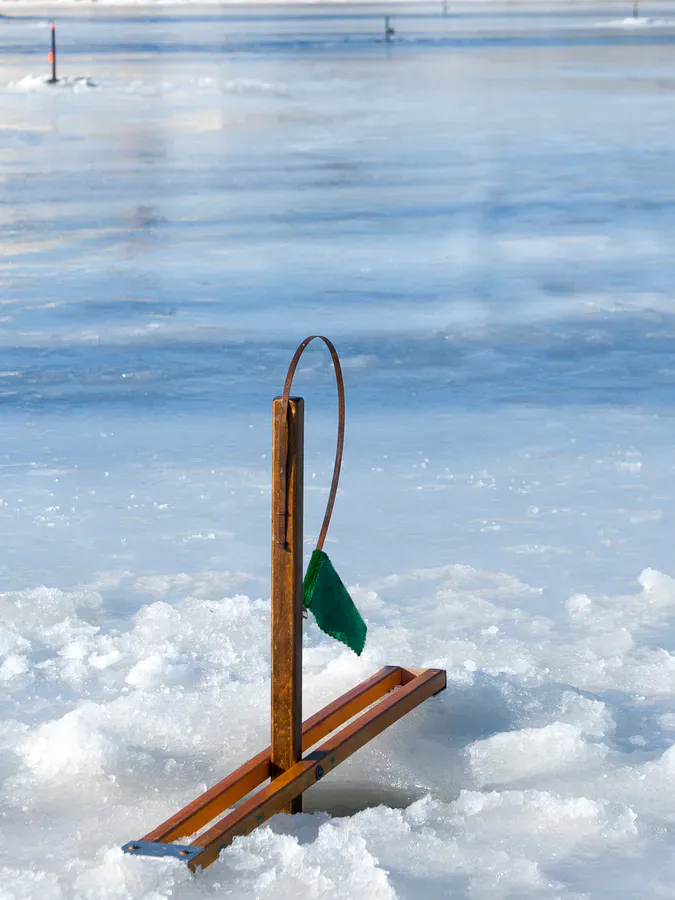
A tip-up holds a baited line through the ice. When a fish takes the bait, the flag pops up and you sprint across the ice to set the hook. Maine allows 5 tip-ups per angler.
The standard advice is “any tip-up works.” That is true at zero degrees. At minus 15 with wind, the cheap plastic frame ones freeze, the spool drags, and you miss fish.
Jack Traps makes tip-ups in Pittsfield, Maine, by hand. Round wooden frames that resist freeze-up, smooth-spinning spools, replaceable parts. Owners report running the same set for a decade or more and having them still work like new. They cost more than the plastic ones at the box store. They are worth it.
#1Premium
Jack Traps Round Wooden Tip-Ups (Set of 5)
Who it’s forBest Maine-made tip-ups
Why we picked itHand-built in Maine by people who actually ice fish here
Pros
- Round wooden frame stays watertight and resists freeze-up
- Smooth-spinning spool resets without sticking
- Replaceable parts; will last decades with basic care
Know before you buy
- More expensive than mass-market plastic tip-ups
- Less compact than collapsible designs
If the local-Maine angle does not matter to you and you want the cheapest-functional option, HT Polar Lite tip-ups work fine and are about $20 each. They do not last as long but they catch fish.
Tip-Up Line and Hooks
- Tip-up line: 30 to 50 lb braided Dacron with a 12 to 18 inch fluorocarbon leader (10-15 lb test for trout, 20 lb for pickerel and lake trout)
- Hooks: Octopus or circle hooks, size 4 to 8 for trout and salmon, size 1/0 for pickerel
- Bait: Live shiners are standard. Get them at a Maine bait shop the morning of (or hold them in an aerated bucket overnight). Native species only, see Maine inland fisheries regs.
2. Rod and Reel Combo for Jigging
Setting a row of tip-ups and then sitting in a chair is one way to fish. Active jigging while you wait is more fun and often more productive, especially for perch, crappie, and stocked trout.
The Clam Jason Mitchell Pro Series Combo is the right beginner setup. Sensitive rod tip, smooth reel pre-spooled with braid, ready to fish out of the package. It is a natural fit for white perch and stocked rainbow trout on Maine ponds.
#2Mid-range
Clam Jason Mitchell Pro Series Rod and Reel Combo
Who it’s forBest beginner ice fishing combo
Why we picked itSensitive rod tip detects light winter bites
Pros
- Smooth reel handles braid and mono
- Comes pre-spooled and ready to fish
- Solid value for jigging perch, crappie, and stocked trout
Know before you buy
- Not heavy enough for lake trout
- Cosmetic wear shows fast
For lake trout and bigger salmon, step up to a medium-heavy ice rod with 8 to 10 lb fluorocarbon. Pflueger and Shimano make solid mid-range options around $90.
3. The Auger Decision
The auger is the most expensive single purchase and where most beginners get stuck. There are three real options:
Option A: Powered Gas Auger
#3Premium
Eskimo Mako 43cc Power Ice Auger
Who it’s forBest value gas auger
Why we picked itCuts a clean 8-inch hole through 24 inches of ice in under 30 seconds
Pros
- 33cc engine starts in cold weather without flooding
- Quantum blades stay sharp through a full season
- Reasonable price for a real powered auger
Know before you buy
- Heavier than electric augers (about 28 lb)
- Gas-powered means fuel mixing and winterization
When to choose: You fish often, drill many holes, and want speed.
The Eskimo Mako 43cc is the value pick. Its 43cc two-cycle engine is paired with an ice auger; check the listing for the included auger diameter. Blade condition, ice thickness and temperature affect drilling performance.
The downside: 28 pounds, fuel mixing, winterization, two-stroke smell on your clothes. If you only fish 4 to 6 times a season, this is more auger than you need.
Option B: Electric / Lithium Cordless
When to choose: You want power but hate gas engines.
The K-Drill 8.5 attaches to a high-torque cordless drill (Milwaukee M18 Fuel or DeWalt FlexVolt). Drills 10+ holes per battery. Lighter, quieter, no fuel. Total setup is around $430 for the auger plus you need a $200+ drill if you do not have one.
Option C: Hand Auger
#4Mid-range
Strikemaster Lazer Hand Auger 5 inch
Who it’s forBest hand auger for hike-in or backup
Why we picked itSharpest hand-auger blade on the market
Pros
- Narrow 5-inch cutting path keeps hand drilling efficient
- Lightweight (around 7 lb) and packs easy
- No fuel, no battery, no breakdowns
Know before you buy
- Drilling 24 inches of late-season ice is real work
- 5-inch hole is too small for big lake trout
When to choose: You hike or snowmobile to remote ponds, or fish under 12 inches of ice, or only fish a few times a year.
The Strikemaster Lazer 5-inch is the right hand auger for hike-in Maine ponds when pack weight matters. Its narrow cutting path keeps the hand-drilling effort down, and there is no fuel system or battery to fail. Drilling 24 inches of late-season ice with a hand auger is work, but it gets you to remote ponds.
Even if you own a power auger, keep a hand auger in the truck. Power augers fail. Carb issues, dead batteries, broken pull cords. A backup hand auger is the difference between a saved trip and driving home.
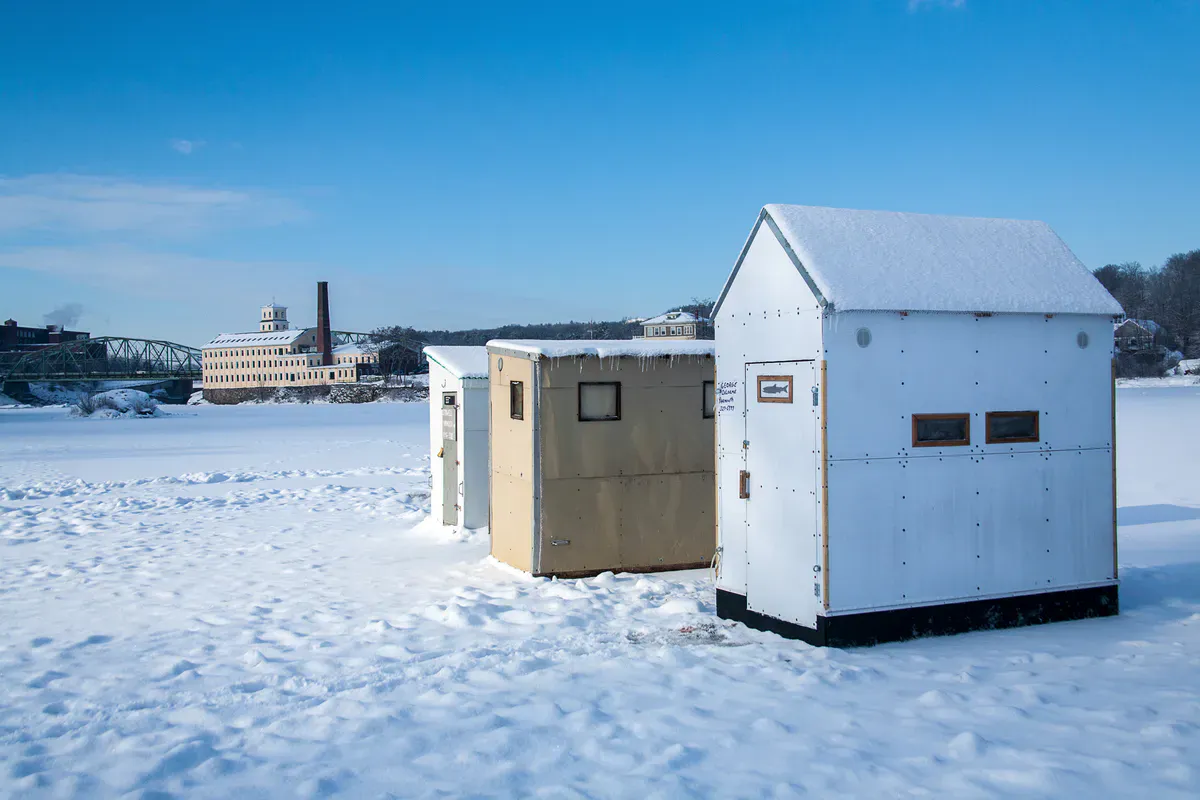
4. The Shelter Question
You do not need a shelter to ice fish in Maine. Plenty of locals fish from a folding chair with their tip-ups spread out, walking between holes to stay warm. But a shelter changes the experience. You can sit out a snow squall. You can fish at minus 10 with a small propane heater and stay genuinely comfortable. You can keep electronics from icing over.
The Eskimo QuickFish 3i is the pop-up we recommend. Sets up in about a minute. Insulated walls hold heat from a Mr. Heater Buddy. Pulls on its sled floor. Three anglers fit comfortably.
For solo fishermen, the QuickFish 2i is the same design sized down. For 4+ anglers, the QuickFish 6i (also called the Eskimo Eskape 2400) is the bigger version.
#5Premium
Eskimo QuickFish 3i Insulated Shelter
Who it’s forBest pop-up shelter for Maine ice fishing
Why we picked itSets up in 60 seconds, no tools or assembly
Pros
- Insulated walls hold heat from a small propane heater
- Three angler capacity is real (4 anglers fit if friendly)
- Sled-style floor lets you pull it on the ice
Know before you buy
- Bulky to store off-season
- Single door
Pair the shelter with a Mr. Heater Buddy (4,000 to 9,000 BTU). Carbon monoxide is the real risk inside a shelter, keep a small CO detector inside and crack a vent.
5. Sonar (Eventually)
Sonar finds fish you would not otherwise know are there. It also keeps you from fishing dead water for two hours.
Vexilar FL-8SE (Best Flasher)
Flashers are faster to read than LCD sonar. The display updates in real time and shows the fish moving up to your jig. The Vexilar FL-8SE is the standard Maine ice fishermen use. Takes 10 minutes to learn the basics and a season to read it well.
Garmin Striker 4 Ice Fishing Bundle (Best LCD)
For people new to sonar, the Striker 4 LCD is easier to read. GPS mode lets you mark productive holes for next time. Works as a summer boat unit. About $100 cheaper than the Vexilar.
Sonar transducers go in the same hole as your line. Drop the transducer, dial in the depth, then drop the jig next to it. You will see the jig as a separate line on the screen, when a fish moves toward it, you know exactly when to set the hook.
6. Safety Gear (Non-Negotiable for Early and Late Ice)
People go through the ice in Maine every year. The lakes do not freeze evenly. Springs, currents, and warm-water inflows leave thin spots even in February. Two pieces of gear are non-negotiable:
Floating Bib and Jacket
A Striker Ice Predator (or similar Striker / Frabill / Clam floating suit) is rated to keep you afloat in fishing position if you go through. They are not cheap, but they are the difference between a recovery and a fatality.
Maine ice safety guidelines: 4 inches of clear blue ice for foot travel, 6 inches for snowmobile, 8 to 12 inches for a side-by-side, 12+ inches for a truck. White or honeycomb ice is half the strength of clear blue ice. Always check ice with a spud bar as you walk. Never trust ice in inlets, outlets, or near springs.
Ice Picks
#6Budget
Frabill Ice Safety Picks
Who it’s forCritical ice fishing safety gear
Why we picked itLets you punch into the ice edge and pull yourself out
Pros
- Wears ready around your neck on a lanyard
- Low-cost safety gear for lakes that freeze unevenly
Wear ice picks around your neck on a lanyard. If you go through, they let you punch into the ice edge and pull yourself out. They cost $15. Frabill makes the standard. Get them.
Spud Bar
A spud bar (heavy steel chisel on a wooden handle) is for testing ice as you walk on first ice. Chip the ice ahead of you with one solid hit. If it breaks through, do not go that way. Carry a spud bar any time you walk on ice less than 6 inches thick.
Where to Fish in Maine (Quick Picks)
The guide above is gear, but where you fish matters as much as what you use. Quick picks by region:
- Southern Maine: Sebago Lake for salmon and lake trout, Crystal Lake and Sabbathday Lake for stocked trout
- Midcoast: Megunticook Lake for pickerel and perch, Quantabacook Lake for trout
- Western Mountains: Rangeley Lake and Mooselookmeguntic for landlocked salmon, Aziscohos for togue
- Moosehead Region: Moosehead Lake for lake trout, Brassua and Indian Pond for salmon
- Downeast: Graham Lake for pickerel, Donnell Pond for togue
- Aroostook: Long Lake (St. Agatha) for salmon, Square Lake for togue
Maine Department of Inland Fisheries and Wildlife publishes a free ice fishing guide every fall with regulations, stocking reports, and lake-specific rules. Get a copy.
Bait, Licenses, and Regs
- License: Maine resident annual fishing license is around $25. Non-resident is around $65. 1-day, 3-day, and 7-day options exist. Buy online at the Maine DIFW site.
- Bait: Live bait is restricted to native species in some waters. Read the regs for your specific lake.
- Limits: Vary by lake. Sebago salmon are restricted, some western lakes are catch-and-release, some ponds are 5 trout per day. Always check current regs.
What gear do I need to start ice fishing in Maine?
Absolute minimum: 5 tip-ups (Jack Traps), bait, an ice skimmer, a license, and access to a pre-drilled hole or a way to make one. Add a hand auger (Strikemaster Lazer) for independence. Add a rod and reel combo (Clam Jason Mitchell Pro) for jigging while you wait. That setup costs about $400 total and will catch fish for years.
Do I need a power auger or is a hand auger enough?
For under 12 inches of ice, a hand auger is fine and more portable. For mid-season Maine ice (18 to 30 inches), drilling 5+ holes by hand is significant work. If you fish 8+ times a year and drill multiple holes per trip, the time savings of a power auger justify the cost. For occasional fishermen, a sharp hand auger is enough.
How thick does the ice need to be in Maine?
4 inches of clear blue ice for foot travel, 6 inches for a snowmobile, 8 to 12 inches for a side-by-side or ATV, 12+ inches for a truck. These are minimums for clear blue ice. White or honeycomb ice is roughly half strength. Always check with a spud bar and avoid inlets, outlets, springs, and currents.
Is ice fishing in Maine worth doing without a shelter?
Yes. Plenty of Maine ice fishermen fish without a shelter on short or warm days. A folding chair, layered clothing, and a thermos of coffee get you through a 4-hour session in the 20s. Shelters become essential when temperatures drop below 10°F, on windy days, or for full-day sessions.
When does ice fishing season start in Maine?
First ice on smaller ponds usually arrives in mid to late December. Big lakes (Sebago, Moosehead) freeze in early to mid January. The general law fishing season for ice fishing is January 1 through March 31 on most waters, with some lakes opening earlier or extending later. Always check current Maine DIFW regulations for your specific water.