
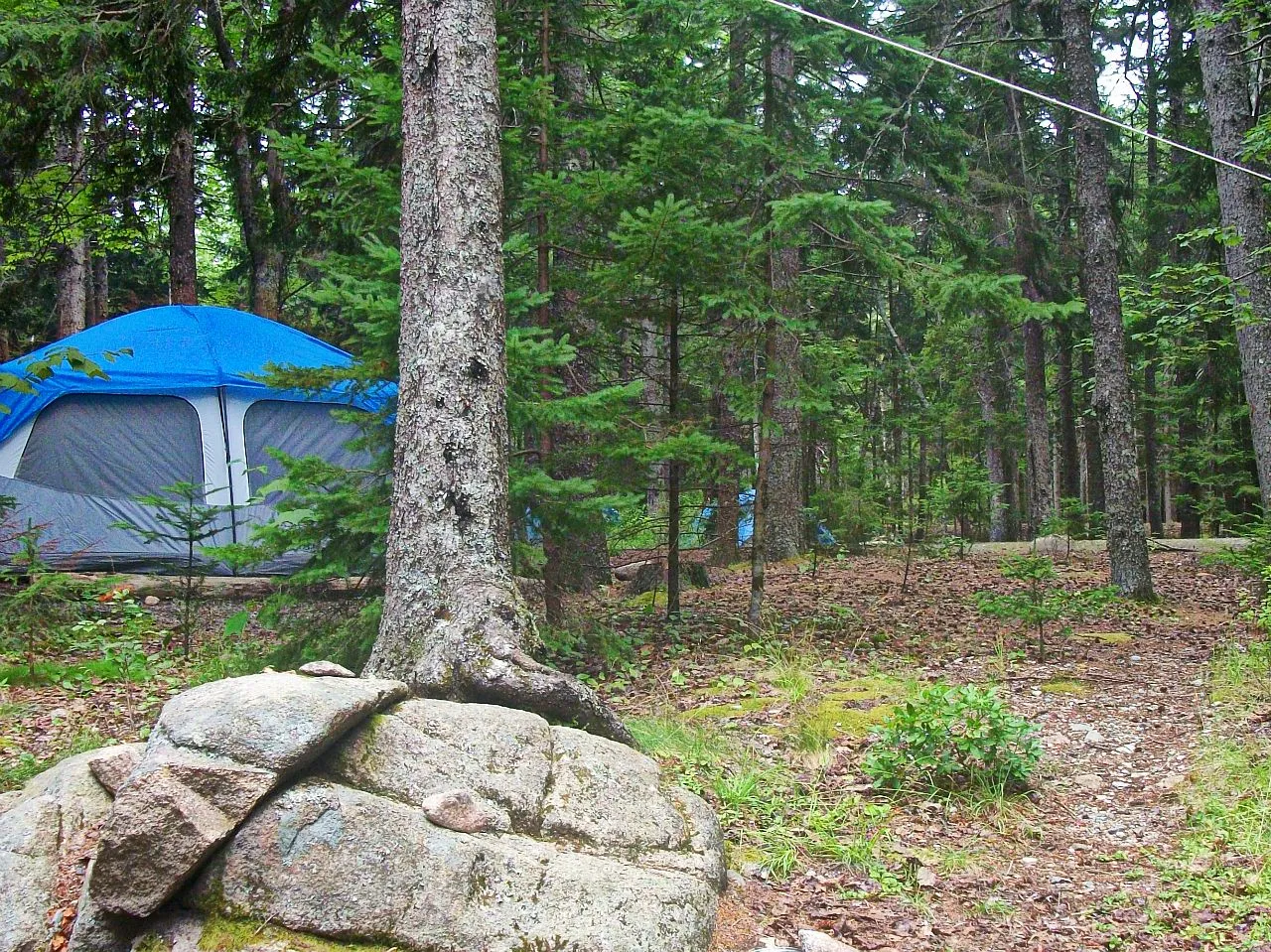














Somewhere around the third day into the 100-Mile Wilderness, the reality of where you are sinks in. There is no cell service. There has not been any since you parked at the trailhead, and there will not be any until you reach Abol Bridge days from now. The nearest road is hours of bushwhacking away through black spruce and blowdowns. This is the longest stretch of the Appalachian Trail with no resupply and no easy exit, and it is one of the most genuinely remote places east of the Mississippi. If something goes wrong out here, you are on your own until you can get a signal to someone who can help.
Now picture a turned ankle on the rooty descent off White Cap, two and a half days from the nearest trailhead, with a partner who cannot carry you out. Or a paddler pinned on a sweeper in the Allagash Wilderness Waterway miles from the nearest ranger station. These are the situations a satellite communicator is built for. The device sends your message and your coordinates over a satellite network from places where a phone shows zero bars, which in northern Maine is almost everywhere. A two-way unit lets you text family that you are running a day late so nobody calls the wardens by mistake. A beacon lets you trigger a coordinated rescue when it is the real thing.
We compared seven devices for the parts of Maine where the map goes blank: the 100-Mile Wilderness, the North Maine Woods, the Allagash, Baxter State Park, and the deep gorges of Gulf Hagas. Six of them do two-way messaging plus SOS, and one is a pure personal locator beacon with no subscription and no texting at all. We weighed coverage network, messaging, battery life, weight, and how each one actually behaves under Maine’s tree canopy.
| Device | Price | Two-Way | Subscription | Rating |
|---|---|---|---|---|
| Premium | Yes | Required | 4.6 | |
| Mid-range | Yes | Required | 4.6 | |
| Premium | Yes | Required | 4.6 | |
| Mid-range | Yes | Required | 4.6 | |
| Mid-range | Yes | Required | 4.6 | |
| Mid-range | Yes | Required | 4.6 | |
| Premium | Yes | Required | 4.6 |
How We Chose
We judged each device against the real conditions in northern Maine, not bench specs. The first filter was the satellite network. The Iridium constellation provides true global, pole-to-pole coverage, and it holds up well at Maine’s northern latitudes and under heavy tree canopy. Globalstar, which the SPOT X uses, has thinner coverage the farther north you go and can be slower to acquire a fix in deep woods. For the North Maine Woods and the Allagash specifically, an Iridium device is the safer bet, and most of our picks use it.
The second filter was the difference between two-way messaging and SOS-only. A two-way satellite communicator lets you send and receive normal text messages, which is what keeps a small problem from becoming a search. You can tell your contact you are a day behind, ask a question, or confirm a pickup time. A personal locator beacon (PLB) like the ACR ResQLink 400 does one thing: it transmits an emergency distress signal on the dedicated 406 MHz search-and-rescue frequency. That is it. No texting, no check-ins, no “running late.” We treat these as two different tools, and we explain below who each one suits.
The third filter was subscription versus no subscription. Every two-way communicator on this list requires an active service plan to send or receive anything, including its SOS. Plans vary by provider and by how many messages you send, and several offer flexible month-to-month options for people who only head into the backcountry a few times a season. The ResQLink 400 is the outlier: it is a PLB with no subscription ever, because its 406 MHz signal goes to the government-operated Cospas-Sarsat system rather than a private messaging service. The last filters were battery life on a single charge, weight on a long carry, and durability against Maine rain, mud, and granite.

The Devices We Recommend
Garmin inReach Mini 2, Best Overall
Premium
Garmin inReach Mini 2
Who it’s forBest overall satellite communicator for Maine backpacking
Why we picked itTwo-way texting and interactive SOS over the Iridium network with global coverage
Pros
- Tiny at 3.5 oz, clips to a pack strap and disappears
- Long battery life in 10-minute tracking, days of real-world use
- TracBack routing helps you retrace your steps in the deep woods
Know before you buy
- On-device typing is slow, you really want the Garmin Messenger app
- Requires an active subscription to send or receive anything
The inReach Mini 2 is the device we clip to a pack strap on nearly every trip into the North Maine Woods. It does two-way texting and interactive SOS over the Iridium network, which means you can hold a real conversation with the International Emergency Response Coordination Center and with your own contacts from anywhere your sky is reasonably open. At about 3.5 ounces it is small enough that you forget it is there until you need it, which is exactly the point.
Battery life is the quiet strength. In a 10-minute tracking interval it lasts for days of genuine backcountry use, enough to cover a full traverse of the 100-Mile Wilderness without a recharge if you are disciplined about settings. The Mini 2 also adds onboard navigation features the original Mini lacked, including TracBack routing, which retraces your inbound path. That matters when fog drops on a logging-road maze and every spur looks the same.
The honest weaknesses are two. Typing on the device itself is slow and tedious, so you really want to pair it with the Garmin Messenger app on your phone and tap out messages on a real keyboard. And like every two-way unit here, it does nothing without an active subscription. Plans exist at several tiers, and you can suspend them in the off-season, but you cannot send a single message, including SOS, on an inactive plan.
Garmin inReach Messenger, Best Value Two-Way
Mid-range
Garmin inReach Messenger
Who it’s forBest value two-way communicator for messaging
Why we picked itTwo-way texting and SOS over Iridium with very long battery life
Pros
- Can charge your phone in a pinch as a backup power bank
- Messaging-first design pairs smoothly with the phone app
- Lower cost than the Mini 2 for the same core messaging
Know before you buy
- No built-in topo maps or onboard navigation like the Mini 2
- Requires an active subscription
The inReach Messenger strips the Mini 2 down to its core job, two-way texting and SOS over Iridium, and comes in at a lower price for it. If your priority is staying in touch and being able to call for help rather than navigating, this is the smarter buy. It is messaging-first by design and pairs cleanly with the Garmin Messenger app, so composing a note to your contact back home is as easy as a normal text.
The battery is the headline. The Messenger runs even longer than the Mini 2 on a charge, which is reassuring on a week-long Allagash trip where outlets do not exist. It can also push a charge back into your phone in an emergency, turning it into a small backup battery when your phone is the thing you need to keep alive for photos of the takeout or your downloaded maps.
What you give up is onboard navigation. There are no topo maps and no GPS routing on the device itself the way there is on the Mini 2 or the GPSMAP 67i. For a trip where you carry paper maps or navigate on your phone anyway, that is no loss. As with all of these, it requires an active subscription to do anything at all.
Garmin GPSMAP 67i, Best All-in-One
Premium
Garmin GPSMAP 67i
Who it’s forBest all-in-one GPS and communicator for serious navigation
Why we picked itFull handheld GPS with topo maps plus inReach two-way messaging and SOS
Pros
- Enormous multi-day battery life on a single charge
- Bright sunlight-readable screen for routefinding in the North Maine Woods
- One device replaces both a GPS unit and a communicator
Know before you buy
- Big and heavy compared to a dedicated messenger
- Premium price plus the inReach subscription
The GPSMAP 67i is the device for people who want one unit to both navigate and communicate. It is a full-featured handheld GPS with preloaded topo maps and a bright, sunlight-readable screen, and it carries the same inReach two-way messaging and SOS over Iridium that the Mini 2 has. For routefinding off-trail in the North Maine Woods, where logging roads branch endlessly and trails go faint, having real maps on a dedicated screen instead of draining your phone is a genuine advantage.
The battery life is exceptional, running for many days of multi-day use on a single charge, far longer than a phone could ever manage while navigating. That endurance, combined with the rugged build, makes it the unit we would hand to someone leading a group through Gulf Hagas and the surrounding gorge country, where reliable navigation matters as much as the ability to call for help.
The trade-off is size and cost. The 67i is large and heavy next to a Mini 2 or a Messenger, and it is a premium-priced device on top of the inReach subscription it also requires. If you do not need standalone maps and navigation, a smaller messenger does the communication job for less weight and money. If you do, the 67i replaces two devices with one.
ACR Bivy Stick, Best for Occasional Trips
Mid-range
ACR Bivy Stick
Who it’s forBest for occasional trips with flexible subscription plans
Why we picked itTwo-way messaging and SOS with flexible no-contract monthly plans
Pros
- Compact and light, runs entirely through your phone app
- Pay-as-you-go billing suits occasional backcountry trips
- Doubles as a small backup battery for your phone
Know before you buy
- Relies on the phone app for almost everything, little standalone function
- Messaging is slower to send than the Garmin units in our experience
The Bivy Stick earns its place on flexibility. It does two-way messaging and SOS, and its plans are genuinely no-contract and month-to-month, so you can activate service for a single September trip into the Allagash and pause it the rest of the year. For someone who heads into no-service country only a few times a season, that pay-as-you-go structure can be the difference between owning a communicator and owning nothing.
It is compact and light, and it runs almost entirely through the Bivy phone app rather than its own screen, which keeps the hardware simple. Like the Garmin Messenger, it can also act as a small backup battery for your phone, a useful second job when your phone holds your maps and your message drafts. For a casual backcountry user who wants a safety net without a year-round commitment, it covers the basics well.
The catch is that dependence on the app. With little standalone function, a dead or broken phone leaves the Bivy Stick badly hobbled, so phone battery discipline matters more with this unit than with a device that has its own keyboard. In our experience messages also send a touch slower than on the Garmin units. It still requires an active plan, just one you can turn on and off freely.
ZOLEO, Best for Automatic Network Switching
Mid-range
ZOLEO
Who it’s forBest for automatic cell-to-satellite messaging
Why we picked itTwo-way messaging and SOS with a dedicated phone number and email address
Pros
- Switches automatically between cell, WiFi, and satellite to save on satellite messages
- Rugged and water resistant, simple to operate
- Strong, predictable subscription value for the messaging you get
Know before you buy
- Needs the paired phone app for full messaging
- No onboard maps or navigation
The ZOLEO does two-way messaging and SOS, and its standout trick is how it routes those messages. The paired app switches automatically between cell, WiFi, and satellite, using the cheapest available path. On the drive up Route 11 toward the woods you are texting over cell at no satellite cost, and the moment you lose service it switches to satellite without you doing anything. Over a season of trips that adds up, because you only spend satellite messages when you truly need them.
ZOLEO also gives you a dedicated phone number and an email address, so your contacts reach you the same way every time whether you are in town or deep in the Allagash Wilderness Waterway. The hardware is rugged and water resistant and the operation is about as simple as these devices get, which makes it a good pick for someone who wants reliable communication without a learning curve.
The limitations are familiar. Full messaging needs the paired phone app, and there are no onboard maps or navigation, so this is a communicator rather than a GPS. It also requires an active subscription, though the plans deliver predictable value for the message volume most backpackers actually use.
SPOT X, Best Standalone Keyboard
Mid-range
SPOT X
Who it’s forBest standalone messenger with a real keyboard
Why we picked itTwo-way messaging with a full physical keyboard, no phone required to type
Pros
- Dedicated SPOT number so contacts can text you directly
- Built-in compass and basic navigation
- Standalone operation works without pairing a phone
Know before you buy
- Uses the Globalstar network, which has weaker coverage at far northern latitudes than Iridium
- Bulkier than the Garmin and ZOLEO units
The SPOT X is the two-way device for people who do not want to depend on a phone at all. It has a full physical QWERTY keyboard built into the unit, so you compose and send messages directly on the device without pairing anything. It comes with its own dedicated SPOT number that contacts can text, and it includes a built-in compass and basic navigation. For a trip where you want your communicator to be entirely self-contained, the standalone keyboard is a real and rare advantage.
It does two-way messaging and SOS like the others, and the keyboard makes longer real-time conversations far less painful than thumbing through an on-screen keyboard on a tiny unit. We reach for it when we want a backup that does not care whether the phone survives the trip.
The reason it is not our top pick comes down to the network. The SPOT X runs on Globalstar rather than Iridium, and Globalstar’s coverage thins out at the far-northern latitudes that define the North Maine Woods and the Allagash. In practice that can mean longer waits to acquire a satellite and a less reliable fix under heavy canopy than an Iridium device gives you. It is also bulkier than the Garmin and ZOLEO units, and it requires an active subscription.
ACR ResQLink 400, Best No-Subscription Beacon
Premium
ACR ResQLink 400
Who it’s forBest no-subscription SOS-only beacon
Why we picked itPersonal locator beacon with no subscription ever required
Pros
- Transmits on the 406 MHz government search-and-rescue frequency for a fast response
- Built-in GPS and a 121.5 MHz homing signal for rescuers
- Multi-year battery shelf life, you set it and forget it
Know before you buy
- SOS only, there is no two-way or routine messaging at all
- You cannot tell anyone you are simply running late
The ResQLink 400 is a different animal from everything above, and it is the one device here that needs no subscription, ever. It is a personal locator beacon, not a messenger. When you deploy it, it transmits a distress signal with your GPS coordinates on the 406 MHz frequency monitored by the Cospas-Sarsat search-and-rescue satellite system, the same network used by aviation and marine emergency beacons. It also broadcasts a 121.5 MHz homing signal that rescuers can track on the final approach to your exact location.
Because it talks to a government rescue system rather than a private messaging service, there is no monthly fee and no plan to keep active. You register it once for free, then it sits in your pack with a multi-year battery shelf life until the day you hope you never have. For a minimalist who wants pure emergency insurance and nothing else, that simplicity is the whole appeal: nothing to forget to renew, nothing to suspend, nothing to pay.
The flip side is just as absolute. The ResQLink does SOS and only SOS. There is no two-way texting, no daily check-in, no way to tell your family you are simply a day late or to ask whether a stream is fordable. If you activate it, you have declared a life-or-death emergency and committed to a full rescue response. For anyone who wants to communicate as well as call for help, pair this thinking with one of the two-way units above instead.
For every two-way communicator on this list except the SPOT X, pair the device with its companion app over Bluetooth and type your messages on your phone’s keyboard. It is far faster and less frustrating than thumbing through an on-device interface, and it lets you use your phone’s contacts and map. On the subscription side, do not just default to the cheapest tier. Match the plan to your trip: a flexible month-to-month plan suits a few trips a season, while a frequent backpacker often saves with an annual plan. Confirm your plan is active and your SOS contacts are loaded before you leave the trailhead, because none of these will send anything on a suspended plan.
A satellite communicator is not a substitute for planning. Before any trip into the 100-Mile Wilderness, the Allagash, or the North Maine Woods, leave a written itinerary with a reliable person: your route, your campsites, your turnaround times, and exactly when to call for help if you are overdue. Carry a map and compass and know how to use them. Devices fail, batteries die, and a thick canopy or a deep gorge like Gulf Hagas can block the sky you need to reach a satellite. And remember the hard limit of a PLB: the ResQLink 400 is SOS-only. It can summon a rescue, but it cannot tell anyone you are merely running late, so it does not replace a filed trip plan or a two-way device for routine check-ins.
We tell every client the same thing before we push off into the Allagash: the device lives on your body, not in your pack. A communicator zipped inside a dry bag at the bottom of a canoe does you no good when the canoe is upside down and you are in the water. Clip it to your PFD or your shoulder strap where you can reach it one-handed, and send a check-in message from camp every single night so someone always knows where you slept.
Two-Way Communicator or PLB?
The single most important choice here is not which brand but which type. A two-way satellite communicator (the Garmin units, Bivy Stick, ZOLEO, and SPOT X) lets you send and receive normal messages and trigger an interactive SOS where you can describe your emergency to a response center. The cost is a required subscription. A personal locator beacon (the ResQLink 400) does nothing but broadcast a distress signal to a government rescue network, with no subscription and no messaging.
If you want to stay in touch, coordinate pickups, tell family you are fine, and prevent a late arrival from turning into a needless search, you need a two-way device. If you want the simplest, most foolproof, fee-free emergency insurance and you are comfortable with a tool that only screams for help, the PLB is bombproof. Many experienced parties carry a two-way unit for everyday communication and consider a PLB as a backup beacon that works even if the messaging device fails. For most Maine backpackers and paddlers, a single Iridium-based two-way communicator is the right starting point.
If you are still building out a complete kit, the best headlamps for Maine and the best daypacks for Maine cover the rest of the essentials, and the winter hiking gear guide covers the cold-weather complications that drain device batteries fast.
Do I really need a satellite communicator in Maine?
For the deep backcountry, yes. The 100-Mile Wilderness, the Allagash Wilderness Waterway, the North Maine Woods, and large parts of Baxter State Park have no cell service at all, and the nearest road can be days away. A satellite communicator works where your phone shows zero bars, lets you call for a coordinated rescue, and lets a two-way unit tell family you are fine so a late arrival does not trigger an unnecessary search. For short day hikes near towns with reliable cell coverage, it matters far less.
What is the difference between a satellite communicator and a PLB?
A two-way satellite communicator, like the Garmin inReach Mini 2 or the ZOLEO, sends and receives normal text messages and triggers an interactive SOS, but it requires a paid subscription. A personal locator beacon (PLB), like the ACR ResQLink 400, only transmits an emergency distress signal to a government search-and-rescue network. A PLB needs no subscription, but it does SOS only, with no texting, no check-ins, and no way to say you are running late.
Does a PLB like the ResQLink 400 need a subscription?
No. The ResQLink 400 transmits on the 406 MHz frequency monitored by the government-operated Cospas-Sarsat satellite system, so there is no monthly fee and no plan to keep active. You register it once for free, then it sits ready with a multi-year battery shelf life. The trade-off is that it is SOS-only, so it cannot send routine messages the way a subscription-based two-way device can.
Which satellite network is best for northern Maine?
Iridium. The Iridium constellation provides true global, pole-to-pole coverage that holds up well at Maine's northern latitudes and under heavy tree canopy. The Garmin inReach devices, the ACR Bivy Stick, and the ZOLEO all use it. The SPOT X uses Globalstar, whose coverage thins out the farther north you go and can be slower to get a fix in the deep woods of the Allagash and North Maine Woods.
How long do these batteries last on a long trip?
It depends on settings and tracking interval, but the messaging-focused units are built for multi-day trips. The Garmin inReach Messenger and the GPSMAP 67i have especially long battery life, often covering more than a week of careful use on a single charge. To stretch any device, use a longer tracking interval, turn off features you are not using, and keep it warm in cold weather, since cold drains lithium batteries faster. Several units can also recharge from a power bank, and a couple can charge your phone in a pinch.
Where can I use these in Maine and where might they struggle?
They work across the 100-Mile Wilderness, the Allagash, the North Maine Woods, and Baxter, anywhere you have a reasonable view of the sky. They struggle where the sky is blocked: under a very dense conifer canopy, deep inside a steep-walled gorge like Gulf Hagas, or down in a tight ravine. In those spots, step into a clearing or move to higher, more open ground and give the device a minute or two to acquire a satellite before sending.