

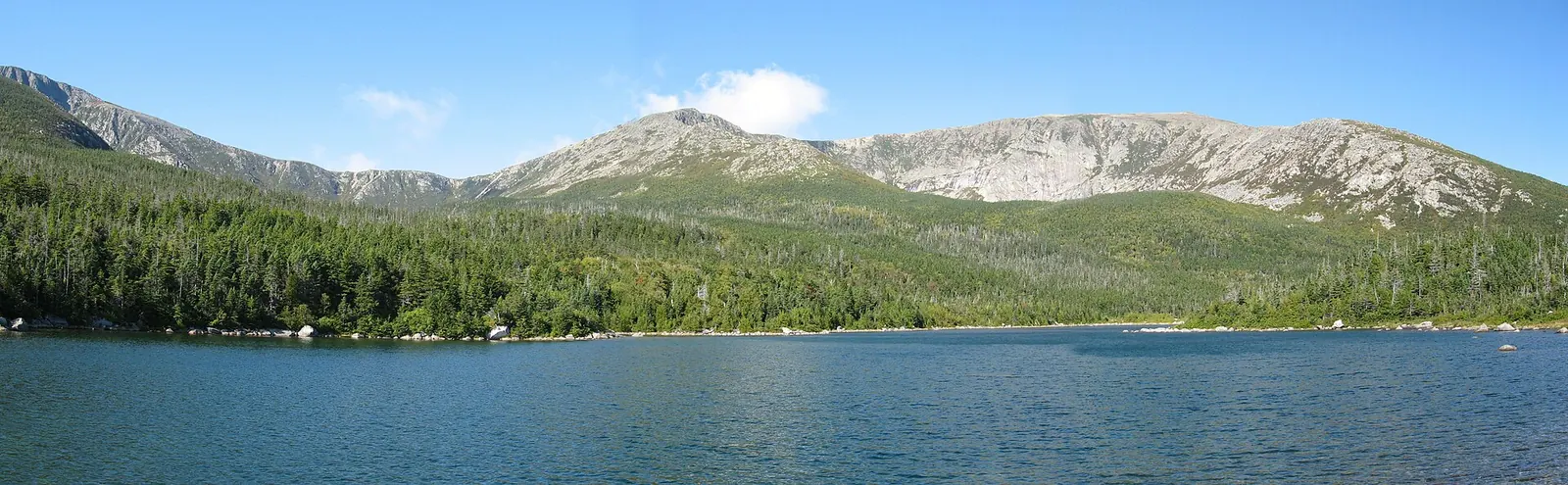
Maine has a lot of outdoor lists. Most are written by people who flew in for a weekend. This one is not. These are thirty experiences that reward you for being here, things you cannot do anywhere else or cannot do as well anywhere else. Some take an hour. Some take a week. Together they are a real outdoor life in this state.
Work through them at whatever pace you want. Some people do a handful a year. Some pick one per season. If you grew up here, you have probably done a third of these without calling them a bucket list. Call them that now. They deserve the label.
The List at a Glance
| # | Adventure | Category | Season | Difficulty | Region |
|---|---|---|---|---|---|
| 1 | Sunrise on Cadillac Mountain | Coastal | Oct-Mar | Easy | Downeast / Acadia |
| 2 | Ocean Path + Thunder Hole | Coastal | All | Easy | Downeast / Acadia |
| 3 | Popovers at Jordan Pond House | Coastal | May-Oct | Easy | Downeast / Acadia |
| 4 | Tide walk at Pemaquid Point | Coastal | All | Easy | Midcoast |
| 5 | Marginal Way walk in Ogunquit | Coastal | All | Easy | Southern |
| 6 | Bold Coast Trail cliff walk | Coastal | May-Oct | Moderate | Downeast |
| 7 | West Quoddy Head Light | Coastal | All | Easy | Downeast |
| 8 | Schoodic Point wave watching | Coastal | All | Easy | Downeast |
| 9 | Lobster roll at a coastal shack | Coastal | May-Oct | Easy | Coastal |
| 10 | Windjammer sail from Camden | Coastal | Jun-Sep | Easy | Midcoast |
| 11 | Mount Katahdin summit | Mountain | Jun-Oct | Hard | North Woods |
| 12 | Beehive iron rungs | Mountain | May-Oct | Moderate | Downeast / Acadia |
| 13 | Bigelow Range ridge traverse | Mountain | Jun-Oct | Hard | Western Mtns |
| 14 | Sugarloaf alpine zone | Mountain | Jun-Oct | Moderate | Western Mtns |
| 15 | Tumbledown Mountain pond loop | Mountain | Jun-Oct | Moderate | Western Mtns |
| 16 | Table Rock in Grafton Notch | Mountain | May-Oct | Moderate | Western Mtns |
| 17 | Borestone twin summits | Mountain | May-Oct | Moderate | North Woods |
| 18 | Swim at Sebago Lake | Water | Jun-Sep | Easy | Southern |
| 19 | Smalls Falls tiered pools | Water | Jun-Sep | Easy | Western Mtns |
| 20 | Coos Canyon plunge pool | Water | Jun-Sep | Easy | Western Mtns |
| 21 | Moxie Falls 90-foot drop | Water | May-Oct | Easy | Kennebec Valley |
| 22 | Gulf Hagas canyon | Water | Jun-Oct | Hard | North Woods |
| 23 | Moose at Sandy Stream Pond | Wildlife | May-Oct | Easy | North Woods |
| 24 | Puffins from Boothbay Harbor | Wildlife | May-Aug | Easy | Midcoast |
| 25 | Whale watch from Bar Harbor | Wildlife | Jun-Sep | Easy | Downeast |
| 26 | Migrating hawks at Agamenticus | Wildlife | Sep-Oct | Easy | Southern |
| 27 | 100-Mile Wilderness backpack | Wilderness | Jun-Sep | Hard | North Woods |
| 28 | Allagash canoe trip | Wilderness | Jun-Sep | Hard | North Woods |
| 29 | Appalachian Trail finish at Katahdin | Wilderness | Jun-Sep | Hard | North Woods |
| 30 | Camp at Baxter State Park | Wilderness | May-Oct | Moderate | North Woods |
Coast and Ocean
1. Sunrise on Cadillac Mountain
From October 7 to March 6, Cadillac Mountain is the first place in the continental United States to see the sun come up. The road to the summit opens before dawn. You can be sitting on pink granite with the Atlantic spreading out under you while most of the country is still in the dark.
You need a timed-entry vehicle reservation from late May through mid-October. Book at recreation.gov as soon as the window opens; they go fast. The rest of the year you just drive up. October is the sweet spot: first-in-the-country sunrise kicks in, foliage peaks on the slopes below, and the road is open without a reservation once the season closes.
Dress warmer than you think. The summit can be 20 degrees colder than Bar Harbor at 5 AM. Wind on exposed granite is the real story.
2. Ocean Path and Thunder Hole
The Ocean Path is the best short walk in Maine. Two miles flat along the cliff edge from Sand Beach to Otter Point, with the Atlantic pounding the pink granite the whole way. Thunder Hole is the highlight: a narrow slot in the rock where incoming waves compress, pop, and fire a column of water into the air.
Thunder Hole works best an hour or two before high tide, when the swell has some size. A flat calm day is disappointing. After a storm or in a southwest wind the boom is genuinely loud. Stand well back. The railing is there for a reason.
3. Popovers at Jordan Pond House
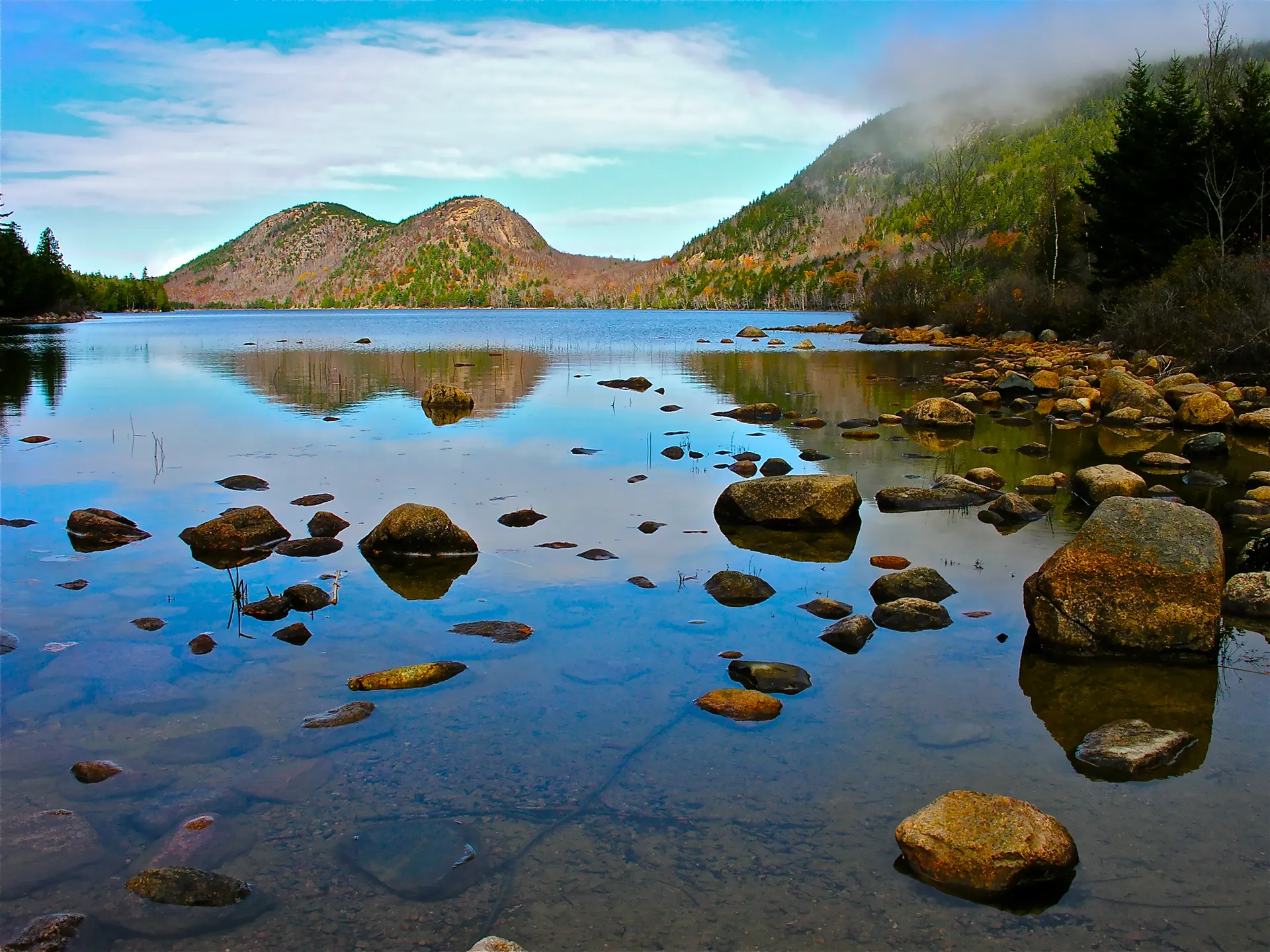
There is one place in Acadia where the food is part of the point. Jordan Pond House has been serving popovers with strawberry jam and tea on the lawn since the 1890s. You sit on Adirondack chairs looking across Jordan Pond at the Bubbles, those two round granite mounds at the far end. It is the most photographed view in the park for good reason.
Reservations are essential in summer. The seasonal closure runs late October to mid-May. Go at off-peak times (late afternoon on a weekday) if you can.
4. Tide Walk at Pemaquid Point
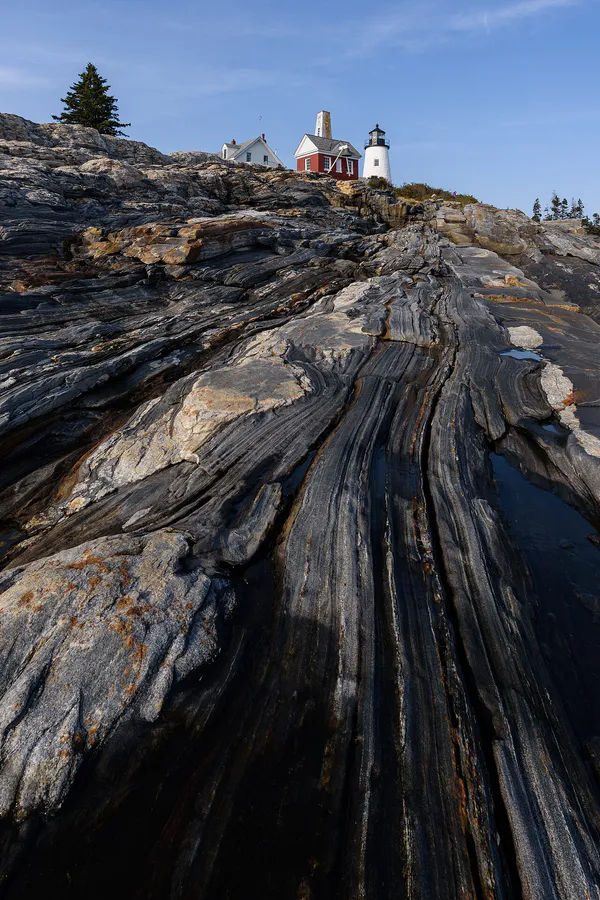
Pemaquid Point Lighthouse is the lighthouse on the Maine state quarter. What the quarter does not show is the rock. The headland is folded, tilted bedrock: striped slabs of metamorphic gneiss sloping into the surf. At low tide you walk out onto them and inspect tide pools holding sea stars, urchins, and green crabs.
Check the tide chart. Two hours either side of low is the window. Rogue waves wash the lower ledges in any sea. Watch what the ocean is doing before you step down.
5. Marginal Way in Ogunquit
The Marginal Way is a mile and a quarter of paved cliff path along the southern Maine coast. It connects Ogunquit village to Perkins Cove. On one side you have hedged rose gardens and hotel lawns; on the other, 40-foot drops into Atlantic surf and small cobble coves.
Dog-friendly off-season. Packed in July. The best time is a bright, cold day in late October with the oaks turning copper against the blue water. Pack a lobster roll from Perkins Cove and eat it on one of the benches facing south.
6. Bold Coast Trail
The Bold Coast Trail is the best coastal hiking in the eastern United States. Period. A 10-mile loop on Cutler Preserve land with roughly four miles of pure cliff edge: spruce and moss on one hand, 200 feet of vertical basalt and the Grand Manan Channel on the other. No crowds. No shops. Very few guardrails.
Plan six to seven hours for the full loop. Wear tread. Bring water. Cell service is gone. This is the closest thing to Ireland or Newfoundland in the Lower 48.
7. West Quoddy Head Light
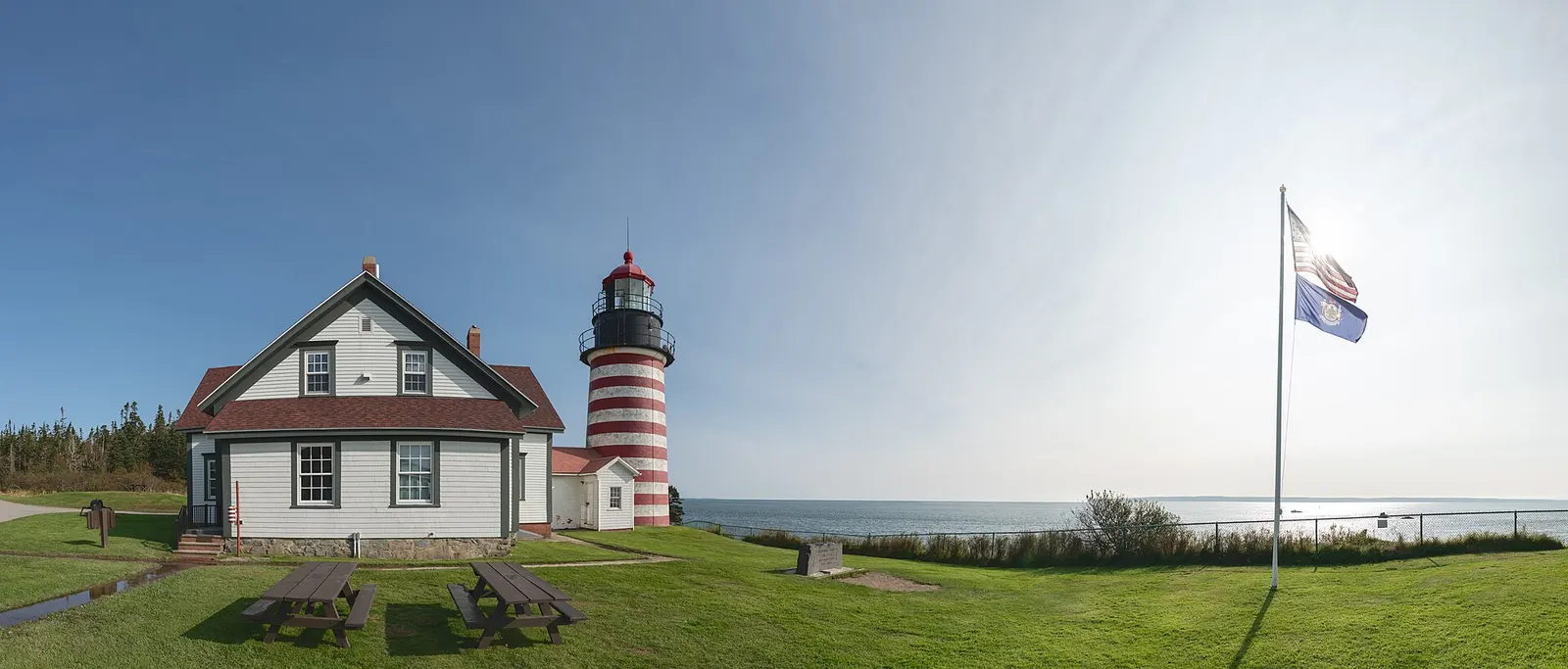
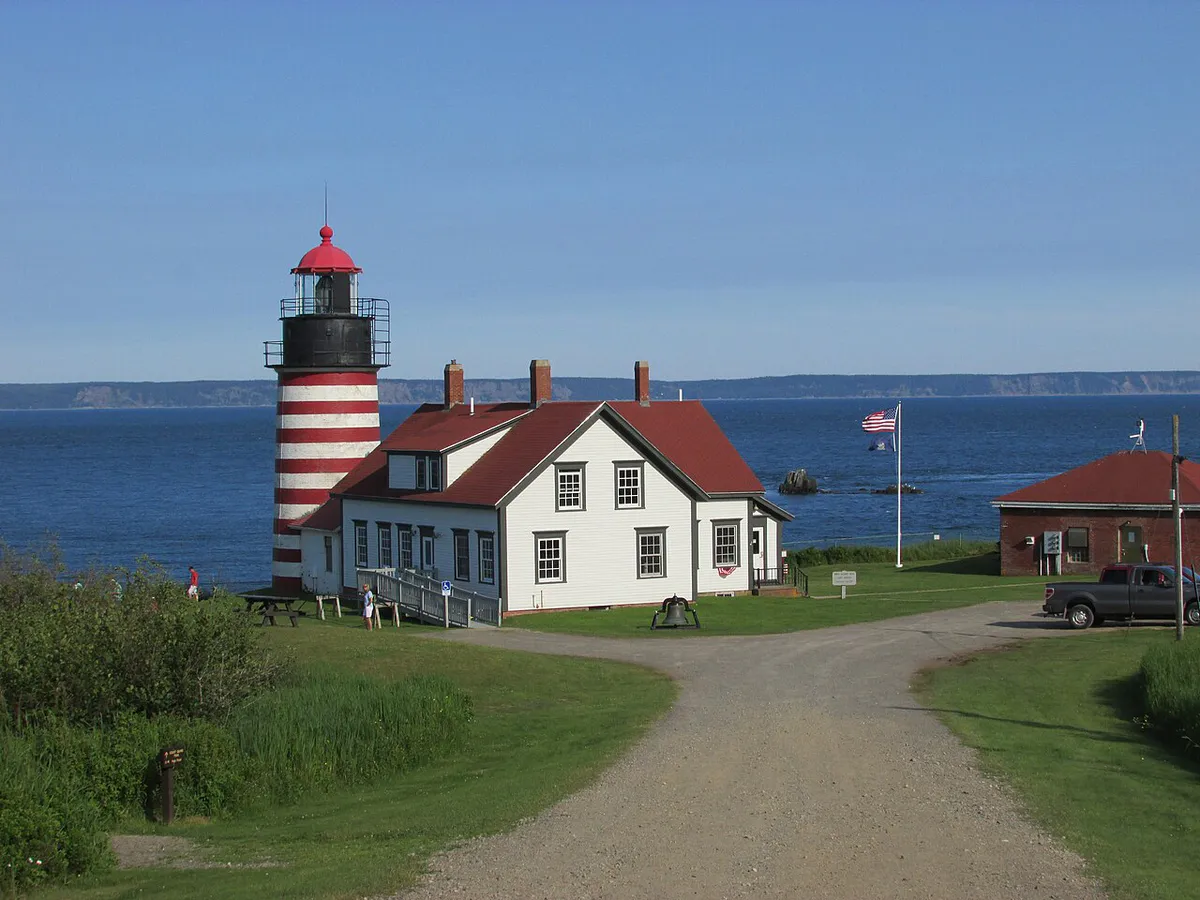
The red-and-white striped West Quoddy Head Lighthouse stands at the easternmost point in the continental United States. It has the latitude of Gaspé and the look of a candy cane. The light is in Lubec, the most northeasterly town in the country.
A small state park wraps around the point. From the cliff trail you can see the pink walls of Grand Manan Island across the channel. Seal, porpoise, and eagle sightings are routine. Go at dawn in midsummer: you are seeing the sunrise before anyone else in the country by a solid 20 seconds.
8. Schoodic Point Wave Watching
Schoodic Point is the quiet half of Acadia. A pink granite headland sticking into the open Atlantic with no island in front of it. That last detail is what makes it work. Swells roll straight in from deep water and detonate on the ledges.
After a fall storm the surf is enormous. Thirty-foot wave columns are regular. The rock is slippery, cold, and exposed; keep well back. On a calm day the point is still worth the trip for the view across to Cadillac on the horizon. No reservation needed.
9. Lobster Roll at a Working Shack
You eat a lobster roll outdoors, at a picnic table, on a dock, with a view of boats bringing more of them in. Not in a dining room. The experience is the setting. Red’s Eats in Wiscasset draws lines because it is on Route 1. Thurston’s in Bernard is the pick for a lobster roll on a working pier; the towns of Mount Desert Island have several. You cannot lose badly here.
A classic Maine roll is cold lobster meat with a little mayo, on a buttered top-split bun, with a small dish of chips. Butter roll (warm lobster, melted butter, no mayo) is the other option. Locals fight about this. Pick the one you like.
10. Windjammer Sail from Camden
The Camden windjammer fleet is a dozen or so two-masted schooners, some more than 100 years old, built originally to haul granite and lime along the coast. They now take passengers on three- to six-day sailing trips through the islands of Penobscot Bay.
You sleep in a narrow cabin. You eat chowder made on a wood stove. You drop anchor in a different cove every night. No engine under sail, no itinerary carved in stone, no phone signal past the breakwater. Book May through September; fall trips exist but it gets cold fast after Labor Day.
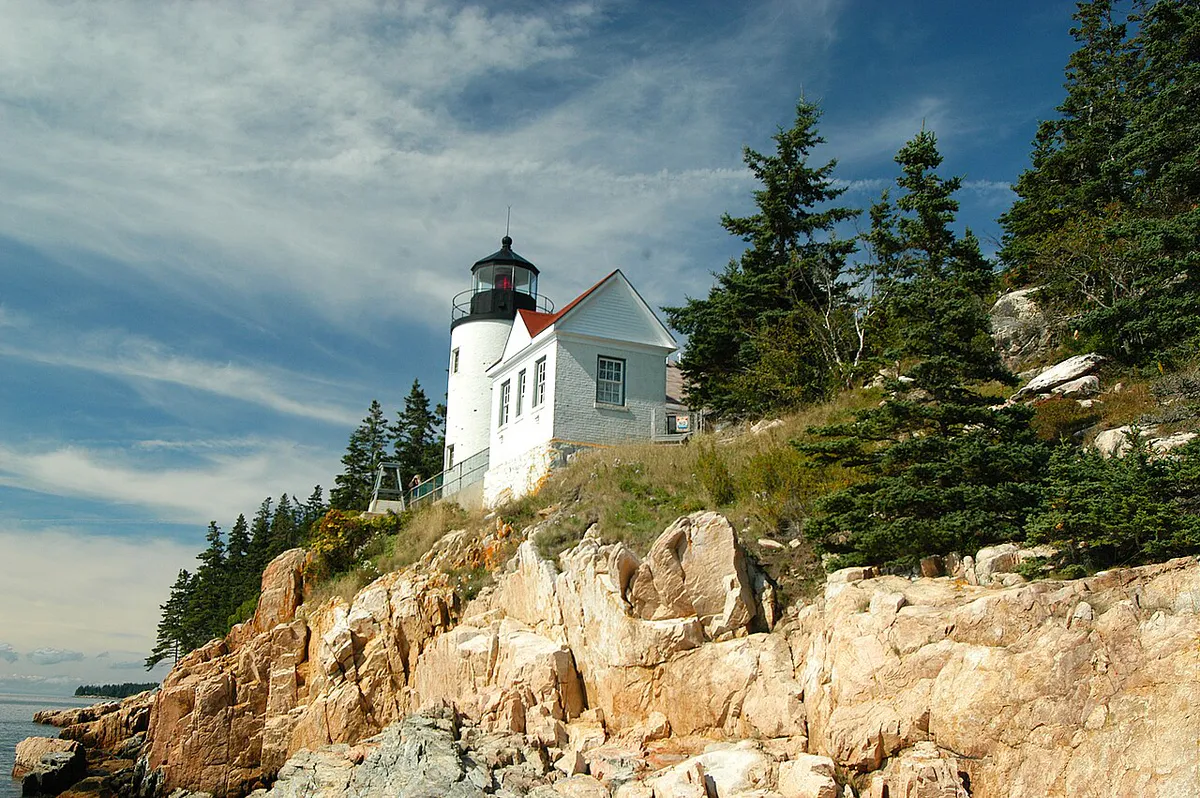
If you have a weekend, not a week, the classic Maine coast sampler is: Cadillac at sunrise, Ocean Path before breakfast, lobster roll at noon, Jordan Pond tea at 4 PM, and sunset at Bass Harbor Head Light. You cover most of what the Acadia section of this list is about in under 12 hours.
Mountains and Peaks
11. Summit Mount Katahdin
Katahdin is the hardest day hike in the Northeast. It is also the best. A mile-high massif in the middle of the north woods, with five summit ridges, two glacial cirques, and a mile-long exposed ridge (the Knife Edge) that connects the two highest peaks. The Hunt Trail is the classic line: 10.4 miles round-trip, 4,200 feet of climb, ending at the wooden sign that marks the northern terminus of the Appalachian Trail.
You need a day-use parking reservation in summer. Book through the Baxter State Park website; they open the reservation window four months in advance. Weather turns fast above treeline. The park closes the peaks when wind, lightning, or ice make them dangerous. Check the morning announcement.
12. Beehive Iron Rungs
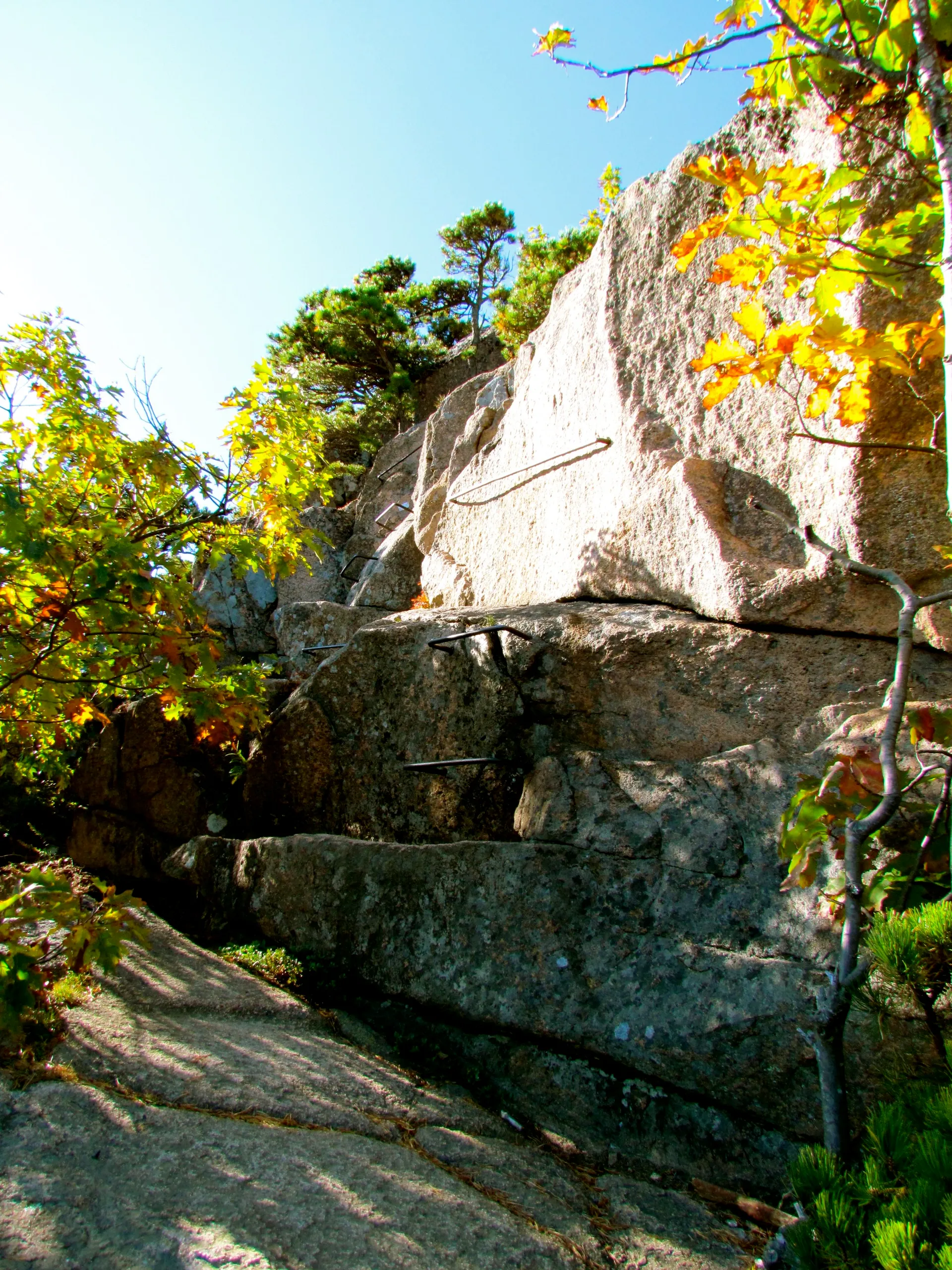
The Beehive is a 500-foot granite dome above Sand Beach. The trail up is vertical enough that the park bolted iron rungs and narrow stone steps into the face. You climb hand-over-hand for the last 200 feet with the Atlantic opening behind you. At the top you have one of the best views in Acadia, and you did not have to hike for hours to get it.
The full loop is 1.5 miles. Plan 90 minutes. Not appropriate for small kids or people uneasy with heights. The rungs are closed in winter when ice makes them dangerous.
13. Bigelow Range Ridge Traverse
The Bigelow Range is the best alpine ridge in the state south of Katahdin. Four summits over 4,000 feet strung along a four-mile crest with views of Flagstaff Lake below and the 100-Mile Wilderness rolling north. The ridge traverse goes 10 to 12 miles point-to-point depending on your line.
Most people day hike Avery and West peaks out and back; a true traverse wants a car shuttle or an overnight at Horns Pond lean-to. Fall is spectacular. Wind on the crest is legitimate; bring a shell even in July.
14. Sugarloaf Alpine Zone
Sugarloaf is a ski mountain in winter and Maine’s third-highest peak (4,237 feet) in summer. It is one of only 14 mountains in New England with a true alpine zone above treeline. You can ride the lift partway in summer, then hike the last stretch to the summit, and stand in low-growing sedges and Bigelow sedge with views across the whole western high peaks region.
The hike from the lodge is 6.4 miles round-trip with 2,600 feet of gain. The AT-to-summit spur is shorter but less interesting. Ski in winter, hike in August.
15. Tumbledown Mountain Pond Loop
Tumbledown Mountain is the best moderate hike in the state. A 3,068-foot granite peak with an alpine pond (Tumbledown Pond) sitting in a natural bowl below the summit. The loop is seven miles with 1,900 feet of gain. The summit gives a view across Webb Lake and the Mount Blue region; the pond is a swimming hole cradled at 2,700 feet.
Take the Brook Trail up and the Parker Ridge Trail down. Or reverse. Go on a weekday. Saturday in July fills the parking lot.
16. Table Rock in Grafton Notch
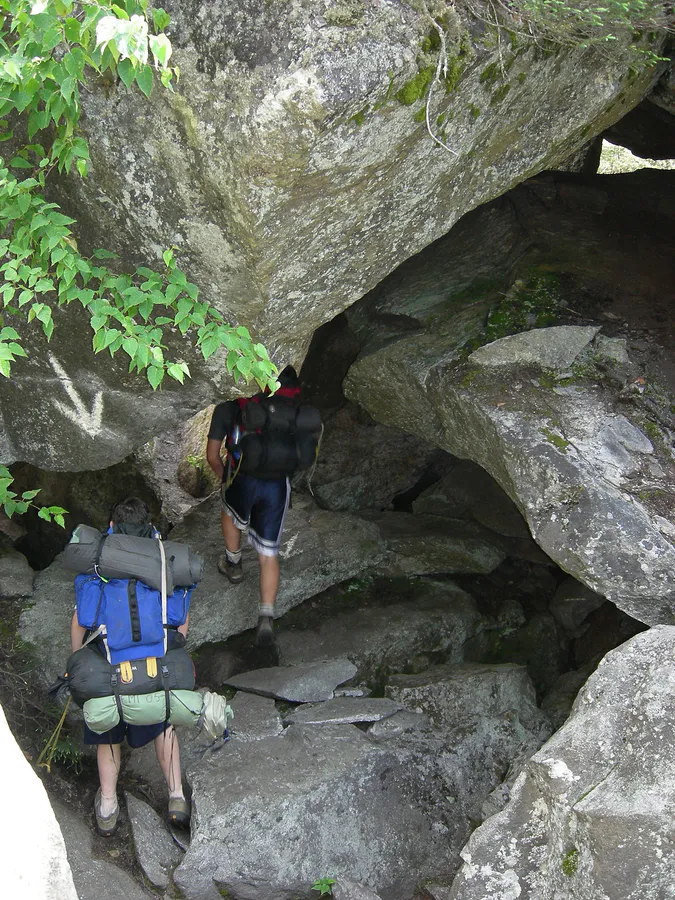
Table Rock is a jutting slab of granite 900 feet above Route 26, cantilevered out over Grafton Notch. You hike 2.4 miles round-trip up a steep trail that passes through a field of boulders and small caves. The top is a flat ledge you can walk out onto.
Good for a half day. Views straight across the notch to Old Speck, with the Mahoosuc range running west. Combine with a visit to Screw Auger Falls a mile down the road.
17. Borestone Mountain Twin Summits
Borestone Mountain is a 1,947-foot peak with twin rocky summits and three ponds in between. The preserve is Audubon-managed and has a small museum at the base. You climb through hardwood to the west peak (views), cross a small col, then climb the east peak (bigger views). Four miles round-trip, 1,400 feet up.
From the summit ledges you look north into the 100-Mile Wilderness, with Chairback, Barren, and Columbus ridges unrolling toward Katahdin. The ponds between the summits are swimmable in summer.
Swimming and Water
18. Sebago Lake
Sebago Lake is the state’s second-largest and deepest lake (316 feet). The water is cold, clear, and on an unusually warm summer day actually refreshing rather than painful. The best beach is at Sebago Lake State Park; there are quieter public accesses on the western shore.
Sebago is the source of Portland’s drinking water. It is that clean. Swim out past the swim line in August and you cannot see the bottom at 20 feet. Bring goggles.
19. Smalls Falls
Smalls Falls is the swimming hole you see on Maine tourism posters. Four tiered cascades dropping through a mossy granite gorge, with a deep plunge pool at the base of each drop. The whole thing is 100 yards off Route 4 near Rangeley, and there is a small picnic area built around it.
Top pool for the view. Bottom pool for the deepest water. Cliff jumping happens; I am not recommending it. The rock is slick and the pools are deeper than they look.
20. Coos Canyon Plunge Pool
Coos Canyon is a granite slot on the Swift River in Byron. The river cuts through polished, curved bedrock and drops into a 12-foot pool. You can slide down the rock, jump from the ledge (again: risks), and float through a miniature canyon lined with potholes.
Free to visit. Parking on Route 17. Combine with a drive over Height of Land in October, or with a trip to Rangeley in July.
21. Moxie Falls
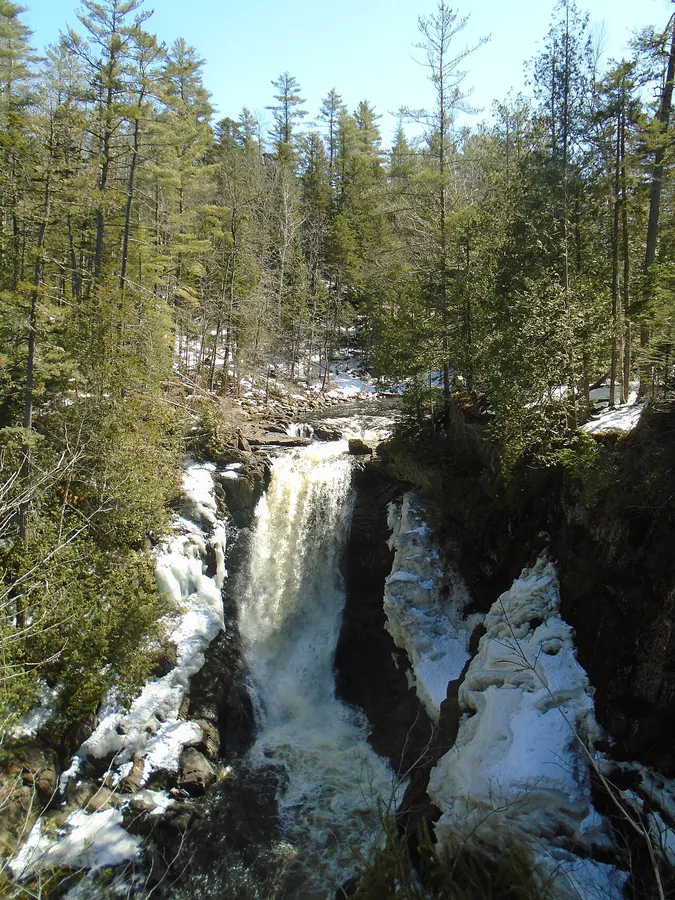
Moxie Falls is one of the tallest waterfalls in New England. The main drop is 90 feet straight down a basalt face into a cold pool. The trail is gentle (0.8 miles each way on a boardwalk) and the view is from a built platform at the lip of the gorge.
You cannot swim in the pool at the base (the park prohibits it). You can swim upstream in the pools above the falls, which are pleasant on a hot day. Go in May or after a rainy week for the biggest flow.
22. Gulf Hagas
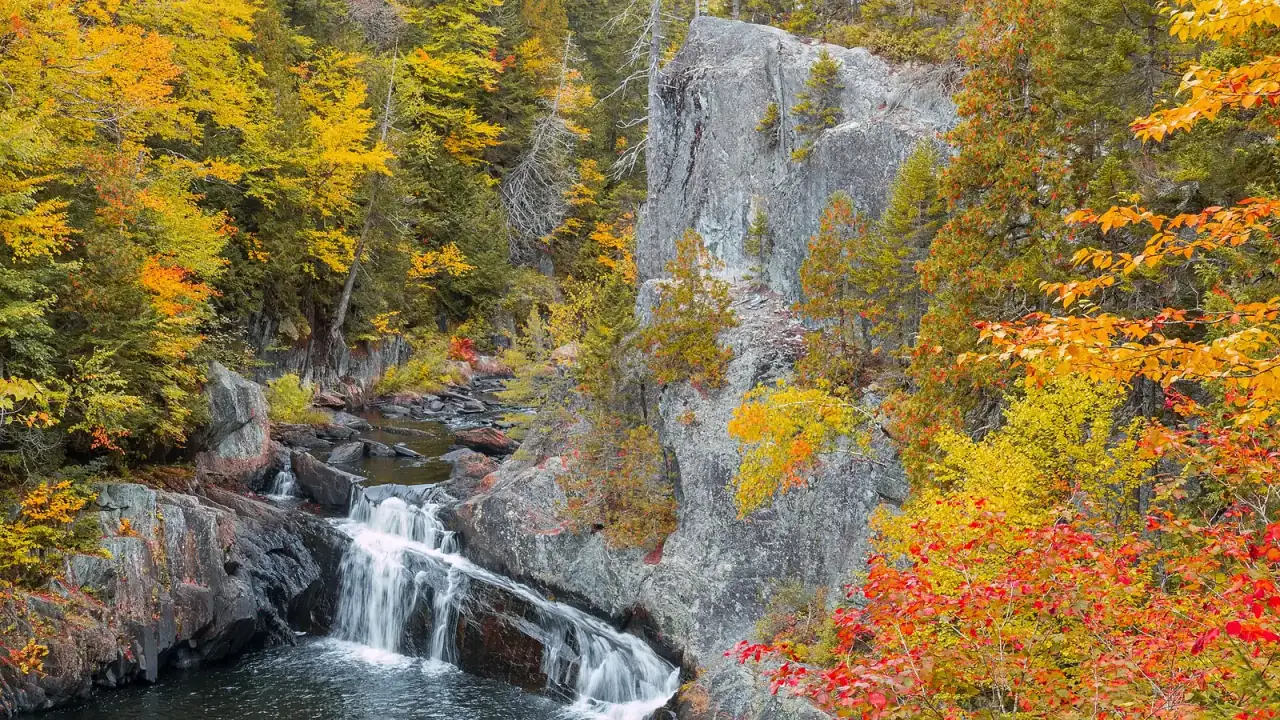
Gulf Hagas has been called Maine’s Grand Canyon, which oversells it, but it is still remarkable. A slate gorge on the West Branch of the Pleasant River with six major waterfalls packed into three miles of trail. The loop is eight miles of surprisingly rugged hiking with views from a dozen overlooks.
Access is off the Katahdin Iron Works Road, a seasonal logging road with a user fee. Go midweek in September. Bring strong water shoes for the Pleasant River ford; the water is knee-deep most years.
Wildlife and Nature
23. Moose at Sandy Stream Pond
The most reliable place to see a moose in Maine is Sandy Stream Pond in Baxter State Park. A short trail (0.7 miles) from the Roaring Brook Campground ends at a platform overlooking a shallow kettle pond lined with aquatic plants. Moose eat the plants. They come most reliably at dawn and dusk from late May through July.
If you want a hike with your moose, continue on to South Turner Mountain for one of the best near-views of Katahdin in the park. Sandy Stream, where most of the moose actually are, is the first stop on that trail.
24. Puffins from Boothbay Harbor
Atlantic puffins nest on a handful of rocky islands off the Maine coast from May through August. The best way to see them is on a boat tour out of Boothbay Harbor to Eastern Egg Rock, home to a restored puffin colony reintroduced by Project Puffin in the 1970s.
You see birds by the hundreds in peak (late June to mid July). The tour is two and a half hours round-trip. Bring a long lens; tours stay 50 yards offshore to keep distance. Dress warm even in July; sea wind is cold.
25. Whale Watch from Bar Harbor
From late spring through early fall, humpback, finback, and minke whales feed in the waters south of Bar Harbor and Schoodic. Whale-watching boats (fast catamarans, three- to four-hour trips) run out of Bar Harbor’s ferry dock daily in season.
Sightings are not guaranteed but are routine. Captains radio each other about sighting locations. July and August offer the highest probability; whales migrate in and out on schedules dictated by krill and baitfish.
26. Migrating Hawks at Mount Agamenticus
In September and October, tens of thousands of hawks, falcons, and eagles move south down the Atlantic coast to winter in South America. The coastal updraft concentrates them onto narrow flyways. Mount Agamenticus in southern York County is one of the best hawkwatch sites in Maine.
The summit is a short hike (there is a road, too). Peak count days in mid-September can record several thousand raptors, including broadwings, sharpshins, merlins, peregrines, and the occasional golden eagle. Bring binoculars. Local volunteers identify species from the summit; say hello and ask questions.
Wilderness and Solitude
27. 100-Mile Wilderness
The 100-Mile Wilderness is the northernmost stretch of the Appalachian Trail, running from Monson to Abol Bridge at the boundary of Baxter State Park. It is the longest roadless section of the AT and one of the most remote backpacking routes in the eastern United States.
Thru-hikers plan seven to ten days. You carry food for the whole stretch; there is no resupply. The terrain is rolling, with a few significant climbs (Chairback, Whitecap) and a lot of mossy, slow bog. You will cross Little Boardman Mountain without seeing another person. Mid-August through late September is the window.
28. Allagash Wilderness Waterway
The Allagash Wilderness Waterway is a 92-mile chain of lakes and river preserved as wild since 1970. You paddle canoes from Telos Lake (south end) to Allagash Village (north end) over five to ten days, camping on designated sites each night.
You are in the north Maine woods the entire way. No towns, no roads crossing the water (with one exception at Michaud Farm near the north end), and no cell service. Allagash Falls is the scenic centerpiece: a 40-foot ledge drop you portage around near the end. Run this trip in July or August.
29. Appalachian Trail Finish at Katahdin
If you thru-hike the AT northbound, this is the last day of a 2,194-mile walk. You climb the last five miles of the Hunt Trail and the sign on the summit of Katahdin. That sign is one of the most famous objects in American hiking, and the ceremony of touching it, hugging it, falling on your knees, getting a picture, that is the classic AT finish.
You do not have to do the whole thing to do this day. Section hike the 100-Mile Wilderness and finish on Katahdin and you get a version of it. Do the last 50 miles of the AT for the same peak day without the weeks.
30. Camp at Baxter State Park
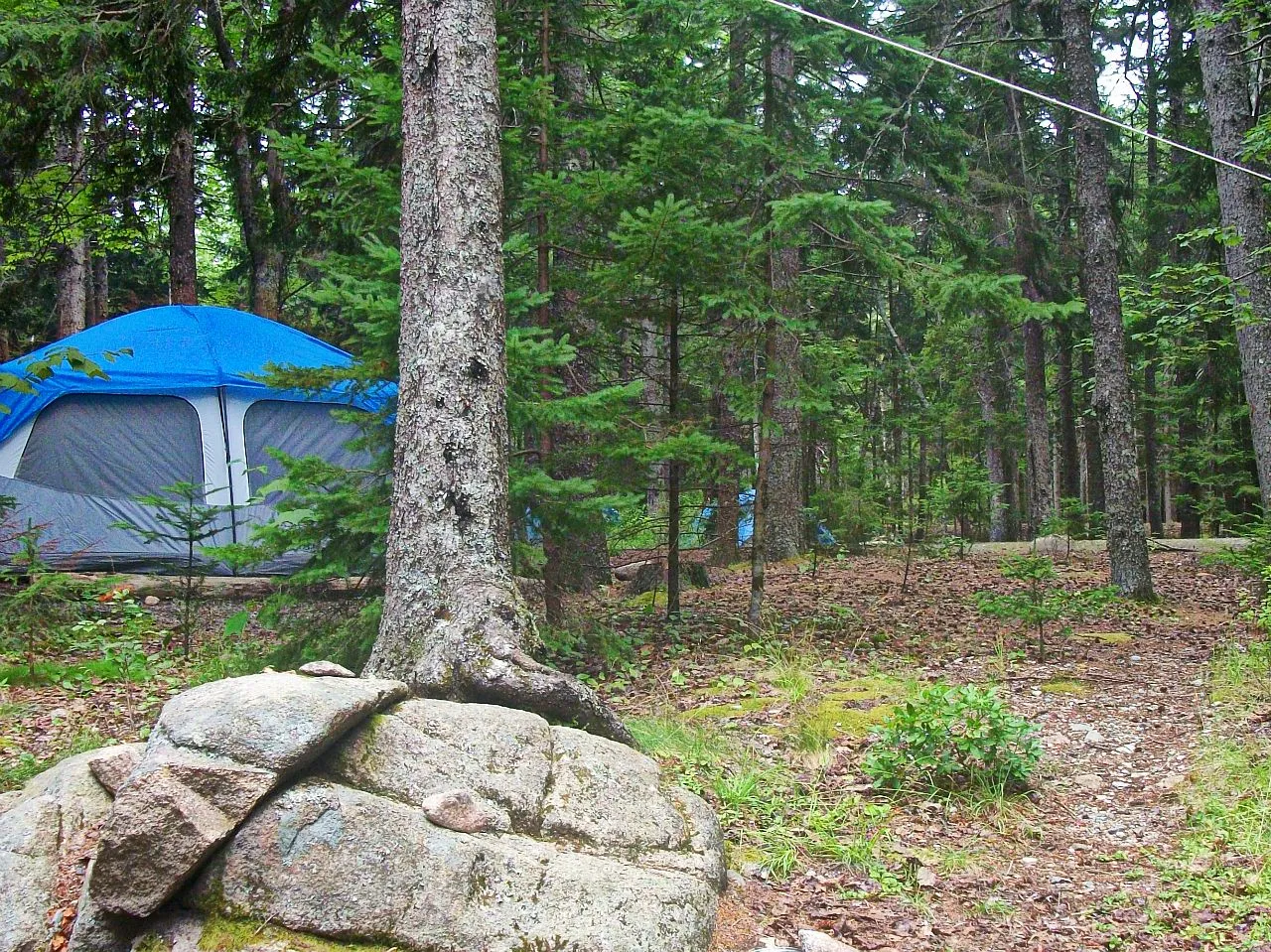
Percival Baxter, a former governor of Maine, bought 200,000 acres around Katahdin in the 1930s and deeded it to the state with one restriction: it must be kept forever wild. Baxter has no electricity in the campgrounds, no piped water at sites, no RV hookups, and the park stops letting new cars in once it is full.
Pick a campground based on what you want to do. Baxter State Park camping breakdown: Roaring Brook for Katahdin and Sandy Stream moose; Abol for the Hunt Trail; Kidney Pond for canoes and solitude; Russell Pond for true backcountry (seven-mile hike in). Reservations open four months in advance and top choices vanish in minutes. With no lights for a hundred miles, the night sky here is the other reason to stay; the region holds an International Dark Sky park, and our Maine stargazing and dark sky guide covers where and when to look up.
Do not try to do Baxter as a day trip. The drive from the park gate to Roaring Brook takes an hour and a half on dirt roads. The drive from Bangor to the gate takes another hour. If you leave Portland at 3 AM you can climb Katahdin and return the same day, but you will sleep in the parking lot. Stay in the park.
When to Do Each
Not all thirty work year-round. Here is a rough calendar for sequencing a year of Maine adventures.
Spring (April-May). Water is high, so waterfalls are at peak. Smalls Falls, Moxie, Coos Canyon, Screw Auger Falls. Swimming holes are too cold; hit them in two months. The Bold Coast Trail is muddy but uncrowded. Raptors have not moved yet, but Agamenticus is still a good warmup hike.
Summer (June-August). Swimming season. Sebago, Smalls Falls pools, Coos Canyon, Tumbledown Pond. Hiking season above treeline: Katahdin, Bigelow, Sugarloaf alpine zone. Puffins peak at Eastern Egg Rock (late June). Allagash paddling is in its window. 100-Mile Wilderness is best August onward when bugs let up.
Fall (September-October). The Maine crown jewel season. Cadillac sunrise kicks in (after October 7). Foliage peaks move south from Rangeley in week one to Ogunquit in week four. Ocean Path and Jordan Pond are uncrowded. Hawk migration peaks at Agamenticus. Bold Coast hikes are at their best. Do as much as you can.
Winter (November-March). The island is gated, Baxter closes to cars, and half the coast shuts down. But: Cadillac is open, sunrise is still first-in-the-country, windjammer shops close but the towns are peaceful. Sugarloaf becomes a ski mountain (not on this list but worth its own trip). Cross-country skiing and ice fishing open other doors.
For more on timing, see our fall foliage road trip guide, winter things to do in Maine, and the Maine 4000-footers post for summit planning.
Where to Base Yourself
You cannot do thirty things from one town. Here is the shortest map to covering the list.
- Bar Harbor or Mount Desert Island covers items 1, 2, 3, 8, 12, 25, plus Acadia in general. Three days is the minimum.
- Camden or Rockland for the windjammer (10), puffin tours via Boothbay Harbor (24), and Pemaquid Point (4).
- Rangeley or Bethel for the western mountains cluster (13-16, 19, 20). See our western mountains guide for the full regional breakdown.
- Millinocket or Greenville for Katahdin, Baxter, Moosehead, and the wilderness items (11, 17, 22, 23, 27, 28, 29, 30).
- Lubec or Eastport for the Downeast items (6, 7) and the quietest end of the state.
- Portland or Ogunquit as a southern-coast base for (5, 18, 26). Portland makes a good entry point flying in.
For planning longer coastal loops, see our Route 1 road trip guide and the Maine lighthouse road trip. For day trips in the south, see best day trips from Portland.
Related Guides on the Site
- Shorter hikes to start with: best easy hikes in Maine
- Hiking Acadia: best hikes in Acadia
- A weekend on the island: weekend in Bar Harbor itinerary or 3 days in Acadia
- For swimming: best swimming holes in Maine and best lakes for swimming
- For wildlife: where to see moose in Maine
- Comparison trips: Acadia vs. Baxter State Park and Acadia alternatives
- For dog owners: dog-friendly hikes in Maine
- Low-cost adventures: free things to do outdoors in Maine
How long does it take to complete a Maine outdoor bucket list like this?
Realistically, two to three years of trips if you come from out of state and visit a couple of weeks each year. One full year if you live in Maine and treat it as a project. Some items (Allagash, 100-Mile Wilderness, thru-hike finish) need dedicated weeks; most can be stacked into weekend trips.
What is the single best experience on this list if I only have one day?
Cadillac Mountain sunrise in October, followed by Ocean Path, lunch on the Jordan Pond lawn, and sunset at Bass Harbor Head Light. You hit four items from the Coast section and get one of the best outdoor days the state offers.
Which items are accessible without strenuous hiking?
Most of the coastal and wildlife items. Specifically: Cadillac summit (drive up), Thunder Hole, Jordan Pond popovers, Pemaquid Point, Marginal Way, West Quoddy Light, Schoodic Point, Moxie Falls (flat boardwalk), Sebago beach, puffin tour, whale watch, Moose at Sandy Stream (short walk), Smalls Falls. Fifteen to twenty of the thirty items are low-effort.
Do I need to book campsites and reservations in advance?
Yes for Baxter State Park (four months in advance, gone in minutes for summer weekends), Cadillac Mountain vehicle reservation (recreation.gov, booked ahead), Jordan Pond House lunch (OpenTable in season), windjammer trips (months ahead for summer), and Allagash Wilderness Waterway (permit required). The rest are first-come or walk-up.
What should I bring for Maine outdoor adventures?
Layers and a rain shell in every season. Bug spray from May through early August, especially inland. Water shoes for swimming holes. Binoculars for wildlife. Tread on boots for granite (it is slick when wet). A full tank of gas north of Greenville or past Rangeley; stations get sparse. Paper map backup; cell service is patchy in the mountains and the north woods.
Is Maine dangerous? Do I need to worry about bears, moose, or tides?
Black bears are present but avoid people; food storage matters in the backcountry. Moose are a real road hazard at dawn and dusk on Route 201, Route 15, and in Baxter; drive the speed limit. Tides on the coast can rise fast and rogue waves are common at Thunder Hole and Schoodic. Cliff edges along the Bold Coast are unguarded. Use judgment. Injuries are rare but usually come from ignoring the terrain.
Best time of year overall for a Maine bucket list trip?
Last week of September through the third week of October. The weather is cooperative, foliage is at or near peak somewhere in the state every week, crowds are way down from summer, Cadillac Mountain becomes first-in-the-country for sunrise, and hawk migration plus late wildlife activity give you good wildlife days. September second half is my pick if I had to choose one week.