

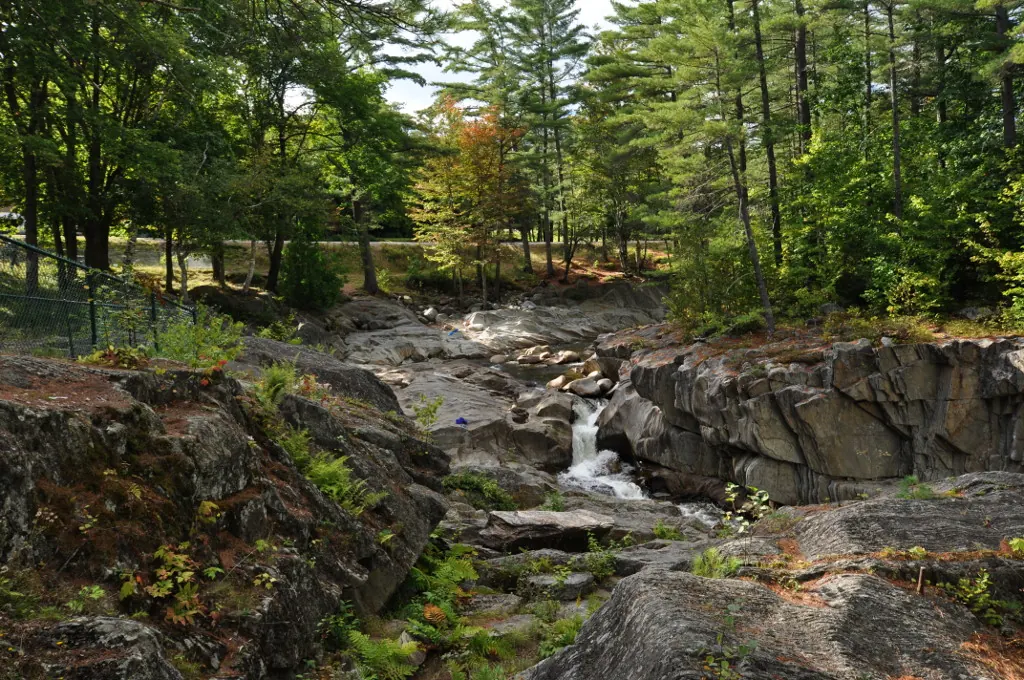
Everyone knows Moxie Falls. Everyone knows Screw Auger. If you have spent fifteen minutes researching waterfalls in Maine, those names come up immediately. They deserve the attention. But Maine has dozens of falls that do not appear in the first page of search results, do not have paved parking lots, and do not draw a crowd on summer weekends.
These are the ten we keep going back to. They are not necessarily the tallest or most dramatic, some are modest cascades on backcountry streams. What they share is isolation, atmosphere, and the particular satisfaction of reaching a place that most visitors drive right past.
| Waterfall | Region | Approx. Height | Effort Level | Best Season |
|---|---|---|---|---|
| Hay Brook Falls | 100-Mile Wilderness | 25 ft | Moderate hike | May–June |
| Mosher Hill Falls | Farmington | 30 ft | Easy walk | April–June |
| Sawtelle Falls | Deep Aroostook | 20 ft | Easy drive + walk | May–July |
| Mad River Falls | Batchelders Grant | 40 ft | Moderate (gravel road) | May–June |
| Snow Falls | West Paris | 25 ft (tiers) | Roadside | Year-round |
| Rumford Falls | Rumford | 180 ft (tiers) | Roadside/park | April–June |
| Mother Walker Falls | Grafton Notch | ~40 ft gorge | Easy walk | May–June |
| Tobey Falls | Willimantic | 40 ft | Easy walk | May–July |
| Kees Falls | Mason Township | 35 ft | Moderate hike | May–June |
| Otter Falls | Deep Aroostook | 30 ft | Difficult (remote) | June–July |
1. Hay Brook Falls
Location: T7 R9 NWP, inside the 100-Mile Wilderness corridor Height: Approximately 25 feet Trail: Moderate, requires navigating logging roads and a short bushwhack Best season: Late May through June, when snowmelt keeps the flow strong
Hay Brook Falls sits deep inside the 100-Mile Wilderness, the most remote stretch of the Appalachian Trail in the eastern United States. Getting there is the challenge. You will need to follow logging roads from Brownville or Monson, a DeLorme Maine Atlas is more useful than Google Maps in this territory, and then hike a short stretch along Hay Brook to reach the falls.
The cascade drops through a narrow rock channel into a pool ringed by spruce and fir. In late May, when snowmelt is still pouring off the surrounding ridges, the volume is impressive for a brook this size. By August, it thins to a trickle.
This is a falls for people who are comfortable with ambiguity. The approach is not signed. The road may or may not be gated. Bring a map, tell someone where you are going, and enjoy the silence.
Pair this with a day trip to Gulf Hagas, which is in the same general area. Hit Hay Brook Falls in the morning, then drive to the Gulf Hagas trailhead for the afternoon. Two of Maine’s best backcountry waterfall experiences in a single day.
2. Mosher Hill Falls
Location: Farmington, Franklin County Height: Approximately 30 feet Trail: Easy, short walk from a pull-off on a gravel road Best season: April through June
Mosher Hill Falls is the kind of waterfall that exists in a town of 7,000 people and still manages to feel like a secret. A narrow ribbon of water slides over a series of mossy ledges in a hemlock-shaded ravine just outside Farmington. The approach is a gravel road with a small pull-off, then a five-minute walk through the woods.
The falls are not tall or thunderous. What makes them worth the detour is the setting, dark green moss covering every surface, hemlocks filtering the light, and almost nobody else. Farmington is not on the tourist circuit. People come here for the University of Maine campus and keep driving. Their loss.
Spring is the prime window. By July, the brook feeding Mosher Hill is usually low, and the falls turn into a damp stain on the rocks. But in April and May, after snowmelt, the cascade is steady and photogenic.
Farmington is a good base for exploring the northern end of the Western Mountains. From here you can reach Poplar Stream Falls in Carrabassett Valley, the Sugarloaf area, and the Mount Blue State Park region without much driving.
3. Sawtelle Falls
Location: T6 R7 WELS, deep Aroostook County Height: Approximately 20 feet Trail: Easy, short walk from a gravel road pull-off Best season: May through July
Sawtelle Falls sits in the deep woods of northern Maine, in unorganized territory that most Mainers have never visited. The falls drop across a wide ledge on Sawtelle Brook, creating a curtain of water that fans out during high flow and concentrates into a single chute during drier months.
Getting there requires driving North Maine Woods roads, which means paying a gate fee at a checkpoint and navigating by logging road numbers. The roads are well-maintained gravel, passable in any vehicle with reasonable clearance, but there are no services for miles in any direction.
The isolation is the point. This is not a waterfall you visit between lunch in Bar Harbor and dinner in Portland. It is a waterfall you visit because you are already in the big woods, maybe on a fishing trip, maybe on a moose-watching expedition, and you want to see what is hiding off the logging road. What you find is a quiet, beautiful cascade in a forest that stretches to the horizon.
4. Mad River Falls
Location: Batchelders Grant, Oxford County Height: Approximately 40 feet across multiple drops Trail: Moderate, gravel road access, then a short scramble Best season: May through early June
Mad River Falls is in the same general constellation as the better-known falls around Grafton Notch and the Bethel area, but it sits far enough off the main roads that most waterfall chasers skip it. That is a mistake.
The Mad River drops through a rocky gorge in a series of cascades, with the main drop plunging roughly 40 feet into a shaded pool. The approach is via gravel roads that wind through Batchelders Grant, a township with more moose than people. High clearance is helpful but not strictly necessary in dry conditions.
What sets Mad River Falls apart from, say, Frenchman’s Hole or Screw Auger is the effort-to-solitude ratio. The extra 30 minutes of gravel-road driving filters out casual visitors. On a July Saturday when Frenchman’s Hole has 40 cars in the lot, you will have Mad River Falls to yourself.
Combine Mad River Falls with a visit to Kees Falls in neighboring Mason Township. Both are off the beaten path and within 30 minutes of each other. Then swing by Dunn Falls in Andover North Surplus for a triple-header of hidden falls in a single afternoon.
5. Snow Falls
Location: West Paris, Oxford County (Route 26) Height: Approximately 25 feet across multiple tiers Trail: Roadside, park and walk 30 seconds Best season: Year-round, peak flow April through May
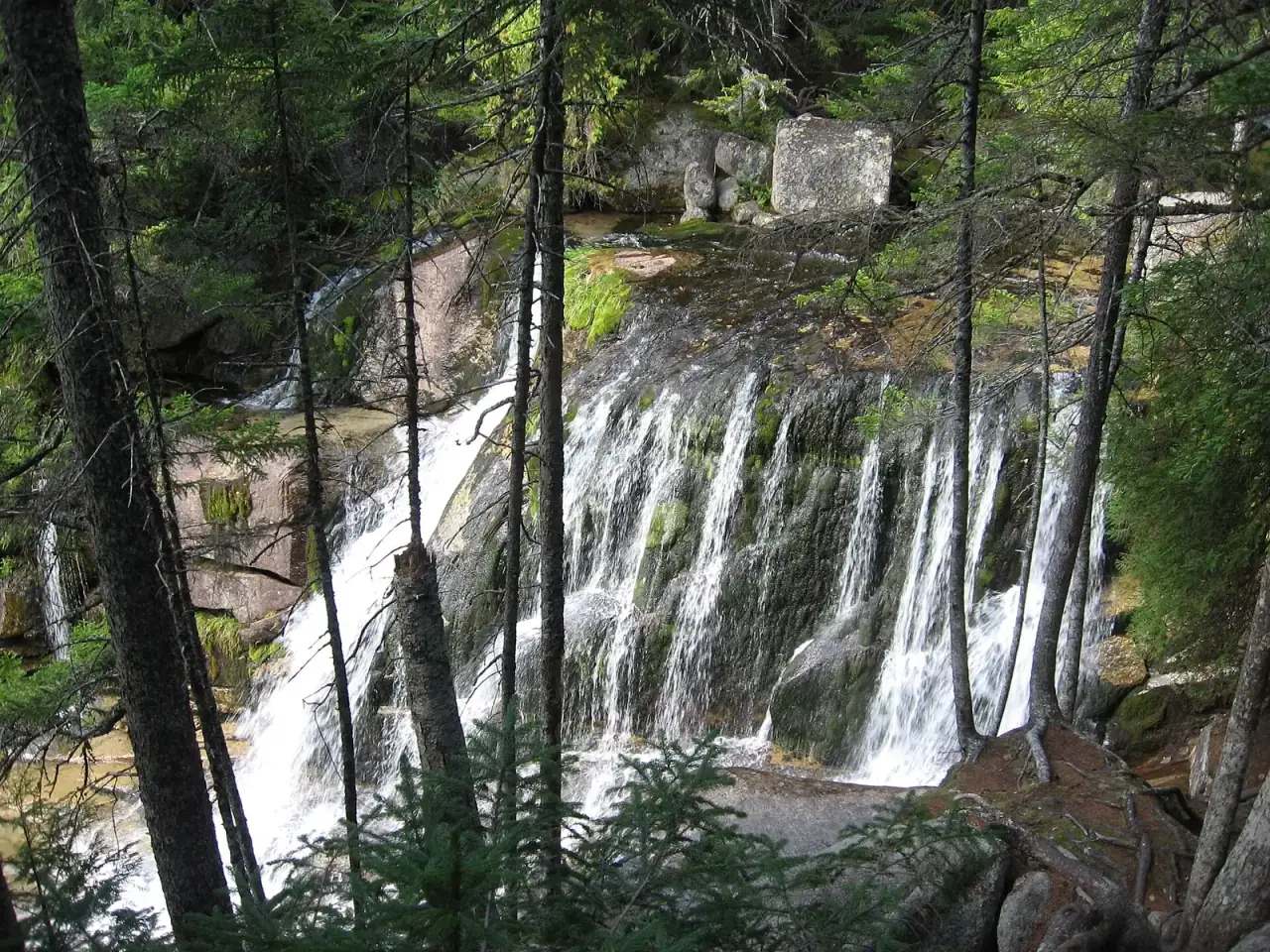
Snow Falls is not exactly hidden. It sits right on Route 26, the main road between Portland and Bethel. But somehow most travelers blow right past it. There is a small gorge park with picnic tables, a footbridge, and a view straight down into a series of cascades where the Little Androscoggin River squeezes through a granite chute.
The reason Snow Falls makes this list is accessibility. You do not need hiking boots or a map. You need to pull over and walk 30 seconds. In spring, the river is powerful enough to make the viewing platforms vibrate. In summer, the pools below the falls are popular with local families who come to wade and cool off.
It is also one of the few Maine waterfalls that is interesting in winter. Ice formations build up along the gorge walls from December through March, creating blue-and-white curtains that photographers love. The park stays accessible in winter, though the footbridge can be icy.
6. Rumford Falls
Location: Downtown Rumford, Oxford County Height: 180 feet total across multiple tiers Trail: None, visible from town park and riverbank Best season: April through June (highest flow), but worth seeing year-round
Rumford Falls is the most bizarre entry on this list. It is a 180-foot waterfall, one of the tallest cascades in New England, sitting directly behind a paper mill in downtown Rumford. You can see it from the parking lot of a shopping plaza. And yet almost no out-of-state visitors have any idea it exists.
The Androscoggin River drops over a series of massive ledges as it passes through the center of town. The flow is controlled by a dam, so the spectacle depends entirely on how much water the utility company is releasing. When the gates are open in spring, Rumford Falls is a roaring wall of whitewater that shakes the ground. When the gates are closed in late summer, it can be a disappointing trickle.
The town has built a small riverfront park with viewing platforms and walking paths. The juxtaposition is striking, industrial buildings on one side, a genuinely powerful waterfall on the other. It feels like a natural wonder that got swallowed by a factory town, which is basically what happened.
Rumford is on Route 2, which connects to the Rangeley Lakes area via Route 17. If you are driving up to see Coos Canyon, Smalls Falls, or Angel Falls, stop in Rumford on the way through. It adds five minutes to your drive and shows you a waterfall unlike any other in the state.
7. Mother Walker Falls
Location: Grafton Notch State Park, Route 26, Newry Height: Approximately 40 feet through a narrow gorge Trail: Easy, short walk from a roadside pull-off Best season: May through October
Mother Walker Falls is technically inside Grafton Notch State Park, within a quarter mile of Screw Auger Falls. But it gets a fraction of the attention. Most visitors hit Screw Auger, snap photos of the potholes, and drive on to Table Rock or Old Speck. Mother Walker is the one they skip.
The falls cascade through a narrow rock flume, a long, dark corridor of granite carved by centuries of water pressure. The gorge itself is the attraction more than the height of the drop. Walking along the rim and peering down into the shaded channel gives a sense of geological time that the more photogenic Screw Auger does not quite deliver.
Come in May or early June for the best flow. The gorge stays shaded and cool even in midsummer, making it a pleasant stop on hot days when the direct-sun falls feel less inviting. If you are already in Grafton Notch, and you should be. There is no reason to skip this.
8. Tobey Falls
Location: Willimantic, Piscataquis County Height: Approximately 40 feet Trail: Easy, short path from a small parking area Best season: May through July
Tobey Falls drops 40 feet in a single tier on Ship Pond Stream, just north of the Moosehead Lake region. It is easily accessible from a small parking area, with a short trail leading to the base. The falls are wide, clean, and surprisingly powerful during spring runoff.
What makes Tobey Falls special is the pairing opportunity. It sits between Moosehead Lake and the Borestone Mountain area, both of which are legitimate all-day destinations. Add Tobey Falls as a 30-minute detour on the way to either, and you have seen one of the most beautiful waterfalls in Piscataquis County without adding any real effort to your trip.
The surrounding forest is dense and dark, classic Maine spruce-fir, and the falls feel more remote than they actually are. In early June, the streambanks are thick with wildflowers.
9. Kees Falls
Location: Mason Township, Oxford County Height: Approximately 35 feet Trail: Moderate, rough trail through the woods Best season: May through June
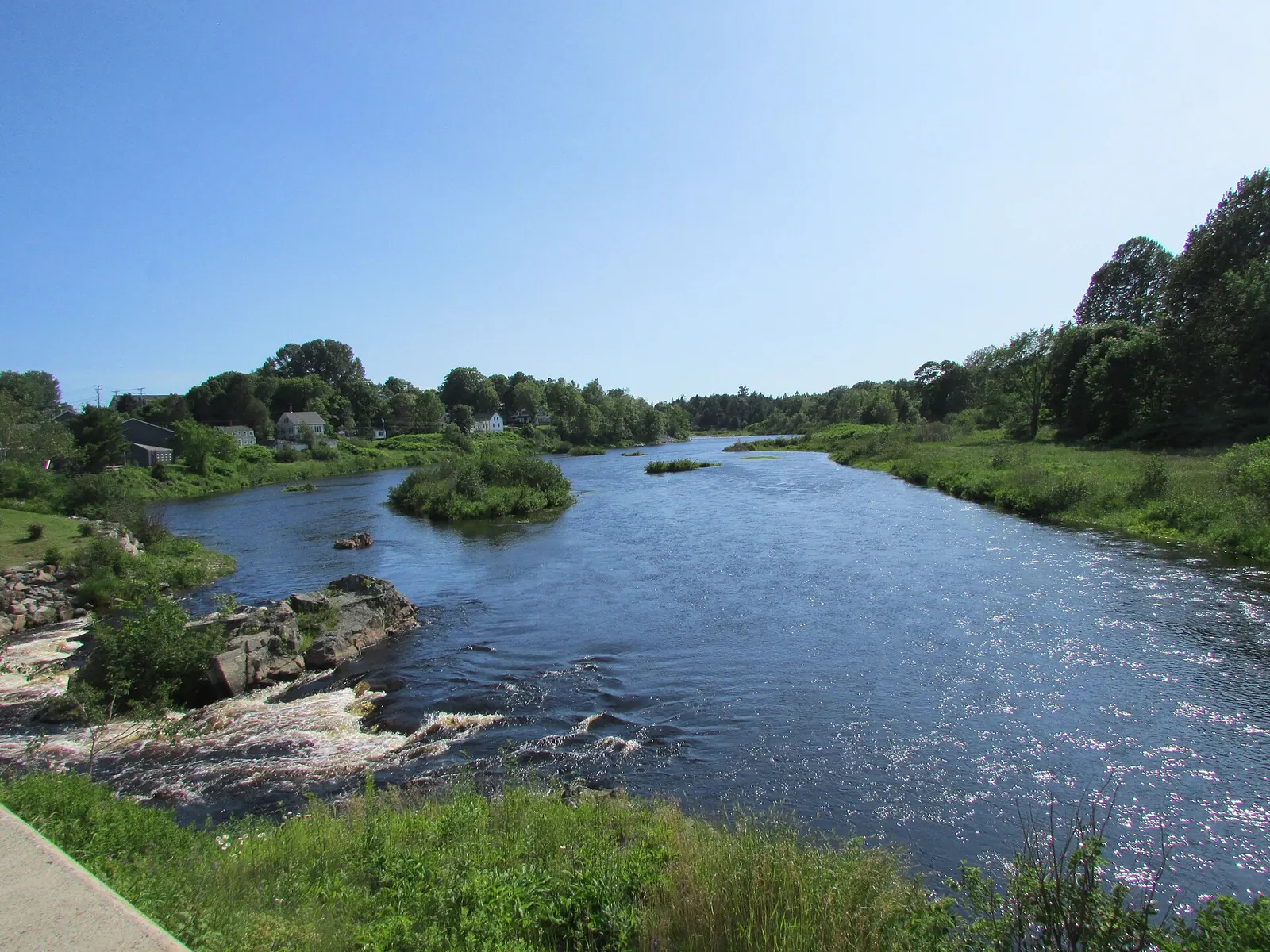
Kees Falls hides in the forested back roads of Mason Township, near the New Hampshire border. The approach involves unpaved roads and a trail that is not heavily maintained, which keeps visitor numbers low even in peak season.
The falls drop through a wooded ravine into a dark pool. The setting feels primeval, ancient hemlocks, thick moss on the boulders, and no cell service. You could be in the 1800s. Kees Falls does not have the swimming pools of Frenchman’s Hole or the roadside convenience of Coos Canyon, but it has something neither of those can offer: genuine solitude in one of the densest waterfall regions in Maine.
If you are based in the Bethel area and have already checked off the greatest hits, Kees Falls is the logical next step. It rewards the extra effort with quiet and atmosphere.
Cell service is nonexistent in Mason Township. Download offline maps before you leave Bethel. The gravel roads are not always well-signed, and GPS can be unreliable. A DeLorme Maine Atlas (page 10) is the most reliable navigation tool for this area.
10. Otter Falls
Location: T4 R11 WELS, northern Aroostook County Height: Approximately 30 feet Trail: Difficult, remote location, logging roads, some bushwhacking Best season: June through July
Otter Falls is the most remote waterfall on this list and arguably the most remote named waterfall in Maine. Located deep in the unorganized territories of Aroostook County, it requires navigating an extensive network of logging roads, paying a North Maine Woods gate fee, and potentially doing some light bushwhacking to reach the cascade.
The falls themselves are a clean drop on a tributary stream, set in boreal forest that stretches unbroken to the Canadian border. The area has the highest moose density in the eastern United States. You may see more moose than people on the drive in.
This is not a casual day trip. Otter Falls is for experienced backcountry travelers who are comfortable with map-and-compass navigation, who carry emergency supplies, and who understand that the nearest town with services is a long drive away. But for those who make the effort, it is a chance to experience a Maine waterfall exactly as it was before the state had roads.
When to Chase Hidden Waterfalls
The timing calculus for lesser-known falls is different from the famous ones. At Smalls Falls or Screw Auger, you can visit in August and still see a good cascade. These hidden falls, on smaller streams with smaller watersheds, are much more flow-dependent.
Best window: Late April through mid-June. Snowmelt keeps the streams charged, trails are drying out from mud season, and black flies have not yet peaked (though they are building, bring a head net starting in late May). Check our bug season calendar before planning a June trip.
Worst window: Late July through September. Many of these falls slow to a seep in dry years. The exception is after a heavy rainstorm, which can briefly resurrect even the smallest cascades.
Wild card: Winter. Falls like Snow Falls and Rumford Falls are accessible and visually striking in winter. The remote falls on this list are generally not advisable in winter unless you are experienced with backcountry winter travel.
Planning Your Hidden Waterfall Tour
Western Mountains base camp: Stay in Bethel or Rangeley. From either town, you can reach Mad River Falls, Kees Falls, Mother Walker Falls, Snow Falls, Rumford Falls, and Mosher Hill Falls in day trips. That is six of the ten on this list within an hour’s drive.
Moosehead/100-Mile Wilderness base camp: Stay in Greenville or Monson. From there, Hay Brook Falls, Tobey Falls, and the Gulf Hagas system are all accessible.
Aroostook expedition: Sawtelle Falls and Otter Falls require a trip to the big woods. Combine them with a moose-watching trip or a visit to Baxter State Park to make the long drive worthwhile.
Gear: Waterproof hiking boots are essential for the trail-access falls. Bring a rain jacket even in clear weather, spray from the falls and wet trail conditions are constant. For the remote falls, carry a daypack with water, snacks, a first aid kit, and a paper map.
What About the Famous Ones?
This list intentionally avoids the heavily visited Maine waterfalls. If you want the greatest hits, Angel Falls, Moxie Falls, Smalls Falls, Frenchman’s Hole, Gulf Hagas, read our complete guide to Maine waterfalls by region. It covers 33 falls organized by geography, with swimming notes, trail details, and seasonal advice.
For swimming holes specifically, most of the falls on this hidden list are not great swimming destinations. The famous falls with deep pools, Frenchman’s Hole, Smalls Falls, Coos Canyon, earned their fame partly because they are the ones you can actually swim in.
What is the most hidden waterfall in Maine?
Otter Falls in T4 R11 WELS is the most remote named waterfall in the state. It requires navigating North Maine Woods logging roads and potentially bushwhacking to reach. Hay Brook Falls in the 100-Mile Wilderness corridor is a close second. Neither has developed trails or signage.
Are these waterfalls safe to visit alone?
Snow Falls, Rumford Falls, Mother Walker Falls, and Mosher Hill Falls are all safe for solo visits. They are near roads and have easy access. The remote falls (Hay Brook, Sawtelle, Otter Falls) should not be visited alone. Tell someone your itinerary, carry emergency supplies, and be prepared for no cell service.
Do I need a 4WD vehicle to reach these waterfalls?
Most do not require 4WD. Snow Falls, Rumford Falls, and Mother Walker Falls are on paved roads. Mosher Hill, Tobey, and Sawtelle are on maintained gravel roads passable in a regular car. Mad River Falls and Kees Falls benefit from higher clearance. Hay Brook and Otter Falls may require 4WD depending on road conditions and recent weather.
When is the best time to photograph these waterfalls?
Late April through mid-May for peak water flow. Overcast days produce the best waterfall photos, direct sunlight creates harsh contrast between water and shadow. Early morning light filtering through the forest canopy is ideal at the wooded falls like Kees, Mosher Hill, and Mad River.
Can you swim at any of these hidden waterfalls?
Snow Falls has wadeable pools below the cascades in summer. Rumford Falls is not swimmable (controlled dam release, dangerous currents). The others generally have shallow pools not suitable for swimming. For swimming waterfalls, visit Frenchman's Hole, Smalls Falls, or Coos Canyon, covered in our best waterfalls guide.